Selank Peptide Benefits: A Scientific Overview
Selank is a synthetic peptide that has attracted growing interest in neuroscience, neuropharmacology, and peptide research. Originally developed by researchers studying neuroactive peptides, Selank is investigated for its interactions with neurotransmitter systems and immune signaling pathways. As research into peptide-based compounds continues to expand, Selank remains an important subject for laboratory investigations exploring brain function, cognitive processes, and peptide-receptor interactions.
For research institutions, biotechnology companies, universities, and pharmaceutical laboratories, access to high-quality research peptides is essential for generating reliable scientific data. At Appex Peptide Lab, research-grade peptides are supplied exclusively for laboratory and scientific research purposes, accompanied by quality documentation to support reproducible investigations.
This article explores Selank peptide benefits from a research perspective, explains what Selank peptide is, discusses what Selank peptide is used for in scientific studies, and addresses common questions regarding Selank peptide dosage in laboratory research.
What Is Selank Peptide?
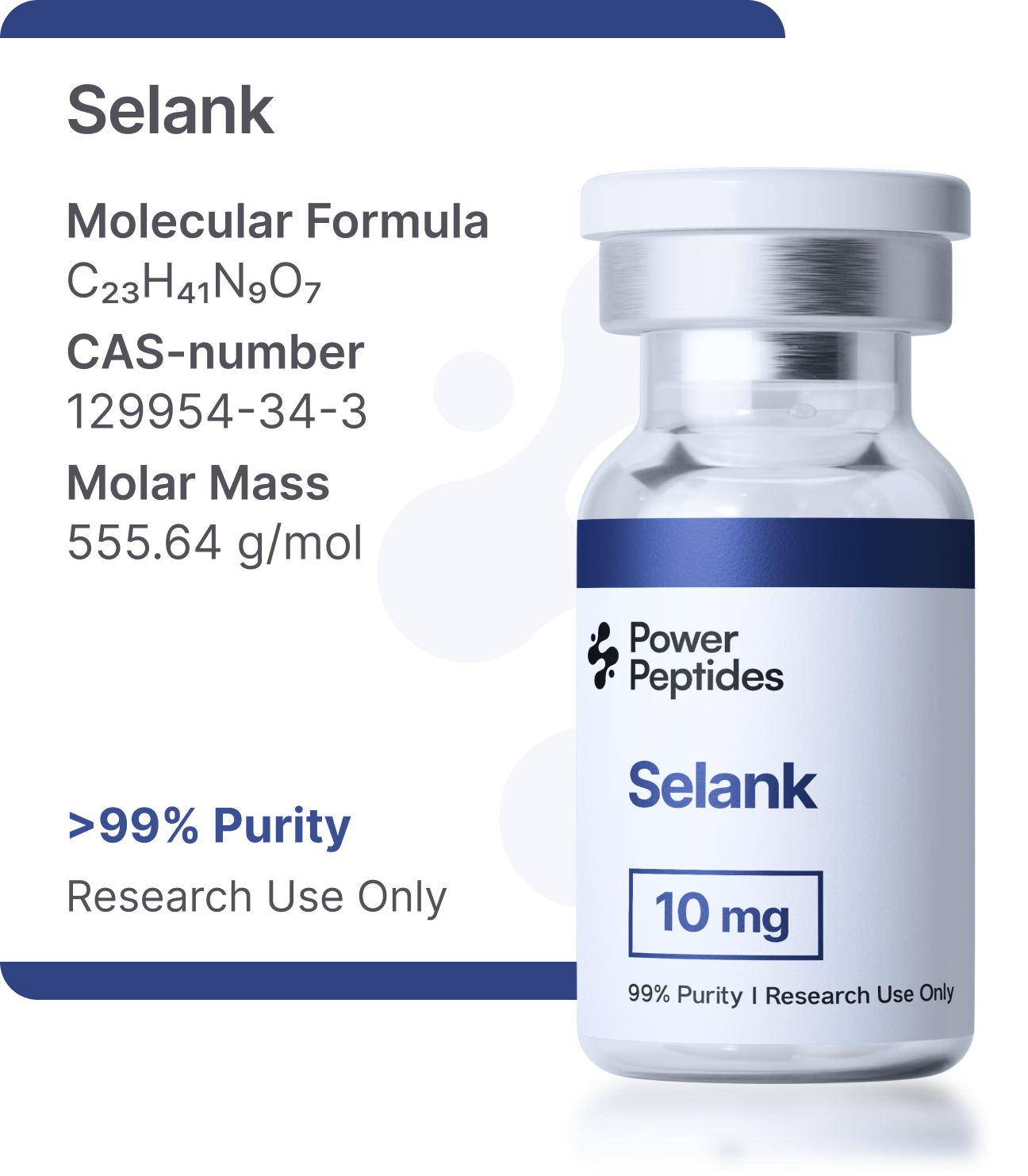
Selank is a synthetic heptapeptide derived from the naturally occurring immunomodulatory peptide tuftsin. Through structural modification, researchers developed Selank to investigate its potential interactions with the central nervous system and immune-related biological pathways.
Unlike many peptides that primarily target endocrine functions, Selank has been studied for its influence on neurochemical signaling and peptide-mediated communication within biological systems.
Researchers continue to investigate Selank in areas such as:
- Neurotransmitter regulation
- Cognitive function research
- Stress response mechanisms
- Neuroimmune interactions
- Peptide signaling pathways
- Behavioral neuroscience
Its unique molecular profile has made Selank an important research compound in laboratories studying neurological and immunological processes.
Selank Peptide Benefits in Scientific Research
Although ongoing studies continue to investigate Selank’s biological properties, researchers have explored several areas where the peptide may influence physiological mechanisms. These findings are experimental and intended to advance scientific understanding rather than establish clinical outcomes.
1. Neurotransmitter Signaling Research
One of the most extensively studied aspects of Selank involves its interaction with neurotransmitter systems.
Laboratory research has examined how Selank may influence signaling pathways associated with:
- Gamma-aminobutyric acid (GABA)
- Serotonin
- Dopamine
- Norepinephrine
Understanding these interactions helps researchers investigate the complex communication networks involved in brain function.
2. Cognitive Research
Scientists have investigated Selank in experimental models examining learning, memory, and information processing.
Research areas include:
- Cognitive performance
- Learning mechanisms
- Memory formation
- Neural plasticity
- Synaptic signaling
These studies contribute to broader efforts to understand how peptide molecules interact with cognitive processes.
3. Stress Response Mechanisms
Researchers have explored Selank’s potential role in biological pathways associated with stress regulation.
Experimental investigations focus on:
- Neurochemical responses
- Hormonal signaling pathways
- Adaptive biological responses
- Central nervous system regulation
Such research supports a better understanding of peptide-mediated communication during physiological stress.
4. Neuroimmune Research
Selank has also been investigated for its interactions with immune signaling molecules.
Research interests include:
- Cytokine regulation
- Immune cell communication
- Inflammatory signaling pathways
- Neuroimmune system interactions
This area continues to be an active field of peptide research.
5. Peptide-Based Drug Discovery
Because of its molecular stability and biological activity, Selank serves as a valuable model compound for scientists studying peptide therapeutics and next-generation molecular designs.
Research focuses include:
- Peptide engineering
- Molecular optimization
- Pharmacological modeling
- Structure-activity relationships

What Is Selank Peptide Used For?
Researchers use Selank as a laboratory tool to investigate several biological systems rather than for general consumer use.
Scientific studies commonly examine Selank in relation to:
- Neuroscience research
- Behavioral biology
- Peptide signaling
- Neurotransmitter interactions
- Neuroimmune communication
- Molecular pharmacology
- Experimental peptide therapeutics
Its versatility makes Selank relevant across multiple areas of biomedical research.
Selank Peptide Dosage in Research
One of the most common online searches is “Selank peptide dosage.”
It is important to distinguish between laboratory research protocols and medical use.
In scientific research, dosing parameters are determined by:
- Study objectives
- Experimental model
- Research design
- Ethics approvals
- Institutional protocols
- Species being studied (where applicable)
There is no universally applicable dosage that can be recommended outside of approved research settings. Qualified researchers establish dosing regimens based on validated study protocols and the objectives of their experiments.
Molecular Characteristics of Selank
| Characteristic | Information |
|---|---|
| Peptide Type | Synthetic heptapeptide |
| Origin | Modified tuftsin analogue |
| Research Category | Neuroactive peptide |
| Common Presentation | Lyophilized powder |
| Laboratory Testing | HPLC and Mass Spectrometry |
| Intended Use | Laboratory research only |
Why Peptide Quality Matters
Reliable scientific outcomes begin with high-quality research materials.
Researchers selecting Selank should evaluate suppliers based on:
Analytical Testing
High-quality research peptides are commonly verified using:
- High-Performance Liquid Chromatography (HPLC)
- Mass Spectrometry (MS)
These analytical methods help confirm peptide identity and purity.
Batch Consistency
Consistency between production batches supports reproducibility and confidence in experimental outcomes.
Researchers should look for suppliers that maintain robust quality assurance procedures.
Certificate of Analysis (COA)
A Certificate of Analysis provides important information regarding:
- Batch identification
- Purity results
- Analytical testing
- Product specifications
Maintaining batch-specific documentation supports laboratory recordkeeping and quality management.

Why Researchers Choose Appex Peptide Lab
Appex Peptide Lab supplies research-grade peptides for qualified scientific professionals, including:
- Universities
- Biotechnology companies
- Pharmaceutical research organizations
- Academic laboratories
- Life science institutions
Researchers choose Appex Peptide Lab because of its commitment to:
- Research-grade peptide quality
- Transparent product information
- Batch-specific documentation
- Analytical testing standards
- Reliable laboratory supply
Frequently Asked Questions
Selank is a synthetic peptide derived from tuftsin that is studied in neuroscience, neuropharmacology, and neuroimmune research for its interactions with biological signaling pathways.
In research settings, Selank is investigated for its potential role in neurotransmitter regulation, cognitive function, stress-response mechanisms, neuroimmune signaling, and peptide pharmacology.
From a research perspective, Selank has been studied for its interactions with neurotransmitter systems, cognitive processes, stress-related pathways, and immune signaling. These investigations are designed to improve scientific understanding rather than establish therapeutic effects.
What is the recommended There is no standard dosage suitable for general use. In laboratory research, dosing depends on the specific experimental design, model, and approved research protocol.
Research-grade Selank supplied by Appex Peptide Lab is intended for laboratory research purposes only. It is not marketed or sold for human consumption or as a treatment for any medical condition.
Conclusion
Interest in Selank peptide benefits continues to grow within the scientific community due to its unique role in peptide research and its potential interactions with neurological and immune signaling pathways. Ongoing investigations into what Selank peptide is, what Selank peptide is used for, and its molecular mechanisms contribute to a broader understanding of neuroactive peptides and their relevance to biomedical research.
For laboratories seeking high-quality research materials, selecting a supplier that emphasizes analytical testing, batch consistency, and transparent documentation is essential. Appex Peptide Lab supports researchers with research-grade peptides manufactured for scientific investigation, helping advance reliable and reproducible research across neuroscience, biotechnology, and pharmaceutical development.