Bulk Orders. Better Value.
Research institutions, universities and clinical teams qualify for volume discounts. Contact our team to discuss custom formulations and bulk pricing.

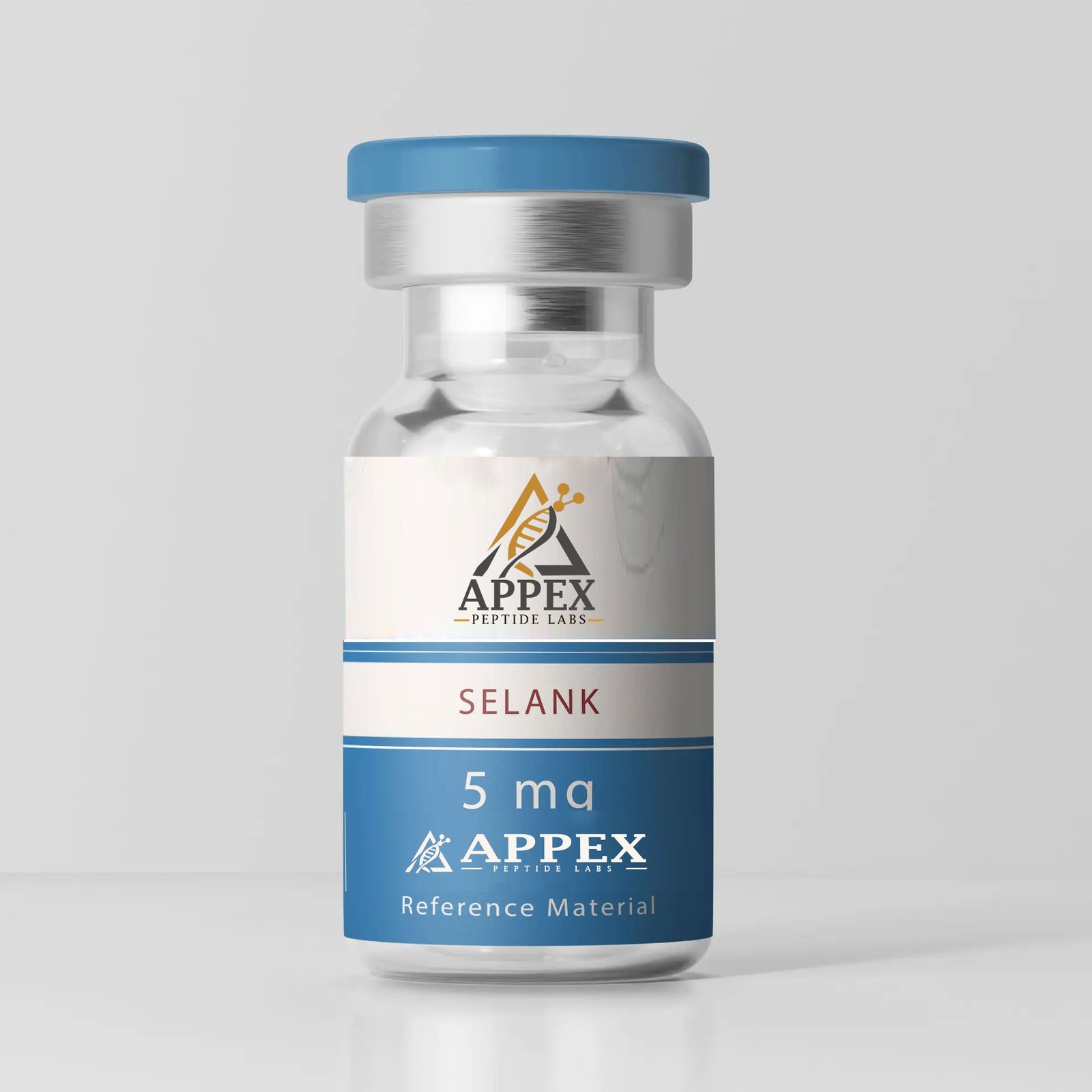


Selank Peptide is a synthetic analog of tuftsin engineered by extending the native tetrapeptide sequence with a Pro-Gly-Pro fragment to improve enzymatic stability and prolong biological activity during laboratory investigations. This structural modification has made Selank an extensively studied peptide within neuroscience, molecular biology, peptide chemistry, and neuroimmunology research.
Published scientific literature has explored Selank Peptide in experimental models examining neurotransmitter regulation, neuroplasticity, peptide-receptor interactions, immune signaling, and intracellular communication. Researchers continue to investigate its influence on GABAergic pathways, brain-derived neurotrophic factor (BDNF) expression, cytokine regulation, and transcriptional mechanisms involved in neuronal adaptation and cellular homeostasis.
Beyond neurochemical research, Selank Peptide has become valuable for studies involving peptide transport, blood-brain barrier permeability, neuroendocrine signaling, and molecular pharmacology. Its defined amino acid sequence and reproducible physicochemical characteristics enable highly controlled experimental design across academic, pharmaceutical, and biotechnology laboratories.
Each batch is synthesized under rigorous quality-controlled manufacturing conditions, analytically verified using validated methods, and supplied as a stable lyophilized powder with a comprehensive Certificate of Analysis. This ensures exceptional consistency and reproducibility for advanced scientific research.
For research use only. Not intended for human consumption or clinical use.
Selank Peptide is widely utilized in laboratory investigations examining GABAergic neurotransmission, neurotransmitter homeostasis, receptor regulation, and neuronal signaling networks involved in cellular communication.
Researchers employ Selank Peptide to investigate molecular mechanisms regulating neuronal adaptation, synaptic remodeling, transcriptional activity, and neurotrophic factor expression under controlled experimental conditions.
Experimental models incorporate Selank Peptide to evaluate interactions between immune mediators, cytokine signaling pathways, microglial responses, and central nervous system immune communication.
Selank Peptide serves as a valuable experimental compound for studying peptide pharmacokinetics, enzymatic stability, receptor-independent signaling, intracellular transport, and molecular distribution.
Scientists investigate Selank Peptide in studies involving transcriptional regulation, epigenetic modulation, RNA expression profiling, and downstream signaling pathways associated with neuronal function.
The peptide is frequently utilized for structure-function analysis, peptide stability evaluation, degradation kinetics, formulation development, and analytical method validation.
| Specification | Details |
|---|---|
| Product Name | Selank Peptide |
| Synonyms | Selank, TKPRPGP |
| Purity | ≥99% (HPLC Verified) |
| Molecular Formula | C₃₃H₅₇N₁₁O₉ |
| Molecular Weight | 751.87 g/mol |
| CAS Number | 129954-34-3 |
| Sequence | Thr-Lys-Pro-Arg-Pro-Gly-Pro |
| Appearance | White to off-white lyophilized powder |
| Solubility | Soluble in sterile bacteriostatic water and laboratory-grade aqueous buffers |
| Storage Conditions | Store lyophilized peptide at 2–8°C. For extended storage, maintain at −20°C in a dry, light-protected environment. Avoid repeated freeze-thaw cycles following reconstitution. |
| Available Sizes | 5 mg, 10 mg |

Selank Peptide is a synthetic heptapeptide engineered from the endogenous immunomodulatory peptide tuftsin through the addition of a Pro-Gly-Pro sequence that enhances resistance to enzymatic degradation. This modification improves peptide stability in experimental systems and allows researchers to investigate prolonged molecular interactions within laboratory models.
Published research indicates that Selank Peptide influences multiple neurochemical signaling pathways rather than functioning as a conventional high-affinity receptor agonist. Experimental studies have focused primarily on its modulation of GABAergic neurotransmission, where Selank appears to alter receptor-associated signaling through indirect or allosteric mechanisms. These interactions are believed to affect neuronal excitability and intracellular communication without directly replacing endogenous neurotransmitters.
Another major area of investigation involves the regulation of neurotrophic signaling. Laboratory studies have explored the peptide’s influence on brain-derived neurotrophic factor (BDNF) expression and associated intracellular pathways that regulate neuronal differentiation, synaptic remodeling, and gene transcription. Researchers continue to investigate downstream signaling networks involving CREB phosphorylation, MAPK/ERK activation, and transcription factors responsible for maintaining neuronal plasticity and cellular adaptation.
Selank Peptide has also been examined for its effects on monoaminergic neurotransmitter systems. Experimental models suggest interactions with serotonin, dopamine, and norepinephrine metabolism through modulation of enzymatic activity and neurotransmitter turnover. These observations remain subjects of ongoing laboratory investigation and contribute to understanding peptide-mediated neurochemical regulation.
In neuroimmune research, Selank has demonstrated the capacity to influence cytokine expression and immune cell signaling in preclinical experimental systems. Scientists continue investigating its effects on inflammatory mediators, chemokine regulation, microglial activity, and communication between immune and nervous system pathways. Additional studies have explored peptide transport across biological membranes, metabolic stability, and pharmacokinetic behavior to better characterize its molecular disposition.
Owing to its defined amino acid sequence, favorable stability profile, and broad spectrum of molecular interactions, Selank Peptide remains an important research reagent for neuroscience, molecular pharmacology, peptide chemistry, neuroimmunology, and biotechnology laboratories investigating the fundamental biology of regulatory peptides.
For research use only. Not intended for human consumption or clinical use.
| Size | 10mg, 5mg |
|---|---|
| Weight | .125 lbs |
| Dimensions | 9 × 7 × .5 in |
Selank Peptide is a synthetic analog of tuftsin engineered by extending the native tetrapeptide sequence with a Pro-Gly-Pro fragment to improve enzymatic stability and prolong biological activity during laboratory investigations. This structural modification has made Selank an extensively studied peptide within neuroscience, molecular biology, peptide chemistry, and neuroimmunology research.
Published scientific literature has explored Selank Peptide in experimental models examining neurotransmitter regulation, neuroplasticity, peptide-receptor interactions, immune signaling, and intracellular communication. Researchers continue to investigate its influence on GABAergic pathways, brain-derived neurotrophic factor (BDNF) expression, cytokine regulation, and transcriptional mechanisms involved in neuronal adaptation and cellular homeostasis.
Beyond neurochemical research, Selank Peptide has become valuable for studies involving peptide transport, blood-brain barrier permeability, neuroendocrine signaling, and molecular pharmacology. Its defined amino acid sequence and reproducible physicochemical characteristics enable highly controlled experimental design across academic, pharmaceutical, and biotechnology laboratories.
Each batch is synthesized under rigorous quality-controlled manufacturing conditions, analytically verified using validated methods, and supplied as a stable lyophilized powder with a comprehensive Certificate of Analysis. This ensures exceptional consistency and reproducibility for advanced scientific research.
For research use only. Not intended for human consumption or clinical use.
Selank Peptide is widely utilized in laboratory investigations examining GABAergic neurotransmission, neurotransmitter homeostasis, receptor regulation, and neuronal signaling networks involved in cellular communication.
Researchers employ Selank Peptide to investigate molecular mechanisms regulating neuronal adaptation, synaptic remodeling, transcriptional activity, and neurotrophic factor expression under controlled experimental conditions.
Experimental models incorporate Selank Peptide to evaluate interactions between immune mediators, cytokine signaling pathways, microglial responses, and central nervous system immune communication.
Selank Peptide serves as a valuable experimental compound for studying peptide pharmacokinetics, enzymatic stability, receptor-independent signaling, intracellular transport, and molecular distribution.
Scientists investigate Selank Peptide in studies involving transcriptional regulation, epigenetic modulation, RNA expression profiling, and downstream signaling pathways associated with neuronal function.
The peptide is frequently utilized for structure-function analysis, peptide stability evaluation, degradation kinetics, formulation development, and analytical method validation.
| Specification | Details |
|---|---|
| Product Name | Selank Peptide |
| Synonyms | Selank, TKPRPGP |
| Purity | ≥99% (HPLC Verified) |
| Molecular Formula | C₃₃H₅₇N₁₁O₉ |
| Molecular Weight | 751.87 g/mol |
| CAS Number | 129954-34-3 |
| Sequence | Thr-Lys-Pro-Arg-Pro-Gly-Pro |
| Appearance | White to off-white lyophilized powder |
| Solubility | Soluble in sterile bacteriostatic water and laboratory-grade aqueous buffers |
| Storage Conditions | Store lyophilized peptide at 2–8°C. For extended storage, maintain at −20°C in a dry, light-protected environment. Avoid repeated freeze-thaw cycles following reconstitution. |
| Available Sizes | 5 mg, 10 mg |
Selank Peptide is a synthetic heptapeptide engineered from the endogenous immunomodulatory peptide tuftsin through the addition of a Pro-Gly-Pro sequence that enhances resistance to enzymatic degradation. This modification improves peptide stability in experimental systems and allows researchers to investigate prolonged molecular interactions within laboratory models.
Published research indicates that Selank Peptide influences multiple neurochemical signaling pathways rather than functioning as a conventional high-affinity receptor agonist. Experimental studies have focused primarily on its modulation of GABAergic neurotransmission, where Selank appears to alter receptor-associated signaling through indirect or allosteric mechanisms. These interactions are believed to affect neuronal excitability and intracellular communication without directly replacing endogenous neurotransmitters.
Another major area of investigation involves the regulation of neurotrophic signaling. Laboratory studies have explored the peptide’s influence on brain-derived neurotrophic factor (BDNF) expression and associated intracellular pathways that regulate neuronal differentiation, synaptic remodeling, and gene transcription. Researchers continue to investigate downstream signaling networks involving CREB phosphorylation, MAPK/ERK activation, and transcription factors responsible for maintaining neuronal plasticity and cellular adaptation.
Selank Peptide has also been examined for its effects on monoaminergic neurotransmitter systems. Experimental models suggest interactions with serotonin, dopamine, and norepinephrine metabolism through modulation of enzymatic activity and neurotransmitter turnover. These observations remain subjects of ongoing laboratory investigation and contribute to understanding peptide-mediated neurochemical regulation.
In neuroimmune research, Selank has demonstrated the capacity to influence cytokine expression and immune cell signaling in preclinical experimental systems. Scientists continue investigating its effects on inflammatory mediators, chemokine regulation, microglial activity, and communication between immune and nervous system pathways. Additional studies have explored peptide transport across biological membranes, metabolic stability, and pharmacokinetic behavior to better characterize its molecular disposition.
Owing to its defined amino acid sequence, favorable stability profile, and broad spectrum of molecular interactions, Selank Peptide remains an important research reagent for neuroscience, molecular pharmacology, peptide chemistry, neuroimmunology, and biotechnology laboratories investigating the fundamental biology of regulatory peptides.
For research use only. Not intended for human consumption or clinical use.
| Size | 10mg, 5mg |
|---|---|
| Weight | .125 lbs |
| Dimensions | 9 × 7 × .5 in |