Bulk Orders. Better Value.
Research institutions, universities and clinical teams qualify for volume discounts. Contact our team to discuss custom formulations and bulk pricing.

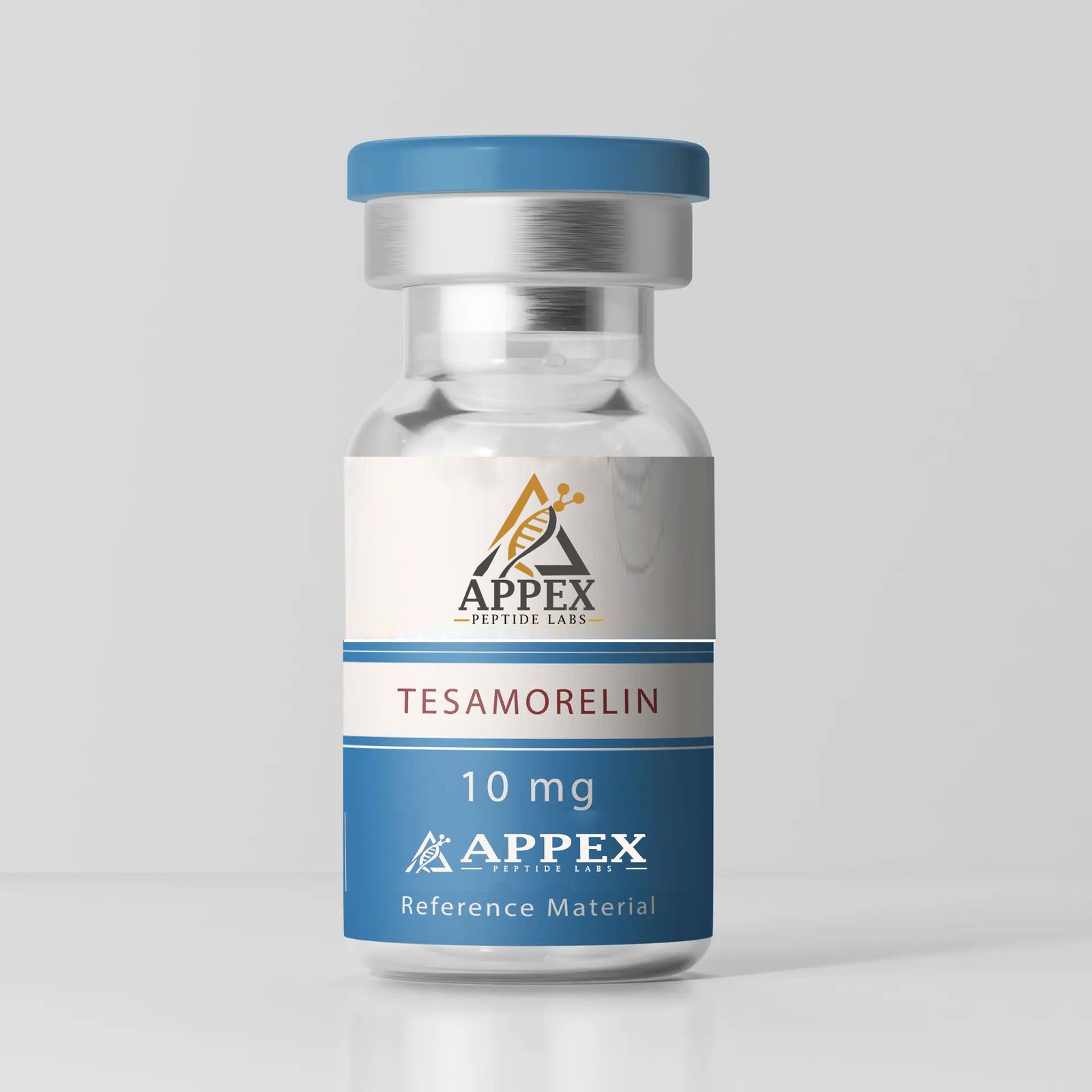
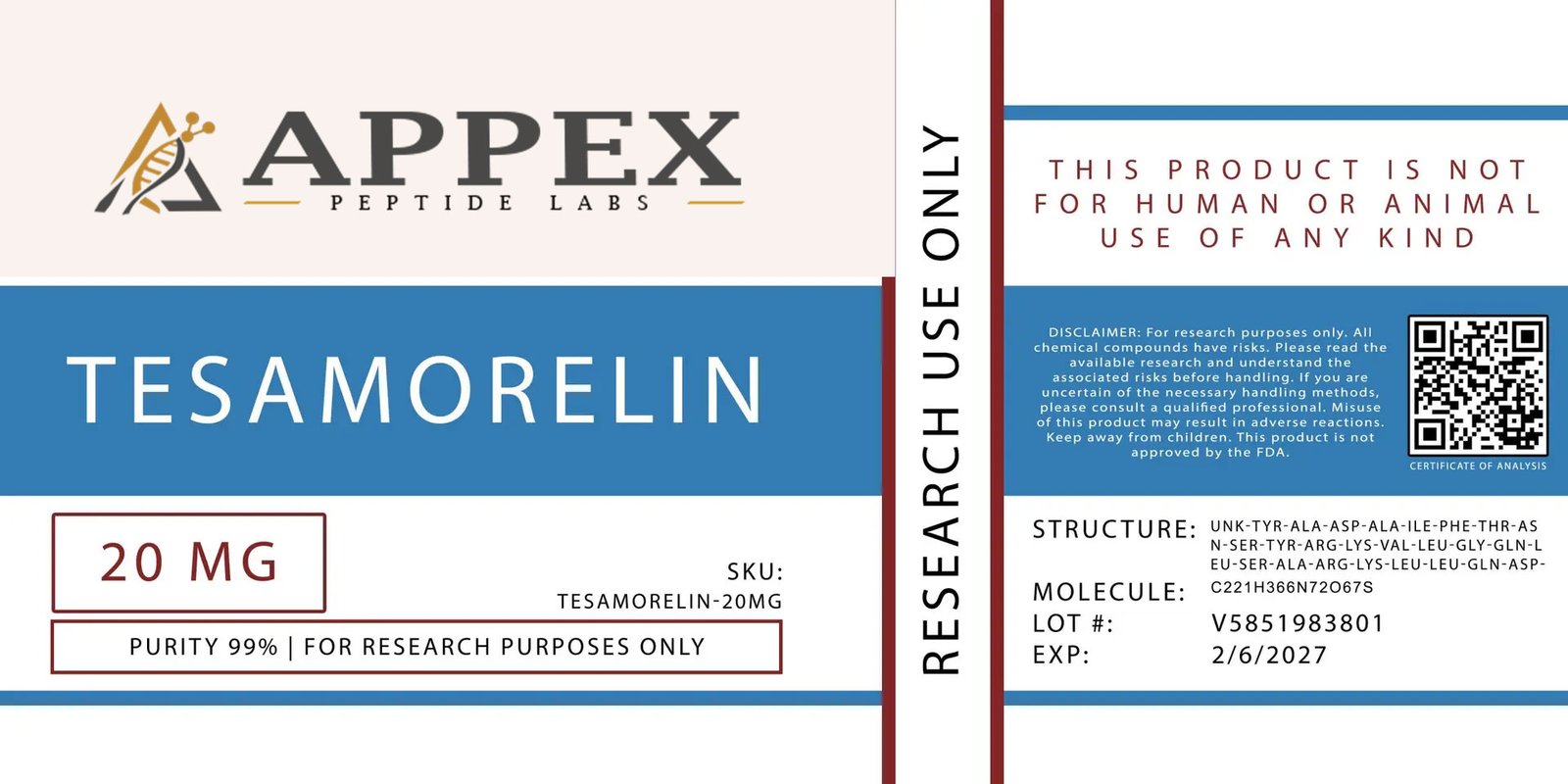
Tesamorelin Peptide is a synthetic analog of endogenous growth hormone-releasing hormone (GHRH) engineered to provide enhanced molecular stability while maintaining affinity for the growth hormone-releasing hormone receptor (GHRHR). Its unique structural modification at the N-terminus increases resistance to degradation by dipeptidyl peptidase-IV (DPP-IV), making it an important research tool for investigating receptor activation, peptide stability, and endocrine signaling under controlled laboratory conditions.
Researchers utilize Tesamorelin to examine molecular mechanisms governing GHRH receptor interactions, intracellular signaling cascades, and growth hormone regulatory networks. Because its structure closely resembles native GHRH while incorporating enhanced stability characteristics, it is frequently selected for studies involving receptor pharmacology, peptide engineering, signal transduction, and protein-ligand interactions.
Appex Peptide Lab manufactures Tesamorelin Peptide using rigorously controlled synthesis and purification processes designed to ensure exceptional purity, structural integrity, and batch-to-batch consistency. Each production lot undergoes independent analytical verification before release, providing laboratories with dependable quality and reproducible performance.
Trusted by universities, biotechnology companies, pharmaceutical organizations, and life science laboratories across the United States, Canada, and Australia, Tesamorelin Peptide supports advanced scientific investigations requiring reliable research-grade peptide standards.
Researchers investigating endocrine biology require peptide standards that combine structural accuracy with exceptional analytical quality. Tesamorelin Peptide from Appex Peptide Lab is manufactured to support reproducible experimental outcomes across demanding laboratory environments.
Researchers choose this product because it offers:
Laboratory investigations examining receptor activation, ligand binding, and intracellular signaling mediated through the growth hormone-releasing hormone receptor.
Research involving hormone signaling pathways, endocrine regulation, and peptide-mediated cellular communication.
Experimental studies evaluating receptor affinity, molecular stability, peptide degradation, and pharmacodynamic characteristics.
Investigations exploring intracellular signaling cascades, transcriptional regulation, and receptor-mediated cellular responses.
Research focused on structural peptide modifications, enzymatic stability, and optimization of receptor-selective analogs.
Suitable for in vitro investigations involving receptor expression, signal transduction, and peptide activity.
Laboratory research examining molecular recognition, receptor binding kinetics, and ligand specificity.
Experimental investigations evaluating signaling mechanisms involved in growth hormone regulatory networks under controlled laboratory conditions.
| Specification | Details |
|---|---|
| Product Name | Tesamorelin Peptide |
| Alternative Name | Tesamorelin Acetate (TH9507) |
| Available Sizes | 5 mg, 10 mg, 20 mg |
| Purity | ≥99% (HPLC Verified) |
| Peptide Type | Synthetic Growth Hormone-Releasing Hormone (GHRH) Analog |
| Molecular Formula | C₂₂₁H₃₆₆N₇₂O₆₇ |
| Molecular Weight | Approximately 5,135.9 g/mol |
| CAS Number | 218949-48-5 |
| Appearance | White to off-white lyophilized powder |
| Solubility | Soluble in appropriate laboratory-grade aqueous research solvents |
| Storage Conditions | Store unopened at -20°C. Protect from moisture, excessive heat, direct light, and repeated freeze-thaw cycles. |
| Sequence | 44-amino-acid GHRH analog with N-terminal trans-3-hexenoyl modification |
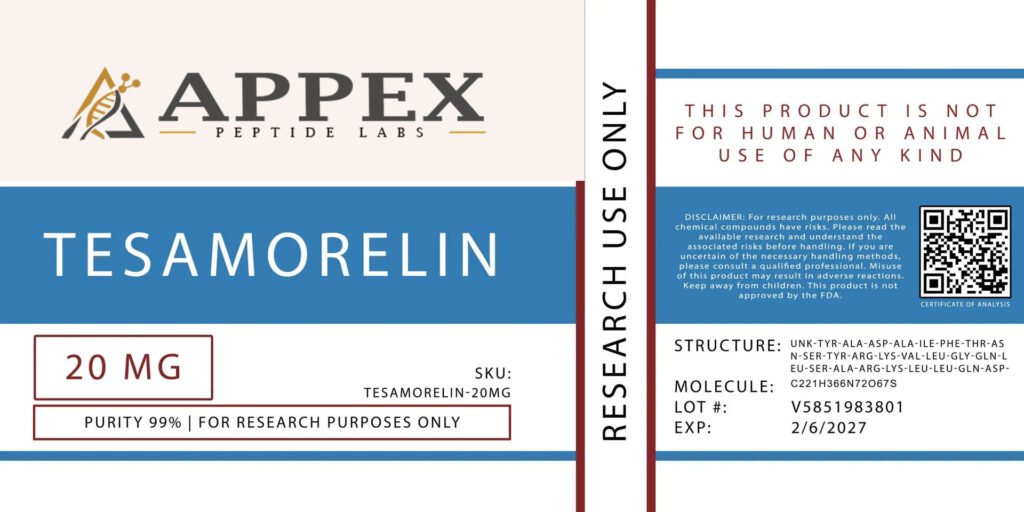
Within laboratory research, Tesamorelin Peptide is investigated for its interaction with the growth hormone-releasing hormone receptor (GHRHR), a Class B G protein-coupled receptor (GPCR) expressed primarily within pituitary-derived cellular models. Its amino acid sequence closely resembles endogenous GHRH while incorporating a trans-3-hexenoyl modification at the N-terminus that enhances resistance to enzymatic degradation by dipeptidyl peptidase-IV (DPP-IV). This increased molecular stability enables researchers to study receptor activation over extended experimental timeframes.
Following receptor binding in laboratory models, Tesamorelin has been investigated for activation of intracellular signaling pathways involving adenylate cyclase, cyclic adenosine monophosphate (cAMP), and protein kinase A (PKA). These signaling events are commonly examined to better understand receptor pharmacology, ligand-receptor interactions, and downstream transcriptional responses associated with GHRH biology.
Researchers also utilize Tesamorelin to evaluate peptide stability, receptor binding kinetics, molecular conformation, and structural modifications that influence peptide half-life and receptor selectivity. Because it closely mimics endogenous GHRH while exhibiting greater resistance to enzymatic cleavage, it serves as a valuable experimental model for studies involving peptide engineering and endocrine signaling.
Current scientific investigations continue to examine Tesamorelin across multiple areas of molecular endocrinology, peptide chemistry, receptor pharmacology, protein-ligand interactions, and intracellular signaling biology. These studies contribute to a broader understanding of GHRH receptor function and peptide structure-activity relationships under controlled laboratory conditions without implying therapeutic or clinical applications.
For research use only. Not intended for human consumption or clinical use.
| Size | 10mg, 20mg, 5mg |
|---|---|
| Weight | .125 lbs |
| Dimensions | 9 × 7 × .5 in |
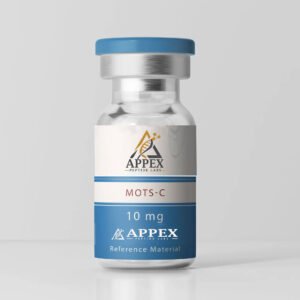
Tesamorelin Peptide is a synthetic analog of endogenous growth hormone-releasing hormone (GHRH) engineered to provide enhanced molecular stability while maintaining affinity for the growth hormone-releasing hormone receptor (GHRHR). Its unique structural modification at the N-terminus increases resistance to degradation by dipeptidyl peptidase-IV (DPP-IV), making it an important research tool for investigating receptor activation, peptide stability, and endocrine signaling under controlled laboratory conditions.
Researchers utilize Tesamorelin to examine molecular mechanisms governing GHRH receptor interactions, intracellular signaling cascades, and growth hormone regulatory networks. Because its structure closely resembles native GHRH while incorporating enhanced stability characteristics, it is frequently selected for studies involving receptor pharmacology, peptide engineering, signal transduction, and protein-ligand interactions.
Appex Peptide Lab manufactures Tesamorelin Peptide using rigorously controlled synthesis and purification processes designed to ensure exceptional purity, structural integrity, and batch-to-batch consistency. Each production lot undergoes independent analytical verification before release, providing laboratories with dependable quality and reproducible performance.
Trusted by universities, biotechnology companies, pharmaceutical organizations, and life science laboratories across the United States, Canada, and Australia, Tesamorelin Peptide supports advanced scientific investigations requiring reliable research-grade peptide standards.
Researchers investigating endocrine biology require peptide standards that combine structural accuracy with exceptional analytical quality. Tesamorelin Peptide from Appex Peptide Lab is manufactured to support reproducible experimental outcomes across demanding laboratory environments.
Researchers choose this product because it offers:
Laboratory investigations examining receptor activation, ligand binding, and intracellular signaling mediated through the growth hormone-releasing hormone receptor.
Research involving hormone signaling pathways, endocrine regulation, and peptide-mediated cellular communication.
Experimental studies evaluating receptor affinity, molecular stability, peptide degradation, and pharmacodynamic characteristics.
Investigations exploring intracellular signaling cascades, transcriptional regulation, and receptor-mediated cellular responses.
Research focused on structural peptide modifications, enzymatic stability, and optimization of receptor-selective analogs.
Suitable for in vitro investigations involving receptor expression, signal transduction, and peptide activity.
Laboratory research examining molecular recognition, receptor binding kinetics, and ligand specificity.
Experimental investigations evaluating signaling mechanisms involved in growth hormone regulatory networks under controlled laboratory conditions.
| Specification | Details |
|---|---|
| Product Name | Tesamorelin Peptide |
| Alternative Name | Tesamorelin Acetate (TH9507) |
| Available Sizes | 5 mg, 10 mg, 20 mg |
| Purity | ≥99% (HPLC Verified) |
| Peptide Type | Synthetic Growth Hormone-Releasing Hormone (GHRH) Analog |
| Molecular Formula | C₂₂₁H₃₆₆N₇₂O₆₇ |
| Molecular Weight | Approximately 5,135.9 g/mol |
| CAS Number | 218949-48-5 |
| Appearance | White to off-white lyophilized powder |
| Solubility | Soluble in appropriate laboratory-grade aqueous research solvents |
| Storage Conditions | Store unopened at -20°C. Protect from moisture, excessive heat, direct light, and repeated freeze-thaw cycles. |
| Sequence | 44-amino-acid GHRH analog with N-terminal trans-3-hexenoyl modification |
Within laboratory research, Tesamorelin Peptide is investigated for its interaction with the growth hormone-releasing hormone receptor (GHRHR), a Class B G protein-coupled receptor (GPCR) expressed primarily within pituitary-derived cellular models. Its amino acid sequence closely resembles endogenous GHRH while incorporating a trans-3-hexenoyl modification at the N-terminus that enhances resistance to enzymatic degradation by dipeptidyl peptidase-IV (DPP-IV). This increased molecular stability enables researchers to study receptor activation over extended experimental timeframes.
Following receptor binding in laboratory models, Tesamorelin has been investigated for activation of intracellular signaling pathways involving adenylate cyclase, cyclic adenosine monophosphate (cAMP), and protein kinase A (PKA). These signaling events are commonly examined to better understand receptor pharmacology, ligand-receptor interactions, and downstream transcriptional responses associated with GHRH biology.
Researchers also utilize Tesamorelin to evaluate peptide stability, receptor binding kinetics, molecular conformation, and structural modifications that influence peptide half-life and receptor selectivity. Because it closely mimics endogenous GHRH while exhibiting greater resistance to enzymatic cleavage, it serves as a valuable experimental model for studies involving peptide engineering and endocrine signaling.
Current scientific investigations continue to examine Tesamorelin across multiple areas of molecular endocrinology, peptide chemistry, receptor pharmacology, protein-ligand interactions, and intracellular signaling biology. These studies contribute to a broader understanding of GHRH receptor function and peptide structure-activity relationships under controlled laboratory conditions without implying therapeutic or clinical applications.
For research use only. Not intended for human consumption or clinical use.
| Size | 10mg, 20mg, 5mg |
|---|---|
| Weight | .125 lbs |
| Dimensions | 9 × 7 × .5 in |