Bulk Orders. Better Value.
Research institutions, universities and clinical teams qualify for volume discounts. Contact our team to discuss custom formulations and bulk pricing.

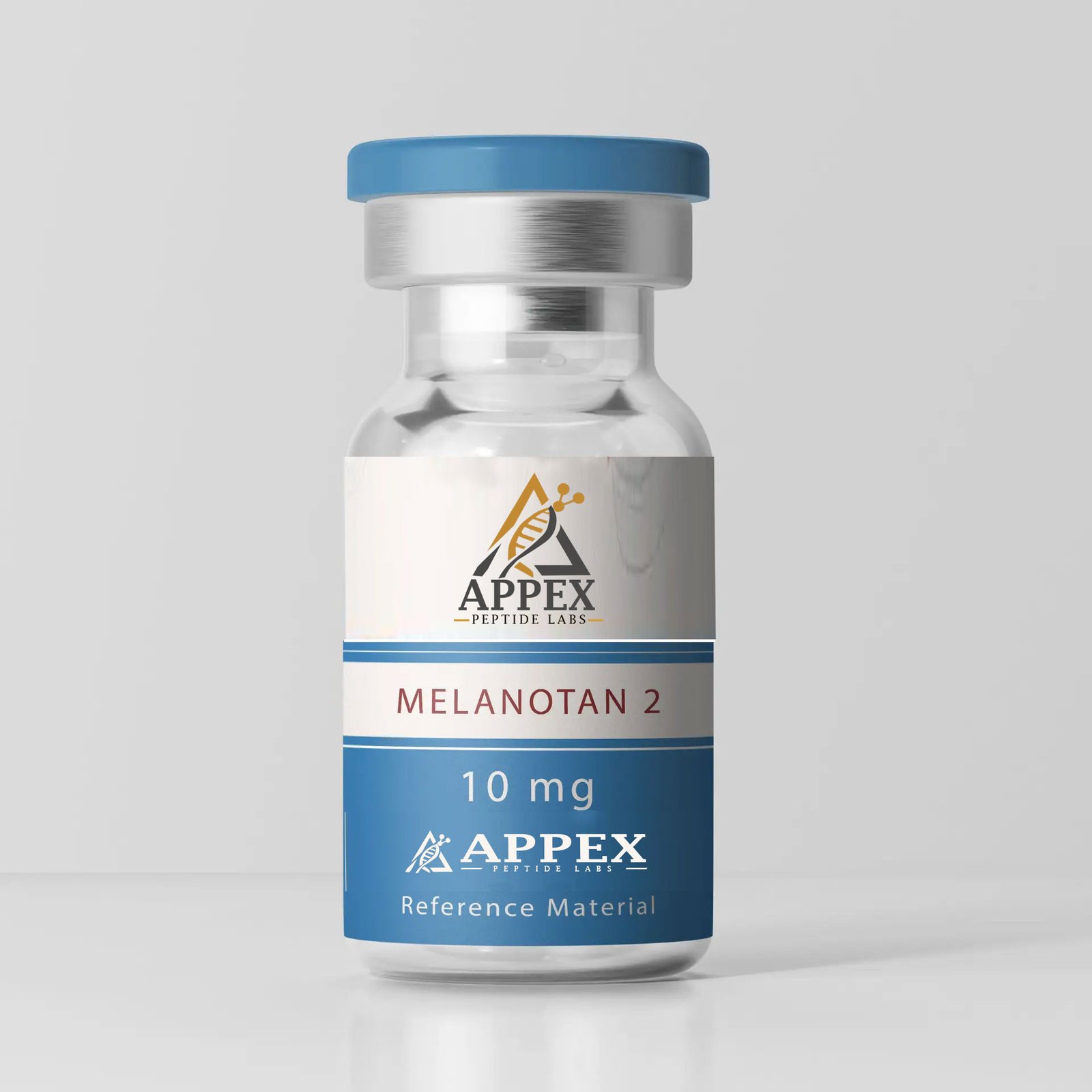


Melanotan 2 (MT-II) Peptide is a synthetic cyclic analog of α-melanocyte-stimulating hormone (α-MSH) that has become one of the most extensively investigated melanocortin receptor agonists in peptide research. Owing to its enhanced structural stability and receptor affinity, MT-II serves as a valuable experimental molecule for studying melanocortin receptor biology, receptor pharmacology, and peptide-mediated cellular signaling.
Researchers employ Melanotan 2 to investigate interactions with melanocortin receptor subtypes, particularly MC1R, while also exploring receptor activity involving MC3R, MC4R, and MC5R in controlled laboratory models. Scientific investigations examine intracellular signaling pathways associated with cyclic AMP (cAMP), melanogenesis, pigment regulation, receptor activation kinetics, and GPCR-mediated molecular communication. Additional research explores UV-responsive cellular mechanisms, transcriptional regulation, and peptide-receptor interactions across multiple biological systems.
At Appex Peptide Lab, Melanotan 2 (MT-II) Peptide is manufactured under rigorous quality-controlled conditions using validated synthesis and purification protocols. Every batch undergoes comprehensive analytical verification to ensure exceptional purity, molecular integrity, and batch reproducibility before release.
Trusted by universities, biotechnology companies, pharmaceutical developers, and peptide science laboratories throughout the United States, Canada, and Australia, MT-II provides dependable quality for advanced melanocortin signaling and molecular biology research.
Researchers studying melanocortin biology require peptide standards that provide exceptional analytical quality and reproducible laboratory performance.
Researchers choose this product because it offers:
Laboratory investigations examining MC1R, MC3R, MC4R, and MC5R activation, ligand binding, receptor trafficking, and intracellular signaling.
Experimental studies evaluating melanocyte biology, melanin biosynthesis pathways, and pigment-related cellular communication.
Research focused on G protein-coupled receptor activation, ligand specificity, receptor selectivity, and signaling kinetics.
Investigations exploring cellular responses to ultraviolet exposure, photobiology, and pigment-associated molecular pathways.
Studies involving receptor-ligand interactions, peptide stability, structure-activity relationships, and receptor pharmacodynamics.
Experimental research evaluating cAMP production, protein kinase activation, transcription factor regulation, and intracellular messenger systems.
Laboratory investigations involving cyclic peptide stability, molecular optimization, conformational analysis, and synthetic peptide characterization.
Studies examining melanocortin signaling networks, neuroendocrine communication, and peptide-mediated receptor biology.
| Specification | Details |
|---|---|
| Product Name | Melanotan 2 (MT-II) Peptide |
| Purity | ≥99% (HPLC Verified) |
| Peptide Type | Synthetic Cyclic Melanocortin Receptor Agonist |
| Molecular Formula | C₅₀H₆₉N₁₅O₉ |
| Molecular Weight | 1024.18 g/mol |
| CAS Number | 121062-08-6 |
| Appearance | White to off-white lyophilized powder |
| Storage Conditions | Store unopened at -20°C. Protect from moisture, direct light, excessive heat, and repeated freeze-thaw cycles. |
| Solubility | Soluble in laboratory-grade sterile water and compatible aqueous research buffers |
| Sequence | Ac-Nle-cyclo[Asp-His-D-Phe-Arg-Trp-Lys]-NH₂ |
| Available Sizes | 10 mg |

Within laboratory research, Melanotan 2 (MT-II) Peptide is investigated as a potent synthetic agonist of the melanocortin receptor (MCR) family, a group of Class A G protein-coupled receptors (GPCRs) involved in numerous physiological signaling pathways. MT-II exhibits high affinity for multiple receptor subtypes, including MC1R, MC3R, MC4R, and MC5R, allowing researchers to evaluate receptor-specific signaling mechanisms across diverse experimental models.
Upon receptor binding, MT-II primarily activates Gs protein-dependent signaling, stimulating adenylyl cyclase and increasing intracellular cyclic adenosine monophosphate (cAMP) concentrations. Elevated cAMP activates downstream signaling mediators such as protein kinase A (PKA) and cAMP-responsive transcription factors, enabling researchers to investigate molecular events associated with melanocortin receptor activation and intracellular signal transduction.
In melanocyte-based laboratory models, activation of MC1R is extensively studied for its influence on transcriptional regulation involving microphthalmia-associated transcription factor (MITF) and downstream enzymes associated with melanogenesis, including tyrosinase (TYR), TRP-1, and TRP-2. Experimental investigations focus on receptor-mediated gene expression, pigment synthesis pathways, and cellular responses to ultraviolet radiation within controlled research environments.
The cyclic peptide structure of MT-II enhances conformational stability and resistance to enzymatic degradation compared with endogenous α-melanocyte-stimulating hormone (α-MSH). Researchers therefore utilize MT-II to examine receptor binding kinetics, peptide stability, receptor internalization, β-arrestin recruitment, and GPCR signaling dynamics. Additional studies explore melanocortin-mediated neuroendocrine signaling, intracellular kinase activation, peptide pharmacology, and structure-activity relationships.
Because of its well-characterized receptor profile and reproducible pharmacological properties, Melanotan 2 remains a valuable research molecule for investigations in peptide chemistry, melanocortin receptor biology, molecular pharmacology, cellular signaling, and experimental physiology.
For research use only. Not intended for human consumption or clinical use.
| Size | 10mg |
|---|---|
| Dimensions | 9 × 7 × .5 in |
| Weight | .125 lbs |


Melanotan 2 (MT-II) Peptide is a synthetic cyclic analog of α-melanocyte-stimulating hormone (α-MSH) that has become one of the most extensively investigated melanocortin receptor agonists in peptide research. Owing to its enhanced structural stability and receptor affinity, MT-II serves as a valuable experimental molecule for studying melanocortin receptor biology, receptor pharmacology, and peptide-mediated cellular signaling.
Researchers employ Melanotan 2 to investigate interactions with melanocortin receptor subtypes, particularly MC1R, while also exploring receptor activity involving MC3R, MC4R, and MC5R in controlled laboratory models. Scientific investigations examine intracellular signaling pathways associated with cyclic AMP (cAMP), melanogenesis, pigment regulation, receptor activation kinetics, and GPCR-mediated molecular communication. Additional research explores UV-responsive cellular mechanisms, transcriptional regulation, and peptide-receptor interactions across multiple biological systems.
At Appex Peptide Lab, Melanotan 2 (MT-II) Peptide is manufactured under rigorous quality-controlled conditions using validated synthesis and purification protocols. Every batch undergoes comprehensive analytical verification to ensure exceptional purity, molecular integrity, and batch reproducibility before release.
Trusted by universities, biotechnology companies, pharmaceutical developers, and peptide science laboratories throughout the United States, Canada, and Australia, MT-II provides dependable quality for advanced melanocortin signaling and molecular biology research.
Researchers studying melanocortin biology require peptide standards that provide exceptional analytical quality and reproducible laboratory performance.
Researchers choose this product because it offers:
Laboratory investigations examining MC1R, MC3R, MC4R, and MC5R activation, ligand binding, receptor trafficking, and intracellular signaling.
Experimental studies evaluating melanocyte biology, melanin biosynthesis pathways, and pigment-related cellular communication.
Research focused on G protein-coupled receptor activation, ligand specificity, receptor selectivity, and signaling kinetics.
Investigations exploring cellular responses to ultraviolet exposure, photobiology, and pigment-associated molecular pathways.
Studies involving receptor-ligand interactions, peptide stability, structure-activity relationships, and receptor pharmacodynamics.
Experimental research evaluating cAMP production, protein kinase activation, transcription factor regulation, and intracellular messenger systems.
Laboratory investigations involving cyclic peptide stability, molecular optimization, conformational analysis, and synthetic peptide characterization.
Studies examining melanocortin signaling networks, neuroendocrine communication, and peptide-mediated receptor biology.
| Specification | Details |
|---|---|
| Product Name | Melanotan 2 (MT-II) Peptide |
| Purity | ≥99% (HPLC Verified) |
| Peptide Type | Synthetic Cyclic Melanocortin Receptor Agonist |
| Molecular Formula | C₅₀H₆₉N₁₅O₉ |
| Molecular Weight | 1024.18 g/mol |
| CAS Number | 121062-08-6 |
| Appearance | White to off-white lyophilized powder |
| Storage Conditions | Store unopened at -20°C. Protect from moisture, direct light, excessive heat, and repeated freeze-thaw cycles. |
| Solubility | Soluble in laboratory-grade sterile water and compatible aqueous research buffers |
| Sequence | Ac-Nle-cyclo[Asp-His-D-Phe-Arg-Trp-Lys]-NH₂ |
| Available Sizes | 10 mg |
Within laboratory research, Melanotan 2 (MT-II) Peptide is investigated as a potent synthetic agonist of the melanocortin receptor (MCR) family, a group of Class A G protein-coupled receptors (GPCRs) involved in numerous physiological signaling pathways. MT-II exhibits high affinity for multiple receptor subtypes, including MC1R, MC3R, MC4R, and MC5R, allowing researchers to evaluate receptor-specific signaling mechanisms across diverse experimental models.
Upon receptor binding, MT-II primarily activates Gs protein-dependent signaling, stimulating adenylyl cyclase and increasing intracellular cyclic adenosine monophosphate (cAMP) concentrations. Elevated cAMP activates downstream signaling mediators such as protein kinase A (PKA) and cAMP-responsive transcription factors, enabling researchers to investigate molecular events associated with melanocortin receptor activation and intracellular signal transduction.
In melanocyte-based laboratory models, activation of MC1R is extensively studied for its influence on transcriptional regulation involving microphthalmia-associated transcription factor (MITF) and downstream enzymes associated with melanogenesis, including tyrosinase (TYR), TRP-1, and TRP-2. Experimental investigations focus on receptor-mediated gene expression, pigment synthesis pathways, and cellular responses to ultraviolet radiation within controlled research environments.
The cyclic peptide structure of MT-II enhances conformational stability and resistance to enzymatic degradation compared with endogenous α-melanocyte-stimulating hormone (α-MSH). Researchers therefore utilize MT-II to examine receptor binding kinetics, peptide stability, receptor internalization, β-arrestin recruitment, and GPCR signaling dynamics. Additional studies explore melanocortin-mediated neuroendocrine signaling, intracellular kinase activation, peptide pharmacology, and structure-activity relationships.
Because of its well-characterized receptor profile and reproducible pharmacological properties, Melanotan 2 remains a valuable research molecule for investigations in peptide chemistry, melanocortin receptor biology, molecular pharmacology, cellular signaling, and experimental physiology.
For research use only. Not intended for human consumption or clinical use.
| Size | 10mg |
|---|---|
| Dimensions | 9 × 7 × .5 in |
| Weight | .125 lbs |