Bulk Orders. Better Value.
Research institutions, universities and clinical teams qualify for volume discounts. Contact our team to discuss custom formulations and bulk pricing.

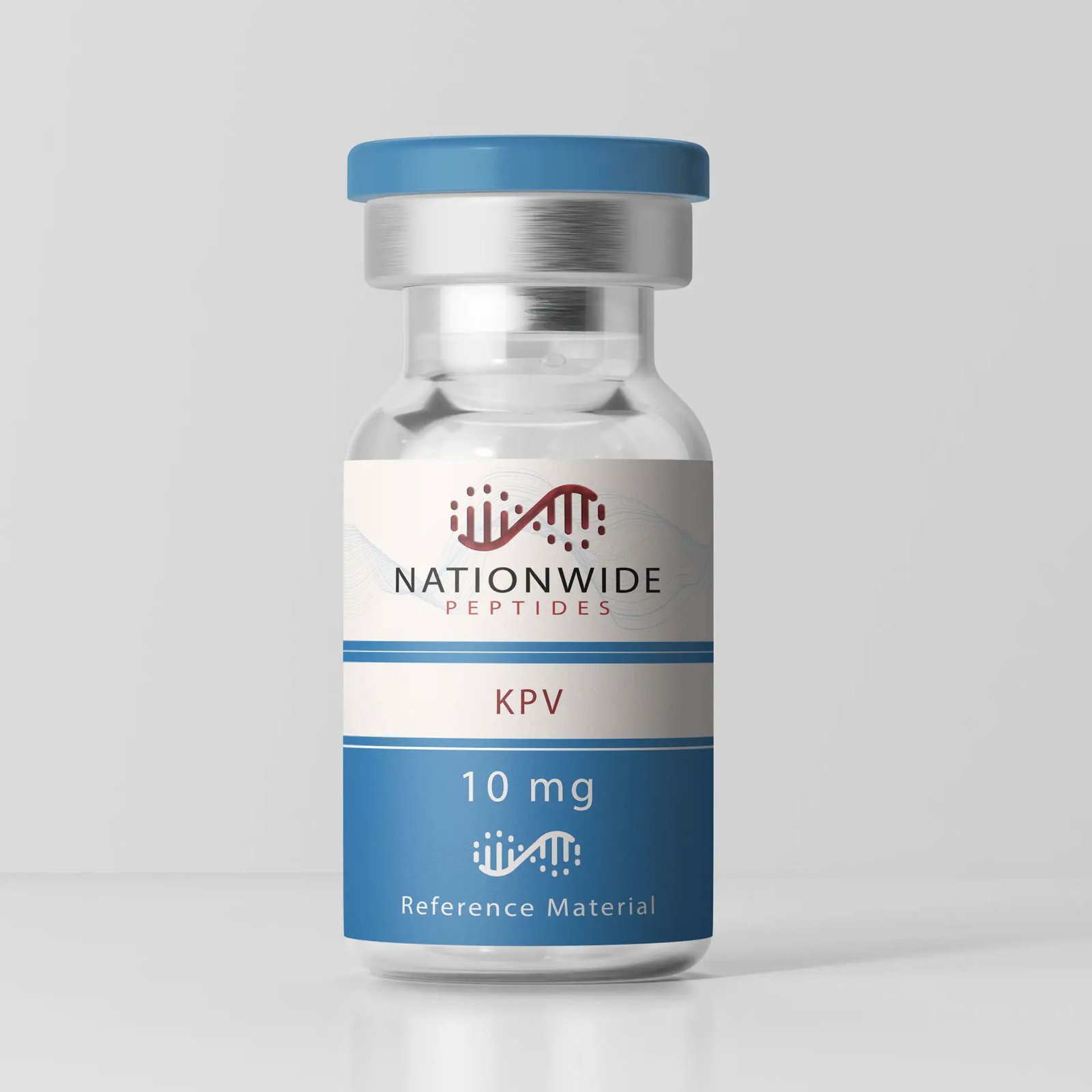
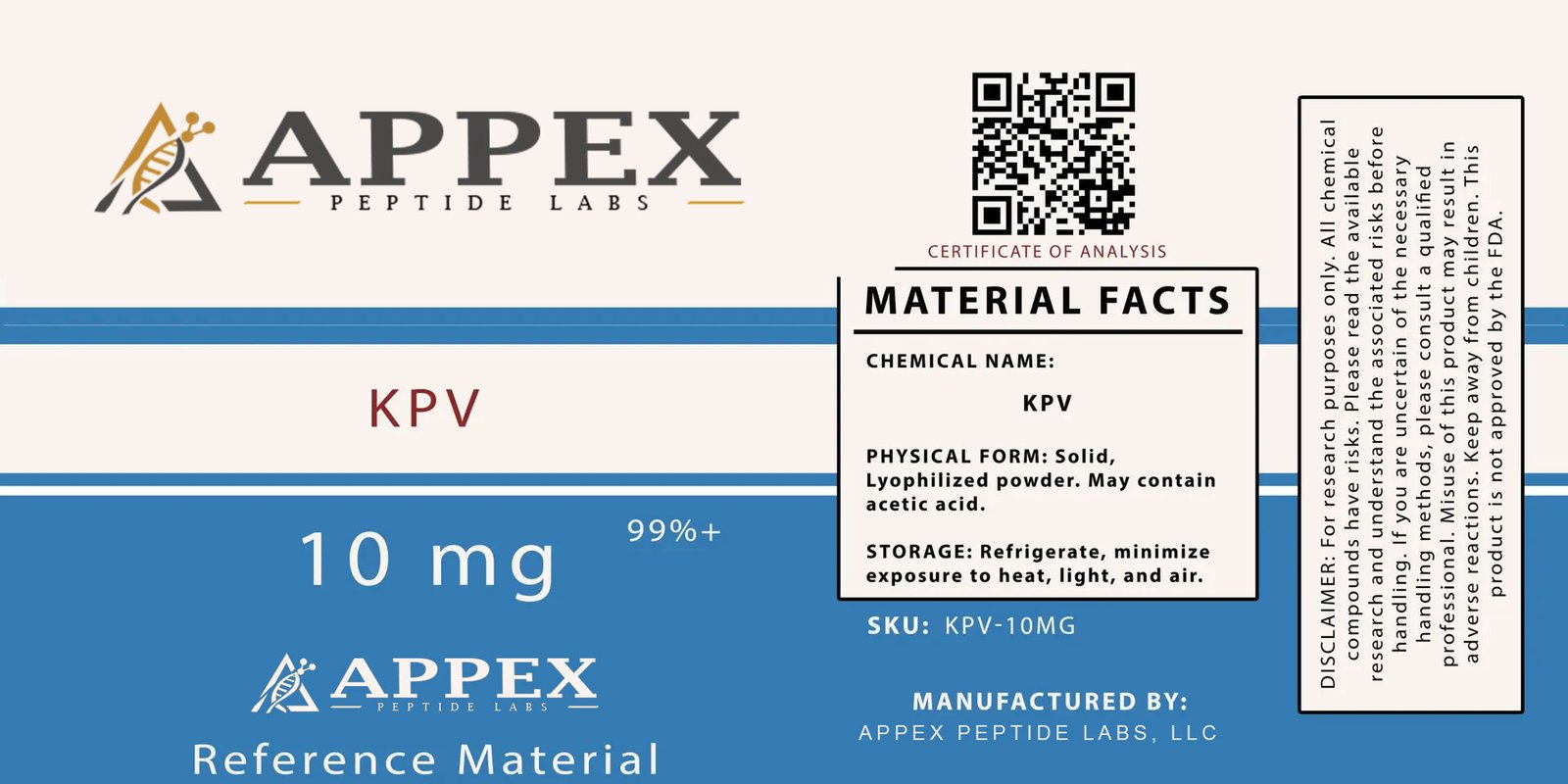

KPV Peptide (Lys-Pro-Val) is an extensively studied biomolecule in the fields of molecular biology, gastroenterology, and immunology. Derived from the endogenous neuroimmunomodulatory peptide α-MSH, this specific tripeptide sequence retains significant biological activity while lacking the melanotropic pigmentary effects associated with full-length melanocortin agonists.
Researchers utilize KPV Peptide primarily to evaluate its interaction with peptide transporters, its modulation of nuclear transcription factors, and its structural role in preserving cellular membrane architecture.
At Appex Peptide Lab, KPV Peptide is synthesized using advanced solid-phase peptide synthesis (SPPS) protocols followed by multi-stage purification. The resulting lyophilized powder exhibits excellent solubility and stability, making it suitable for diverse experimental media, automated assay platforms, and microfluidic research systems. Its high purity and structural consistency support reproducible laboratory investigations.
Researchers utilize KPV Peptide to investigate epithelial barrier homeostasis using cell monolayer models. Studies commonly measure transepithelial electrical resistance (TEER) and paracellular permeability while examining the localization and expression of tight junction proteins including:
These experimental models evaluate cellular responses under chemically or enzymatically induced stress conditions.
KPV Peptide has been investigated as a substrate for the proton-coupled oligopeptide transporter PepT1 (SLC15A1). Research examines transporter affinity, intracellular uptake, and peptide transport across epithelial membranes, providing insight into the movement of low-molecular-weight peptides independent of classical receptor-mediated pathways.
Laboratory studies employ KPV Peptide to investigate transcriptional regulation within cultured cells. Researchers commonly evaluate changes in expression of genes associated with:
These investigations contribute to understanding intracellular signaling and transcriptional regulation.
Because KPV shares structural similarity with α-MSH while demonstrating distinct biological characteristics, it is frequently used to investigate signaling pathways that may operate independently of classical melanocortin receptors such as MC1R. These studies help researchers explore alternative intracellular and cell-surface signaling mechanisms.
| Parameter | Specification |
|---|---|
| Purity | ≥99.0% (HPLC) |
| Molecular Formula | C₁₆H₂₉N₄O₄⁺ |
| Molecular Weight | 341.43 g/mol |
| CAS Number | 82408-22-8 |
| Appearance | Sterile white lyophilized powder |
| Storage Conditions | Store at -20°C for long-term storage; 2–8°C for short-term storage |
| Solubility | Soluble in sterile water, PBS, and aqueous laboratory buffers |
| Sequence | H-Lys-Pro-Val-OH |
| Available Sizes | 5 mg, 10 mg |
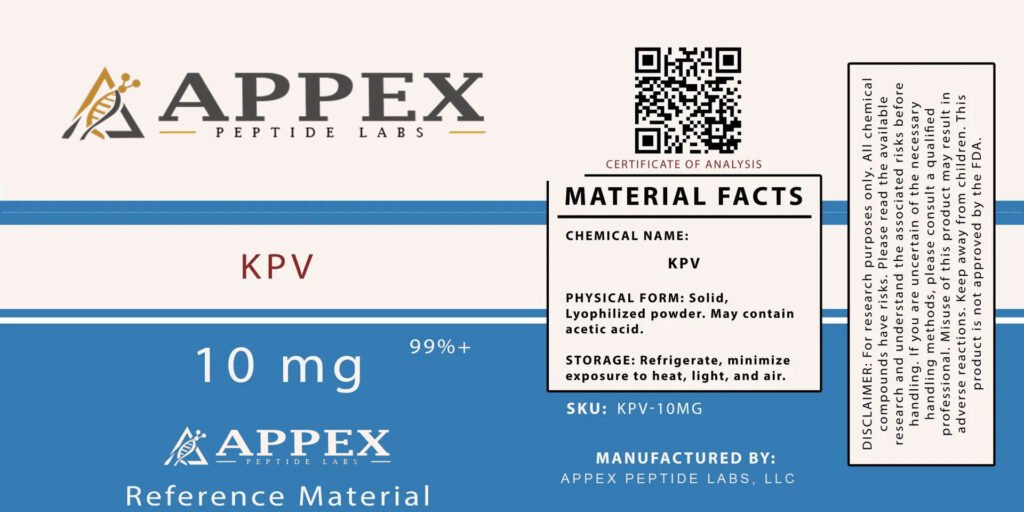
The molecular mechanism of KPV Peptide centers on its intracellular activity and interaction with multiple cellular signaling pathways. Unlike its parent peptide, α-MSH, which primarily exerts biological activity through melanocortin G protein-coupled receptors, KPV has been investigated for biological effects that may occur independently of classical melanocortin receptor activation.
One extensively studied mechanism involves the proton-coupled oligopeptide transporter PepT1 (SLC15A1). Experimental evidence suggests that KPV can be transported into epithelial cells through PepT1, providing researchers with a useful model for studying peptide transport, intracellular trafficking, and transporter-mediated uptake.
Following intracellular localization, laboratory investigations have examined KPV’s influence on the NF-κB signaling pathway. Experimental models suggest that KPV may reduce nuclear translocation of the NF-κB p65 subunit, thereby influencing transcriptional activity associated with NF-κB-responsive genes. The precise molecular interactions underlying these observations continue to be investigated.
Additional research has explored KPV’s effects on mitogen-activated protein kinase (MAPK) signaling, including modulation of p38 MAPK and c-Jun N-terminal kinase (JNK) phosphorylation. These pathways are commonly evaluated in studies examining cellular signaling, transcriptional regulation, oxidative stress responses, and epithelial barrier biology.
Because of its small molecular size and well-characterized tripeptide structure, KPV Peptide remains an important research tool for investigating peptide transport, intracellular signaling, transcription factor regulation, epithelial cell biology, and molecular mechanisms governing cellular homeostasis.
For research use only. Not intended for human consumption or clinical use.
| Size | 10mg, 5mg |
|---|---|
| Dimensions | 9 × 7 × .5 in |
| Weight | .125 lbs |
KPV Peptide (Lys-Pro-Val) is an extensively studied biomolecule in the fields of molecular biology, gastroenterology, and immunology. Derived from the endogenous neuroimmunomodulatory peptide α-MSH, this specific tripeptide sequence retains significant biological activity while lacking the melanotropic pigmentary effects associated with full-length melanocortin agonists.
Researchers utilize KPV Peptide primarily to evaluate its interaction with peptide transporters, its modulation of nuclear transcription factors, and its structural role in preserving cellular membrane architecture.
At Appex Peptide Lab, KPV Peptide is synthesized using advanced solid-phase peptide synthesis (SPPS) protocols followed by multi-stage purification. The resulting lyophilized powder exhibits excellent solubility and stability, making it suitable for diverse experimental media, automated assay platforms, and microfluidic research systems. Its high purity and structural consistency support reproducible laboratory investigations.
Researchers utilize KPV Peptide to investigate epithelial barrier homeostasis using cell monolayer models. Studies commonly measure transepithelial electrical resistance (TEER) and paracellular permeability while examining the localization and expression of tight junction proteins including:
These experimental models evaluate cellular responses under chemically or enzymatically induced stress conditions.
KPV Peptide has been investigated as a substrate for the proton-coupled oligopeptide transporter PepT1 (SLC15A1). Research examines transporter affinity, intracellular uptake, and peptide transport across epithelial membranes, providing insight into the movement of low-molecular-weight peptides independent of classical receptor-mediated pathways.
Laboratory studies employ KPV Peptide to investigate transcriptional regulation within cultured cells. Researchers commonly evaluate changes in expression of genes associated with:
These investigations contribute to understanding intracellular signaling and transcriptional regulation.
Because KPV shares structural similarity with α-MSH while demonstrating distinct biological characteristics, it is frequently used to investigate signaling pathways that may operate independently of classical melanocortin receptors such as MC1R. These studies help researchers explore alternative intracellular and cell-surface signaling mechanisms.
| Parameter | Specification |
|---|---|
| Purity | ≥99.0% (HPLC) |
| Molecular Formula | C₁₆H₂₉N₄O₄⁺ |
| Molecular Weight | 341.43 g/mol |
| CAS Number | 82408-22-8 |
| Appearance | Sterile white lyophilized powder |
| Storage Conditions | Store at -20°C for long-term storage; 2–8°C for short-term storage |
| Solubility | Soluble in sterile water, PBS, and aqueous laboratory buffers |
| Sequence | H-Lys-Pro-Val-OH |
| Available Sizes | 5 mg, 10 mg |
The molecular mechanism of KPV Peptide centers on its intracellular activity and interaction with multiple cellular signaling pathways. Unlike its parent peptide, α-MSH, which primarily exerts biological activity through melanocortin G protein-coupled receptors, KPV has been investigated for biological effects that may occur independently of classical melanocortin receptor activation.
One extensively studied mechanism involves the proton-coupled oligopeptide transporter PepT1 (SLC15A1). Experimental evidence suggests that KPV can be transported into epithelial cells through PepT1, providing researchers with a useful model for studying peptide transport, intracellular trafficking, and transporter-mediated uptake.
Following intracellular localization, laboratory investigations have examined KPV’s influence on the NF-κB signaling pathway. Experimental models suggest that KPV may reduce nuclear translocation of the NF-κB p65 subunit, thereby influencing transcriptional activity associated with NF-κB-responsive genes. The precise molecular interactions underlying these observations continue to be investigated.
Additional research has explored KPV’s effects on mitogen-activated protein kinase (MAPK) signaling, including modulation of p38 MAPK and c-Jun N-terminal kinase (JNK) phosphorylation. These pathways are commonly evaluated in studies examining cellular signaling, transcriptional regulation, oxidative stress responses, and epithelial barrier biology.
Because of its small molecular size and well-characterized tripeptide structure, KPV Peptide remains an important research tool for investigating peptide transport, intracellular signaling, transcription factor regulation, epithelial cell biology, and molecular mechanisms governing cellular homeostasis.
For research use only. Not intended for human consumption or clinical use.
| Size | 10mg, 5mg |
|---|---|
| Dimensions | 9 × 7 × .5 in |
| Weight | .125 lbs |