Bulk Orders. Better Value.
Research institutions, universities and clinical teams qualify for volume discounts. Contact our team to discuss custom formulations and bulk pricing.

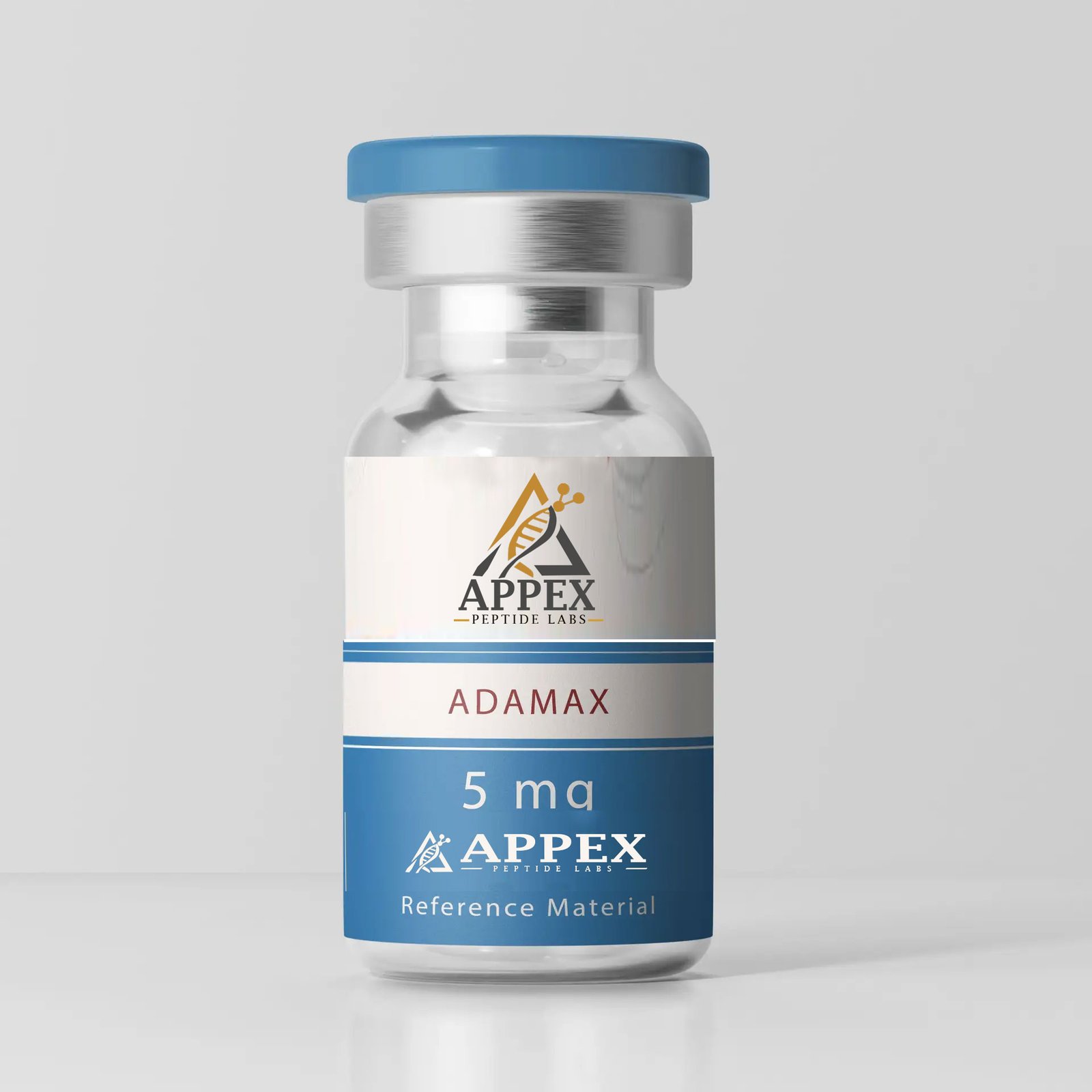


Adamax Peptide is an advanced synthetic peptide developed from the Semax molecular framework through incorporation of an adamantane moiety, a modification designed to enhance lipophilicity and improve resistance to enzymatic degradation under experimental conditions. This structural optimization has made Adamax an increasingly valuable research tool for laboratories investigating peptide transport, receptor signaling, and neurobiological molecular mechanisms.
Scientific literature has examined Adamax Peptide in studies involving neurotrophic signaling pathways, neuronal differentiation, synaptic communication, intracellular protein phosphorylation, and cellular stress-response mechanisms. Particular attention has focused on its relationship with brain-derived neurotrophic factor (BDNF), tropomyosin receptor kinase B (TrkB), hepatocyte growth factor (HGF), and c-Met receptor signaling in controlled laboratory models.
Its enhanced molecular stability compared with parent Semax analogs allows investigators to evaluate peptide-receptor interactions and downstream signaling with improved experimental consistency. The peptide is commonly incorporated into in vitro cellular assays, molecular pharmacology research, and preclinical neuroscience investigations exploring peptide-mediated regulation of neuronal signaling networks.
Manufactured to rigorous research standards, Adamax Peptide is supplied as a highly purified lyophilized powder suitable for analytical, biochemical, and molecular biology applications requiring reproducible laboratory-grade materials.
For research use only. Not intended for human consumption or clinical use.
Adamax Peptide is extensively investigated for its influence on brain-derived neurotrophic factor signaling and the molecular regulation of neuronal communication within experimental laboratory systems.
Researchers employ Adamax to examine receptor activation dynamics, downstream intracellular signaling, and peptide-mediated modulation of TrkB-associated biological pathways.
The peptide serves as a valuable research tool for studying molecular events involved in synaptic remodeling, dendritic spine formation, and neuronal connectivity.
Laboratory investigations evaluate Adamax within hepatocyte growth factor and c-Met receptor signaling models to better understand peptide-regulated intracellular communication.
Adamax Peptide supports investigations involving peptide stability, receptor selectivity, pharmacodynamic characterization, and structure-function relationships.
Researchers utilize Adamax in experimental models examining neuronal differentiation, intracellular signaling proteins, oxidative stress responses, and peptide-mediated cellular adaptation.
| Specification | Details |
|---|---|
| Product Name | Adamax Peptide |
| Purity | ≥99% (HPLC) |
| Molecular Formula | Proprietary peptide analog |
| Molecular Weight | Manufacturer-specific |
| CAS Number | Not available |
| Appearance | White to off-white lyophilized powder |
| Sequence | Ac-Met-Glu-His-Phe-Pro-Gly-Pro-Adamantane-NH₂* |
| Solubility | Soluble in sterile laboratory-grade water and appropriate research buffers |
| Storage Conditions | Store lyophilized at -20°C. After reconstitution, aliquot and minimize repeated freeze-thaw cycles. |
| Available Sizes | 5 mg, 10 mg |
*Sequence representation reflects the modified Semax-derived research analog supplied by the manufacturer.

Adamax Peptide is a synthetic peptide engineered from the Semax molecular scaffold through incorporation of an adamantane functional group that increases lipophilicity and improves resistance to enzymatic degradation. This structural modification has attracted interest in laboratory research because it enables investigators to evaluate peptide stability, molecular transport, receptor interactions, and intracellular signaling under controlled experimental conditions.
Current preclinical research indicates that Adamax Peptide influences multiple neurotrophic signaling networks involved in neuronal communication and cellular adaptation. One of the primary areas of investigation involves modulation of brain-derived neurotrophic factor (BDNF), an important signaling protein that regulates neuronal differentiation, synaptic remodeling, and intracellular communication. Experimental models have explored how Adamax affects BDNF expression and subsequent activation of the tropomyosin receptor kinase B (TrkB), leading to downstream phosphorylation events that regulate multiple intracellular signaling cascades.
Activation of TrkB has been associated with stimulation of phosphoinositide 3-kinase (PI3K)/Akt and mitogen-activated protein kinase (MAPK)/ERK pathways. These signaling networks coordinate transcription factor activity, protein synthesis, mitochondrial function, cytoskeletal organization, and intracellular communication. Laboratory studies have also investigated cyclic AMP response element-binding protein (CREB) phosphorylation, a transcription factor involved in regulation of genes associated with neuronal signaling and synaptic plasticity.
Additional research has examined Adamax Peptide in relation to hepatocyte growth factor (HGF) and c-Met receptor signaling. Activation of this pathway has been investigated for its role in regulating intracellular kinase activity, cytoskeletal remodeling, and cellular communication mechanisms within experimental neuronal systems. Researchers continue to evaluate how these molecular interactions integrate with established neurotrophic signaling pathways.
The adamantane modification is also believed to enhance physicochemical properties by increasing membrane permeability and improving metabolic stability relative to unmodified peptide analogs. These characteristics allow researchers to investigate prolonged peptide-receptor interactions and more sustained intracellular signaling within laboratory models.
Ongoing studies continue to characterize Adamax Peptide through molecular biology, peptide chemistry, receptor pharmacology, and cellular neuroscience research. Its combination of structural stability, modified physicochemical profile, and involvement in neurotrophic signaling has established Adamax Peptide as a valuable experimental tool for investigating peptide-mediated cellular communication and intracellular signaling pathways.
For research use only. Not intended for human consumption or clinical use.
| Size | 10mg, 5mg |
|---|---|
| Dimensions | 9 × 7 × .5 in |
| Weight | .125 lbs |
Adamax Peptide is an advanced synthetic peptide developed from the Semax molecular framework through incorporation of an adamantane moiety, a modification designed to enhance lipophilicity and improve resistance to enzymatic degradation under experimental conditions. This structural optimization has made Adamax an increasingly valuable research tool for laboratories investigating peptide transport, receptor signaling, and neurobiological molecular mechanisms.
Scientific literature has examined Adamax Peptide in studies involving neurotrophic signaling pathways, neuronal differentiation, synaptic communication, intracellular protein phosphorylation, and cellular stress-response mechanisms. Particular attention has focused on its relationship with brain-derived neurotrophic factor (BDNF), tropomyosin receptor kinase B (TrkB), hepatocyte growth factor (HGF), and c-Met receptor signaling in controlled laboratory models.
Its enhanced molecular stability compared with parent Semax analogs allows investigators to evaluate peptide-receptor interactions and downstream signaling with improved experimental consistency. The peptide is commonly incorporated into in vitro cellular assays, molecular pharmacology research, and preclinical neuroscience investigations exploring peptide-mediated regulation of neuronal signaling networks.
Manufactured to rigorous research standards, Adamax Peptide is supplied as a highly purified lyophilized powder suitable for analytical, biochemical, and molecular biology applications requiring reproducible laboratory-grade materials.
For research use only. Not intended for human consumption or clinical use.
Adamax Peptide is extensively investigated for its influence on brain-derived neurotrophic factor signaling and the molecular regulation of neuronal communication within experimental laboratory systems.
Researchers employ Adamax to examine receptor activation dynamics, downstream intracellular signaling, and peptide-mediated modulation of TrkB-associated biological pathways.
The peptide serves as a valuable research tool for studying molecular events involved in synaptic remodeling, dendritic spine formation, and neuronal connectivity.
Laboratory investigations evaluate Adamax within hepatocyte growth factor and c-Met receptor signaling models to better understand peptide-regulated intracellular communication.
Adamax Peptide supports investigations involving peptide stability, receptor selectivity, pharmacodynamic characterization, and structure-function relationships.
Researchers utilize Adamax in experimental models examining neuronal differentiation, intracellular signaling proteins, oxidative stress responses, and peptide-mediated cellular adaptation.
| Specification | Details |
|---|---|
| Product Name | Adamax Peptide |
| Purity | ≥99% (HPLC) |
| Molecular Formula | Proprietary peptide analog |
| Molecular Weight | Manufacturer-specific |
| CAS Number | Not available |
| Appearance | White to off-white lyophilized powder |
| Sequence | Ac-Met-Glu-His-Phe-Pro-Gly-Pro-Adamantane-NH₂* |
| Solubility | Soluble in sterile laboratory-grade water and appropriate research buffers |
| Storage Conditions | Store lyophilized at -20°C. After reconstitution, aliquot and minimize repeated freeze-thaw cycles. |
| Available Sizes | 5 mg, 10 mg |
*Sequence representation reflects the modified Semax-derived research analog supplied by the manufacturer.
Adamax Peptide is a synthetic peptide engineered from the Semax molecular scaffold through incorporation of an adamantane functional group that increases lipophilicity and improves resistance to enzymatic degradation. This structural modification has attracted interest in laboratory research because it enables investigators to evaluate peptide stability, molecular transport, receptor interactions, and intracellular signaling under controlled experimental conditions.
Current preclinical research indicates that Adamax Peptide influences multiple neurotrophic signaling networks involved in neuronal communication and cellular adaptation. One of the primary areas of investigation involves modulation of brain-derived neurotrophic factor (BDNF), an important signaling protein that regulates neuronal differentiation, synaptic remodeling, and intracellular communication. Experimental models have explored how Adamax affects BDNF expression and subsequent activation of the tropomyosin receptor kinase B (TrkB), leading to downstream phosphorylation events that regulate multiple intracellular signaling cascades.
Activation of TrkB has been associated with stimulation of phosphoinositide 3-kinase (PI3K)/Akt and mitogen-activated protein kinase (MAPK)/ERK pathways. These signaling networks coordinate transcription factor activity, protein synthesis, mitochondrial function, cytoskeletal organization, and intracellular communication. Laboratory studies have also investigated cyclic AMP response element-binding protein (CREB) phosphorylation, a transcription factor involved in regulation of genes associated with neuronal signaling and synaptic plasticity.
Additional research has examined Adamax Peptide in relation to hepatocyte growth factor (HGF) and c-Met receptor signaling. Activation of this pathway has been investigated for its role in regulating intracellular kinase activity, cytoskeletal remodeling, and cellular communication mechanisms within experimental neuronal systems. Researchers continue to evaluate how these molecular interactions integrate with established neurotrophic signaling pathways.
The adamantane modification is also believed to enhance physicochemical properties by increasing membrane permeability and improving metabolic stability relative to unmodified peptide analogs. These characteristics allow researchers to investigate prolonged peptide-receptor interactions and more sustained intracellular signaling within laboratory models.
Ongoing studies continue to characterize Adamax Peptide through molecular biology, peptide chemistry, receptor pharmacology, and cellular neuroscience research. Its combination of structural stability, modified physicochemical profile, and involvement in neurotrophic signaling has established Adamax Peptide as a valuable experimental tool for investigating peptide-mediated cellular communication and intracellular signaling pathways.
For research use only. Not intended for human consumption or clinical use.
| Size | 10mg, 5mg |
|---|---|
| Dimensions | 9 × 7 × .5 in |
| Weight | .125 lbs |