Bulk Orders. Better Value.
Research institutions, universities and clinical teams qualify for volume discounts. Contact our team to discuss custom formulations and bulk pricing.

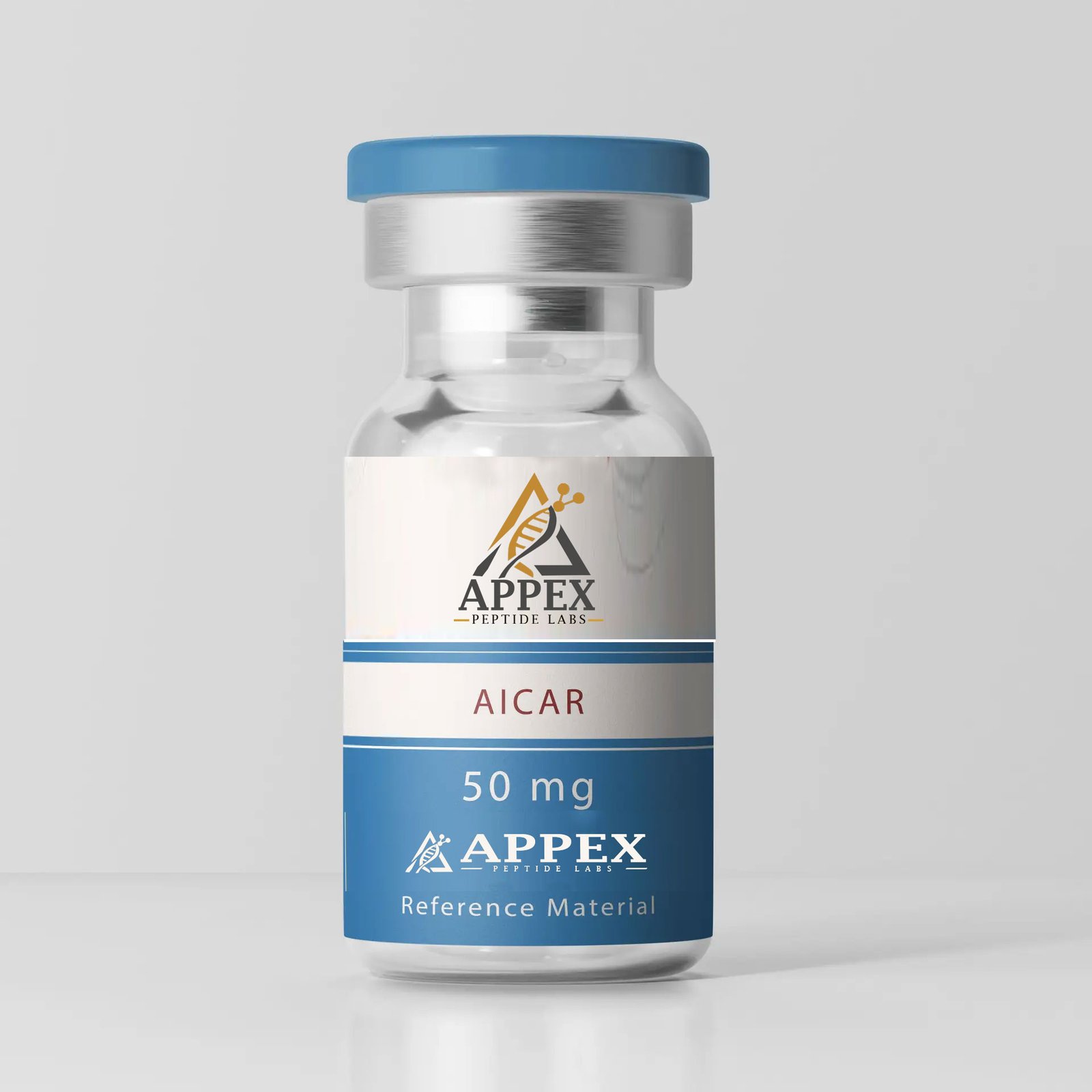
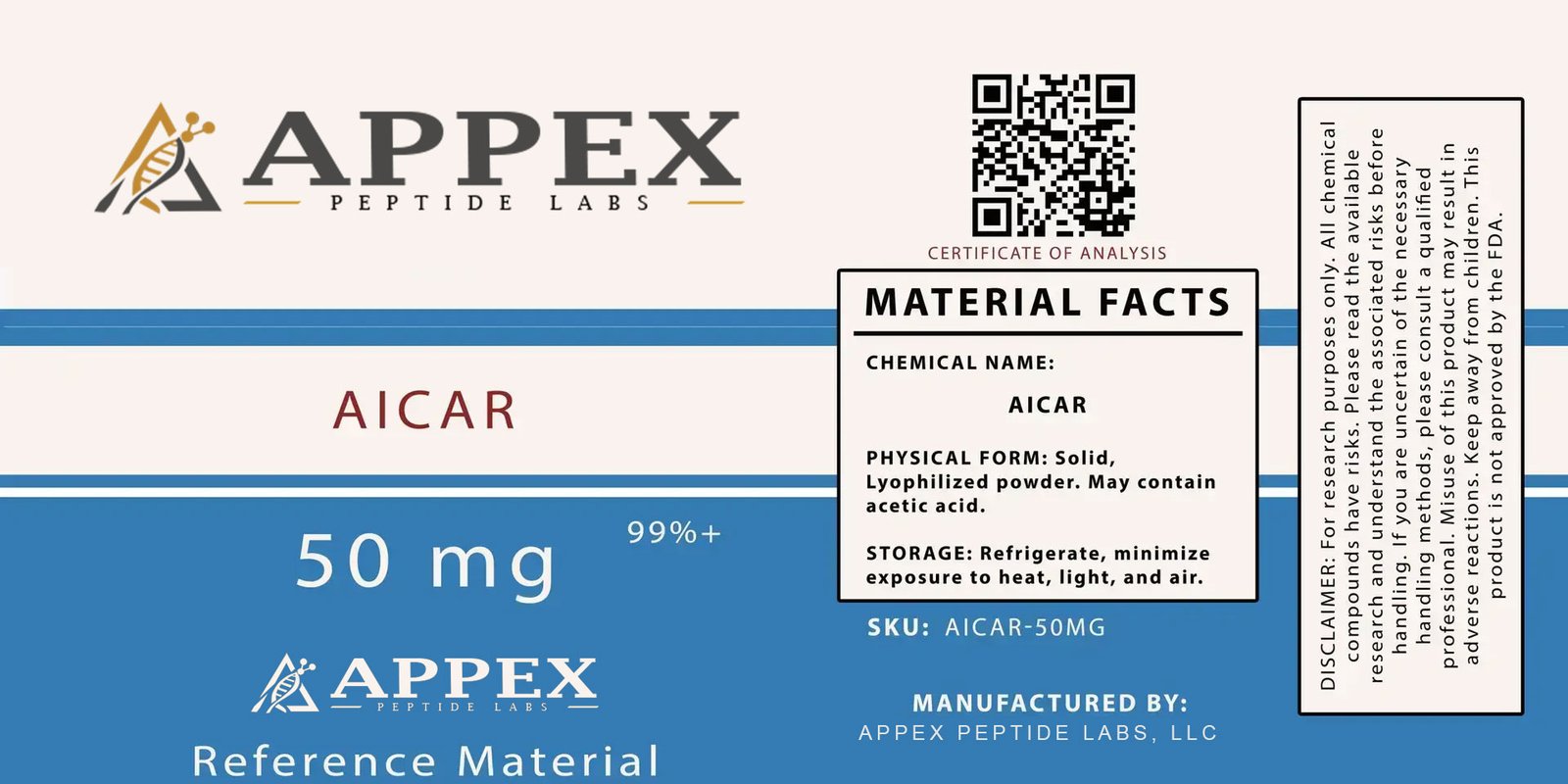

AICAR Peptide is a well-characterized synthetic nucleoside analog that has become one of the most widely used pharmacological tools for studying AMP-activated protein kinase (AMPK), the master regulator of cellular energy homeostasis. After entering cells, AICAR is phosphorylated by adenosine kinase to form ZMP (AICA ribotide), an AMP analog that activates AMPK and initiates downstream metabolic signaling.
Researchers utilize AICAR across multiple scientific disciplines, including molecular biology, metabolism, exercise physiology, oncology, mitochondrial biology, and pharmacology. Experimental investigations frequently examine AMPK-mediated regulation of glucose utilization, lipid metabolism, mitochondrial function, autophagy, transcriptional control, and intracellular energy balance.
Because AICAR activates a highly conserved metabolic signaling network, it is commonly incorporated into studies investigating PGC-1α, mTOR, ACC, ULK1, and other signaling pathways governing mitochondrial adaptation and metabolic regulation. Its predictable mechanism of action and extensive scientific validation have established AICAR as a reference standard for metabolic research.
Every batch is manufactured under rigorous quality-controlled conditions, analytically verified for purity and structural identity, and supplied as a stable research-grade powder with a comprehensive Certificate of Analysis to support reproducible laboratory investigations.
For research use only. Not intended for human consumption or clinical use.
Researchers employ AICAR to investigate activation of AMP-activated protein kinase and downstream signaling pathways involved in cellular energy sensing and metabolic regulation.
AICAR is widely utilized in laboratory studies examining mitochondrial biogenesis, oxidative phosphorylation, ATP production, and mitochondrial adaptation through AMPK-dependent mechanisms.
Experimental models incorporate AICAR to evaluate glucose transport, glycolysis, fatty acid oxidation, acetyl-CoA metabolism, and metabolic flexibility under varying cellular conditions.
Scientists investigate intracellular energy balance, AMP-sensitive signaling networks, metabolic stress responses, and nutrient-sensing pathways using AICAR as a pharmacological research tool.
Researchers utilize AICAR to study compound pharmacodynamics, intracellular metabolism, enzyme activation, signal transduction, and metabolic pathway modulation.
AICAR serves as a valuable experimental reagent for investigations involving metabolic reprogramming, autophagy regulation, transcriptomic analysis, proteomics, and systems-level metabolic network research.
| Specification | Details |
|---|---|
| Product Name | AICAR |
| Synonyms | Acadesine, AICA Riboside, 5-Aminoimidazole-4-carboxamide Ribonucleoside |
| Purity | ≥99% (HPLC Verified) |
| Molecular Formula | C₉H₁₄N₄O₅ |
| Molecular Weight | 258.23 g/mol |
| CAS Number | 2627-69-2 |
| Appearance | White to off-white crystalline powder |
| Solubility | Freely soluble in water and appropriate laboratory-grade aqueous buffers |
| Storage Conditions | Store in a tightly sealed container at 2–8°C in a cool, dry environment protected from moisture and light. |
| Structure | Synthetic nucleoside analog (non-peptide) |
| Available Sizes | 50 mg, 100 mg |
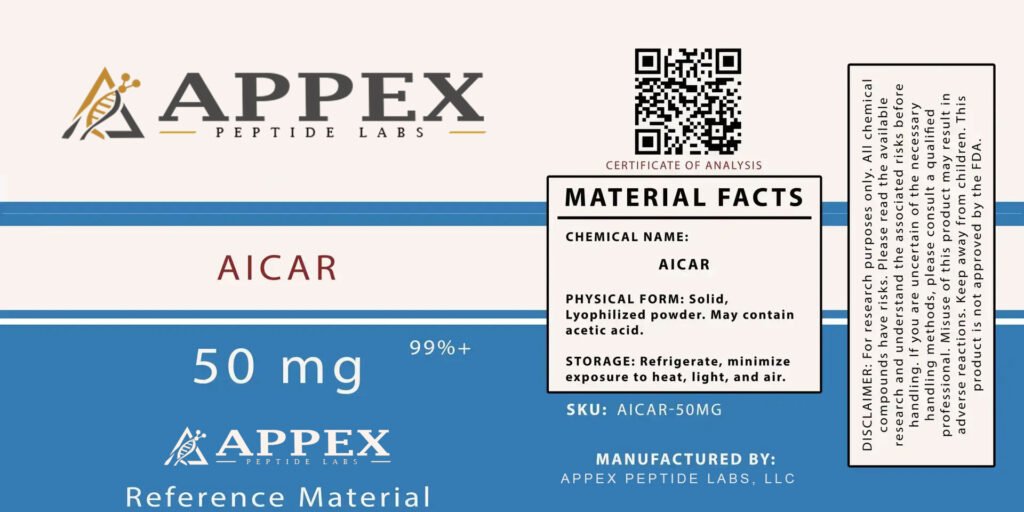
AICAR (Acadesine) is a synthetic nucleoside analog that functions as one of the most extensively characterized pharmacological activators of AMP-activated protein kinase (AMPK). Following cellular uptake through nucleoside transporters, AICAR undergoes intracellular phosphorylation by adenosine kinase to produce 5-aminoimidazole-4-carboxamide ribonucleotide (ZMP). ZMP closely resembles endogenous AMP and serves as an intracellular AMP mimetic, allowing researchers to investigate energy-sensing pathways under controlled laboratory conditions. AICAR Peptide.
Accumulation of ZMP promotes activation of AMPK by enhancing phosphorylation of the catalytic α-subunit at Thr172 by upstream kinases such as liver kinase B1 (LKB1) and, in certain experimental systems, calcium/calmodulin-dependent protein kinase kinase β (CaMKKβ). Activated AMPK functions as a central metabolic regulator by coordinating anabolic and catabolic processes to maintain intracellular energy homeostasis. AICAR Peptide
Once activated, AMPK phosphorylates multiple downstream substrates, including acetyl-CoA carboxylase (ACC), leading to reduced malonyl-CoA production and increased mitochondrial fatty acid transport through enhanced carnitine palmitoyltransferase-1 (CPT-1) activity. Laboratory studies also demonstrate AMPK-mediated inhibition of the mechanistic target of rapamycin (mTOR) signaling pathway, resulting in altered protein synthesis, enhanced autophagic signaling through ULK1, and modulation of cellular growth pathways.
Published research has further examined AICAR-induced activation of PGC-1α, a transcriptional coactivator involved in mitochondrial biogenesis, oxidative metabolism, and metabolic adaptation. Additional investigations explore interactions with glucose transporter (GLUT4) trafficking, glycolytic regulation, oxidative phosphorylation, and transcriptional networks controlling cellular metabolism.
Because AICAR activates a highly conserved intracellular energy-sensing system with well-characterized molecular targets, it remains a gold-standard research compound for metabolic biology, mitochondrial physiology, molecular pharmacology, systems biology, and cellular signaling investigations.
For research use only. Not intended for human consumption or clinical use.
| Size | 100mg, 50mg |
|---|---|
| Dimensions | 9 × 7 × .5 in |
| Weight | .125 lbs |
AICAR Peptide is a well-characterized synthetic nucleoside analog that has become one of the most widely used pharmacological tools for studying AMP-activated protein kinase (AMPK), the master regulator of cellular energy homeostasis. After entering cells, AICAR is phosphorylated by adenosine kinase to form ZMP (AICA ribotide), an AMP analog that activates AMPK and initiates downstream metabolic signaling.
Researchers utilize AICAR across multiple scientific disciplines, including molecular biology, metabolism, exercise physiology, oncology, mitochondrial biology, and pharmacology. Experimental investigations frequently examine AMPK-mediated regulation of glucose utilization, lipid metabolism, mitochondrial function, autophagy, transcriptional control, and intracellular energy balance.
Because AICAR activates a highly conserved metabolic signaling network, it is commonly incorporated into studies investigating PGC-1α, mTOR, ACC, ULK1, and other signaling pathways governing mitochondrial adaptation and metabolic regulation. Its predictable mechanism of action and extensive scientific validation have established AICAR as a reference standard for metabolic research.
Every batch is manufactured under rigorous quality-controlled conditions, analytically verified for purity and structural identity, and supplied as a stable research-grade powder with a comprehensive Certificate of Analysis to support reproducible laboratory investigations.
For research use only. Not intended for human consumption or clinical use.
Researchers employ AICAR to investigate activation of AMP-activated protein kinase and downstream signaling pathways involved in cellular energy sensing and metabolic regulation.
AICAR is widely utilized in laboratory studies examining mitochondrial biogenesis, oxidative phosphorylation, ATP production, and mitochondrial adaptation through AMPK-dependent mechanisms.
Experimental models incorporate AICAR to evaluate glucose transport, glycolysis, fatty acid oxidation, acetyl-CoA metabolism, and metabolic flexibility under varying cellular conditions.
Scientists investigate intracellular energy balance, AMP-sensitive signaling networks, metabolic stress responses, and nutrient-sensing pathways using AICAR as a pharmacological research tool.
Researchers utilize AICAR to study compound pharmacodynamics, intracellular metabolism, enzyme activation, signal transduction, and metabolic pathway modulation.
AICAR serves as a valuable experimental reagent for investigations involving metabolic reprogramming, autophagy regulation, transcriptomic analysis, proteomics, and systems-level metabolic network research.
| Specification | Details |
|---|---|
| Product Name | AICAR |
| Synonyms | Acadesine, AICA Riboside, 5-Aminoimidazole-4-carboxamide Ribonucleoside |
| Purity | ≥99% (HPLC Verified) |
| Molecular Formula | C₉H₁₄N₄O₅ |
| Molecular Weight | 258.23 g/mol |
| CAS Number | 2627-69-2 |
| Appearance | White to off-white crystalline powder |
| Solubility | Freely soluble in water and appropriate laboratory-grade aqueous buffers |
| Storage Conditions | Store in a tightly sealed container at 2–8°C in a cool, dry environment protected from moisture and light. |
| Structure | Synthetic nucleoside analog (non-peptide) |
| Available Sizes | 50 mg, 100 mg |
AICAR (Acadesine) is a synthetic nucleoside analog that functions as one of the most extensively characterized pharmacological activators of AMP-activated protein kinase (AMPK). Following cellular uptake through nucleoside transporters, AICAR undergoes intracellular phosphorylation by adenosine kinase to produce 5-aminoimidazole-4-carboxamide ribonucleotide (ZMP). ZMP closely resembles endogenous AMP and serves as an intracellular AMP mimetic, allowing researchers to investigate energy-sensing pathways under controlled laboratory conditions. AICAR Peptide.
Accumulation of ZMP promotes activation of AMPK by enhancing phosphorylation of the catalytic α-subunit at Thr172 by upstream kinases such as liver kinase B1 (LKB1) and, in certain experimental systems, calcium/calmodulin-dependent protein kinase kinase β (CaMKKβ). Activated AMPK functions as a central metabolic regulator by coordinating anabolic and catabolic processes to maintain intracellular energy homeostasis. AICAR Peptide
Once activated, AMPK phosphorylates multiple downstream substrates, including acetyl-CoA carboxylase (ACC), leading to reduced malonyl-CoA production and increased mitochondrial fatty acid transport through enhanced carnitine palmitoyltransferase-1 (CPT-1) activity. Laboratory studies also demonstrate AMPK-mediated inhibition of the mechanistic target of rapamycin (mTOR) signaling pathway, resulting in altered protein synthesis, enhanced autophagic signaling through ULK1, and modulation of cellular growth pathways.
Published research has further examined AICAR-induced activation of PGC-1α, a transcriptional coactivator involved in mitochondrial biogenesis, oxidative metabolism, and metabolic adaptation. Additional investigations explore interactions with glucose transporter (GLUT4) trafficking, glycolytic regulation, oxidative phosphorylation, and transcriptional networks controlling cellular metabolism.
Because AICAR activates a highly conserved intracellular energy-sensing system with well-characterized molecular targets, it remains a gold-standard research compound for metabolic biology, mitochondrial physiology, molecular pharmacology, systems biology, and cellular signaling investigations.
For research use only. Not intended for human consumption or clinical use.
| Size | 100mg, 50mg |
|---|---|
| Dimensions | 9 × 7 × .5 in |
| Weight | .125 lbs |