Bulk Orders. Better Value.
Research institutions, universities and clinical teams qualify for volume discounts. Contact our team to discuss custom formulations and bulk pricing.

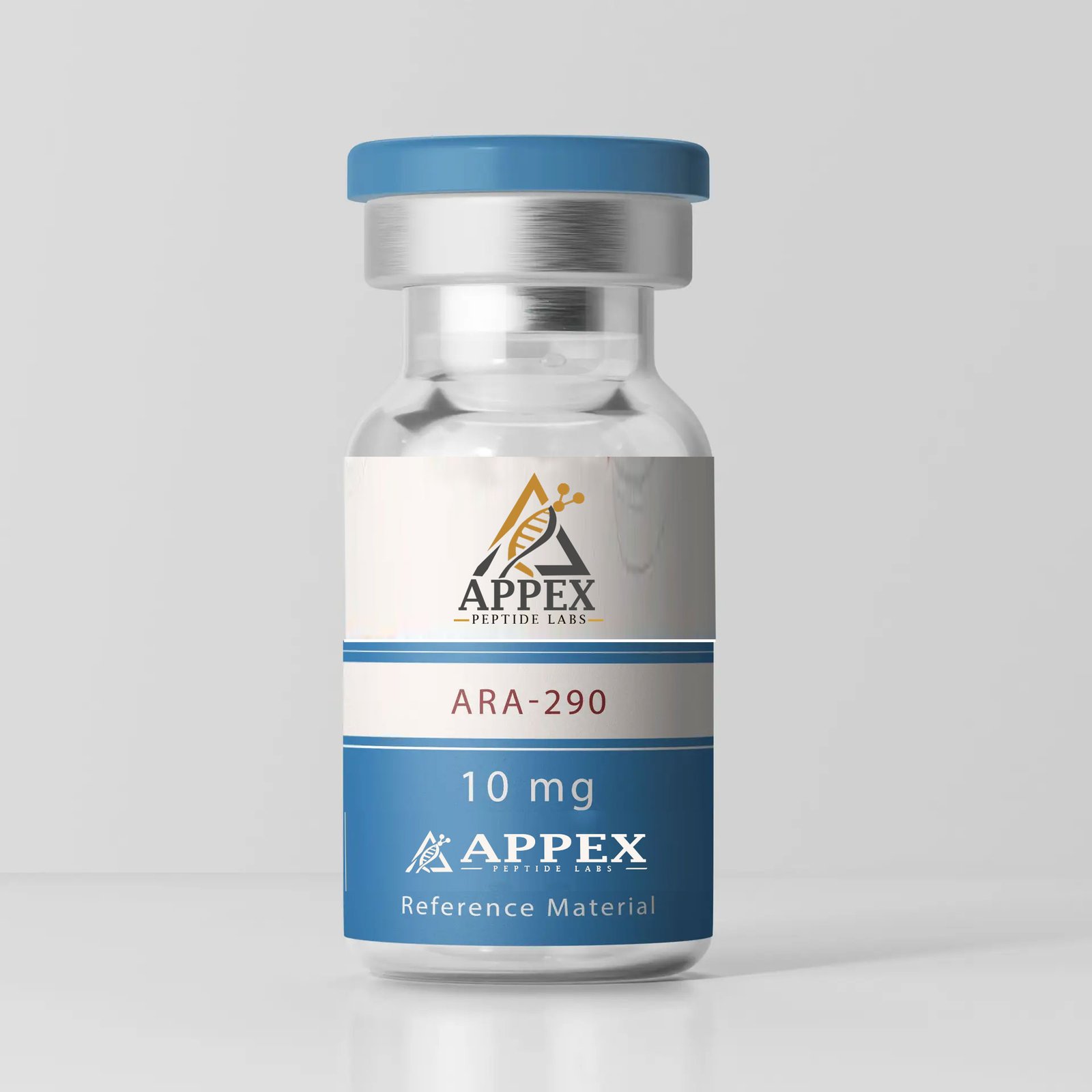



ARA-290 (Cibinetide) Peptide is a synthetic peptide engineered from the helix-B surface of erythropoietin (EPO) while excluding the structural domains responsible for activation of the classical erythropoietin receptor involved in red blood cell production. This selective design enables researchers to investigate non-erythropoietic EPO signaling pathways through activation of the Innate Repair Receptor (IRR), a heteromeric receptor complex composed of the erythropoietin receptor (EPOR) and the β-common receptor (CD131).
Scientific investigations have utilized ARA-290 Peptide in laboratory studies examining receptor pharmacology, intracellular signal transduction, cytokine regulation, oxidative stress responses, mitochondrial function, apoptosis, and mechanisms involved in cellular adaptation to physiological stress. Because it selectively targets IRR-mediated pathways, ARA-290 has become an important experimental reagent for studying tissue-protective signaling independently of erythropoiesis.
Researchers across neuroscience, immunology, molecular pharmacology, regenerative biology, and peptide chemistry continue to investigate ARA-290 using cellular, biochemical, and preclinical models to better understand receptor activation, inflammatory signaling networks, and peptide-mediated communication.
Each batch is synthesized under stringent quality-controlled manufacturing conditions, analytically verified for purity and sequence identity, and supplied as a stable lyophilized peptide with a comprehensive Certificate of Analysis to ensure reproducible laboratory performance.
For research use only. Not intended for human consumption or clinical use.
ARA-290 (Cibinetide) Peptide is extensively utilized in laboratory investigations examining activation of the Innate Repair Receptor (IRR), receptor selectivity, and downstream intracellular signaling mechanisms.
Researchers employ ARA-290 to investigate JAK/STAT signaling, PI3K/Akt activation, MAPK/ERK pathways, transcriptional regulation, and peptide-mediated intracellular communication.
Experimental models utilize ARA-290 to evaluate regulation of inflammatory mediators, cytokine expression, chemokine signaling, and immune-related molecular pathways under controlled laboratory conditions.
Scientists investigate mitochondrial homeostasis, oxidative stress regulation, reactive oxygen species signaling, and cellular bioenergetics using ARA-290 in mechanistic research models.
Laboratory investigations incorporate ARA-290 to examine molecular mechanisms regulating programmed cell death, intracellular stress responses, survival signaling pathways, and cellular adaptation.
Researchers utilize ARA-290 for receptor characterization, peptide stability studies, pharmacodynamic investigations, analytical characterization, and structure-function relationship research.
| Specification | Details |
|---|---|
| Product Name | ARA-290 (Cibinetide) Peptide |
| Synonyms | Cibinetide, ARA-290 |
| Purity | ≥99% (HPLC Verified) |
| Molecular Formula | C₅₁H₈₄N₁₆O₁₈* |
| Molecular Weight | Approximately 1,258.4 g/mol* |
| CAS Number | 1208243-50-8 |
| Sequence | pGlu-Gln-Leu-Glu-Arg-Ala-Leu-Asn-Ser-Ser |
| Appearance | White to off-white lyophilized powder |
| Solubility | Soluble in sterile bacteriostatic water and laboratory-grade aqueous buffers |
| Storage Conditions | Store lyophilized peptide at 2–8°C. For long-term storage, maintain at −20°C in a dry, light-protected environment. Avoid repeated freeze-thaw cycles after reconstitution. |
| Available Sizes | 10 mg |
*Values may vary slightly depending on the counterion (e.g., acetate or TFA salt form).

ARA-290 (Cibinetide) Peptide is a synthetic peptide modeled after the helix-B surface of erythropoietin (EPO) and is specifically engineered to activate the Innate Repair Receptor (IRR) without engaging the homodimeric erythropoietin receptor responsible for erythropoiesis. The IRR consists of a heteromeric receptor complex formed by the erythropoietin receptor (EPOR) and the β-common receptor (CD131). This selective receptor interaction enables researchers to investigate non-erythropoietic EPO signaling while minimizing activation of pathways associated with red blood cell production.
Upon binding to the IRR, ARA-290 initiates intracellular signaling cascades involving Janus kinase 2 (JAK2) activation followed by phosphorylation of Signal Transducer and Activator of Transcription (STAT) proteins, particularly STAT3 and STAT5. These signaling events regulate transcriptional programs involved in cellular adaptation, stress responses, and maintenance of tissue homeostasis within experimental models.
Published laboratory research has also demonstrated activation of phosphatidylinositol 3-kinase (PI3K)/Akt and mitogen-activated protein kinase (MAPK/ERK) pathways following IRR stimulation. These intracellular signaling networks coordinate cellular survival responses, mitochondrial homeostasis, protein synthesis regulation, and modulation of oxidative stress signaling. Researchers continue investigating how these pathways contribute to peptide-mediated cellular communication under controlled laboratory conditions.
Additional investigations have examined ARA-290’s influence on inflammatory signaling pathways involving nuclear factor-kappa B (NF-κB), cytokine regulation, and expression of inflammatory mediators such as tumor necrosis factor-alpha (TNF-α) and interleukin-6 (IL-6). Experimental studies also evaluate interactions with apoptotic signaling proteins, mitochondrial membrane stability, and intracellular redox regulation to better understand mechanisms governing cellular resilience and adaptive responses.
Because ARA-290 selectively activates the Innate Repair Receptor without stimulating classical erythropoietic signaling, it has become an important research reagent for molecular pharmacology, immunology, neuroscience, peptide chemistry, regenerative biology, and biotechnology laboratories investigating receptor biology, intracellular signaling, and cellular homeostasis.
For research use only. Not intended for human consumption or clinical use.
| Size | 10mg |
|---|---|
| Dimensions | 9 × 7 × .5 in |
| Weight | .125 lbs |

ARA-290 (Cibinetide) Peptide is a synthetic peptide engineered from the helix-B surface of erythropoietin (EPO) while excluding the structural domains responsible for activation of the classical erythropoietin receptor involved in red blood cell production. This selective design enables researchers to investigate non-erythropoietic EPO signaling pathways through activation of the Innate Repair Receptor (IRR), a heteromeric receptor complex composed of the erythropoietin receptor (EPOR) and the β-common receptor (CD131).
Scientific investigations have utilized ARA-290 Peptide in laboratory studies examining receptor pharmacology, intracellular signal transduction, cytokine regulation, oxidative stress responses, mitochondrial function, apoptosis, and mechanisms involved in cellular adaptation to physiological stress. Because it selectively targets IRR-mediated pathways, ARA-290 has become an important experimental reagent for studying tissue-protective signaling independently of erythropoiesis.
Researchers across neuroscience, immunology, molecular pharmacology, regenerative biology, and peptide chemistry continue to investigate ARA-290 using cellular, biochemical, and preclinical models to better understand receptor activation, inflammatory signaling networks, and peptide-mediated communication.
Each batch is synthesized under stringent quality-controlled manufacturing conditions, analytically verified for purity and sequence identity, and supplied as a stable lyophilized peptide with a comprehensive Certificate of Analysis to ensure reproducible laboratory performance.
For research use only. Not intended for human consumption or clinical use.
ARA-290 (Cibinetide) Peptide is extensively utilized in laboratory investigations examining activation of the Innate Repair Receptor (IRR), receptor selectivity, and downstream intracellular signaling mechanisms.
Researchers employ ARA-290 to investigate JAK/STAT signaling, PI3K/Akt activation, MAPK/ERK pathways, transcriptional regulation, and peptide-mediated intracellular communication.
Experimental models utilize ARA-290 to evaluate regulation of inflammatory mediators, cytokine expression, chemokine signaling, and immune-related molecular pathways under controlled laboratory conditions.
Scientists investigate mitochondrial homeostasis, oxidative stress regulation, reactive oxygen species signaling, and cellular bioenergetics using ARA-290 in mechanistic research models.
Laboratory investigations incorporate ARA-290 to examine molecular mechanisms regulating programmed cell death, intracellular stress responses, survival signaling pathways, and cellular adaptation.
Researchers utilize ARA-290 for receptor characterization, peptide stability studies, pharmacodynamic investigations, analytical characterization, and structure-function relationship research.
| Specification | Details |
|---|---|
| Product Name | ARA-290 (Cibinetide) Peptide |
| Synonyms | Cibinetide, ARA-290 |
| Purity | ≥99% (HPLC Verified) |
| Molecular Formula | C₅₁H₈₄N₁₆O₁₈* |
| Molecular Weight | Approximately 1,258.4 g/mol* |
| CAS Number | 1208243-50-8 |
| Sequence | pGlu-Gln-Leu-Glu-Arg-Ala-Leu-Asn-Ser-Ser |
| Appearance | White to off-white lyophilized powder |
| Solubility | Soluble in sterile bacteriostatic water and laboratory-grade aqueous buffers |
| Storage Conditions | Store lyophilized peptide at 2–8°C. For long-term storage, maintain at −20°C in a dry, light-protected environment. Avoid repeated freeze-thaw cycles after reconstitution. |
| Available Sizes | 10 mg |
*Values may vary slightly depending on the counterion (e.g., acetate or TFA salt form).
ARA-290 (Cibinetide) Peptide is a synthetic peptide modeled after the helix-B surface of erythropoietin (EPO) and is specifically engineered to activate the Innate Repair Receptor (IRR) without engaging the homodimeric erythropoietin receptor responsible for erythropoiesis. The IRR consists of a heteromeric receptor complex formed by the erythropoietin receptor (EPOR) and the β-common receptor (CD131). This selective receptor interaction enables researchers to investigate non-erythropoietic EPO signaling while minimizing activation of pathways associated with red blood cell production.
Upon binding to the IRR, ARA-290 initiates intracellular signaling cascades involving Janus kinase 2 (JAK2) activation followed by phosphorylation of Signal Transducer and Activator of Transcription (STAT) proteins, particularly STAT3 and STAT5. These signaling events regulate transcriptional programs involved in cellular adaptation, stress responses, and maintenance of tissue homeostasis within experimental models.
Published laboratory research has also demonstrated activation of phosphatidylinositol 3-kinase (PI3K)/Akt and mitogen-activated protein kinase (MAPK/ERK) pathways following IRR stimulation. These intracellular signaling networks coordinate cellular survival responses, mitochondrial homeostasis, protein synthesis regulation, and modulation of oxidative stress signaling. Researchers continue investigating how these pathways contribute to peptide-mediated cellular communication under controlled laboratory conditions.
Additional investigations have examined ARA-290’s influence on inflammatory signaling pathways involving nuclear factor-kappa B (NF-κB), cytokine regulation, and expression of inflammatory mediators such as tumor necrosis factor-alpha (TNF-α) and interleukin-6 (IL-6). Experimental studies also evaluate interactions with apoptotic signaling proteins, mitochondrial membrane stability, and intracellular redox regulation to better understand mechanisms governing cellular resilience and adaptive responses.
Because ARA-290 selectively activates the Innate Repair Receptor without stimulating classical erythropoietic signaling, it has become an important research reagent for molecular pharmacology, immunology, neuroscience, peptide chemistry, regenerative biology, and biotechnology laboratories investigating receptor biology, intracellular signaling, and cellular homeostasis.
For research use only. Not intended for human consumption or clinical use.
| Size | 10mg |
|---|---|
| Dimensions | 9 × 7 × .5 in |
| Weight | .125 lbs |