Bulk Orders. Better Value.
Research institutions, universities and clinical teams qualify for volume discounts. Contact our team to discuss custom formulations and bulk pricing.

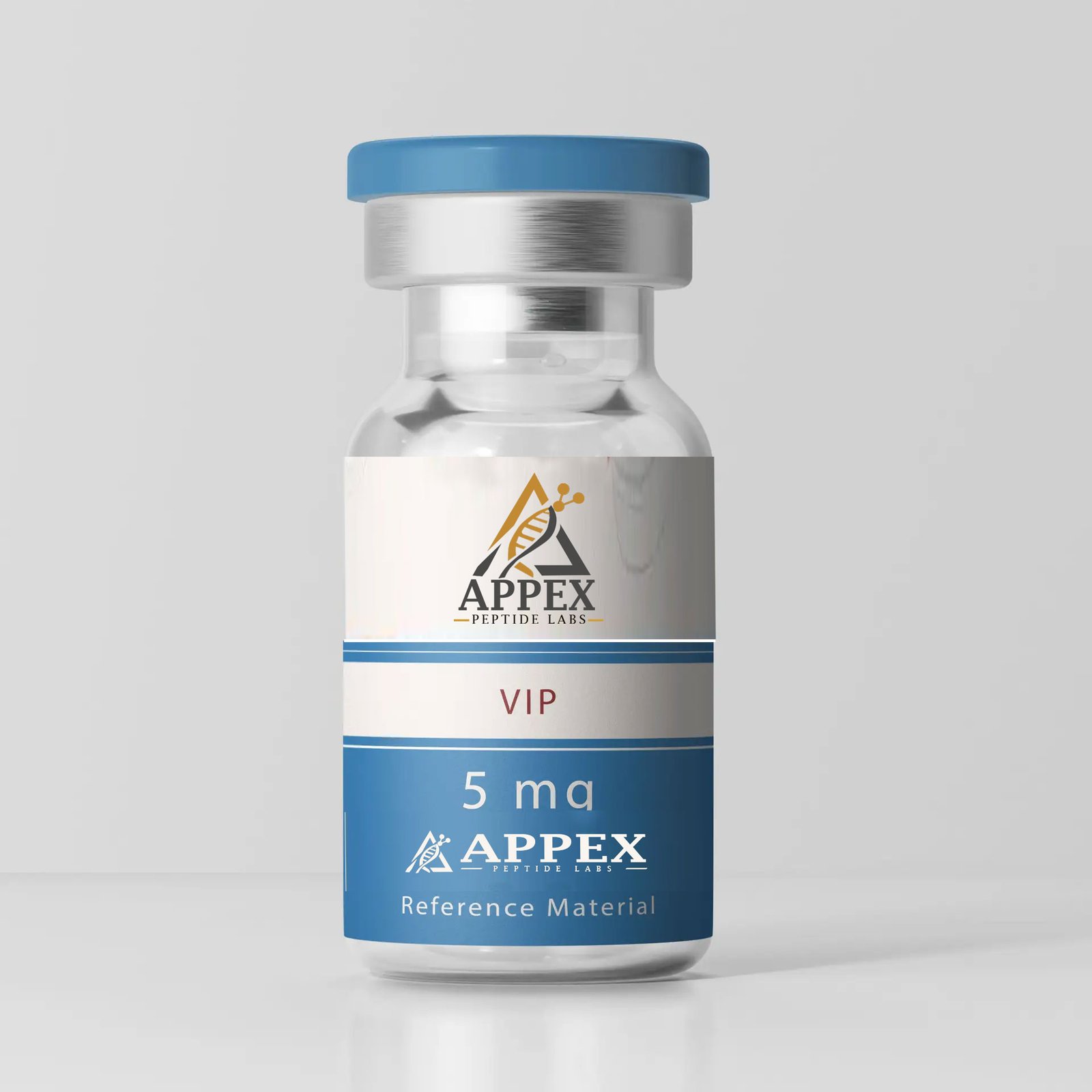
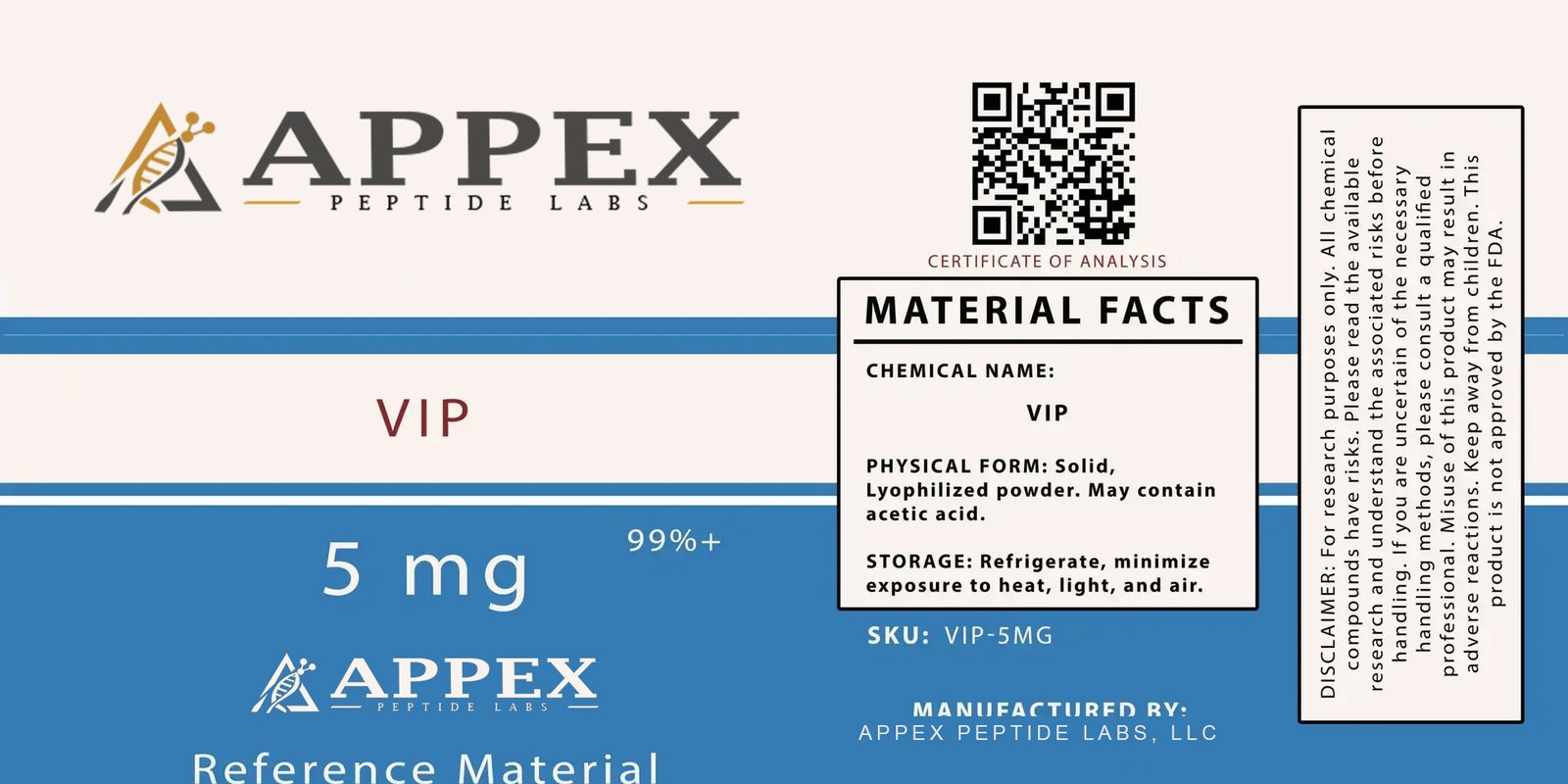

VIP Peptide (Vasoactive Intestinal Peptide) is a naturally occurring neuropeptide belonging to the secretin/glucagon peptide family and is broadly distributed throughout the central nervous system, peripheral nervous system, gastrointestinal tract, respiratory system, and immune tissues. Since its discovery in 1970, VIP has become one of the most extensively investigated neuropeptides in receptor biology and neuroendocrine research.
Scientific investigations utilize VIP Peptide to examine VPAC1 and VPAC2 receptor activation, G protein-coupled receptor (GPCR) signaling, cyclic AMP production, neurotransmission, smooth muscle regulation, epithelial secretion, circadian rhythm biology, and cellular communication. Laboratory studies also investigate its interactions with immune cells, inflammatory mediators, neuronal survival pathways, and intracellular transcriptional networks.
Beyond neuroscience, VIP Peptide is incorporated into molecular endocrinology, pulmonary biology, gastrointestinal physiology, peptide pharmacology, and biotechnology research. Its highly conserved amino acid sequence and well-characterized receptor pharmacology make it a valuable experimental reagent for universities, biotechnology companies, pharmaceutical organizations, and life science laboratories investigating peptide-mediated signaling.
Each batch is synthesized under rigorous quality-controlled manufacturing procedures, analytically verified for purity and sequence identity, and supplied as a stable lyophilized peptide accompanied by a comprehensive Certificate of Analysis to ensure reproducible laboratory investigations.
For research use only. Not intended for human consumption or clinical use.
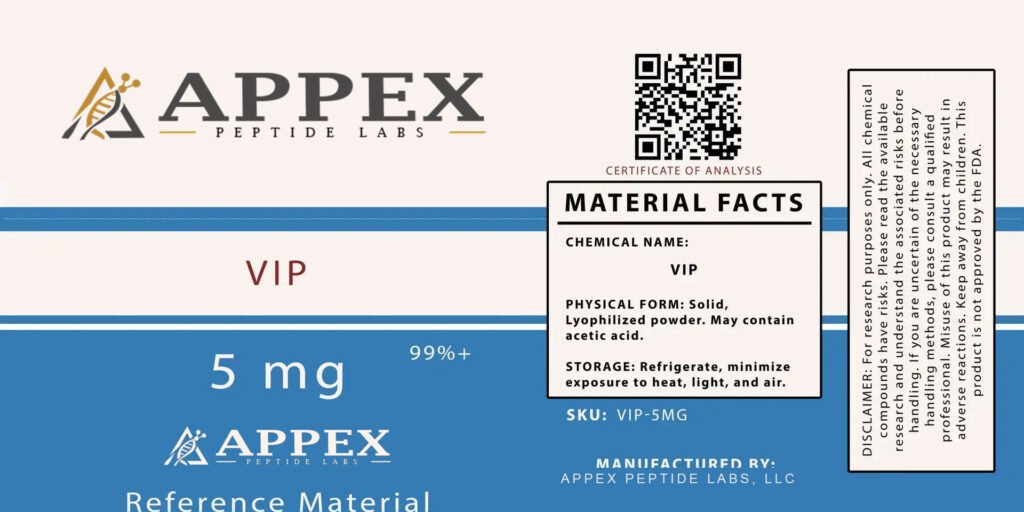
VIP Peptide is extensively utilized in laboratory investigations examining VPAC1 and VPAC2 receptor activation, receptor pharmacology, ligand binding kinetics, receptor trafficking, and G protein-coupled receptor signaling.
Researchers employ VIP Peptide to investigate neuronal communication, neurotransmitter regulation, hypothalamic signaling, circadian rhythm mechanisms, and neuropeptide-mediated intracellular signaling.
Experimental models utilize VIP Peptide to study smooth muscle regulation, epithelial secretion, intestinal motility, enteric nervous system signaling, and gastrointestinal cellular communication.
Scientists investigate VIP-mediated immune signaling, cytokine regulation, leukocyte communication, inflammatory signaling pathways, dendritic cell biology, and T-cell signaling under controlled laboratory conditions.
Laboratory investigations incorporate VIP Peptide into studies examining airway smooth muscle physiology, vascular signaling, endothelial communication, and receptor-mediated cellular responses.
Researchers utilize VIP Peptide for analytical characterization, receptor selectivity studies, peptide stability investigations, structure-function analysis, and formulation development.
| Specification | Details |
|---|---|
| Product Name | VIP Peptide (Vasoactive Intestinal Peptide) |
| Synonyms | VIP, Vasoactive Intestinal Peptide |
| Purity | ≥99% (HPLC Verified) |
| Molecular Formula | C₁₄₇H₂₃₆N₄₄O₄₂S |
| Molecular Weight | 3,326.90 g/mol |
| CAS Number | 40077-57-4 |
| Sequence | His-Ser-Asp-Ala-Val-Phe-Thr-Asp-Asn-Tyr-Thr-Arg-Leu-Arg-Lys-Gln-Met-Ala-Val-Lys-Lys-Tyr-Leu-Asn-Ser-Ile-Leu-Asn-NH₂ |
| Appearance | White to off-white lyophilized powder |
| Solubility | Soluble in sterile bacteriostatic water and laboratory-grade aqueous buffers |
| Storage Conditions | Store lyophilized peptide at 2–8°C. For long-term storage, maintain at −20°C in a dry, light-protected environment. Avoid repeated freeze-thaw cycles after reconstitution. |
| Available Sizes | 5 mg, 10 mg |
VIP Peptide (Vasoactive Intestinal Peptide) is an endogenous 28-amino-acid neuropeptide that functions primarily through activation of the VPAC1 and VPAC2 receptors, two Class B G protein-coupled receptors (GPCRs) expressed throughout the nervous system, gastrointestinal tract, respiratory tissues, vascular endothelium, and numerous immune cell populations. These receptors mediate a broad range of intracellular signaling events that regulate cellular communication and physiological homeostasis in experimental models.
Upon binding to VPAC receptors, VIP predominantly activates Gs proteins, stimulating adenylyl cyclase and increasing intracellular cyclic adenosine monophosphate (cAMP) concentrations. Elevated cAMP activates protein kinase A (PKA), which phosphorylates downstream targets including cAMP response element-binding protein (CREB). Researchers investigate this signaling cascade because it regulates transcriptional activity, ion transport, cellular secretion, neuronal signaling, and smooth muscle physiology.
Experimental investigations have also demonstrated activation of additional intracellular pathways including MAPK/ERK, PI3K/Akt, and calcium-dependent signaling networks. These pathways influence gene expression, cellular differentiation, mitochondrial function, oxidative stress responses, and intracellular communication. VIP-mediated signaling has further been examined in relation to nitric oxide production, endothelial function, and smooth muscle relaxation using molecular biology and receptor pharmacology models.
Laboratory studies continue to investigate VIP interactions with immune cells, including T lymphocytes, macrophages, dendritic cells, and microglia, where VPAC receptor activation influences cytokine signaling, transcription factor activity, and immune cell communication. Researchers also explore VIP-mediated regulation of circadian rhythm signaling within the suprachiasmatic nucleus, neuronal survival pathways, and neuropeptide interactions that coordinate central and peripheral signaling networks.
Because of its highly conserved structure, selective receptor pharmacology, and well-characterized intracellular signaling profile, VIP Peptide remains an essential research reagent for neurobiology, immunology, gastroenterology, pulmonary biology, receptor pharmacology, peptide chemistry, biotechnology, and life science laboratories investigating peptide-mediated cellular communication.
For research use only. Not intended for human consumption or clinical use.
| Size | 10mg, 5mg |
|---|---|
| Dimensions | 9 × 7 × .5 in |
| Weight | .125 lbs |
VIP Peptide (Vasoactive Intestinal Peptide) is a naturally occurring neuropeptide belonging to the secretin/glucagon peptide family and is broadly distributed throughout the central nervous system, peripheral nervous system, gastrointestinal tract, respiratory system, and immune tissues. Since its discovery in 1970, VIP has become one of the most extensively investigated neuropeptides in receptor biology and neuroendocrine research.
Scientific investigations utilize VIP Peptide to examine VPAC1 and VPAC2 receptor activation, G protein-coupled receptor (GPCR) signaling, cyclic AMP production, neurotransmission, smooth muscle regulation, epithelial secretion, circadian rhythm biology, and cellular communication. Laboratory studies also investigate its interactions with immune cells, inflammatory mediators, neuronal survival pathways, and intracellular transcriptional networks.
Beyond neuroscience, VIP Peptide is incorporated into molecular endocrinology, pulmonary biology, gastrointestinal physiology, peptide pharmacology, and biotechnology research. Its highly conserved amino acid sequence and well-characterized receptor pharmacology make it a valuable experimental reagent for universities, biotechnology companies, pharmaceutical organizations, and life science laboratories investigating peptide-mediated signaling.
Each batch is synthesized under rigorous quality-controlled manufacturing procedures, analytically verified for purity and sequence identity, and supplied as a stable lyophilized peptide accompanied by a comprehensive Certificate of Analysis to ensure reproducible laboratory investigations.
For research use only. Not intended for human consumption or clinical use.
VIP Peptide is extensively utilized in laboratory investigations examining VPAC1 and VPAC2 receptor activation, receptor pharmacology, ligand binding kinetics, receptor trafficking, and G protein-coupled receptor signaling.
Researchers employ VIP Peptide to investigate neuronal communication, neurotransmitter regulation, hypothalamic signaling, circadian rhythm mechanisms, and neuropeptide-mediated intracellular signaling.
Experimental models utilize VIP Peptide to study smooth muscle regulation, epithelial secretion, intestinal motility, enteric nervous system signaling, and gastrointestinal cellular communication.
Scientists investigate VIP-mediated immune signaling, cytokine regulation, leukocyte communication, inflammatory signaling pathways, dendritic cell biology, and T-cell signaling under controlled laboratory conditions.
Laboratory investigations incorporate VIP Peptide into studies examining airway smooth muscle physiology, vascular signaling, endothelial communication, and receptor-mediated cellular responses.
Researchers utilize VIP Peptide for analytical characterization, receptor selectivity studies, peptide stability investigations, structure-function analysis, and formulation development.
| Specification | Details |
|---|---|
| Product Name | VIP Peptide (Vasoactive Intestinal Peptide) |
| Synonyms | VIP, Vasoactive Intestinal Peptide |
| Purity | ≥99% (HPLC Verified) |
| Molecular Formula | C₁₄₇H₂₃₆N₄₄O₄₂S |
| Molecular Weight | 3,326.90 g/mol |
| CAS Number | 40077-57-4 |
| Sequence | His-Ser-Asp-Ala-Val-Phe-Thr-Asp-Asn-Tyr-Thr-Arg-Leu-Arg-Lys-Gln-Met-Ala-Val-Lys-Lys-Tyr-Leu-Asn-Ser-Ile-Leu-Asn-NH₂ |
| Appearance | White to off-white lyophilized powder |
| Solubility | Soluble in sterile bacteriostatic water and laboratory-grade aqueous buffers |
| Storage Conditions | Store lyophilized peptide at 2–8°C. For long-term storage, maintain at −20°C in a dry, light-protected environment. Avoid repeated freeze-thaw cycles after reconstitution. |
| Available Sizes | 5 mg, 10 mg |
VIP Peptide (Vasoactive Intestinal Peptide) is an endogenous 28-amino-acid neuropeptide that functions primarily through activation of the VPAC1 and VPAC2 receptors, two Class B G protein-coupled receptors (GPCRs) expressed throughout the nervous system, gastrointestinal tract, respiratory tissues, vascular endothelium, and numerous immune cell populations. These receptors mediate a broad range of intracellular signaling events that regulate cellular communication and physiological homeostasis in experimental models.
Upon binding to VPAC receptors, VIP predominantly activates Gs proteins, stimulating adenylyl cyclase and increasing intracellular cyclic adenosine monophosphate (cAMP) concentrations. Elevated cAMP activates protein kinase A (PKA), which phosphorylates downstream targets including cAMP response element-binding protein (CREB). Researchers investigate this signaling cascade because it regulates transcriptional activity, ion transport, cellular secretion, neuronal signaling, and smooth muscle physiology.
Experimental investigations have also demonstrated activation of additional intracellular pathways including MAPK/ERK, PI3K/Akt, and calcium-dependent signaling networks. These pathways influence gene expression, cellular differentiation, mitochondrial function, oxidative stress responses, and intracellular communication. VIP-mediated signaling has further been examined in relation to nitric oxide production, endothelial function, and smooth muscle relaxation using molecular biology and receptor pharmacology models.
Laboratory studies continue to investigate VIP interactions with immune cells, including T lymphocytes, macrophages, dendritic cells, and microglia, where VPAC receptor activation influences cytokine signaling, transcription factor activity, and immune cell communication. Researchers also explore VIP-mediated regulation of circadian rhythm signaling within the suprachiasmatic nucleus, neuronal survival pathways, and neuropeptide interactions that coordinate central and peripheral signaling networks.
Because of its highly conserved structure, selective receptor pharmacology, and well-characterized intracellular signaling profile, VIP Peptide remains an essential research reagent for neurobiology, immunology, gastroenterology, pulmonary biology, receptor pharmacology, peptide chemistry, biotechnology, and life science laboratories investigating peptide-mediated cellular communication.
For research use only. Not intended for human consumption or clinical use.
| Size | 10mg, 5mg |
|---|---|
| Dimensions | 9 × 7 × .5 in |
| Weight | .125 lbs |