Bulk Orders. Better Value.
Research institutions, universities and clinical teams qualify for volume discounts. Contact our team to discuss custom formulations and bulk pricing.

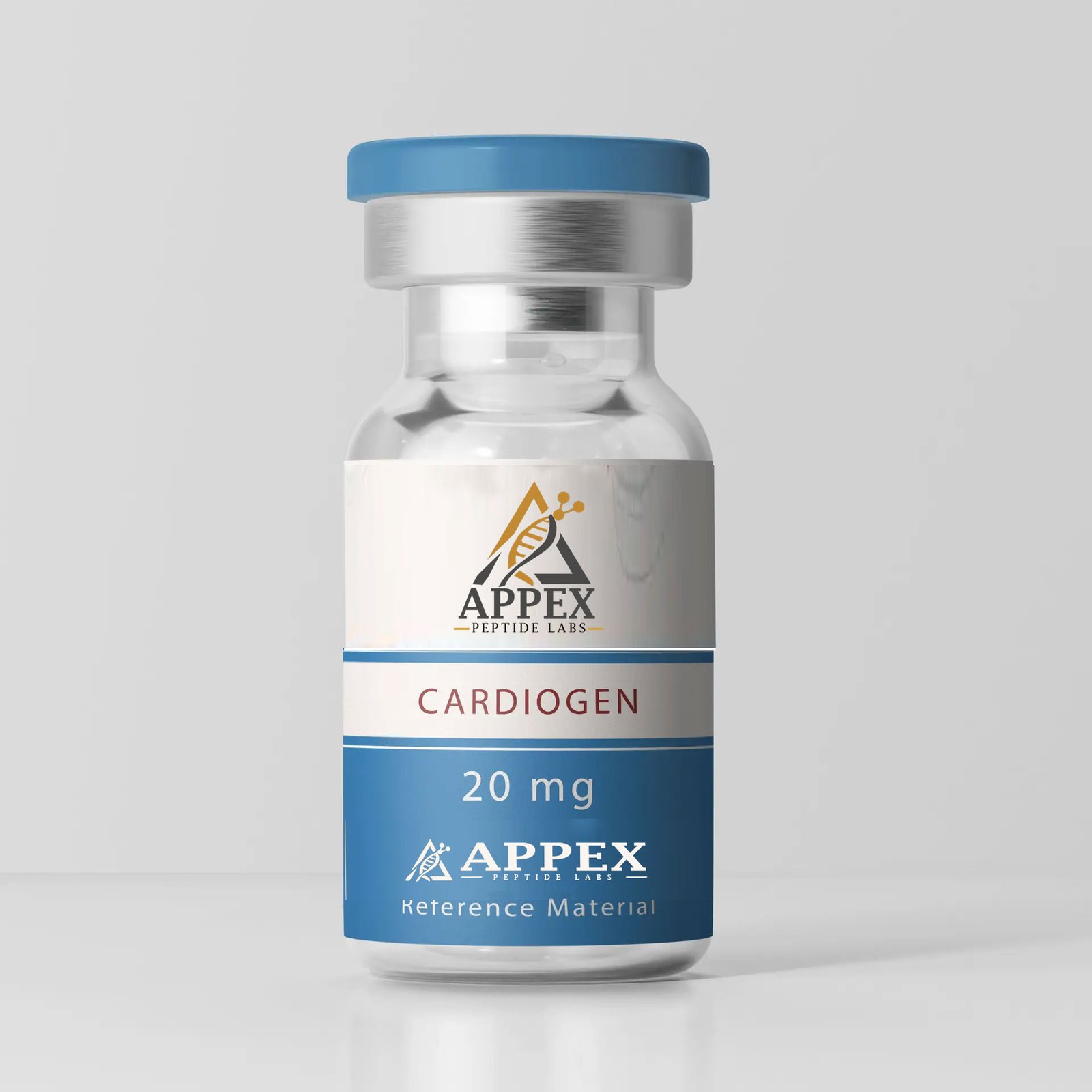

Cardiogen Peptide is a research-grade synthetic tetrapeptide belonging to the family of short peptide bioregulators investigated for their interactions with gene regulatory mechanisms and cellular signaling networks. The peptide has attracted scientific interest due to experimental studies examining its influence on transcriptional activity, myocardial cell biology, extracellular matrix regulation, and protein synthesis within cardiovascular research models.
Unlike receptor-specific peptide agonists, Cardiogen Peptide is primarily investigated as a molecular regulator capable of influencing intracellular processes associated with gene expression, nuclear signaling, and cellular homeostasis. Laboratory investigations have explored its interactions with cardiomyocytes, cardiac fibroblasts, and other cardiovascular cell populations to better understand mechanisms governing tissue organization and cellular communication.
Researchers employ Cardiogen Peptide across molecular biology, cardiovascular physiology, regenerative biology, epigenetics, and cellular pharmacology. It is commonly incorporated into experimental systems designed to investigate myocardial tissue remodeling, transcriptional regulation, mitochondrial function, and extracellular matrix organization under controlled laboratory conditions.
Appex Peptide Lab supplies high-purity research-grade Cardiogen Peptide manufactured under stringent quality control standards with comprehensive analytical verification to ensure reproducible scientific outcomes.
For research use only. Not intended for human consumption or clinical use.

Cardiogen Peptide is widely utilized to investigate molecular mechanisms regulating cardiomyocyte physiology, cellular communication, intracellular signaling, and myocardial tissue organization.
Researchers employ Cardiogen Peptide to examine transcriptional regulation, chromatin-associated molecular events, epigenetic mechanisms, and gene expression patterns within cardiovascular cell models.
The peptide supports investigations involving fibroblast biology, extracellular matrix remodeling, collagen-associated signaling, and tissue architecture under controlled laboratory conditions.
Cardiogen Peptide is incorporated into laboratory studies evaluating translational regulation, cellular protein production, metabolic adaptation, and intracellular biosynthetic pathways.
Suitable for in vitro experiments utilizing cardiomyocytes, cardiac fibroblasts, stem cell-derived cardiac cells, and other cardiovascular research systems to investigate molecular signaling mechanisms.
Biotechnology and pharmaceutical laboratories utilize Cardiogen Peptide for mechanistic pathway analysis, peptide bioregulator investigations, molecular pharmacology, and cardiovascular assay development.
| Specification | Details |
|---|---|
| Purity | ≥99% (HPLC verified) |
| Molecular Formula | C₁₉H₃₂N₆O₁₀ |
| Molecular Weight | Approximately 504.49 g/mol |
| CAS Number | Not assigned |
| Appearance | White to off-white lyophilized powder |
| Storage Conditions | Store at -20°C in a dry environment. Following reconstitution, aliquot according to validated laboratory protocols and avoid repeated freeze-thaw cycles. |
| Solubility | Soluble in sterile laboratory-grade water or appropriate aqueous research buffers |
| Sequence | Ala-Glu-Asp-Arg (AEDR) |
| Available Sizes | 5 mg, 10 mg (availability may vary) |
Cardiogen Peptide is a synthetic tetrapeptide bioregulator composed of the amino acid sequence Ala-Glu-Asp-Arg (AEDR). Unlike conventional receptor-selective peptide agonists or antagonists, Cardiogen Peptide has been investigated in laboratory research for its potential role in modulating intracellular gene expression and cellular regulatory networks associated with cardiovascular tissue biology. Current evidence is derived primarily from preclinical and experimental studies, and its precise molecular mechanism continues to be investigated.
Research involving short peptide bioregulators suggests that peptides such as Cardiogen may interact with chromatin-associated proteins, DNA regulatory regions, or nuclear protein complexes that influence transcriptional activity. Experimental models have examined how Cardiogen Peptide affects expression of genes involved in cellular metabolism, structural protein synthesis, extracellular matrix organization, and myocardial cellular homeostasis. These investigations provide researchers with a framework for studying peptide-mediated regulation of gene transcription without directly activating classical membrane-bound receptors.
In cultured cardiac cell models, Cardiogen Peptide has been evaluated for its influence on cardiomyocyte proliferation, fibroblast activity, and protein synthesis pathways. Laboratory investigations also examine intracellular signaling networks associated with cellular differentiation, mitochondrial bioenergetics, metabolic adaptation, and maintenance of myocardial structural integrity. These studies enable researchers to characterize coordinated molecular responses under experimentally controlled conditions.
Experimental evidence further suggests that Cardiogen Peptide may influence signaling pathways involved in cell cycle regulation, apoptosis-associated molecular markers, and extracellular matrix remodeling. Researchers frequently evaluate changes in transcription factor activity, structural protein expression, collagen-associated signaling, and interactions between cardiomyocytes and cardiac fibroblasts to better understand tissue organization and intercellular communication.
Modern molecular biology laboratories employ Cardiogen Peptide in investigations involving epigenetic regulation, transcriptomic analysis, proteomics, cell signaling, mitochondrial function, and systems biology approaches. Because of its relatively small molecular size and well-defined amino acid sequence, the peptide serves as a useful experimental tool for studying peptide-mediated regulation of gene expression and cellular physiology within cardiovascular research models.
Ongoing preclinical investigations continue to expand scientific understanding of Cardiogen Peptide’s molecular interactions, intracellular signaling mechanisms, and regulatory effects on cardiac-associated cellular processes. These studies contribute to broader knowledge of peptide bioregulators and their potential roles in fundamental cardiovascular biology.
For research use only. Not intended for human consumption or clinical use.
| Size | 20mg |
|---|---|
| Dimensions | 9 × 7 × .5 in |
| Weight | .125 lbs |
Cardiogen Peptide is a research-grade synthetic tetrapeptide belonging to the family of short peptide bioregulators investigated for their interactions with gene regulatory mechanisms and cellular signaling networks. The peptide has attracted scientific interest due to experimental studies examining its influence on transcriptional activity, myocardial cell biology, extracellular matrix regulation, and protein synthesis within cardiovascular research models.
Unlike receptor-specific peptide agonists, Cardiogen Peptide is primarily investigated as a molecular regulator capable of influencing intracellular processes associated with gene expression, nuclear signaling, and cellular homeostasis. Laboratory investigations have explored its interactions with cardiomyocytes, cardiac fibroblasts, and other cardiovascular cell populations to better understand mechanisms governing tissue organization and cellular communication.
Researchers employ Cardiogen Peptide across molecular biology, cardiovascular physiology, regenerative biology, epigenetics, and cellular pharmacology. It is commonly incorporated into experimental systems designed to investigate myocardial tissue remodeling, transcriptional regulation, mitochondrial function, and extracellular matrix organization under controlled laboratory conditions.
Appex Peptide Lab supplies high-purity research-grade Cardiogen Peptide manufactured under stringent quality control standards with comprehensive analytical verification to ensure reproducible scientific outcomes.
For research use only. Not intended for human consumption or clinical use.
Cardiogen Peptide is widely utilized to investigate molecular mechanisms regulating cardiomyocyte physiology, cellular communication, intracellular signaling, and myocardial tissue organization.
Researchers employ Cardiogen Peptide to examine transcriptional regulation, chromatin-associated molecular events, epigenetic mechanisms, and gene expression patterns within cardiovascular cell models.
The peptide supports investigations involving fibroblast biology, extracellular matrix remodeling, collagen-associated signaling, and tissue architecture under controlled laboratory conditions.
Cardiogen Peptide is incorporated into laboratory studies evaluating translational regulation, cellular protein production, metabolic adaptation, and intracellular biosynthetic pathways.
Suitable for in vitro experiments utilizing cardiomyocytes, cardiac fibroblasts, stem cell-derived cardiac cells, and other cardiovascular research systems to investigate molecular signaling mechanisms.
Biotechnology and pharmaceutical laboratories utilize Cardiogen Peptide for mechanistic pathway analysis, peptide bioregulator investigations, molecular pharmacology, and cardiovascular assay development.
| Specification | Details |
|---|---|
| Purity | ≥99% (HPLC verified) |
| Molecular Formula | C₁₉H₃₂N₆O₁₀ |
| Molecular Weight | Approximately 504.49 g/mol |
| CAS Number | Not assigned |
| Appearance | White to off-white lyophilized powder |
| Storage Conditions | Store at -20°C in a dry environment. Following reconstitution, aliquot according to validated laboratory protocols and avoid repeated freeze-thaw cycles. |
| Solubility | Soluble in sterile laboratory-grade water or appropriate aqueous research buffers |
| Sequence | Ala-Glu-Asp-Arg (AEDR) |
| Available Sizes | 5 mg, 10 mg (availability may vary) |
Cardiogen Peptide is a synthetic tetrapeptide bioregulator composed of the amino acid sequence Ala-Glu-Asp-Arg (AEDR). Unlike conventional receptor-selective peptide agonists or antagonists, Cardiogen Peptide has been investigated in laboratory research for its potential role in modulating intracellular gene expression and cellular regulatory networks associated with cardiovascular tissue biology. Current evidence is derived primarily from preclinical and experimental studies, and its precise molecular mechanism continues to be investigated.
Research involving short peptide bioregulators suggests that peptides such as Cardiogen may interact with chromatin-associated proteins, DNA regulatory regions, or nuclear protein complexes that influence transcriptional activity. Experimental models have examined how Cardiogen Peptide affects expression of genes involved in cellular metabolism, structural protein synthesis, extracellular matrix organization, and myocardial cellular homeostasis. These investigations provide researchers with a framework for studying peptide-mediated regulation of gene transcription without directly activating classical membrane-bound receptors.
In cultured cardiac cell models, Cardiogen Peptide has been evaluated for its influence on cardiomyocyte proliferation, fibroblast activity, and protein synthesis pathways. Laboratory investigations also examine intracellular signaling networks associated with cellular differentiation, mitochondrial bioenergetics, metabolic adaptation, and maintenance of myocardial structural integrity. These studies enable researchers to characterize coordinated molecular responses under experimentally controlled conditions.
Experimental evidence further suggests that Cardiogen Peptide may influence signaling pathways involved in cell cycle regulation, apoptosis-associated molecular markers, and extracellular matrix remodeling. Researchers frequently evaluate changes in transcription factor activity, structural protein expression, collagen-associated signaling, and interactions between cardiomyocytes and cardiac fibroblasts to better understand tissue organization and intercellular communication.
Modern molecular biology laboratories employ Cardiogen Peptide in investigations involving epigenetic regulation, transcriptomic analysis, proteomics, cell signaling, mitochondrial function, and systems biology approaches. Because of its relatively small molecular size and well-defined amino acid sequence, the peptide serves as a useful experimental tool for studying peptide-mediated regulation of gene expression and cellular physiology within cardiovascular research models.
Ongoing preclinical investigations continue to expand scientific understanding of Cardiogen Peptide’s molecular interactions, intracellular signaling mechanisms, and regulatory effects on cardiac-associated cellular processes. These studies contribute to broader knowledge of peptide bioregulators and their potential roles in fundamental cardiovascular biology.
For research use only. Not intended for human consumption or clinical use.
| Size | 20mg |
|---|---|
| Dimensions | 9 × 7 × .5 in |
| Weight | .125 lbs |