Bulk Orders. Better Value.
Research institutions, universities and clinical teams qualify for volume discounts. Contact our team to discuss custom formulations and bulk pricing.

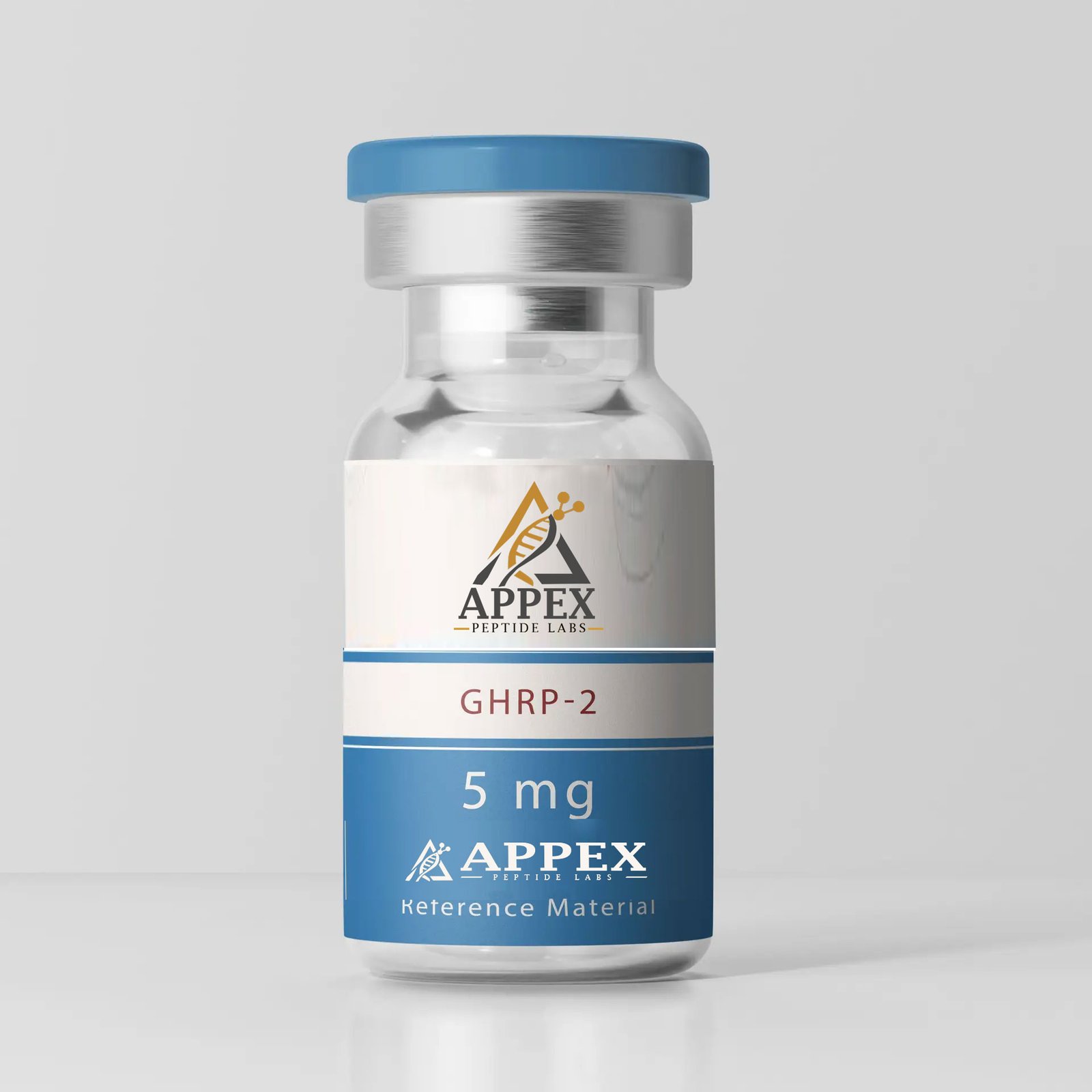
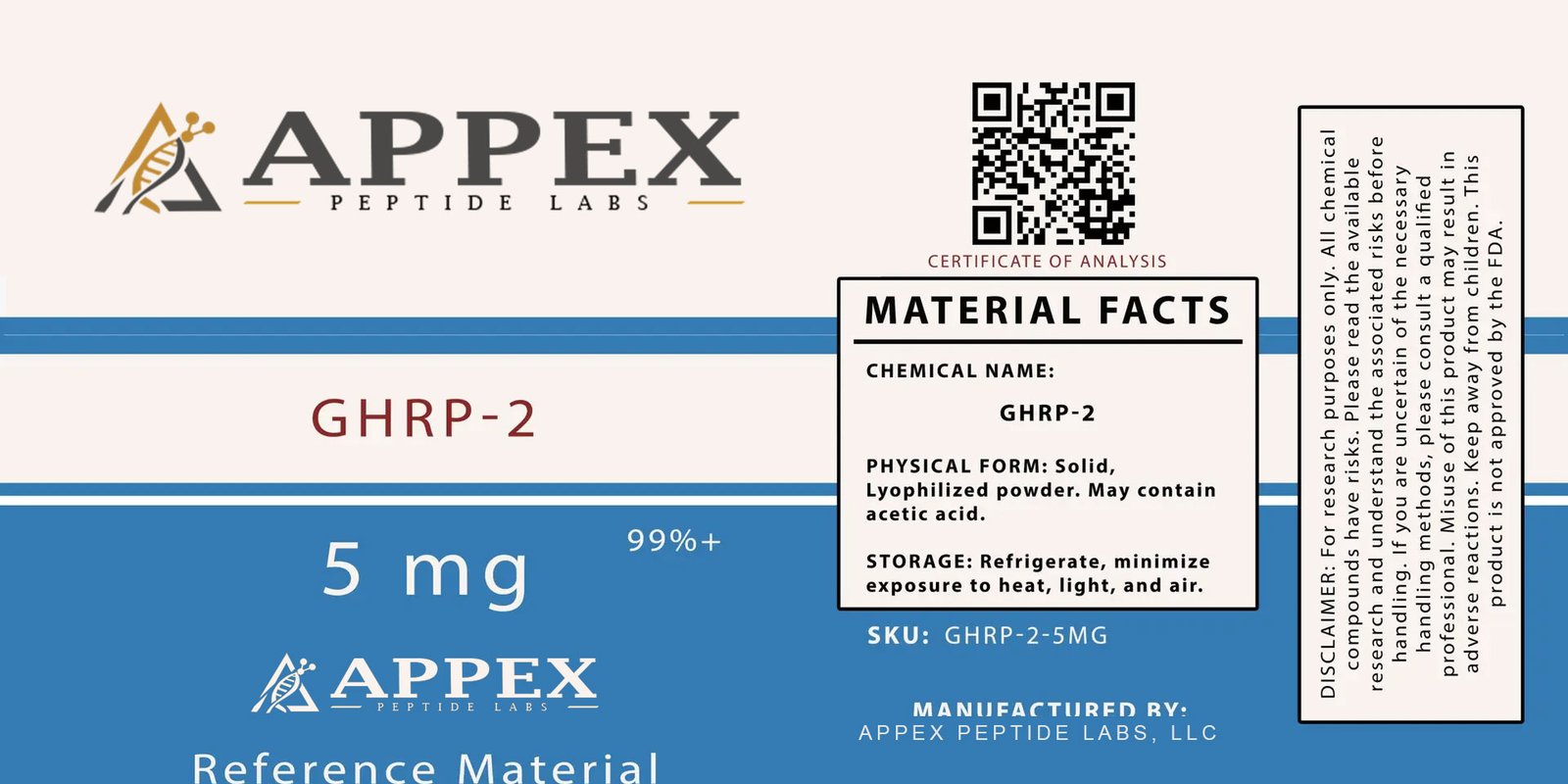

GHRP-2 Peptide is a synthetic growth hormone secretagogue consisting of the amino acid sequence D-Ala-D-(β-naphthyl)-Ala-Ala-Trp-D-Phe-Lys-NH₂. Developed as a second-generation member of the GHRP family, it has been extensively characterized in scientific literature for its selective interaction with the growth hormone secretagogue receptor type 1a (GHS-R1a), commonly known as the ghrelin receptor.
In laboratory settings, GHRP-2 Peptide is frequently employed to investigate receptor activation, intracellular signaling cascades, endocrine regulation, ligand-receptor kinetics, and peptide structure-function relationships. Its reproducible pharmacological characteristics make it an important reference compound for comparative studies involving other synthetic secretagogues and endogenous ghrelin signaling.
Researchers utilize GHRP-2 Peptide in receptor-binding assays, molecular biology experiments, cell culture models, and pharmacological investigations designed to evaluate peptide-mediated signal transduction and endocrine communication. The peptide’s extensive scientific documentation supports its continued use across academic institutions, biotechnology organizations, and pharmaceutical research laboratories.
Appex Peptide Lab provides high-purity research-grade GHRP-2 Peptide manufactured under strict quality control procedures and accompanied by comprehensive analytical documentation for dependable laboratory performance.
For research use only. Not intended for human consumption or clinical use.
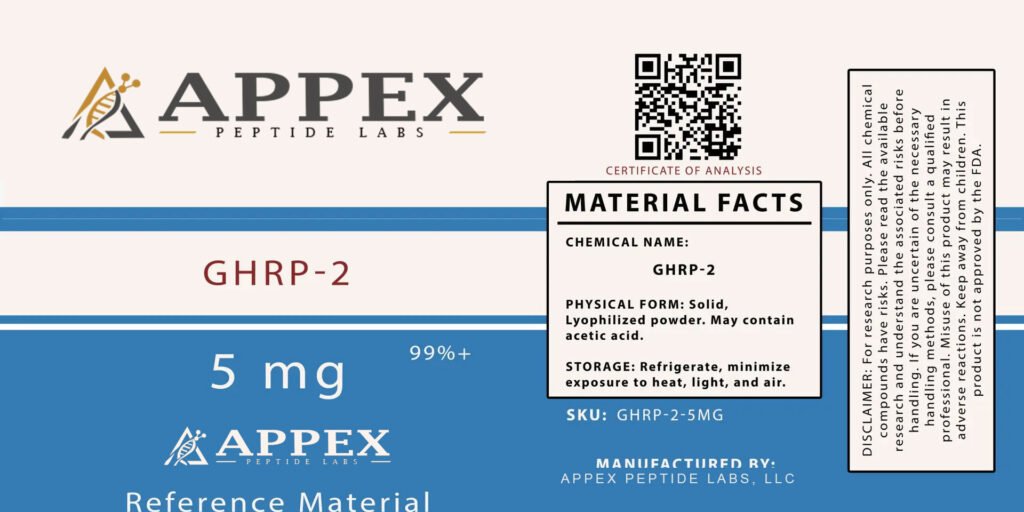
GHRP-2 Peptide is widely used to investigate receptor activation, ligand affinity, receptor internalization, and downstream signaling mechanisms associated with the growth hormone secretagogue receptor.
Researchers utilize GHRP-2 Peptide to study hormonal communication, neuropeptide regulation, pituitary signaling, and endocrine network interactions under controlled laboratory conditions.
The peptide supports investigations involving phospholipase C activation, phosphoinositide metabolism, intracellular calcium mobilization, protein kinase C signaling, and MAPK pathway regulation.
GHRP-2 Peptide is frequently incorporated into studies evaluating receptor kinetics, agonist potency, ligand specificity, peptide-receptor interactions, and comparative pharmacological profiling.
Suitable for in vitro experiments using recombinant cell systems and endocrine-derived cell lines to characterize receptor-mediated cellular responses and downstream molecular events.
Biotechnology and pharmaceutical laboratories employ GHRP-2 Peptide during assay development, receptor screening, compound validation, and peptide characterization programs.
| Specification | Details |
|---|---|
| Purity | ≥99% (HPLC verified) |
| Molecular Formula | C₄₅H₅₅N₉O₆* |
| Molecular Weight | Approximately 817.98 g/mol* |
| CAS Number | 158861-67-7 |
| Appearance | White to off-white lyophilized powder |
| Storage Conditions | Store lyophilized peptide at -20°C. Following reconstitution, store according to validated laboratory protocols and avoid repeated freeze-thaw cycles. |
| Solubility | Soluble in sterile laboratory-grade water or appropriate aqueous research buffer |
| Sequence | D-Ala-D-(β-naphthyl)-Ala-Ala-Trp-D-Phe-Lys-NH₂ |
| Available Sizes | 5 mg, 10 mg, 15 mg |
*Values may vary slightly depending on salt form (e.g., acetate).
GHRP-2 Peptide is a synthetic hexapeptide that functions as a potent agonist of the growth hormone secretagogue receptor type 1a (GHS-R1a), a G protein-coupled receptor naturally activated by the endogenous peptide hormone ghrelin. Owing to its high receptor affinity and reproducible signaling profile, GHRP-2 Peptide is extensively employed in laboratory research investigating endocrine regulation, receptor pharmacology, intracellular signaling, and peptide-receptor interactions.
Upon binding to GHS-R1a, GHRP-2 Peptide primarily activates Gq/11-dependent signaling, stimulating phospholipase C (PLC). PLC hydrolyzes phosphatidylinositol 4,5-bisphosphate (PIP₂), generating the intracellular second messengers inositol 1,4,5-trisphosphate (IP₃) and diacylglycerol (DAG). IP₃ promotes the release of calcium ions from intracellular endoplasmic reticulum stores, while DAG activates protein kinase C (PKC). Together, these signaling events regulate calcium-dependent exocytosis, protein phosphorylation, transcription factor activation, and numerous downstream molecular responses examined in endocrine research.
Experimental studies have also demonstrated activation of additional intracellular signaling pathways including ERK1/2 (MAPK), PI3K/Akt, and calcium/calmodulin-dependent signaling networks. These pathways are investigated for their roles in receptor desensitization, signal amplification, intracellular trafficking, transcriptional regulation, and peptide-mediated cellular communication.
Unlike growth hormone-releasing hormone (GHRH), which predominantly activates the cyclic AMP (cAMP)-protein kinase A (PKA) pathway, GHRP-2 Peptide utilizes phosphoinositide-dependent signaling mechanisms. Researchers frequently compare these distinct receptor systems to understand complementary signaling networks, receptor crosstalk, and integrated endocrine regulation within experimental models.
GHRP-2 Peptide is also widely used in receptor-binding assays, structure-activity relationship studies, ligand affinity analyses, biased agonism research, and investigations of receptor conformational dynamics. Its defined molecular structure and extensive scientific characterization make it a valuable reference compound for modern molecular pharmacology, neuroendocrinology, peptide chemistry, and drug discovery research.
For research use only. Not intended for human consumption or clinical use.
| Size | 10mg, 15mg, 5mg |
|---|---|
| Dimensions | 9 × 7 × .5 in |
| Weight | .125 lbs |
GHRP-2 Peptide is a synthetic growth hormone secretagogue consisting of the amino acid sequence D-Ala-D-(β-naphthyl)-Ala-Ala-Trp-D-Phe-Lys-NH₂. Developed as a second-generation member of the GHRP family, it has been extensively characterized in scientific literature for its selective interaction with the growth hormone secretagogue receptor type 1a (GHS-R1a), commonly known as the ghrelin receptor.
In laboratory settings, GHRP-2 Peptide is frequently employed to investigate receptor activation, intracellular signaling cascades, endocrine regulation, ligand-receptor kinetics, and peptide structure-function relationships. Its reproducible pharmacological characteristics make it an important reference compound for comparative studies involving other synthetic secretagogues and endogenous ghrelin signaling.
Researchers utilize GHRP-2 Peptide in receptor-binding assays, molecular biology experiments, cell culture models, and pharmacological investigations designed to evaluate peptide-mediated signal transduction and endocrine communication. The peptide’s extensive scientific documentation supports its continued use across academic institutions, biotechnology organizations, and pharmaceutical research laboratories.
Appex Peptide Lab provides high-purity research-grade GHRP-2 Peptide manufactured under strict quality control procedures and accompanied by comprehensive analytical documentation for dependable laboratory performance.
For research use only. Not intended for human consumption or clinical use.
GHRP-2 Peptide is widely used to investigate receptor activation, ligand affinity, receptor internalization, and downstream signaling mechanisms associated with the growth hormone secretagogue receptor.
Researchers utilize GHRP-2 Peptide to study hormonal communication, neuropeptide regulation, pituitary signaling, and endocrine network interactions under controlled laboratory conditions.
The peptide supports investigations involving phospholipase C activation, phosphoinositide metabolism, intracellular calcium mobilization, protein kinase C signaling, and MAPK pathway regulation.
GHRP-2 Peptide is frequently incorporated into studies evaluating receptor kinetics, agonist potency, ligand specificity, peptide-receptor interactions, and comparative pharmacological profiling.
Suitable for in vitro experiments using recombinant cell systems and endocrine-derived cell lines to characterize receptor-mediated cellular responses and downstream molecular events.
Biotechnology and pharmaceutical laboratories employ GHRP-2 Peptide during assay development, receptor screening, compound validation, and peptide characterization programs.
| Specification | Details |
|---|---|
| Purity | ≥99% (HPLC verified) |
| Molecular Formula | C₄₅H₅₅N₉O₆* |
| Molecular Weight | Approximately 817.98 g/mol* |
| CAS Number | 158861-67-7 |
| Appearance | White to off-white lyophilized powder |
| Storage Conditions | Store lyophilized peptide at -20°C. Following reconstitution, store according to validated laboratory protocols and avoid repeated freeze-thaw cycles. |
| Solubility | Soluble in sterile laboratory-grade water or appropriate aqueous research buffer |
| Sequence | D-Ala-D-(β-naphthyl)-Ala-Ala-Trp-D-Phe-Lys-NH₂ |
| Available Sizes | 5 mg, 10 mg, 15 mg |
*Values may vary slightly depending on salt form (e.g., acetate).
GHRP-2 Peptide is a synthetic hexapeptide that functions as a potent agonist of the growth hormone secretagogue receptor type 1a (GHS-R1a), a G protein-coupled receptor naturally activated by the endogenous peptide hormone ghrelin. Owing to its high receptor affinity and reproducible signaling profile, GHRP-2 Peptide is extensively employed in laboratory research investigating endocrine regulation, receptor pharmacology, intracellular signaling, and peptide-receptor interactions.
Upon binding to GHS-R1a, GHRP-2 Peptide primarily activates Gq/11-dependent signaling, stimulating phospholipase C (PLC). PLC hydrolyzes phosphatidylinositol 4,5-bisphosphate (PIP₂), generating the intracellular second messengers inositol 1,4,5-trisphosphate (IP₃) and diacylglycerol (DAG). IP₃ promotes the release of calcium ions from intracellular endoplasmic reticulum stores, while DAG activates protein kinase C (PKC). Together, these signaling events regulate calcium-dependent exocytosis, protein phosphorylation, transcription factor activation, and numerous downstream molecular responses examined in endocrine research.
Experimental studies have also demonstrated activation of additional intracellular signaling pathways including ERK1/2 (MAPK), PI3K/Akt, and calcium/calmodulin-dependent signaling networks. These pathways are investigated for their roles in receptor desensitization, signal amplification, intracellular trafficking, transcriptional regulation, and peptide-mediated cellular communication.
Unlike growth hormone-releasing hormone (GHRH), which predominantly activates the cyclic AMP (cAMP)-protein kinase A (PKA) pathway, GHRP-2 Peptide utilizes phosphoinositide-dependent signaling mechanisms. Researchers frequently compare these distinct receptor systems to understand complementary signaling networks, receptor crosstalk, and integrated endocrine regulation within experimental models.
GHRP-2 Peptide is also widely used in receptor-binding assays, structure-activity relationship studies, ligand affinity analyses, biased agonism research, and investigations of receptor conformational dynamics. Its defined molecular structure and extensive scientific characterization make it a valuable reference compound for modern molecular pharmacology, neuroendocrinology, peptide chemistry, and drug discovery research.
For research use only. Not intended for human consumption or clinical use.
| Size | 10mg, 15mg, 5mg |
|---|---|
| Dimensions | 9 × 7 × .5 in |
| Weight | .125 lbs |