Bulk Orders. Better Value.
Research institutions, universities and clinical teams qualify for volume discounts. Contact our team to discuss custom formulations and bulk pricing.

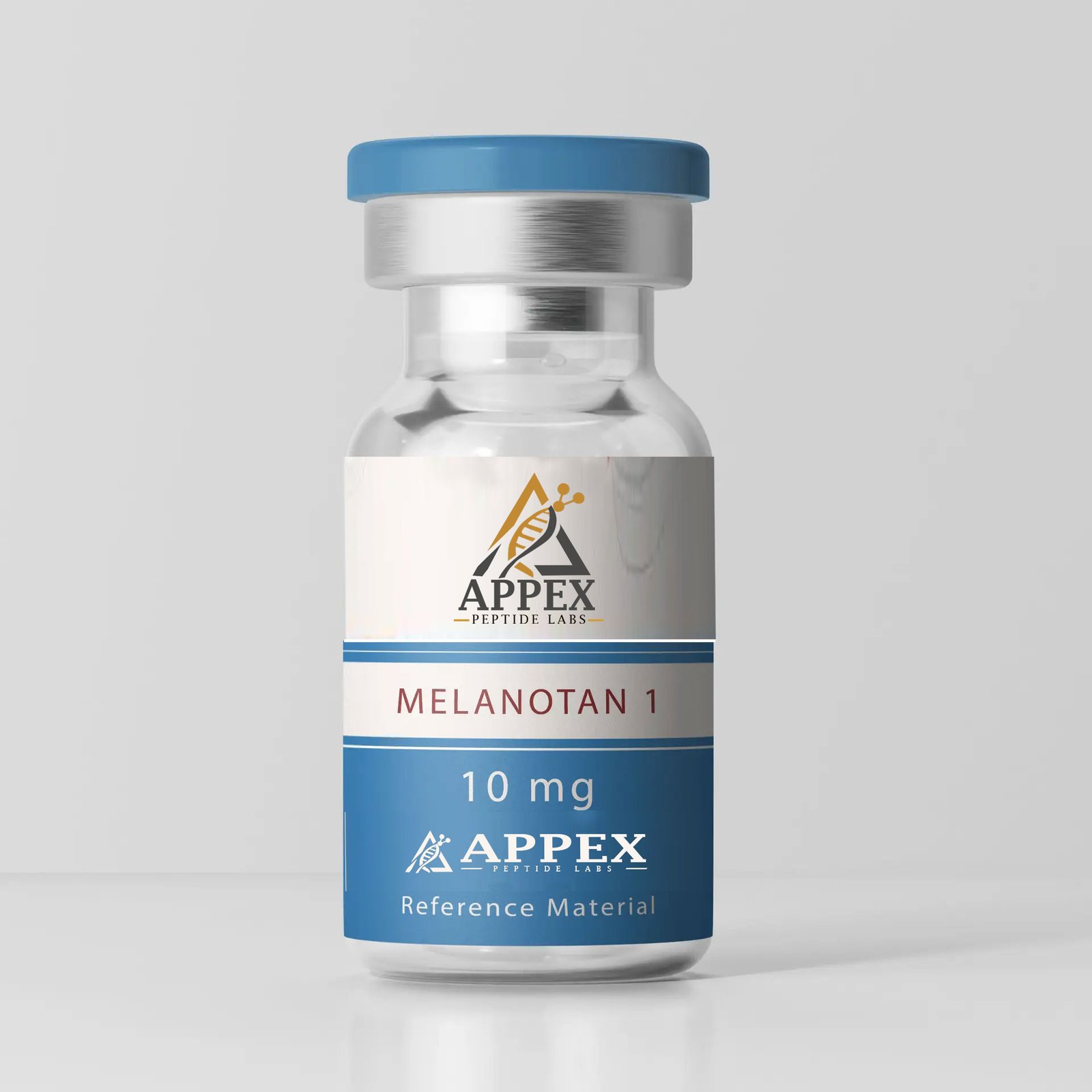
Melanotan 1 Peptide is a synthetic analog of the endogenous melanocortin hormone α-melanocyte-stimulating hormone (α-MSH). Structural modifications, including the substitution of norleucine (Nle) at position four and D-phenylalanine (D-Phe) at position seven, significantly improve enzymatic stability while maintaining high affinity for the melanocortin-1 receptor (MC1R). These modifications have established Melanotan 1 as one of the most widely studied melanocortin receptor agonists in experimental research.
Scientific investigations utilize Melanotan 1 Peptide across molecular biology, dermatological research, receptor pharmacology, peptide chemistry, and cellular signaling. Laboratory studies commonly examine melanocyte biology, melanin biosynthesis, ultraviolet response mechanisms, intracellular signaling cascades, pigment cell differentiation, and transcriptional regulation associated with melanogenesis.
Researchers also employ Melanotan 1 to investigate receptor-ligand interactions, cyclic AMP (cAMP) signaling, microphthalmia-associated transcription factor (MITF) regulation, tyrosinase expression, oxidative stress responses, and pigment cell homeostasis. Its well-characterized pharmacological profile makes it a valuable experimental reagent for universities, biotechnology companies, pharmaceutical organizations, and life science laboratories.
Each batch is synthesized under stringent quality-controlled manufacturing procedures, analytically verified for purity and sequence identity, and supplied as a stable lyophilized peptide with a comprehensive Certificate of Analysis to ensure highly reproducible laboratory investigations.
For research use only. Not intended for human consumption or clinical use.
Melanotan 1 Peptide is extensively utilized in laboratory investigations examining MC1R receptor activation, receptor binding kinetics, intracellular signaling, and receptor pharmacology.
Researchers employ Melanotan 1 to investigate melanin biosynthesis, tyrosinase regulation, pigment production, melanocyte differentiation, and molecular mechanisms governing pigmentation.
Experimental models utilize Melanotan 1 to study cAMP production, protein kinase A (PKA) activation, CREB phosphorylation, MITF regulation, and downstream transcriptional responses.
Scientists investigate ultraviolet-responsive molecular pathways, oxidative stress signaling, pigment cell adaptation, DNA damage response mechanisms, and photobiological cellular processes.
Laboratory investigations incorporate Melanotan 1 into studies involving epidermal biology, melanocyte communication, keratinocyte interactions, extracellular signaling, and skin cell physiology.
Researchers utilize Melanotan 1 to investigate peptide stability, receptor selectivity, analytical characterization, structure-function relationships, and formulation development.
| Specification | Details |
|---|---|
| Product Name | Melanotan 1 Peptide |
| Synonyms | Afamelanotide, [Nle⁴, D-Phe⁷]-α-MSH |
| Purity | ≥99% (HPLC Verified) |
| Molecular Formula | C₇₈H₁₁₁N₂₁O₁₉ |
| Molecular Weight | 1,646.85 g/mol |
| CAS Number | 75921-69-6 |
| Sequence | Ac-Ser-Tyr-Ser-Nle-Glu-His-D-Phe-Arg-Trp-Gly-Lys-Pro-Val-NH₂ |
| Appearance | White to off-white lyophilized powder |
| Solubility | Soluble in sterile bacteriostatic water and laboratory-grade aqueous buffers |
| Storage Conditions | Store lyophilized peptide at 2–8°C. For long-term storage, maintain at −20°C in a dry, light-protected environment. Avoid repeated freeze-thaw cycles after reconstitution. |
| Available Sizes | 5 mg, 10 mg |

Melanotan 1 Peptide is a synthetic tridecapeptide analog of α-melanocyte-stimulating hormone (α-MSH) that functions primarily as a highly selective agonist of the melanocortin-1 receptor (MC1R), a Class A G protein-coupled receptor predominantly expressed on melanocytes. Structural substitutions at positions four and seven significantly increase resistance to enzymatic degradation while preserving strong receptor affinity, making Melanotan 1 a valuable experimental tool for receptor biology and melanogenesis research.
Upon binding to MC1R, Melanotan 1 activates Gs proteins, stimulating adenylyl cyclase and increasing intracellular cyclic adenosine monophosphate (cAMP) concentrations. Elevated cAMP activates protein kinase A (PKA), which phosphorylates cAMP response element-binding protein (CREB). Activated CREB promotes transcription of the microphthalmia-associated transcription factor (MITF), a master regulator of melanocyte differentiation and pigment cell gene expression.
MITF subsequently increases transcription of key melanogenic enzymes including tyrosinase (TYR), tyrosinase-related protein-1 (TYRP1), and dopachrome tautomerase (DCT/TYRP2). These enzymes regulate sequential steps of eumelanin biosynthesis, making Melanotan 1 a widely utilized reagent for investigating melanogenesis, pigment cell physiology, and intracellular signaling mechanisms.
Laboratory investigations have also explored activation of additional signaling pathways including MAPK/ERK, PI3K/Akt, and oxidative stress-associated molecular networks. Researchers continue to evaluate interactions between melanocortin signaling, DNA damage response pathways, antioxidant defense systems, inflammatory mediators, and cellular adaptation following ultraviolet exposure under controlled experimental conditions.
Because of its high receptor selectivity, enhanced biochemical stability, and well-characterized molecular pharmacology, Melanotan 1 Peptide remains an important research reagent for molecular dermatology, receptor pharmacology, pigment cell biology, peptide chemistry, biotechnology, and life science laboratories investigating melanocortin signaling and cellular communication.
For research use only. Not intended for human consumption or clinical use.
| Size | 10mg |
|---|---|
| Weight | .125 lbs |
| Dimensions | 9 × 7 × .5 in |
Melanotan 1 Peptide is a synthetic analog of the endogenous melanocortin hormone α-melanocyte-stimulating hormone (α-MSH). Structural modifications, including the substitution of norleucine (Nle) at position four and D-phenylalanine (D-Phe) at position seven, significantly improve enzymatic stability while maintaining high affinity for the melanocortin-1 receptor (MC1R). These modifications have established Melanotan 1 as one of the most widely studied melanocortin receptor agonists in experimental research.
Scientific investigations utilize Melanotan 1 Peptide across molecular biology, dermatological research, receptor pharmacology, peptide chemistry, and cellular signaling. Laboratory studies commonly examine melanocyte biology, melanin biosynthesis, ultraviolet response mechanisms, intracellular signaling cascades, pigment cell differentiation, and transcriptional regulation associated with melanogenesis.
Researchers also employ Melanotan 1 to investigate receptor-ligand interactions, cyclic AMP (cAMP) signaling, microphthalmia-associated transcription factor (MITF) regulation, tyrosinase expression, oxidative stress responses, and pigment cell homeostasis. Its well-characterized pharmacological profile makes it a valuable experimental reagent for universities, biotechnology companies, pharmaceutical organizations, and life science laboratories.
Each batch is synthesized under stringent quality-controlled manufacturing procedures, analytically verified for purity and sequence identity, and supplied as a stable lyophilized peptide with a comprehensive Certificate of Analysis to ensure highly reproducible laboratory investigations.
For research use only. Not intended for human consumption or clinical use.
Melanotan 1 Peptide is extensively utilized in laboratory investigations examining MC1R receptor activation, receptor binding kinetics, intracellular signaling, and receptor pharmacology.
Researchers employ Melanotan 1 to investigate melanin biosynthesis, tyrosinase regulation, pigment production, melanocyte differentiation, and molecular mechanisms governing pigmentation.
Experimental models utilize Melanotan 1 to study cAMP production, protein kinase A (PKA) activation, CREB phosphorylation, MITF regulation, and downstream transcriptional responses.
Scientists investigate ultraviolet-responsive molecular pathways, oxidative stress signaling, pigment cell adaptation, DNA damage response mechanisms, and photobiological cellular processes.
Laboratory investigations incorporate Melanotan 1 into studies involving epidermal biology, melanocyte communication, keratinocyte interactions, extracellular signaling, and skin cell physiology.
Researchers utilize Melanotan 1 to investigate peptide stability, receptor selectivity, analytical characterization, structure-function relationships, and formulation development.
| Specification | Details |
|---|---|
| Product Name | Melanotan 1 Peptide |
| Synonyms | Afamelanotide, [Nle⁴, D-Phe⁷]-α-MSH |
| Purity | ≥99% (HPLC Verified) |
| Molecular Formula | C₇₈H₁₁₁N₂₁O₁₉ |
| Molecular Weight | 1,646.85 g/mol |
| CAS Number | 75921-69-6 |
| Sequence | Ac-Ser-Tyr-Ser-Nle-Glu-His-D-Phe-Arg-Trp-Gly-Lys-Pro-Val-NH₂ |
| Appearance | White to off-white lyophilized powder |
| Solubility | Soluble in sterile bacteriostatic water and laboratory-grade aqueous buffers |
| Storage Conditions | Store lyophilized peptide at 2–8°C. For long-term storage, maintain at −20°C in a dry, light-protected environment. Avoid repeated freeze-thaw cycles after reconstitution. |
| Available Sizes | 5 mg, 10 mg |
Melanotan 1 Peptide is a synthetic tridecapeptide analog of α-melanocyte-stimulating hormone (α-MSH) that functions primarily as a highly selective agonist of the melanocortin-1 receptor (MC1R), a Class A G protein-coupled receptor predominantly expressed on melanocytes. Structural substitutions at positions four and seven significantly increase resistance to enzymatic degradation while preserving strong receptor affinity, making Melanotan 1 a valuable experimental tool for receptor biology and melanogenesis research.
Upon binding to MC1R, Melanotan 1 activates Gs proteins, stimulating adenylyl cyclase and increasing intracellular cyclic adenosine monophosphate (cAMP) concentrations. Elevated cAMP activates protein kinase A (PKA), which phosphorylates cAMP response element-binding protein (CREB). Activated CREB promotes transcription of the microphthalmia-associated transcription factor (MITF), a master regulator of melanocyte differentiation and pigment cell gene expression.
MITF subsequently increases transcription of key melanogenic enzymes including tyrosinase (TYR), tyrosinase-related protein-1 (TYRP1), and dopachrome tautomerase (DCT/TYRP2). These enzymes regulate sequential steps of eumelanin biosynthesis, making Melanotan 1 a widely utilized reagent for investigating melanogenesis, pigment cell physiology, and intracellular signaling mechanisms.
Laboratory investigations have also explored activation of additional signaling pathways including MAPK/ERK, PI3K/Akt, and oxidative stress-associated molecular networks. Researchers continue to evaluate interactions between melanocortin signaling, DNA damage response pathways, antioxidant defense systems, inflammatory mediators, and cellular adaptation following ultraviolet exposure under controlled experimental conditions.
Because of its high receptor selectivity, enhanced biochemical stability, and well-characterized molecular pharmacology, Melanotan 1 Peptide remains an important research reagent for molecular dermatology, receptor pharmacology, pigment cell biology, peptide chemistry, biotechnology, and life science laboratories investigating melanocortin signaling and cellular communication.
For research use only. Not intended for human consumption or clinical use.
| Size | 10mg |
|---|---|
| Weight | .125 lbs |
| Dimensions | 9 × 7 × .5 in |