Bulk Orders. Better Value.
Research institutions, universities and clinical teams qualify for volume discounts. Contact our team to discuss custom formulations and bulk pricing.

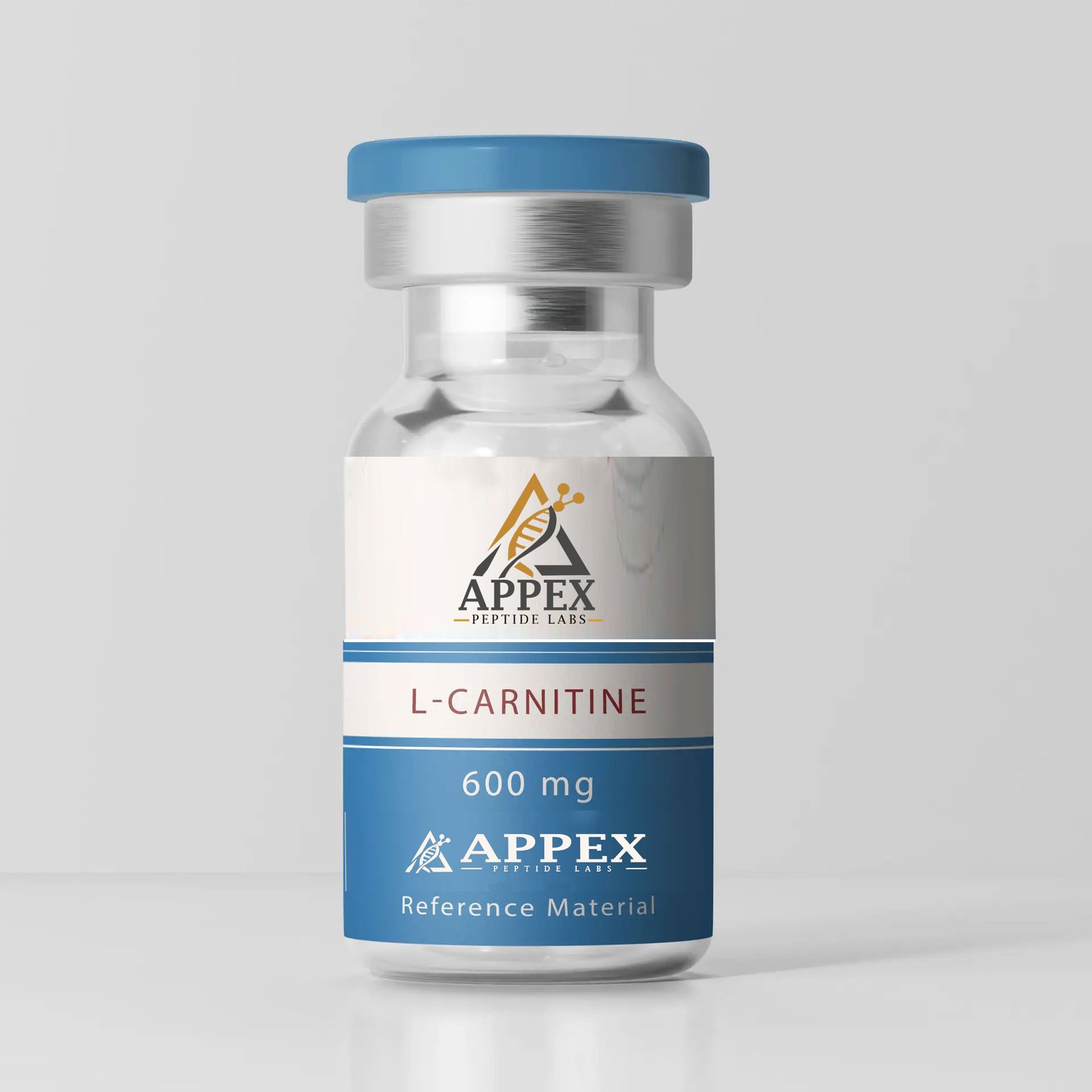
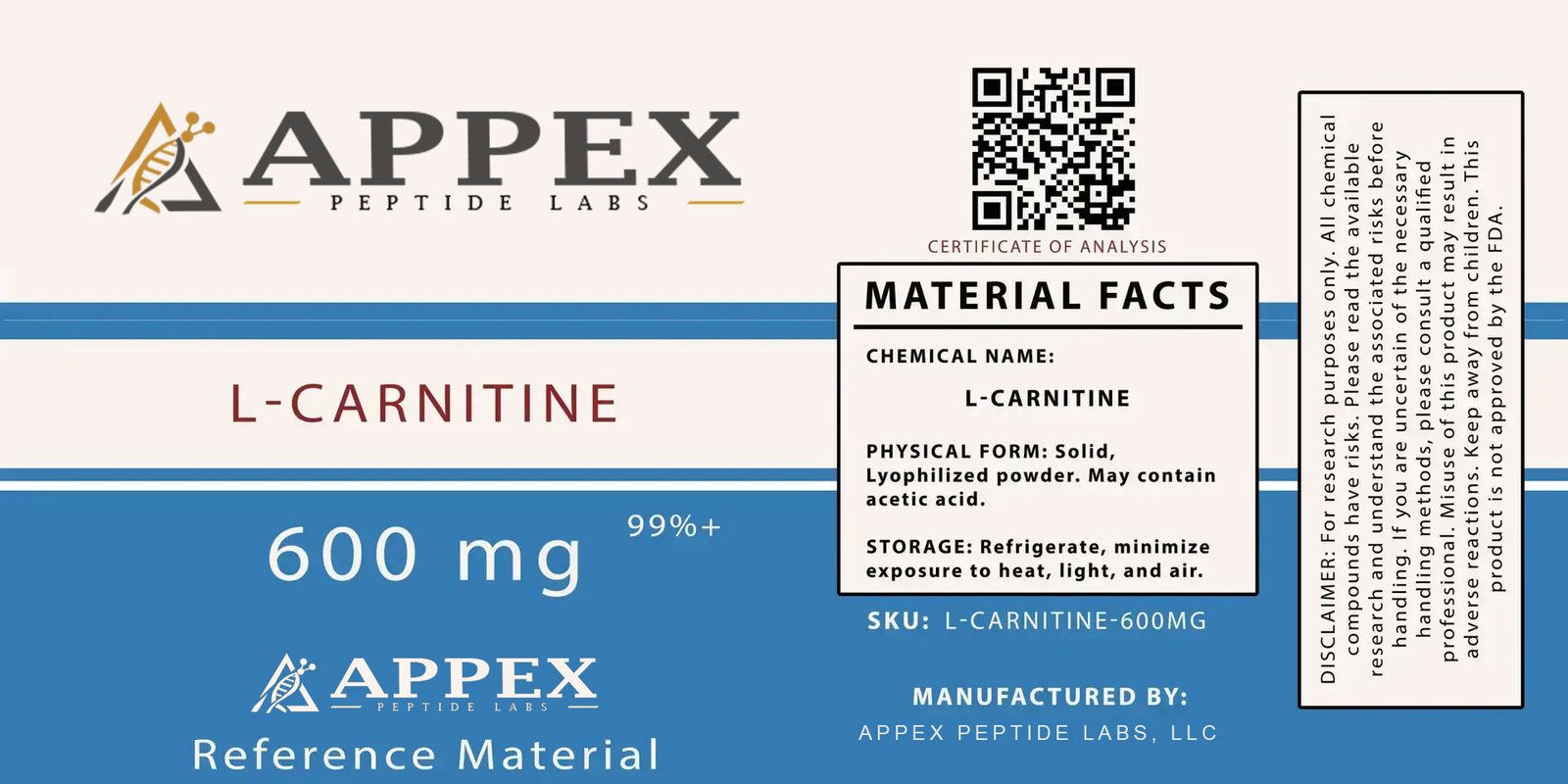

L-Carnitine is an endogenous quaternary ammonium compound synthesized primarily from the amino acids lysine and methionine. It is indispensable in laboratory investigations of mitochondrial metabolism because it functions as the principal carrier responsible for transporting long-chain fatty acids across the inner mitochondrial membrane for β-oxidation. This biochemical role has made L-Carnitine one of the most extensively studied metabolic compounds in molecular biology, biochemistry, exercise physiology, and mitochondrial research.
Researchers utilize L-Carnitine to examine cellular energy production, acyl-CoA homeostasis, lipid metabolism, mitochondrial dynamics, oxidative metabolism, and metabolic adaptation. Experimental studies have also explored its involvement in maintaining mitochondrial function, regulating intracellular acyl group balance, supporting ATP generation, and facilitating metabolic flexibility under varying physiological conditions.
Due to its well-characterized biochemical properties and extensive scientific literature, L-Carnitine remains a valuable research reagent across universities, biotechnology companies, pharmaceutical laboratories, and life science institutions investigating cellular metabolism and mitochondrial biology.
Each batch is produced under rigorous quality-controlled manufacturing conditions, verified using validated analytical methods, and supplied as a stable crystalline powder with a comprehensive Certificate of Analysis to ensure consistency across research applications.
For research use only. Not intended for human consumption or clinical use.
L-Carnitine is widely utilized in studies examining mitochondrial ATP production, oxidative phosphorylation, energy substrate utilization, and mitochondrial membrane transport systems.
Researchers employ L-Carnitine to investigate the transport and metabolism of long-chain fatty acids through the mitochondrial carnitine shuttle and associated enzymatic pathways.
Experimental models use L-Carnitine to evaluate metabolic flexibility, substrate utilization, intermediary metabolism, and regulation of intracellular energy homeostasis.
L-Carnitine serves as an important research compound for examining lipid oxidation, acyl group trafficking, fatty acid catabolism, and metabolic signaling networks.
Researchers investigate L-Carnitine in studies involving acyl-CoA metabolism, enzyme kinetics, metabolomics, and intracellular biochemical regulation.
L-Carnitine is incorporated into laboratory investigations involving metabolic pharmacology, mitochondrial function assays, analytical chemistry, and formulation development.
| Specification | Details |
|---|---|
| Product Name | L-Carnitine |
| Synonyms | Levocarnitine, L-Carnitine Free Base |
| Purity | ≥99% (HPLC Verified) |
| Molecular Formula | C₇H₁₅NO₃ |
| Molecular Weight | 161.20 g/mol |
| CAS Number | 541-15-1 |
| Appearance | White crystalline powder |
| Storage Conditions | Store in a tightly sealed container at room temperature in a cool, dry environment away from excessive moisture and direct light. |
| Solubility | Freely soluble in water; slightly soluble in ethanol |
| Sequence | Not applicable (non-peptide amino acid derivative) |
| Available Sizes | 200 mg, 400 mg, 600 mg, 1200 mg |
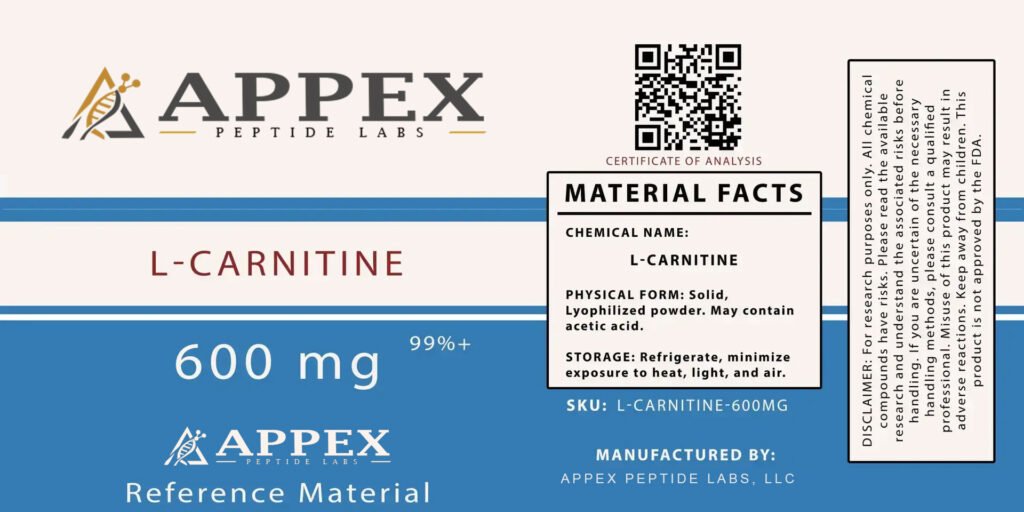
L-Carnitine is a naturally occurring quaternary ammonium compound that plays an essential role in mitochondrial fatty acid metabolism. Unlike peptides, L-Carnitine functions as a molecular carrier that facilitates the transport of long-chain fatty acids from the cytosol into the mitochondrial matrix, where β-oxidation occurs. This transport process is fundamental to cellular energy metabolism and has made L-Carnitine a cornerstone reagent in metabolic and mitochondrial research.
The primary mechanism involves the carnitine shuttle system, a highly regulated transport pathway composed of carnitine palmitoyltransferase I (CPT-I), carnitine-acylcarnitine translocase (CACT), and carnitine palmitoyltransferase II (CPT-II). Long-chain fatty acids are first converted into fatty acyl-CoA molecules in the cytoplasm. CPT-I, located on the outer mitochondrial membrane, catalyzes the transfer of the fatty acyl group from coenzyme A to L-Carnitine, forming acylcarnitine. This intermediate is transported across the inner mitochondrial membrane by CACT, after which CPT-II regenerates fatty acyl-CoA within the mitochondrial matrix, allowing entry into the β-oxidation pathway.
Beyond fatty acid transport, L-Carnitine contributes to intracellular metabolic homeostasis by regulating the balance between free CoA and acyl-CoA esters. This buffering activity supports multiple metabolic pathways, including the tricarboxylic acid (TCA) cycle, amino acid metabolism, and oxidative phosphorylation. By maintaining appropriate CoA availability, L-Carnitine enables efficient mitochondrial enzyme function and metabolic flexibility under varying experimental conditions.
Published laboratory research has also examined L-Carnitine’s influence on mitochondrial dynamics, reactive oxygen species generation, acylcarnitine metabolism, and metabolic signaling pathways involving AMP-activated protein kinase (AMPK), peroxisome proliferator-activated receptors (PPARs), and PGC-1α, all of which regulate cellular energy homeostasis and mitochondrial biogenesis. These investigations remain focused on elucidating fundamental biochemical mechanisms rather than establishing clinical effects.
Due to its well-defined biochemical role, predictable molecular behavior, and extensive scientific characterization, L-Carnitine continues to serve as an indispensable research reagent in studies of mitochondrial biology, cellular metabolism, molecular biochemistry, metabolomics, exercise physiology, and pharmaceutical sciences.
For research use only. Not intended for human consumption or clinical use.
| Size | 1200 mg, 200mg, 400 mg, 600 mg |
|---|---|
| Dimensions | 9 × 7 × .5 in |
| Weight | .125 lbs |
L-Carnitine is an endogenous quaternary ammonium compound synthesized primarily from the amino acids lysine and methionine. It is indispensable in laboratory investigations of mitochondrial metabolism because it functions as the principal carrier responsible for transporting long-chain fatty acids across the inner mitochondrial membrane for β-oxidation. This biochemical role has made L-Carnitine one of the most extensively studied metabolic compounds in molecular biology, biochemistry, exercise physiology, and mitochondrial research.
Researchers utilize L-Carnitine to examine cellular energy production, acyl-CoA homeostasis, lipid metabolism, mitochondrial dynamics, oxidative metabolism, and metabolic adaptation. Experimental studies have also explored its involvement in maintaining mitochondrial function, regulating intracellular acyl group balance, supporting ATP generation, and facilitating metabolic flexibility under varying physiological conditions.
Due to its well-characterized biochemical properties and extensive scientific literature, L-Carnitine remains a valuable research reagent across universities, biotechnology companies, pharmaceutical laboratories, and life science institutions investigating cellular metabolism and mitochondrial biology.
Each batch is produced under rigorous quality-controlled manufacturing conditions, verified using validated analytical methods, and supplied as a stable crystalline powder with a comprehensive Certificate of Analysis to ensure consistency across research applications.
For research use only. Not intended for human consumption or clinical use.
L-Carnitine is widely utilized in studies examining mitochondrial ATP production, oxidative phosphorylation, energy substrate utilization, and mitochondrial membrane transport systems.
Researchers employ L-Carnitine to investigate the transport and metabolism of long-chain fatty acids through the mitochondrial carnitine shuttle and associated enzymatic pathways.
Experimental models use L-Carnitine to evaluate metabolic flexibility, substrate utilization, intermediary metabolism, and regulation of intracellular energy homeostasis.
L-Carnitine serves as an important research compound for examining lipid oxidation, acyl group trafficking, fatty acid catabolism, and metabolic signaling networks.
Researchers investigate L-Carnitine in studies involving acyl-CoA metabolism, enzyme kinetics, metabolomics, and intracellular biochemical regulation.
L-Carnitine is incorporated into laboratory investigations involving metabolic pharmacology, mitochondrial function assays, analytical chemistry, and formulation development.
| Specification | Details |
|---|---|
| Product Name | L-Carnitine |
| Synonyms | Levocarnitine, L-Carnitine Free Base |
| Purity | ≥99% (HPLC Verified) |
| Molecular Formula | C₇H₁₅NO₃ |
| Molecular Weight | 161.20 g/mol |
| CAS Number | 541-15-1 |
| Appearance | White crystalline powder |
| Storage Conditions | Store in a tightly sealed container at room temperature in a cool, dry environment away from excessive moisture and direct light. |
| Solubility | Freely soluble in water; slightly soluble in ethanol |
| Sequence | Not applicable (non-peptide amino acid derivative) |
| Available Sizes | 200 mg, 400 mg, 600 mg, 1200 mg |
L-Carnitine is a naturally occurring quaternary ammonium compound that plays an essential role in mitochondrial fatty acid metabolism. Unlike peptides, L-Carnitine functions as a molecular carrier that facilitates the transport of long-chain fatty acids from the cytosol into the mitochondrial matrix, where β-oxidation occurs. This transport process is fundamental to cellular energy metabolism and has made L-Carnitine a cornerstone reagent in metabolic and mitochondrial research.
The primary mechanism involves the carnitine shuttle system, a highly regulated transport pathway composed of carnitine palmitoyltransferase I (CPT-I), carnitine-acylcarnitine translocase (CACT), and carnitine palmitoyltransferase II (CPT-II). Long-chain fatty acids are first converted into fatty acyl-CoA molecules in the cytoplasm. CPT-I, located on the outer mitochondrial membrane, catalyzes the transfer of the fatty acyl group from coenzyme A to L-Carnitine, forming acylcarnitine. This intermediate is transported across the inner mitochondrial membrane by CACT, after which CPT-II regenerates fatty acyl-CoA within the mitochondrial matrix, allowing entry into the β-oxidation pathway.
Beyond fatty acid transport, L-Carnitine contributes to intracellular metabolic homeostasis by regulating the balance between free CoA and acyl-CoA esters. This buffering activity supports multiple metabolic pathways, including the tricarboxylic acid (TCA) cycle, amino acid metabolism, and oxidative phosphorylation. By maintaining appropriate CoA availability, L-Carnitine enables efficient mitochondrial enzyme function and metabolic flexibility under varying experimental conditions.
Published laboratory research has also examined L-Carnitine’s influence on mitochondrial dynamics, reactive oxygen species generation, acylcarnitine metabolism, and metabolic signaling pathways involving AMP-activated protein kinase (AMPK), peroxisome proliferator-activated receptors (PPARs), and PGC-1α, all of which regulate cellular energy homeostasis and mitochondrial biogenesis. These investigations remain focused on elucidating fundamental biochemical mechanisms rather than establishing clinical effects.
Due to its well-defined biochemical role, predictable molecular behavior, and extensive scientific characterization, L-Carnitine continues to serve as an indispensable research reagent in studies of mitochondrial biology, cellular metabolism, molecular biochemistry, metabolomics, exercise physiology, and pharmaceutical sciences.
For research use only. Not intended for human consumption or clinical use.
| Size | 1200 mg, 200mg, 400 mg, 600 mg |
|---|---|
| Dimensions | 9 × 7 × .5 in |
| Weight | .125 lbs |