Bulk Orders. Better Value.
Research institutions, universities and clinical teams qualify for volume discounts. Contact our team to discuss custom formulations and bulk pricing.

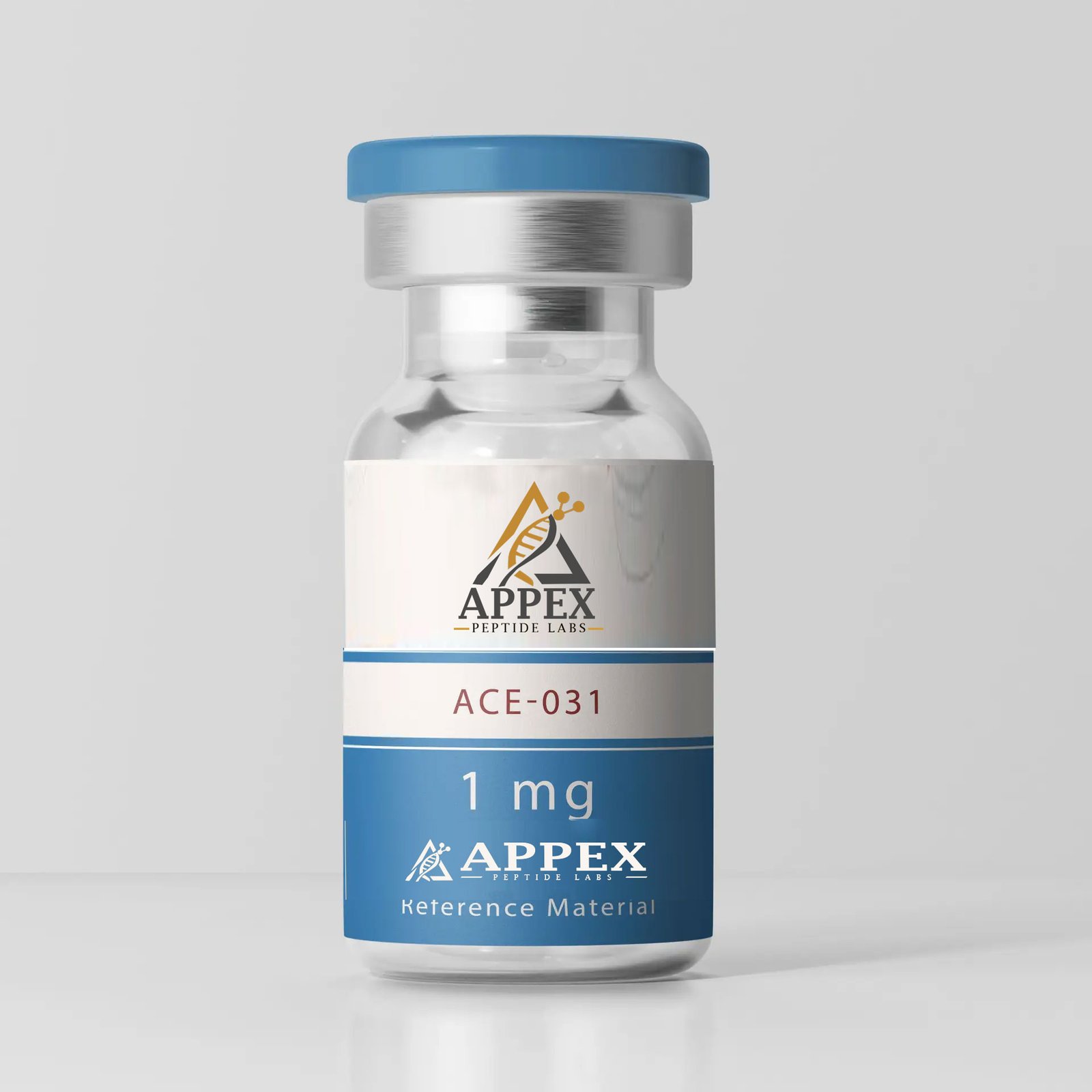


ACE-031 Peptide is a recombinant fusion protein composed of the extracellular ligand-binding domain of the human Activin Type IIB Receptor (ActRIIB) genetically fused to the Fc region of human IgG1. This engineered construct functions as a soluble decoy receptor capable of binding multiple ligands within the transforming growth factor-beta (TGF-β) superfamily, including myostatin (GDF-8), activin A, and related growth differentiation factors.
Because ACE-031 selectively sequesters extracellular ligands before they interact with endogenous ActRIIB receptors, it has become an important molecular tool for investigating signaling mechanisms regulating skeletal muscle biology, cellular differentiation, extracellular matrix remodeling, developmental biology, and ligand-receptor interactions. Its mechanism enables researchers to evaluate pathway-specific responses without directly modifying intracellular signaling proteins.
Scientific investigations utilizing ACE-031 span molecular biology, protein pharmacology, regenerative biology, developmental biology, biotechnology, and pharmaceutical research. The recombinant protein is valued for its high specificity, reproducible manufacturing, and extensive characterization within published scientific literature.
Each production batch is manufactured under rigorous quality standards, verified using multiple analytical methods, and supplied with complete quality documentation to support reproducible laboratory investigations.
For research use only. Not intended for human consumption or clinical use.

ACE-031 is extensively utilized to investigate molecular mechanisms regulating myostatin-mediated signaling, ligand sequestration, receptor binding dynamics, and downstream intracellular pathway activation.
Researchers employ ACE-031 to evaluate activin A interactions with ActRIIB receptors and characterize signaling networks involved in cellular communication, differentiation, and developmental biology.
The recombinant fusion protein serves as an important molecular tool for studying ligand specificity, receptor competition, extracellular signaling modulation, and functional relationships among TGF-β family proteins.
Laboratory investigations utilize ACE-031 to examine molecular pathways associated with skeletal muscle development, satellite cell signaling, extracellular matrix remodeling, and cellular adaptation under controlled experimental conditions.
Scientists incorporate ACE-031 into studies focused on recombinant protein engineering, ligand-binding kinetics, receptor affinity analysis, and biologic drug discovery research.
ACE-031 is frequently employed as a reference molecule for comparative biologic studies, protein characterization, pharmacodynamic investigations, and translational research involving recombinant fusion proteins.
| Specification | Details |
|---|---|
| Product Name | ACE-031 Peptide |
| Purity | ≥99% (HPLC/SEC Tested) |
| Molecular Formula | Recombinant Fusion Protein (Sequence Dependent) |
| Molecular Weight | Approximately 110–120 kDa (dimeric glycoprotein) |
| CAS Number | Not officially assigned |
| Appearance | White to off-white lyophilized powder |
| Storage Conditions | Store at -20°C or below. Protect from repeated freeze-thaw cycles, moisture, and prolonged light exposure. |
| Solubility | Reconstitute with sterile laboratory-grade water or appropriate physiological buffer according to laboratory protocol |
| Sequence | Human Activin Type IIB Receptor (extracellular domain) genetically fused to human IgG1 Fc domain |
| Available Sizes | 1 mg |
ACE-031 Peptide is a recombinant ActRIIB-Fc fusion protein engineered to function as a soluble extracellular decoy receptor for selected members of the transforming growth factor-beta (TGF-β) superfamily. Rather than directly activating or inhibiting intracellular signaling molecules, ACE-031 binds extracellular ligands with high affinity, preventing their interaction with endogenous Activin Type IIB receptors located on the cell surface. This ligand sequestration mechanism enables researchers to investigate signaling pathways controlled by myostatin, activins, and related growth differentiation factors.
Structurally, ACE-031 consists of the extracellular ligand-binding domain of the human Activin Type IIB Receptor (ActRIIB) fused to the Fc region of human immunoglobulin G1 (IgG1). The Fc domain enhances molecular stability, prolongs protein persistence in experimental systems, facilitates purification, and promotes dimerization, thereby increasing ligand-binding capacity. The resulting fusion protein exhibits strong affinity for myostatin (GDF-8), activin A, and several related TGF-β family ligands involved in developmental and cellular signaling.
Under physiological conditions, these ligands bind membrane-bound ActRIIB receptors, initiating receptor complex formation with type I receptors. Subsequent phosphorylation of intracellular receptor domains activates canonical SMAD2/SMAD3 signaling pathways, which regulate transcriptional programs controlling cellular proliferation, differentiation, extracellular matrix organization, developmental processes, and tissue remodeling. By competitively binding extracellular ligands, ACE-031 interrupts this signaling cascade before receptor activation occurs.
Researchers utilize ACE-031 to investigate alterations in ligand availability, receptor occupancy, downstream transcriptional responses, and pathway-specific molecular regulation. Experimental methodologies commonly include ligand-binding assays, surface plasmon resonance, ELISA-based affinity measurements, phospho-SMAD analysis, RNA sequencing, transcriptomic profiling, proteomics, and immunoblotting to characterize cellular responses following pathway modulation.
Because ACE-031 simultaneously interacts with multiple ActRIIB ligands rather than a single molecular target, it provides investigators with a valuable platform for studying integrated TGF-β superfamily biology, receptor pharmacology, and ligand competition under controlled laboratory conditions. Its recombinant design, sequence verification, analytical characterization, and reproducible manufacturing make ACE-031 an important research reagent for biotechnology, pharmaceutical development, molecular biology, and protein engineering studies.
For research use only. Not intended for human consumption or clinical use.
| Size | 1mg |
|---|---|
| Dimensions | 9 × 7 × .5 in |
| Weight | .125 lbs |
ACE-031 Peptide is a recombinant fusion protein composed of the extracellular ligand-binding domain of the human Activin Type IIB Receptor (ActRIIB) genetically fused to the Fc region of human IgG1. This engineered construct functions as a soluble decoy receptor capable of binding multiple ligands within the transforming growth factor-beta (TGF-β) superfamily, including myostatin (GDF-8), activin A, and related growth differentiation factors.
Because ACE-031 selectively sequesters extracellular ligands before they interact with endogenous ActRIIB receptors, it has become an important molecular tool for investigating signaling mechanisms regulating skeletal muscle biology, cellular differentiation, extracellular matrix remodeling, developmental biology, and ligand-receptor interactions. Its mechanism enables researchers to evaluate pathway-specific responses without directly modifying intracellular signaling proteins.
Scientific investigations utilizing ACE-031 span molecular biology, protein pharmacology, regenerative biology, developmental biology, biotechnology, and pharmaceutical research. The recombinant protein is valued for its high specificity, reproducible manufacturing, and extensive characterization within published scientific literature.
Each production batch is manufactured under rigorous quality standards, verified using multiple analytical methods, and supplied with complete quality documentation to support reproducible laboratory investigations.
For research use only. Not intended for human consumption or clinical use.
ACE-031 is extensively utilized to investigate molecular mechanisms regulating myostatin-mediated signaling, ligand sequestration, receptor binding dynamics, and downstream intracellular pathway activation.
Researchers employ ACE-031 to evaluate activin A interactions with ActRIIB receptors and characterize signaling networks involved in cellular communication, differentiation, and developmental biology.
The recombinant fusion protein serves as an important molecular tool for studying ligand specificity, receptor competition, extracellular signaling modulation, and functional relationships among TGF-β family proteins.
Laboratory investigations utilize ACE-031 to examine molecular pathways associated with skeletal muscle development, satellite cell signaling, extracellular matrix remodeling, and cellular adaptation under controlled experimental conditions.
Scientists incorporate ACE-031 into studies focused on recombinant protein engineering, ligand-binding kinetics, receptor affinity analysis, and biologic drug discovery research.
ACE-031 is frequently employed as a reference molecule for comparative biologic studies, protein characterization, pharmacodynamic investigations, and translational research involving recombinant fusion proteins.
| Specification | Details |
|---|---|
| Product Name | ACE-031 Peptide |
| Purity | ≥99% (HPLC/SEC Tested) |
| Molecular Formula | Recombinant Fusion Protein (Sequence Dependent) |
| Molecular Weight | Approximately 110–120 kDa (dimeric glycoprotein) |
| CAS Number | Not officially assigned |
| Appearance | White to off-white lyophilized powder |
| Storage Conditions | Store at -20°C or below. Protect from repeated freeze-thaw cycles, moisture, and prolonged light exposure. |
| Solubility | Reconstitute with sterile laboratory-grade water or appropriate physiological buffer according to laboratory protocol |
| Sequence | Human Activin Type IIB Receptor (extracellular domain) genetically fused to human IgG1 Fc domain |
| Available Sizes | 1 mg |
ACE-031 Peptide is a recombinant ActRIIB-Fc fusion protein engineered to function as a soluble extracellular decoy receptor for selected members of the transforming growth factor-beta (TGF-β) superfamily. Rather than directly activating or inhibiting intracellular signaling molecules, ACE-031 binds extracellular ligands with high affinity, preventing their interaction with endogenous Activin Type IIB receptors located on the cell surface. This ligand sequestration mechanism enables researchers to investigate signaling pathways controlled by myostatin, activins, and related growth differentiation factors.
Structurally, ACE-031 consists of the extracellular ligand-binding domain of the human Activin Type IIB Receptor (ActRIIB) fused to the Fc region of human immunoglobulin G1 (IgG1). The Fc domain enhances molecular stability, prolongs protein persistence in experimental systems, facilitates purification, and promotes dimerization, thereby increasing ligand-binding capacity. The resulting fusion protein exhibits strong affinity for myostatin (GDF-8), activin A, and several related TGF-β family ligands involved in developmental and cellular signaling.
Under physiological conditions, these ligands bind membrane-bound ActRIIB receptors, initiating receptor complex formation with type I receptors. Subsequent phosphorylation of intracellular receptor domains activates canonical SMAD2/SMAD3 signaling pathways, which regulate transcriptional programs controlling cellular proliferation, differentiation, extracellular matrix organization, developmental processes, and tissue remodeling. By competitively binding extracellular ligands, ACE-031 interrupts this signaling cascade before receptor activation occurs.
Researchers utilize ACE-031 to investigate alterations in ligand availability, receptor occupancy, downstream transcriptional responses, and pathway-specific molecular regulation. Experimental methodologies commonly include ligand-binding assays, surface plasmon resonance, ELISA-based affinity measurements, phospho-SMAD analysis, RNA sequencing, transcriptomic profiling, proteomics, and immunoblotting to characterize cellular responses following pathway modulation.
Because ACE-031 simultaneously interacts with multiple ActRIIB ligands rather than a single molecular target, it provides investigators with a valuable platform for studying integrated TGF-β superfamily biology, receptor pharmacology, and ligand competition under controlled laboratory conditions. Its recombinant design, sequence verification, analytical characterization, and reproducible manufacturing make ACE-031 an important research reagent for biotechnology, pharmaceutical development, molecular biology, and protein engineering studies.
For research use only. Not intended for human consumption or clinical use.
| Size | 1mg |
|---|---|
| Dimensions | 9 × 7 × .5 in |
| Weight | .125 lbs |