Bulk Orders. Better Value.
Research institutions, universities and clinical teams qualify for volume discounts. Contact our team to discuss custom formulations and bulk pricing.

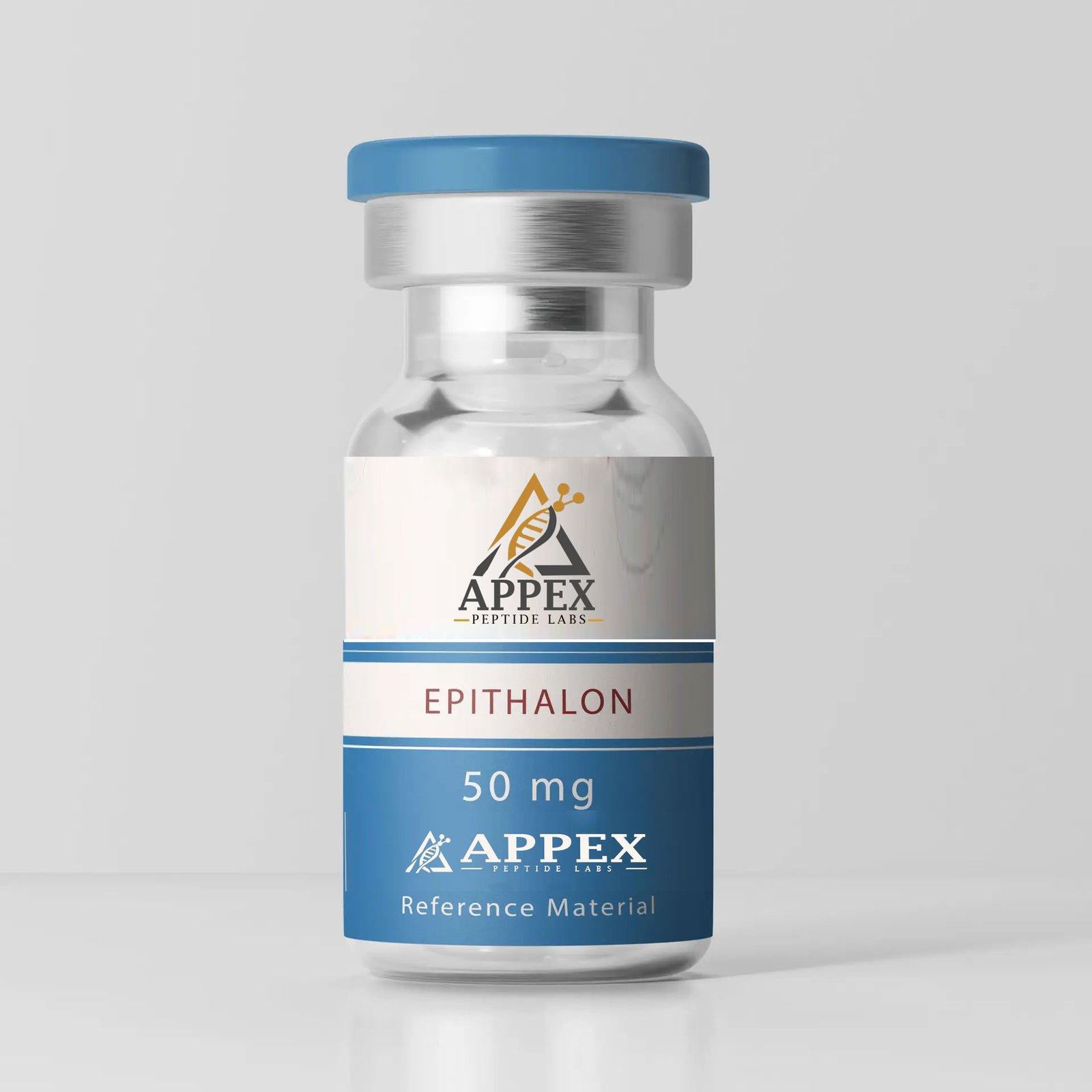
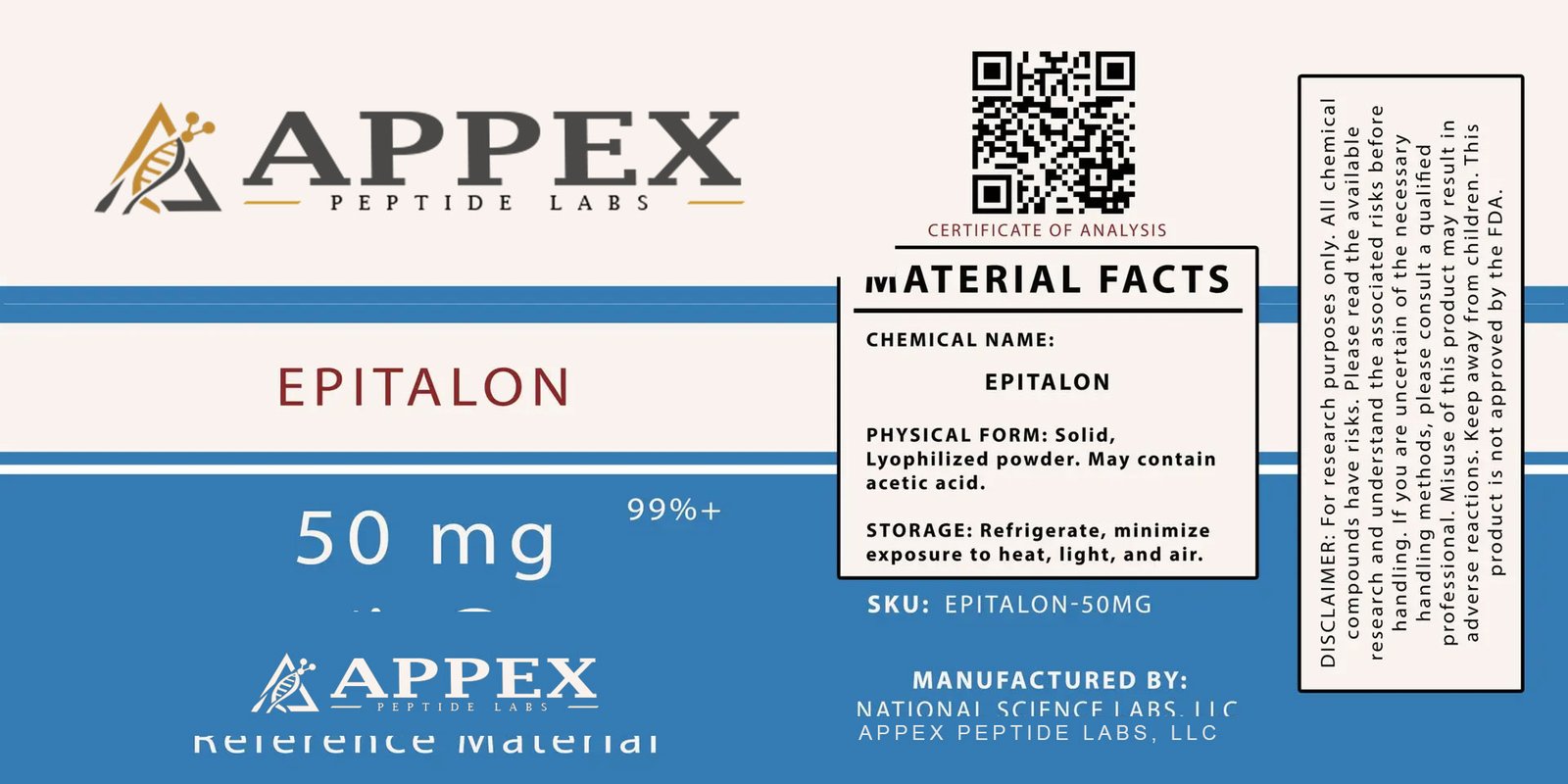

Epithalon Peptide, also known as Epitalon, is a laboratory-synthesized tetrapeptide modeled after the biologically active fragment of epithalamin, a naturally occurring peptide complex isolated from the pineal gland. Since its original development, it has attracted considerable scientific interest because of its unique biochemical characteristics and its extensive evaluation in experimental models examining cellular senescence, chromosomal stability, gene expression, and neuroendocrine regulation.
Its compact four-amino-acid structure enables researchers to study peptide-cell interactions with exceptional precision while minimizing structural complexity. Scientific investigations have explored how Epithalon Peptide interacts with cellular pathways involved in telomerase regulation, oxidative balance, transcriptional activity, DNA stability, and circadian signaling. These studies have contributed valuable insights into peptide biology and molecular regulation without establishing therapeutic applications.
Research laboratories, universities, biotechnology organizations, and pharmaceutical development teams frequently incorporate Epithalon Peptide into experimental protocols involving molecular genetics, peptide pharmacology, cellular metabolism, and aging-related biological mechanisms.
Each research-grade batch is produced under rigorous quality control standards, undergoes analytical verification for purity and identity, and is accompanied by a Certificate of Analysis (COA) to support reproducible laboratory investigations.
For research use only. Not intended for human consumption or clinical use.
Epithalon Peptide is extensively utilized in laboratory investigations examining cellular lifespan, replicative senescence, and mechanisms regulating genomic stability during prolonged cell division.
Researchers employ Epithalon Peptide to investigate molecular pathways associated with telomerase activity, telomere maintenance, chromosomal integrity, and cellular replication under controlled experimental environments.
The peptide is frequently incorporated into studies exploring pineal gland signaling, peptide-mediated endocrine communication, circadian regulatory pathways, and neuroendocrine molecular interactions.
Epithalon Peptide serves as a valuable experimental compound for evaluating transcriptional regulation, epigenetic responses, peptide-induced signaling cascades, and downstream molecular targets.
Laboratories investigate Epithalon Peptide within experimental models evaluating intracellular oxidative balance, antioxidant enzyme activity, mitochondrial function, and reactive oxygen species signaling.
The peptide is commonly used to characterize peptide transport, intracellular distribution, receptor-independent biological responses, and structure-function relationships in peptide chemistry.
| Specification | Details |
|---|---|
| Product Name | Epithalon Peptide |
| Synonyms | Epitalon, AEDG |
| Purity | ≥99% (HPLC Verified) |
| Molecular Formula | C14H22N4O9 |
| Molecular Weight | 390.35 g/mol |
| CAS Number | 307297-39-8 |
| Sequence | Ala-Glu-Asp-Gly (AEDG) |
| Appearance | White to off-white lyophilized powder |
| Solubility | Soluble in sterile water and appropriate laboratory-grade aqueous buffers |
| Storage Conditions | Store lyophilized material at 2–8°C. For extended storage, maintain at −20°C in a dry, light-protected environment. Avoid repeated freeze-thaw cycles after reconstitution. |
| Available Sizes | 10 mg, 50 mg |
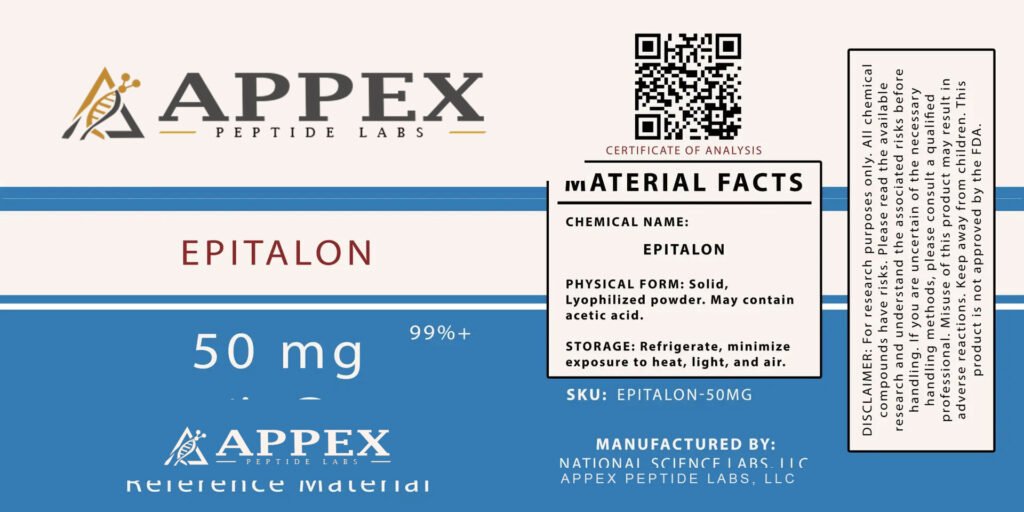
Epithalon Peptide is a synthetic tetrapeptide designed to replicate the biologically active sequence of naturally occurring epithalamin-derived peptides. Within laboratory investigations, it has been extensively studied for its influence on molecular pathways associated with cellular regulation, chromosomal maintenance, transcriptional activity, and peptide-mediated signaling.
Experimental evidence suggests that Epithalon Peptide participates in complex intracellular processes affecting gene expression rather than functioning through a single well-defined receptor. Investigators have examined its ability to modulate transcriptional networks involved in cellular homeostasis, protein synthesis, DNA repair mechanisms, and chromatin organization. These regulatory activities make the peptide particularly valuable for mechanistic studies in molecular biology.
A major area of investigation focuses on telomerase-associated signaling. In controlled laboratory models, Epithalon Peptide has been evaluated for its interaction with pathways regulating telomerase reverse transcriptase (TERT) expression and telomere dynamics. Researchers continue to explore whether these molecular interactions influence chromosomal stability during repeated cellular replication. Current evidence supports continued investigation while recognizing that the precise molecular mechanisms remain an active area of research.
Epithalon Peptide has also been examined in studies involving oxidative stress signaling. Laboratory experiments indicate potential modulation of intracellular antioxidant systems, including enzymatic pathways responsible for maintaining redox balance and limiting reactive oxygen species accumulation. These investigations provide insight into cellular adaptive responses under experimentally induced oxidative conditions without establishing therapeutic implications.
Additional research has explored peptide-mediated regulation of pineal gland biology and circadian-associated molecular pathways. Experimental models suggest interactions with signaling networks governing neuroendocrine communication, transcription factor activity, and rhythmic cellular processes. Scientists continue to investigate these mechanisms using transcriptomic, proteomic, and molecular biology techniques to better understand peptide-driven cellular regulation.
Because of its small molecular size, defined amino acid sequence, and reproducible physicochemical properties, Epithalon Peptide is widely utilized as a research reagent in studies involving peptide chemistry, molecular pharmacology, cellular biology, and gene regulatory mechanisms. Ongoing scientific investigations continue to expand understanding of its biochemical behavior while emphasizing rigorous experimental validation.
**For research use only. Not intended for human consumption or clinical use.
| Size | 10mg, 5mg |
|---|---|
| Weight | .125 lbs |
| Dimensions | 9 × 7 × .5 in |


Epithalon Peptide, also known as Epitalon, is a laboratory-synthesized tetrapeptide modeled after the biologically active fragment of epithalamin, a naturally occurring peptide complex isolated from the pineal gland. Since its original development, it has attracted considerable scientific interest because of its unique biochemical characteristics and its extensive evaluation in experimental models examining cellular senescence, chromosomal stability, gene expression, and neuroendocrine regulation.
Its compact four-amino-acid structure enables researchers to study peptide-cell interactions with exceptional precision while minimizing structural complexity. Scientific investigations have explored how Epithalon Peptide interacts with cellular pathways involved in telomerase regulation, oxidative balance, transcriptional activity, DNA stability, and circadian signaling. These studies have contributed valuable insights into peptide biology and molecular regulation without establishing therapeutic applications.
Research laboratories, universities, biotechnology organizations, and pharmaceutical development teams frequently incorporate Epithalon Peptide into experimental protocols involving molecular genetics, peptide pharmacology, cellular metabolism, and aging-related biological mechanisms.
Each research-grade batch is produced under rigorous quality control standards, undergoes analytical verification for purity and identity, and is accompanied by a Certificate of Analysis (COA) to support reproducible laboratory investigations.
For research use only. Not intended for human consumption or clinical use.
Epithalon Peptide is extensively utilized in laboratory investigations examining cellular lifespan, replicative senescence, and mechanisms regulating genomic stability during prolonged cell division.
Researchers employ Epithalon Peptide to investigate molecular pathways associated with telomerase activity, telomere maintenance, chromosomal integrity, and cellular replication under controlled experimental environments.
The peptide is frequently incorporated into studies exploring pineal gland signaling, peptide-mediated endocrine communication, circadian regulatory pathways, and neuroendocrine molecular interactions.
Epithalon Peptide serves as a valuable experimental compound for evaluating transcriptional regulation, epigenetic responses, peptide-induced signaling cascades, and downstream molecular targets.
Laboratories investigate Epithalon Peptide within experimental models evaluating intracellular oxidative balance, antioxidant enzyme activity, mitochondrial function, and reactive oxygen species signaling.
The peptide is commonly used to characterize peptide transport, intracellular distribution, receptor-independent biological responses, and structure-function relationships in peptide chemistry.
| Specification | Details |
|---|---|
| Product Name | Epithalon Peptide |
| Synonyms | Epitalon, AEDG |
| Purity | ≥99% (HPLC Verified) |
| Molecular Formula | C14H22N4O9 |
| Molecular Weight | 390.35 g/mol |
| CAS Number | 307297-39-8 |
| Sequence | Ala-Glu-Asp-Gly (AEDG) |
| Appearance | White to off-white lyophilized powder |
| Solubility | Soluble in sterile water and appropriate laboratory-grade aqueous buffers |
| Storage Conditions | Store lyophilized material at 2–8°C. For extended storage, maintain at −20°C in a dry, light-protected environment. Avoid repeated freeze-thaw cycles after reconstitution. |
| Available Sizes | 10 mg, 50 mg |
Epithalon Peptide is a synthetic tetrapeptide designed to replicate the biologically active sequence of naturally occurring epithalamin-derived peptides. Within laboratory investigations, it has been extensively studied for its influence on molecular pathways associated with cellular regulation, chromosomal maintenance, transcriptional activity, and peptide-mediated signaling.
Experimental evidence suggests that Epithalon Peptide participates in complex intracellular processes affecting gene expression rather than functioning through a single well-defined receptor. Investigators have examined its ability to modulate transcriptional networks involved in cellular homeostasis, protein synthesis, DNA repair mechanisms, and chromatin organization. These regulatory activities make the peptide particularly valuable for mechanistic studies in molecular biology.
A major area of investigation focuses on telomerase-associated signaling. In controlled laboratory models, Epithalon Peptide has been evaluated for its interaction with pathways regulating telomerase reverse transcriptase (TERT) expression and telomere dynamics. Researchers continue to explore whether these molecular interactions influence chromosomal stability during repeated cellular replication. Current evidence supports continued investigation while recognizing that the precise molecular mechanisms remain an active area of research.
Epithalon Peptide has also been examined in studies involving oxidative stress signaling. Laboratory experiments indicate potential modulation of intracellular antioxidant systems, including enzymatic pathways responsible for maintaining redox balance and limiting reactive oxygen species accumulation. These investigations provide insight into cellular adaptive responses under experimentally induced oxidative conditions without establishing therapeutic implications.
Additional research has explored peptide-mediated regulation of pineal gland biology and circadian-associated molecular pathways. Experimental models suggest interactions with signaling networks governing neuroendocrine communication, transcription factor activity, and rhythmic cellular processes. Scientists continue to investigate these mechanisms using transcriptomic, proteomic, and molecular biology techniques to better understand peptide-driven cellular regulation.
Because of its small molecular size, defined amino acid sequence, and reproducible physicochemical properties, Epithalon Peptide is widely utilized as a research reagent in studies involving peptide chemistry, molecular pharmacology, cellular biology, and gene regulatory mechanisms. Ongoing scientific investigations continue to expand understanding of its biochemical behavior while emphasizing rigorous experimental validation.
**For research use only. Not intended for human consumption or clinical use.
| Size | 10mg, 5mg |
|---|---|
| Weight | .125 lbs |
| Dimensions | 9 × 7 × .5 in |