Bulk Orders. Better Value.
Research institutions, universities and clinical teams qualify for volume discounts. Contact our team to discuss custom formulations and bulk pricing.

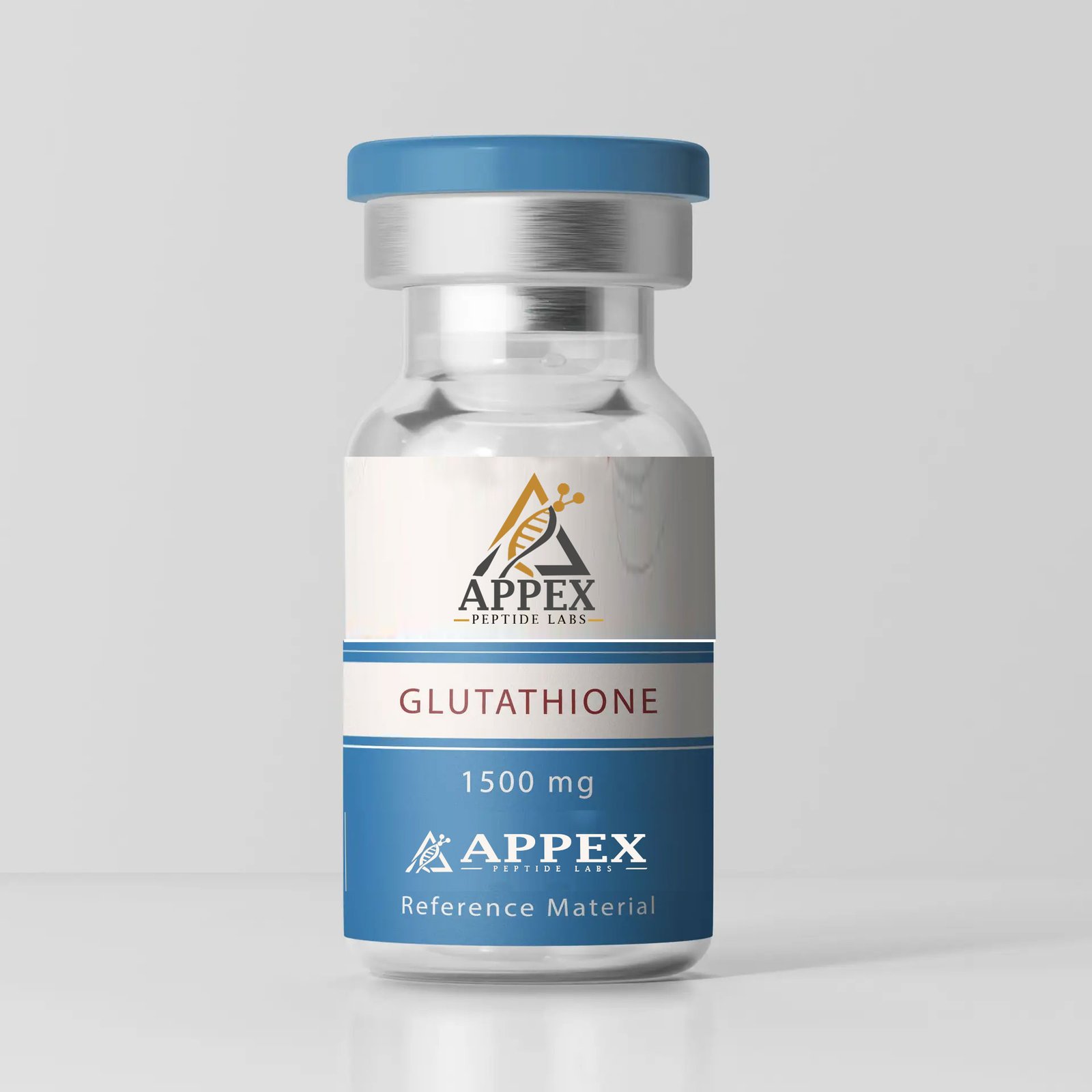
Glutathione Peptide is the reduced form of L-γ-glutamyl-L-cysteinyl-glycine (GSH), a naturally occurring tripeptide recognized as one of the most extensively studied intracellular antioxidants in mammalian cells. Owing to its central role in maintaining cellular redox balance, glutathione has become an indispensable research molecule across molecular biology, biochemistry, toxicology, neuroscience, and mitochondrial physiology.
Researchers utilize Glutathione Peptide to investigate intracellular oxidation-reduction reactions, reactive oxygen species (ROS) metabolism, glutathione-dependent enzyme systems, mitochondrial bioenergetics, and cellular defense mechanisms. Scientific investigations also explore its role as an essential cofactor for glutathione peroxidase (GPx), glutathione S-transferases (GSTs), glyoxalase enzymes, and multiple detoxification pathways involved in maintaining cellular homeostasis.
At Appex Peptide Lab, Glutathione Peptide is manufactured using highly controlled synthesis and purification processes to ensure exceptional purity, structural integrity, and analytical consistency. Each production batch undergoes rigorous third-party verification before release, providing researchers with reliable material suitable for demanding experimental protocols.
Trusted by universities, pharmaceutical developers, biotechnology companies, and research institutions across the United States, Canada, and Australia, Glutathione Peptide delivers dependable quality for advanced laboratory investigations involving oxidative biology and cellular metabolism.
Researchers studying redox biology require analytically verified materials capable of producing reproducible experimental results.
Researchers choose this product because it offers:
Laboratory investigations examining intracellular oxidation-reduction balance, thiol chemistry, and cellular antioxidant systems.
Experimental models evaluating reactive oxygen species (ROS), reactive nitrogen species (RNS), and antioxidant defense mechanisms.
Research exploring mitochondrial bioenergetics, electron transport chain function, and redox-dependent cellular signaling.
Studies investigating metabolic regulation, ATP production, and glutathione-dependent enzymatic pathways.
Research involving glutathione S-transferase (GST), glutathione peroxidase (GPx), and phase II detoxification enzyme systems.
Investigations examining intracellular signaling, protein regulation, transcriptional responses, and cellular homeostasis.
Experimental studies evaluating cellular responses to oxidative compounds, xenobiotics, and environmental stressors.
Suitable for enzyme assays, cofactor investigations, protein chemistry, and biochemical pathway characterization.
| Specification | Details |
|---|---|
| Product Name | Glutathione Peptide |
| Alternative Name | Reduced Glutathione (GSH) |
| Available Sizes | 400 mg, 600 mg, 1200 mg, 1500 mg |
| Purity | ≥99% (HPLC Verified) |
| Peptide Type | Reduced Antioxidant Tripeptide |
| Molecular Formula | C₁₀H₁₇N₃O₆S |
| Molecular Weight | 307.32 g/mol |
| CAS Number | 70-18-8 |
| Appearance | White to off-white lyophilized powder |
| Solubility | Freely soluble in laboratory-grade water and aqueous research buffers |
| Storage Conditions | Store unopened at -20°C. Protect from moisture, oxygen exposure, direct light, and repeated freeze-thaw cycles. |
| Sequence | γ-L-Glutamyl-L-Cysteinyl-Glycine (γ-Glu-Cys-Gly) |
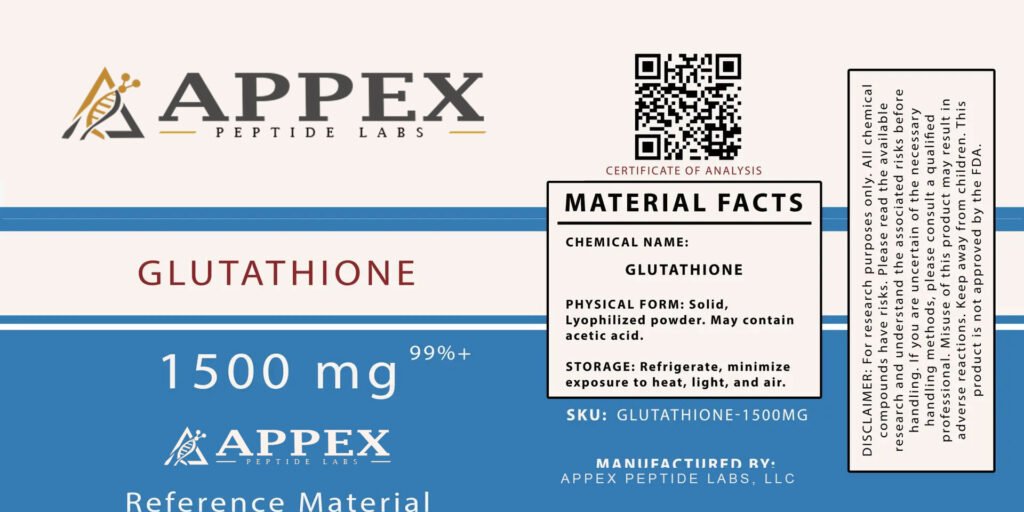
Within laboratory research, Glutathione Peptide is investigated as the principal intracellular low-molecular-weight thiol responsible for maintaining cellular redox homeostasis. Its biologically active sulfhydryl (-SH) group readily participates in reversible oxidation-reduction reactions, making glutathione an essential component of numerous biochemical pathways involved in cellular protection and metabolic regulation.
Researchers extensively study glutathione as a substrate for glutathione peroxidase (GPx), where it participates in the enzymatic reduction of hydrogen peroxide and lipid hydroperoxides while being oxidized to glutathione disulfide (GSSG). The oxidized form is subsequently converted back to reduced glutathione through the action of glutathione reductase, utilizing NADPH as an electron donor. This continuous GSH/GSSG redox cycle serves as a fundamental mechanism for maintaining intracellular redox equilibrium and is widely used as a biochemical indicator of oxidative status in laboratory research.
Beyond antioxidant activity, Glutathione Peptide functions as an essential cofactor for glutathione S-transferases (GSTs), enzymes responsible for conjugation reactions that facilitate metabolism of electrophilic compounds within experimental models. Researchers also investigate its role in protein thiol regulation, disulfide bond formation, mitochondrial signaling, cellular detoxification, sulfur metabolism, and maintenance of protein structure through reversible S-glutathionylation.
Scientific investigations further examine glutathione’s participation in mitochondrial bioenergetics, DNA synthesis, amino acid transport, nitric oxide metabolism, glyoxalase system activity, and intracellular signaling pathways that respond to oxidative stress. Because glutathione is involved in numerous interconnected biochemical processes, it remains one of the most extensively utilized molecules in cellular physiology, toxicology, molecular biology, neuroscience, pharmacology, and metabolism research.
For research use only. Not intended for human consumption or clinical use.
| Size | 1200 mg, 1500 mg, 400 mg, 600 mg, 900 mg |
|---|---|
| Dimensions | 9 × 7 × .5 in |
| Weight | .125 lbs |
Glutathione Peptide is the reduced form of L-γ-glutamyl-L-cysteinyl-glycine (GSH), a naturally occurring tripeptide recognized as one of the most extensively studied intracellular antioxidants in mammalian cells. Owing to its central role in maintaining cellular redox balance, glutathione has become an indispensable research molecule across molecular biology, biochemistry, toxicology, neuroscience, and mitochondrial physiology.
Researchers utilize Glutathione Peptide to investigate intracellular oxidation-reduction reactions, reactive oxygen species (ROS) metabolism, glutathione-dependent enzyme systems, mitochondrial bioenergetics, and cellular defense mechanisms. Scientific investigations also explore its role as an essential cofactor for glutathione peroxidase (GPx), glutathione S-transferases (GSTs), glyoxalase enzymes, and multiple detoxification pathways involved in maintaining cellular homeostasis.
At Appex Peptide Lab, Glutathione Peptide is manufactured using highly controlled synthesis and purification processes to ensure exceptional purity, structural integrity, and analytical consistency. Each production batch undergoes rigorous third-party verification before release, providing researchers with reliable material suitable for demanding experimental protocols.
Trusted by universities, pharmaceutical developers, biotechnology companies, and research institutions across the United States, Canada, and Australia, Glutathione Peptide delivers dependable quality for advanced laboratory investigations involving oxidative biology and cellular metabolism.
Researchers studying redox biology require analytically verified materials capable of producing reproducible experimental results.
Researchers choose this product because it offers:
Laboratory investigations examining intracellular oxidation-reduction balance, thiol chemistry, and cellular antioxidant systems.
Experimental models evaluating reactive oxygen species (ROS), reactive nitrogen species (RNS), and antioxidant defense mechanisms.
Research exploring mitochondrial bioenergetics, electron transport chain function, and redox-dependent cellular signaling.
Studies investigating metabolic regulation, ATP production, and glutathione-dependent enzymatic pathways.
Research involving glutathione S-transferase (GST), glutathione peroxidase (GPx), and phase II detoxification enzyme systems.
Investigations examining intracellular signaling, protein regulation, transcriptional responses, and cellular homeostasis.
Experimental studies evaluating cellular responses to oxidative compounds, xenobiotics, and environmental stressors.
Suitable for enzyme assays, cofactor investigations, protein chemistry, and biochemical pathway characterization.
| Specification | Details |
|---|---|
| Product Name | Glutathione Peptide |
| Alternative Name | Reduced Glutathione (GSH) |
| Available Sizes | 400 mg, 600 mg, 1200 mg, 1500 mg |
| Purity | ≥99% (HPLC Verified) |
| Peptide Type | Reduced Antioxidant Tripeptide |
| Molecular Formula | C₁₀H₁₇N₃O₆S |
| Molecular Weight | 307.32 g/mol |
| CAS Number | 70-18-8 |
| Appearance | White to off-white lyophilized powder |
| Solubility | Freely soluble in laboratory-grade water and aqueous research buffers |
| Storage Conditions | Store unopened at -20°C. Protect from moisture, oxygen exposure, direct light, and repeated freeze-thaw cycles. |
| Sequence | γ-L-Glutamyl-L-Cysteinyl-Glycine (γ-Glu-Cys-Gly) |
Within laboratory research, Glutathione Peptide is investigated as the principal intracellular low-molecular-weight thiol responsible for maintaining cellular redox homeostasis. Its biologically active sulfhydryl (-SH) group readily participates in reversible oxidation-reduction reactions, making glutathione an essential component of numerous biochemical pathways involved in cellular protection and metabolic regulation.
Researchers extensively study glutathione as a substrate for glutathione peroxidase (GPx), where it participates in the enzymatic reduction of hydrogen peroxide and lipid hydroperoxides while being oxidized to glutathione disulfide (GSSG). The oxidized form is subsequently converted back to reduced glutathione through the action of glutathione reductase, utilizing NADPH as an electron donor. This continuous GSH/GSSG redox cycle serves as a fundamental mechanism for maintaining intracellular redox equilibrium and is widely used as a biochemical indicator of oxidative status in laboratory research.
Beyond antioxidant activity, Glutathione Peptide functions as an essential cofactor for glutathione S-transferases (GSTs), enzymes responsible for conjugation reactions that facilitate metabolism of electrophilic compounds within experimental models. Researchers also investigate its role in protein thiol regulation, disulfide bond formation, mitochondrial signaling, cellular detoxification, sulfur metabolism, and maintenance of protein structure through reversible S-glutathionylation.
Scientific investigations further examine glutathione’s participation in mitochondrial bioenergetics, DNA synthesis, amino acid transport, nitric oxide metabolism, glyoxalase system activity, and intracellular signaling pathways that respond to oxidative stress. Because glutathione is involved in numerous interconnected biochemical processes, it remains one of the most extensively utilized molecules in cellular physiology, toxicology, molecular biology, neuroscience, pharmacology, and metabolism research.
For research use only. Not intended for human consumption or clinical use.
| Size | 1200 mg, 1500 mg, 400 mg, 600 mg, 900 mg |
|---|---|
| Dimensions | 9 × 7 × .5 in |
| Weight | .125 lbs |