Bulk Orders. Better Value.
Research institutions, universities and clinical teams qualify for volume discounts. Contact our team to discuss custom formulations and bulk pricing.

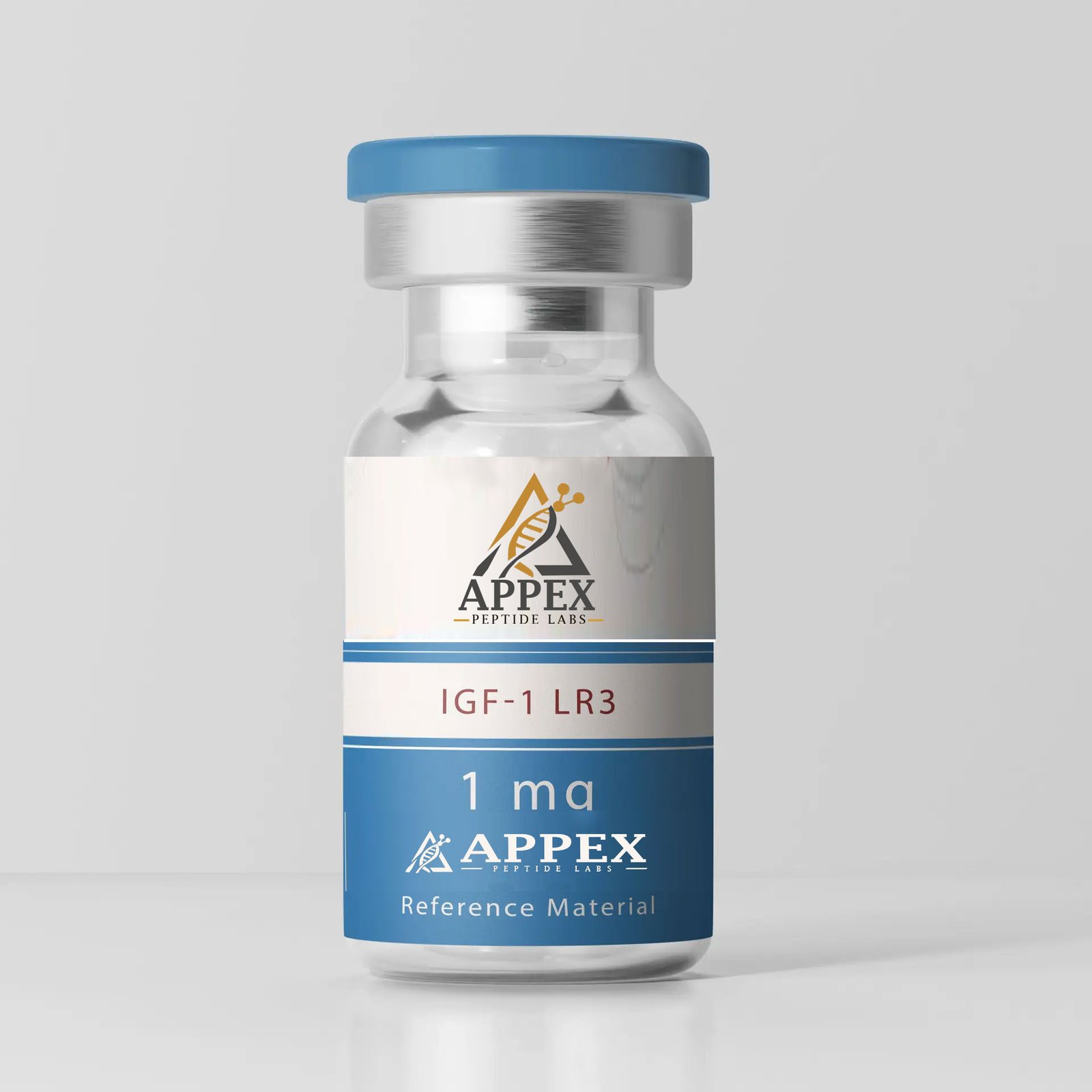
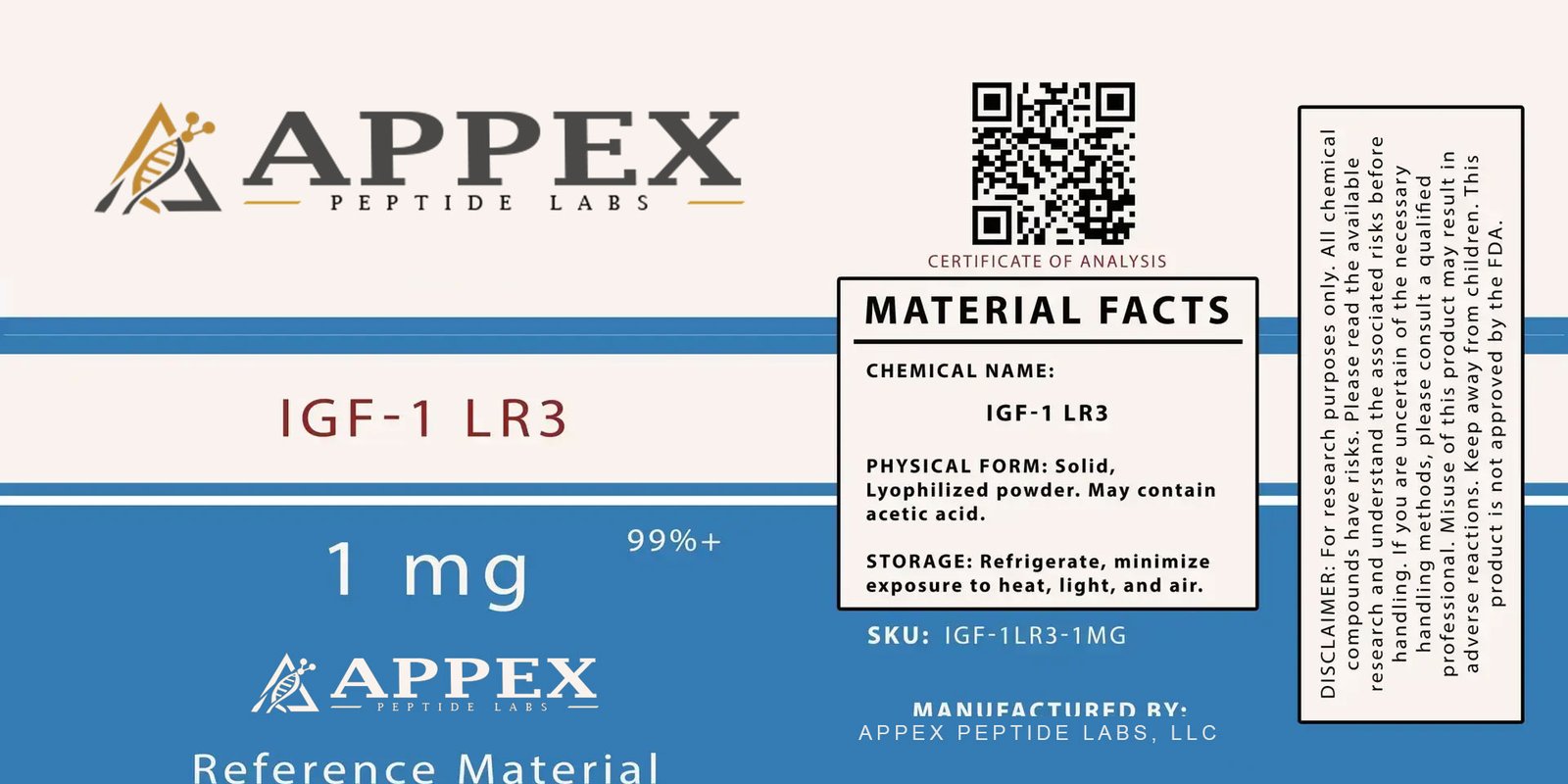

IGF-1 LR3 Peptide is a recombinant long-acting analog of endogenous insulin-like growth factor-1 (IGF-1) developed to provide sustained receptor activation in laboratory research. Compared with native IGF-1, this engineered analog contains two structural modifications: substitution of glutamic acid with arginine at position three (Arg³) and a 13-amino-acid N-terminal extension (MFPAMPLSSLFVNG). These modifications substantially reduce affinity for IGF-binding proteins (IGFBPs), allowing prolonged receptor availability and enhanced experimental stability.
Because of its extended biological persistence in laboratory models, IGF-1 LR3 has become a widely accepted research tool for investigations involving IGF-1 receptor (IGF-1R) signaling, PI3K/Akt pathways, MAPK/ERK activation, mTOR regulation, glucose metabolism, protein synthesis, and cellular bioenergetics. Scientists also utilize this peptide to examine mechanisms governing cellular proliferation, differentiation, tissue development, and receptor pharmacology.
Beyond endocrinology, IGF-1 LR3 Peptide is incorporated into molecular biology, regenerative science, developmental biology, neuroscience, peptide pharmacology, and biotechnology research. Its reproducible biochemical characteristics and defined recombinant structure make it an essential experimental reagent for universities, pharmaceutical companies, biotechnology organizations, and advanced life science laboratories.
Each batch is manufactured under stringent quality-controlled conditions, analytically verified for purity and sequence integrity, and supplied as a stable lyophilized powder with a comprehensive Certificate of Analysis to ensure reproducible laboratory performance.
For research use only. Not intended for human consumption or clinical use.
IGF-1 LR3 Peptide is extensively utilized in laboratory investigations examining IGF-1 receptor activation, receptor phosphorylation, ligand binding kinetics, receptor internalization, and downstream signaling.
Researchers employ IGF-1 LR3 to investigate PI3K/Akt, MAPK/ERK, mTOR, IRS-1, and other intracellular signaling pathways involved in cellular communication and metabolic regulation.
Experimental models utilize IGF-1 LR3 to study cell cycle progression, differentiation, transcriptional regulation, protein synthesis, and mechanisms governing cellular growth.
Scientists investigate glucose transporter regulation, glycogen metabolism, amino acid utilization, mitochondrial bioenergetics, and metabolic signaling pathways using IGF-1 LR3.
IGF-1 LR3 is incorporated into laboratory investigations examining stem cell biology, satellite cell signaling, extracellular matrix interactions, developmental pathways, and tissue remodeling mechanisms.
Researchers utilize IGF-1 LR3 to investigate receptor affinity, peptide stability, pharmacodynamics, analytical characterization, and structure-function relationships.
| Specification | Details |
|---|---|
| Product Name | IGF-1 LR3 Peptide |
| Synonyms | Long R³ IGF-1, LR3 IGF-1, Recombinant Long R³ Insulin-Like Growth Factor-1 |
| Purity | ≥99% (HPLC Verified) |
| Molecular Formula | C₄₀₀H₆₂₅N₁₁₁O₁₁₅S₉* |
| Molecular Weight | Approximately 9,200 Da |
| CAS Number | 946870-92-4 |
| Sequence | MFPAMPLSSLFVNG-Arg³-IGF-1 (83 amino acids total) |
| Appearance | White to off-white lyophilized powder |
| Solubility | Soluble in sterile bacteriostatic water and laboratory-grade aqueous buffers |
| Storage Conditions | Store lyophilized peptide at 2–8°C. For long-term storage, maintain at −20°C in a dry, light-protected environment. Avoid repeated freeze-thaw cycles after reconstitution. |
| Available Sizes | 0.1 mg, 1 mg |
*Representative molecular formula for the recombinant peptide. Minor variation may occur depending on salt form.
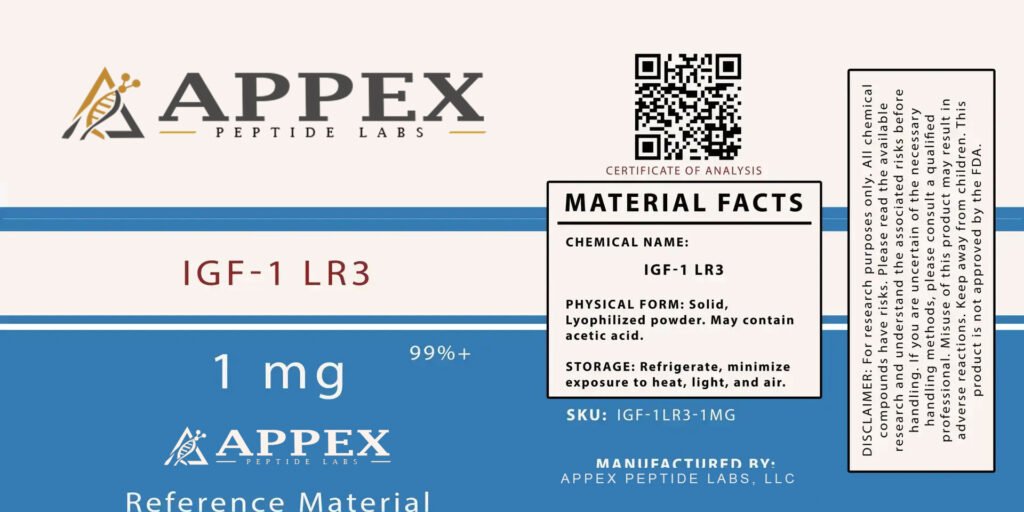
IGF-1 LR3 Peptide is a recombinant analog of human insulin-like growth factor-1 engineered to provide prolonged activation of the IGF-1 receptor (IGF-1R). The peptide incorporates two structural modifications: substitution of glutamic acid with arginine at position three (Arg³) and a 13-amino-acid N-terminal extension (MFPAMPLSSLFVNG). These modifications substantially reduce affinity for endogenous insulin-like growth factor-binding proteins (IGFBPs), thereby increasing receptor availability and extending biological persistence in experimental systems.
Upon binding to the IGF-1 receptor, a receptor tyrosine kinase, IGF-1 LR3 promotes receptor autophosphorylation and activation of multiple intracellular signaling cascades. One of the principal pathways involves recruitment and phosphorylation of insulin receptor substrate (IRS) proteins, leading to activation of phosphatidylinositol 3-kinase (PI3K) and downstream Akt (protein kinase B) signaling. This pathway regulates cellular metabolism, protein synthesis, glucose utilization, mitochondrial activity, and intracellular survival signaling within laboratory models.
IGF-1 LR3 also activates the Ras/Raf/MEK/ERK (MAPK) signaling cascade, which governs gene transcription, cell cycle regulation, differentiation, and cellular proliferation. Additional studies demonstrate activation of mTOR, a central regulator of protein translation, ribosomal biogenesis, and cellular growth. Researchers frequently investigate these signaling pathways to better understand molecular mechanisms controlling cellular adaptation and metabolic regulation.
Experimental investigations have further explored interactions with glucose transporter trafficking, amino acid uptake, glycogen metabolism, satellite cell activation, extracellular matrix remodeling, and mitochondrial bioenergetics. Because IGF-1 LR3 remains available for receptor interaction longer than native IGF-1 due to reduced IGFBP binding, it provides a valuable experimental model for sustained IGF-1 receptor signaling under controlled laboratory conditions.
Its well-characterized recombinant structure, extended receptor activity, and reproducible biochemical properties have established IGF-1 LR3 Peptide as an important research reagent for endocrinology, molecular biology, regenerative science, developmental biology, peptide pharmacology, and biotechnology laboratories investigating growth factor signaling and cellular communication.
For research use only. Not intended for human consumption or clinical use.
| Size | 0.1mg, 1mg |
|---|---|
| Weight | .125 lbs |
| Dimensions | 9 × 7 × .5 in |
IGF-1 LR3 Peptide is a recombinant long-acting analog of endogenous insulin-like growth factor-1 (IGF-1) developed to provide sustained receptor activation in laboratory research. Compared with native IGF-1, this engineered analog contains two structural modifications: substitution of glutamic acid with arginine at position three (Arg³) and a 13-amino-acid N-terminal extension (MFPAMPLSSLFVNG). These modifications substantially reduce affinity for IGF-binding proteins (IGFBPs), allowing prolonged receptor availability and enhanced experimental stability.
Because of its extended biological persistence in laboratory models, IGF-1 LR3 has become a widely accepted research tool for investigations involving IGF-1 receptor (IGF-1R) signaling, PI3K/Akt pathways, MAPK/ERK activation, mTOR regulation, glucose metabolism, protein synthesis, and cellular bioenergetics. Scientists also utilize this peptide to examine mechanisms governing cellular proliferation, differentiation, tissue development, and receptor pharmacology.
Beyond endocrinology, IGF-1 LR3 Peptide is incorporated into molecular biology, regenerative science, developmental biology, neuroscience, peptide pharmacology, and biotechnology research. Its reproducible biochemical characteristics and defined recombinant structure make it an essential experimental reagent for universities, pharmaceutical companies, biotechnology organizations, and advanced life science laboratories.
Each batch is manufactured under stringent quality-controlled conditions, analytically verified for purity and sequence integrity, and supplied as a stable lyophilized powder with a comprehensive Certificate of Analysis to ensure reproducible laboratory performance.
For research use only. Not intended for human consumption or clinical use.
IGF-1 LR3 Peptide is extensively utilized in laboratory investigations examining IGF-1 receptor activation, receptor phosphorylation, ligand binding kinetics, receptor internalization, and downstream signaling.
Researchers employ IGF-1 LR3 to investigate PI3K/Akt, MAPK/ERK, mTOR, IRS-1, and other intracellular signaling pathways involved in cellular communication and metabolic regulation.
Experimental models utilize IGF-1 LR3 to study cell cycle progression, differentiation, transcriptional regulation, protein synthesis, and mechanisms governing cellular growth.
Scientists investigate glucose transporter regulation, glycogen metabolism, amino acid utilization, mitochondrial bioenergetics, and metabolic signaling pathways using IGF-1 LR3.
IGF-1 LR3 is incorporated into laboratory investigations examining stem cell biology, satellite cell signaling, extracellular matrix interactions, developmental pathways, and tissue remodeling mechanisms.
Researchers utilize IGF-1 LR3 to investigate receptor affinity, peptide stability, pharmacodynamics, analytical characterization, and structure-function relationships.
| Specification | Details |
|---|---|
| Product Name | IGF-1 LR3 Peptide |
| Synonyms | Long R³ IGF-1, LR3 IGF-1, Recombinant Long R³ Insulin-Like Growth Factor-1 |
| Purity | ≥99% (HPLC Verified) |
| Molecular Formula | C₄₀₀H₆₂₅N₁₁₁O₁₁₅S₉* |
| Molecular Weight | Approximately 9,200 Da |
| CAS Number | 946870-92-4 |
| Sequence | MFPAMPLSSLFVNG-Arg³-IGF-1 (83 amino acids total) |
| Appearance | White to off-white lyophilized powder |
| Solubility | Soluble in sterile bacteriostatic water and laboratory-grade aqueous buffers |
| Storage Conditions | Store lyophilized peptide at 2–8°C. For long-term storage, maintain at −20°C in a dry, light-protected environment. Avoid repeated freeze-thaw cycles after reconstitution. |
| Available Sizes | 0.1 mg, 1 mg |
*Representative molecular formula for the recombinant peptide. Minor variation may occur depending on salt form.
IGF-1 LR3 Peptide is a recombinant analog of human insulin-like growth factor-1 engineered to provide prolonged activation of the IGF-1 receptor (IGF-1R). The peptide incorporates two structural modifications: substitution of glutamic acid with arginine at position three (Arg³) and a 13-amino-acid N-terminal extension (MFPAMPLSSLFVNG). These modifications substantially reduce affinity for endogenous insulin-like growth factor-binding proteins (IGFBPs), thereby increasing receptor availability and extending biological persistence in experimental systems.
Upon binding to the IGF-1 receptor, a receptor tyrosine kinase, IGF-1 LR3 promotes receptor autophosphorylation and activation of multiple intracellular signaling cascades. One of the principal pathways involves recruitment and phosphorylation of insulin receptor substrate (IRS) proteins, leading to activation of phosphatidylinositol 3-kinase (PI3K) and downstream Akt (protein kinase B) signaling. This pathway regulates cellular metabolism, protein synthesis, glucose utilization, mitochondrial activity, and intracellular survival signaling within laboratory models.
IGF-1 LR3 also activates the Ras/Raf/MEK/ERK (MAPK) signaling cascade, which governs gene transcription, cell cycle regulation, differentiation, and cellular proliferation. Additional studies demonstrate activation of mTOR, a central regulator of protein translation, ribosomal biogenesis, and cellular growth. Researchers frequently investigate these signaling pathways to better understand molecular mechanisms controlling cellular adaptation and metabolic regulation.
Experimental investigations have further explored interactions with glucose transporter trafficking, amino acid uptake, glycogen metabolism, satellite cell activation, extracellular matrix remodeling, and mitochondrial bioenergetics. Because IGF-1 LR3 remains available for receptor interaction longer than native IGF-1 due to reduced IGFBP binding, it provides a valuable experimental model for sustained IGF-1 receptor signaling under controlled laboratory conditions.
Its well-characterized recombinant structure, extended receptor activity, and reproducible biochemical properties have established IGF-1 LR3 Peptide as an important research reagent for endocrinology, molecular biology, regenerative science, developmental biology, peptide pharmacology, and biotechnology laboratories investigating growth factor signaling and cellular communication.
For research use only. Not intended for human consumption or clinical use.
| Size | 0.1mg, 1mg |
|---|---|
| Weight | .125 lbs |
| Dimensions | 9 × 7 × .5 in |