Bulk Orders. Better Value.
Research institutions, universities and clinical teams qualify for volume discounts. Contact our team to discuss custom formulations and bulk pricing.

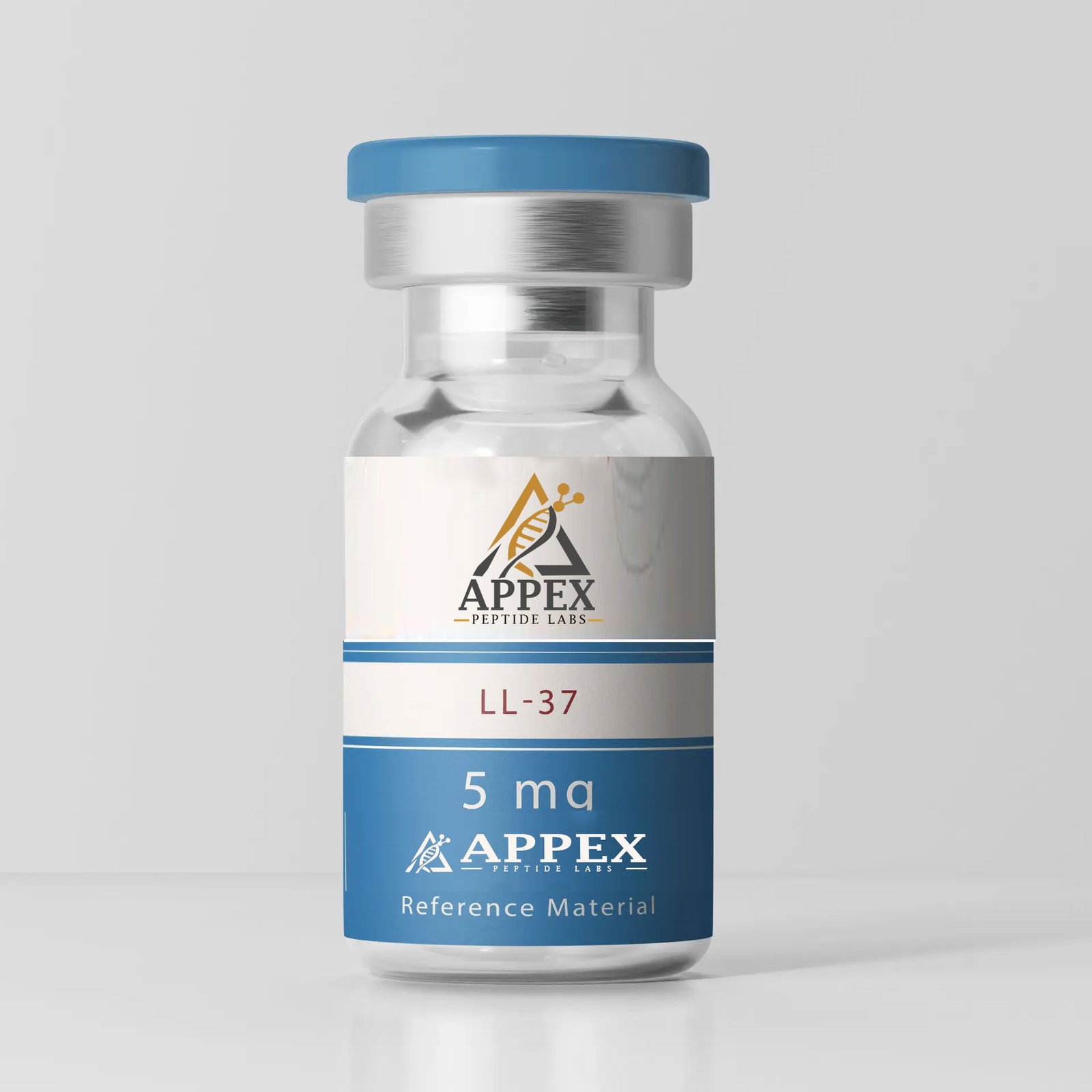
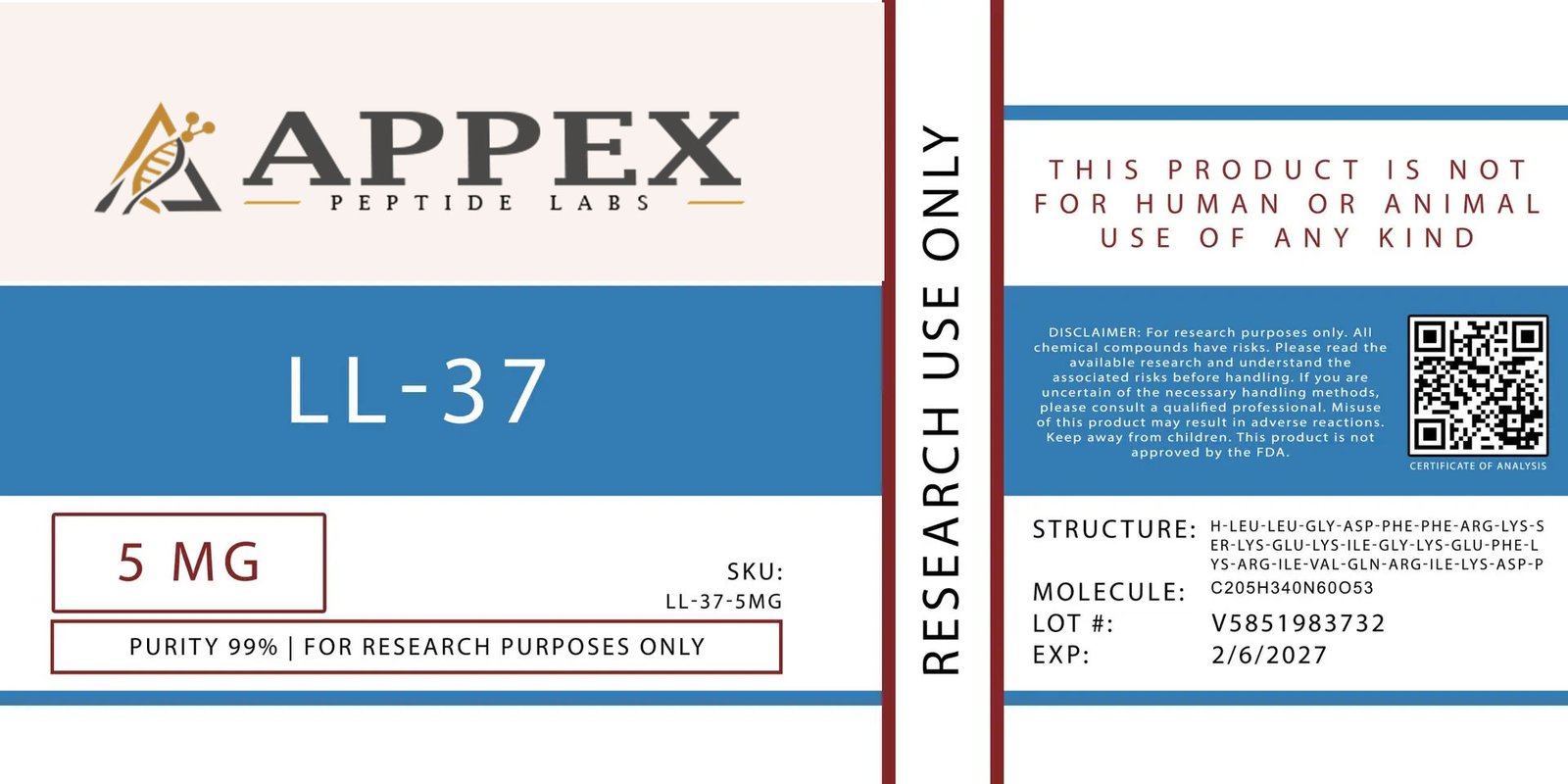

LL-37 (Cathelicidin) Peptide is the biologically active C-terminal fragment of the human antimicrobial precursor protein hCAP-18 (Human Cationic Antimicrobial Protein-18). Produced naturally by neutrophils, macrophages, epithelial cells, and other innate immune cells, LL-37 has become one of the most extensively investigated host-defense peptides due to its multifunctional roles in antimicrobial activity, immune modulation, epithelial biology, and cellular signaling.
Scientific investigations utilize LL-37 (Cathelicidin) Peptide across immunology, microbiology, infectious disease research, molecular biology, peptide chemistry, and regenerative biology. Laboratory studies examine microbial membrane interactions, pattern recognition receptor signaling, cytokine regulation, leukocyte recruitment, epithelial barrier integrity, chemotaxis, wound biology, angiogenesis, and host-pathogen interactions. Researchers also investigate its influence on Toll-like receptor (TLR) signaling, inflammasome regulation, autophagy, and innate immune communication.
Unlike conventional antimicrobial compounds, LL-37 functions as both an antimicrobial effector molecule and an immunomodulatory signaling peptide, making it valuable for mechanistic studies of host defense pathways. Its broad experimental utility has established LL-37 as a reference peptide for universities, biotechnology companies, pharmaceutical organizations, and life science laboratories worldwide.
Each batch is synthesized under rigorous quality-controlled manufacturing standards, analytically verified for purity and sequence identity, and supplied as a stable lyophilized peptide with a complete Certificate of Analysis to ensure reproducible laboratory performance.
For research use only. Not intended for human consumption or clinical use.

LL-37 (Cathelicidin) Peptide is extensively utilized to investigate host defense mechanisms, innate immune signaling, antimicrobial peptide biology, leukocyte activation, and immune communication pathways.
Researchers employ LL-37 to examine microbial membrane disruption, bacterial physiology, biofilm formation, membrane permeability, and host-pathogen interactions under controlled laboratory conditions.
Experimental models utilize LL-37 to study epithelial barrier function, epithelial cell signaling, cellular migration, tissue remodeling, and mucosal defense mechanisms.
Scientists investigate cytokine production, chemokine regulation, Toll-like receptor signaling, inflammasome activation, NF-κB signaling, and innate immune pathway modulation.
Laboratory investigations incorporate LL-37 into studies evaluating dendritic cell biology, macrophage activation, neutrophil function, adaptive immune communication, and peptide-mediated signaling.
Researchers utilize LL-37 for peptide stability studies, analytical characterization, membrane interaction analysis, structure-function investigations, formulation development, and peptide engineering.
| Specification | Details |
|---|---|
| Product Name | LL-37 (Cathelicidin) Peptide |
| Synonyms | LL-37, Human Cathelicidin, CAP-18 Peptide |
| Purity | ≥99% (HPLC Verified) |
| Molecular Formula | C₁₈₃H₃₂₁N₆₀O₅₃ |
| Molecular Weight | Approximately 4,493.3 Da |
| CAS Number | 154947-66-7 |
| Sequence | LLGDFFRKSKEKIGKEFKRIVQRIKDFLRNLVPRTES |
| Appearance | White to off-white lyophilized powder |
| Solubility | Soluble in sterile water, dilute acetic acid, and standard laboratory aqueous buffers |
| Storage Conditions | Store lyophilized peptide at 2–8°C. For extended storage, maintain at −20°C in a dry, light-protected environment. Minimize repeated freeze-thaw cycles after reconstitution. |
| Available Sizes | 5 mg, 10 mg |
LL-37 (Cathelicidin) Peptide is the biologically active antimicrobial fragment generated through proteolytic processing of the precursor protein hCAP-18. As the only human cathelicidin peptide identified to date, LL-37 functions as a multifunctional component of the innate immune system with activities extending beyond direct antimicrobial membrane interactions. Its amphipathic α-helical structure and net positive charge enable selective interactions with negatively charged phospholipid membranes commonly found in microbial organisms, making it a widely investigated model for membrane biology and host defense research.
Published laboratory studies demonstrate that LL-37 associates with microbial membranes through electrostatic interactions, followed by membrane insertion and disruption. Experimental investigations have explored mechanisms including pore formation, membrane destabilization, lipid bilayer permeabilization, and alterations in membrane integrity. Researchers continue to examine how peptide concentration, membrane composition, ionic conditions, and peptide conformation influence these interactions.
Beyond membrane activity, LL-37 serves as an important immunomodulatory signaling molecule. Laboratory investigations have demonstrated interactions with multiple receptors, including formyl peptide receptor-like 1 (FPR2/ALX), P2X7 purinergic receptors, epidermal growth factor receptor (EGFR) signaling pathways, and selected Toll-like receptor-associated mechanisms. Activation of these pathways contributes to investigations of leukocyte chemotaxis, dendritic cell maturation, macrophage signaling, epithelial communication, and cytokine regulation.
Researchers also investigate LL-37-mediated modulation of intracellular signaling pathways involving NF-κB, MAPK/ERK, PI3K/Akt, inflammasome activation, reactive oxygen species regulation, and autophagy. Additional experimental models evaluate peptide participation in epithelial barrier maintenance, angiogenesis, extracellular matrix remodeling, and cellular migration under controlled laboratory conditions.
Its multifunctional molecular profile, defined amino acid sequence, and extensive documentation in peer-reviewed research have established LL-37 (Cathelicidin) Peptide as a foundational research reagent for immunology, microbiology, peptide chemistry, molecular biology, biotechnology, and life science laboratories investigating innate immunity, antimicrobial peptide biology, and host defense signaling.
For research use only. Not intended for human consumption or clinical use.
| Size | 5mg |
|---|---|
| Weight | .125 lbs |
| Dimensions | 9 × 7 × .5 in |
LL-37 (Cathelicidin) Peptide is the biologically active C-terminal fragment of the human antimicrobial precursor protein hCAP-18 (Human Cationic Antimicrobial Protein-18). Produced naturally by neutrophils, macrophages, epithelial cells, and other innate immune cells, LL-37 has become one of the most extensively investigated host-defense peptides due to its multifunctional roles in antimicrobial activity, immune modulation, epithelial biology, and cellular signaling.
Scientific investigations utilize LL-37 (Cathelicidin) Peptide across immunology, microbiology, infectious disease research, molecular biology, peptide chemistry, and regenerative biology. Laboratory studies examine microbial membrane interactions, pattern recognition receptor signaling, cytokine regulation, leukocyte recruitment, epithelial barrier integrity, chemotaxis, wound biology, angiogenesis, and host-pathogen interactions. Researchers also investigate its influence on Toll-like receptor (TLR) signaling, inflammasome regulation, autophagy, and innate immune communication.
Unlike conventional antimicrobial compounds, LL-37 functions as both an antimicrobial effector molecule and an immunomodulatory signaling peptide, making it valuable for mechanistic studies of host defense pathways. Its broad experimental utility has established LL-37 as a reference peptide for universities, biotechnology companies, pharmaceutical organizations, and life science laboratories worldwide.
Each batch is synthesized under rigorous quality-controlled manufacturing standards, analytically verified for purity and sequence identity, and supplied as a stable lyophilized peptide with a complete Certificate of Analysis to ensure reproducible laboratory performance.
For research use only. Not intended for human consumption or clinical use.
LL-37 (Cathelicidin) Peptide is extensively utilized to investigate host defense mechanisms, innate immune signaling, antimicrobial peptide biology, leukocyte activation, and immune communication pathways.
Researchers employ LL-37 to examine microbial membrane disruption, bacterial physiology, biofilm formation, membrane permeability, and host-pathogen interactions under controlled laboratory conditions.
Experimental models utilize LL-37 to study epithelial barrier function, epithelial cell signaling, cellular migration, tissue remodeling, and mucosal defense mechanisms.
Scientists investigate cytokine production, chemokine regulation, Toll-like receptor signaling, inflammasome activation, NF-κB signaling, and innate immune pathway modulation.
Laboratory investigations incorporate LL-37 into studies evaluating dendritic cell biology, macrophage activation, neutrophil function, adaptive immune communication, and peptide-mediated signaling.
Researchers utilize LL-37 for peptide stability studies, analytical characterization, membrane interaction analysis, structure-function investigations, formulation development, and peptide engineering.
| Specification | Details |
|---|---|
| Product Name | LL-37 (Cathelicidin) Peptide |
| Synonyms | LL-37, Human Cathelicidin, CAP-18 Peptide |
| Purity | ≥99% (HPLC Verified) |
| Molecular Formula | C₁₈₃H₃₂₁N₆₀O₅₃ |
| Molecular Weight | Approximately 4,493.3 Da |
| CAS Number | 154947-66-7 |
| Sequence | LLGDFFRKSKEKIGKEFKRIVQRIKDFLRNLVPRTES |
| Appearance | White to off-white lyophilized powder |
| Solubility | Soluble in sterile water, dilute acetic acid, and standard laboratory aqueous buffers |
| Storage Conditions | Store lyophilized peptide at 2–8°C. For extended storage, maintain at −20°C in a dry, light-protected environment. Minimize repeated freeze-thaw cycles after reconstitution. |
| Available Sizes | 5 mg, 10 mg |
LL-37 (Cathelicidin) Peptide is the biologically active antimicrobial fragment generated through proteolytic processing of the precursor protein hCAP-18. As the only human cathelicidin peptide identified to date, LL-37 functions as a multifunctional component of the innate immune system with activities extending beyond direct antimicrobial membrane interactions. Its amphipathic α-helical structure and net positive charge enable selective interactions with negatively charged phospholipid membranes commonly found in microbial organisms, making it a widely investigated model for membrane biology and host defense research.
Published laboratory studies demonstrate that LL-37 associates with microbial membranes through electrostatic interactions, followed by membrane insertion and disruption. Experimental investigations have explored mechanisms including pore formation, membrane destabilization, lipid bilayer permeabilization, and alterations in membrane integrity. Researchers continue to examine how peptide concentration, membrane composition, ionic conditions, and peptide conformation influence these interactions.
Beyond membrane activity, LL-37 serves as an important immunomodulatory signaling molecule. Laboratory investigations have demonstrated interactions with multiple receptors, including formyl peptide receptor-like 1 (FPR2/ALX), P2X7 purinergic receptors, epidermal growth factor receptor (EGFR) signaling pathways, and selected Toll-like receptor-associated mechanisms. Activation of these pathways contributes to investigations of leukocyte chemotaxis, dendritic cell maturation, macrophage signaling, epithelial communication, and cytokine regulation.
Researchers also investigate LL-37-mediated modulation of intracellular signaling pathways involving NF-κB, MAPK/ERK, PI3K/Akt, inflammasome activation, reactive oxygen species regulation, and autophagy. Additional experimental models evaluate peptide participation in epithelial barrier maintenance, angiogenesis, extracellular matrix remodeling, and cellular migration under controlled laboratory conditions.
Its multifunctional molecular profile, defined amino acid sequence, and extensive documentation in peer-reviewed research have established LL-37 (Cathelicidin) Peptide as a foundational research reagent for immunology, microbiology, peptide chemistry, molecular biology, biotechnology, and life science laboratories investigating innate immunity, antimicrobial peptide biology, and host defense signaling.
For research use only. Not intended for human consumption or clinical use.
| Size | 5mg |
|---|---|
| Weight | .125 lbs |
| Dimensions | 9 × 7 × .5 in |