Bulk Orders. Better Value.
Research institutions, universities and clinical teams qualify for volume discounts. Contact our team to discuss custom formulations and bulk pricing.

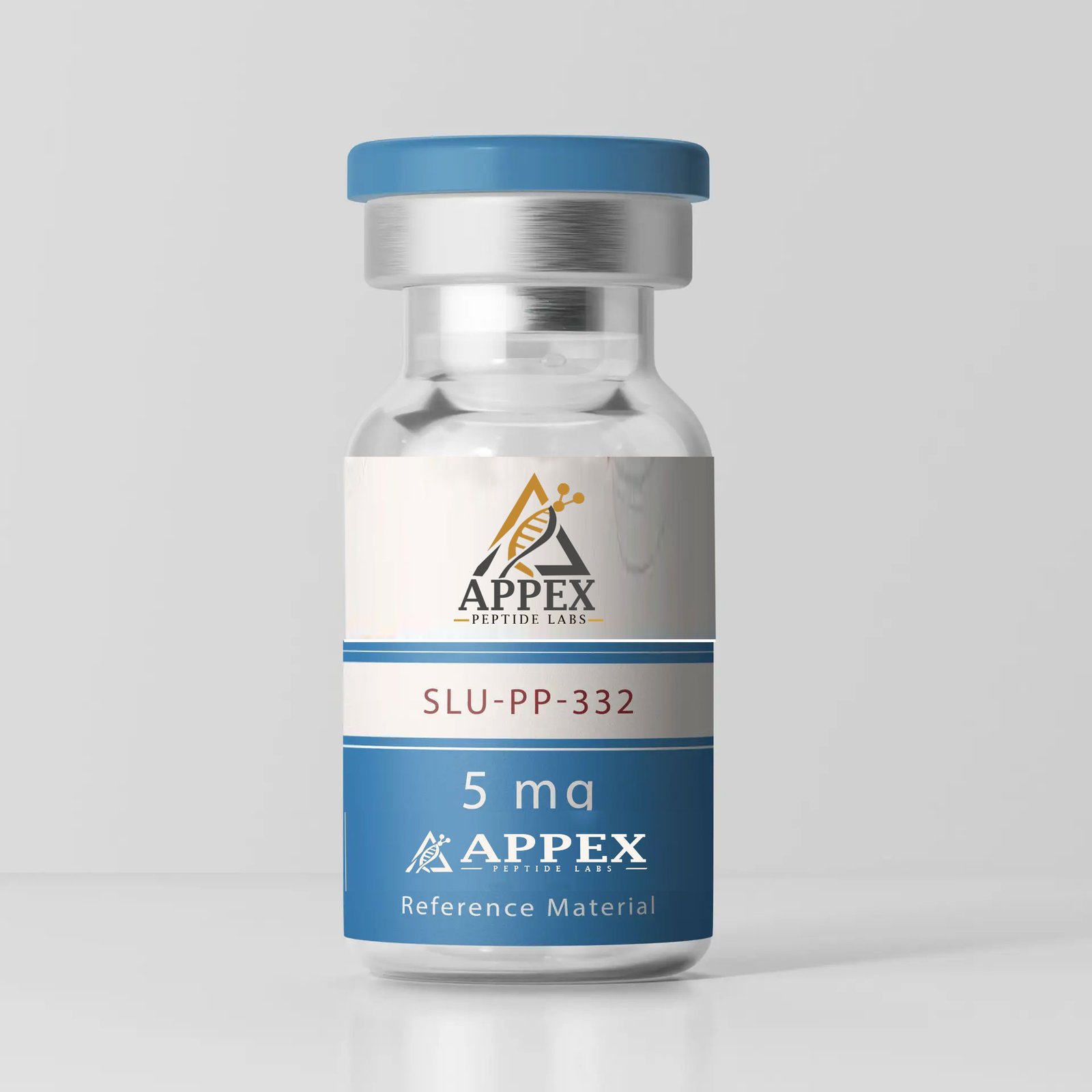
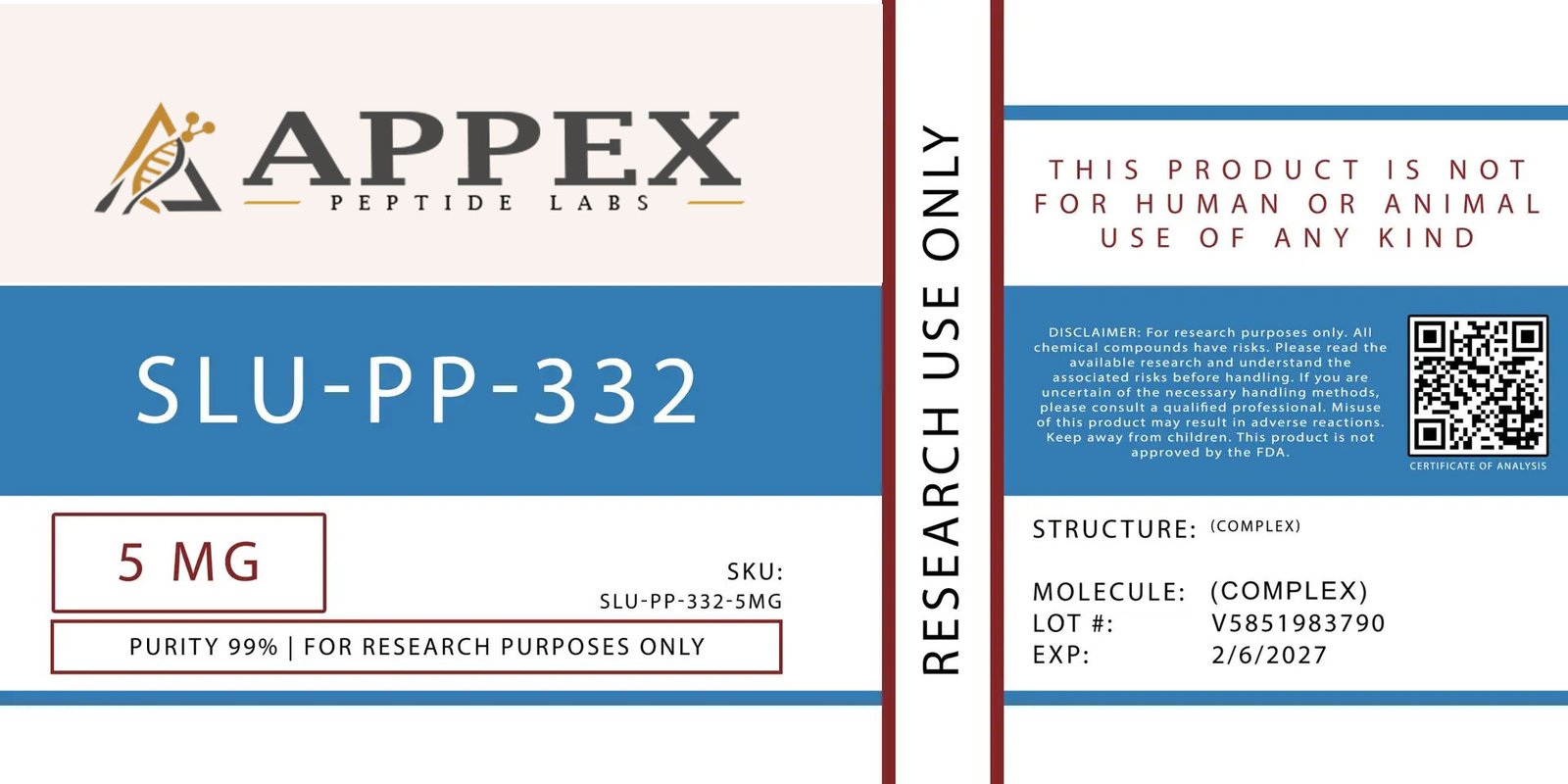
SLU-PP-332 is a synthetic, non-peptide small molecule originally developed by researchers at Saint Louis University as a potent pan-agonist of estrogen-related receptors ERRα, ERRβ, and ERRγ. These orphan nuclear receptors function as ligand-regulated transcription factors that coordinate genes involved in mitochondrial function, oxidative metabolism, fatty acid utilization, and cellular energy production. Because endogenous ligands for ERRs remain incompletely characterized, SLU-PP-332 has become an important experimental compound for investigating receptor activation under controlled laboratory conditions.
Scientific investigations utilize SLU-PP-332 across molecular biology, metabolism, exercise physiology, mitochondrial biology, pharmacology, and systems biology. Researchers employ this compound to examine ERR-mediated transcription, PGC-1α coactivation, oxidative phosphorylation, mitochondrial biogenesis, fatty acid oxidation, glucose metabolism, and cellular bioenergetics.
Unlike estrogen receptor agonists, SLU-PP-332 demonstrates high selectivity for ERR family members without measurable activation of classical estrogen receptors (ERα or ERβ), allowing researchers to isolate ERR-specific signaling pathways. Its reproducible chemical properties and defined pharmacological profile make it a valuable experimental reagent for universities, biotechnology companies, pharmaceutical organizations, and life science laboratories.
Each batch is manufactured under rigorous quality-controlled procedures, analytically verified for purity and structural identity, and supplied as a stable crystalline powder with a comprehensive Certificate of Analysis to ensure reproducible laboratory investigations.
For research use only. Not intended for human consumption or clinical use.
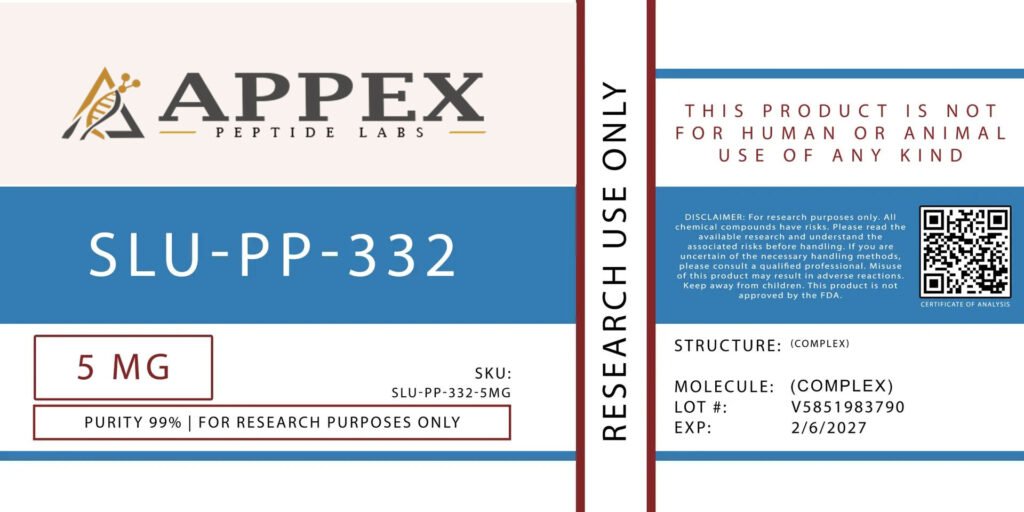
SLU-PP-332 is extensively utilized in laboratory investigations examining ERRα, ERRβ, and ERRγ activation, receptor pharmacology, transcriptional regulation, and orphan nuclear receptor biology.
Researchers employ SLU-PP-332 to investigate mitochondrial biogenesis, oxidative phosphorylation, respiratory capacity, mitochondrial DNA regulation, and organelle function.
Experimental models utilize SLU-PP-332 to study ATP production, oxidative metabolism, substrate utilization, metabolic flexibility, and cellular energy homeostasis.
Scientists investigate ERR-mediated gene expression, PGC-1α coactivation, nuclear receptor signaling, chromatin interactions, and transcription factor regulation.
Laboratory investigations examine β-oxidation pathways, lipid metabolism, mitochondrial fatty acid transport, acyl-CoA metabolism, and metabolic pathway integration.
Researchers utilize SLU-PP-332 for receptor affinity studies, analytical characterization, medicinal chemistry, structure-activity relationship investigations, and formulation development.
| Specification | Details |
|---|---|
| Product Name | SLU-PP-332 |
| Synonyms | SLU-PP-332, Pan-ERR Agonist |
| Purity | ≥99% (HPLC Verified) |
| Molecular Formula | C₁₈H₁₄N₂O₂ |
| Molecular Weight | 290.32 g/mol |
| CAS Number | 303760-60-3 |
| Chemical Name | (E)-4-Hydroxy-N′-(naphthalen-2-ylmethylene)benzohydrazide |
| Appearance | Off-white to pale yellow crystalline powder |
| Solubility | Soluble in DMSO and compatible laboratory organic solvents; limited aqueous solubility |
| Storage Conditions | Store in a tightly sealed container at 2–8°C, protected from moisture and light. Long-term storage at −20°C is recommended for extended stability. |
| Available Sizes | 5 mg, 10 mg |
SLU-PP-332 is a synthetic, non-peptide small molecule that functions as a pan-agonist of estrogen-related receptors (ERRα, ERRβ, and ERRγ). These receptors belong to the nuclear receptor superfamily and regulate transcription of genes involved in mitochondrial function, oxidative metabolism, cellular respiration, and energy homeostasis. Unlike classical estrogen receptors, ERRs are classified as orphan nuclear receptors and are activated independently of endogenous estrogen signaling.
Upon entering the cell, SLU-PP-332 binds directly to the ligand-binding domains of ERRα, ERRβ, and ERRγ, stabilizing receptor conformations that promote recruitment of transcriptional coactivators, particularly peroxisome proliferator-activated receptor gamma coactivator-1 alpha (PGC-1α). The receptor-coactivator complex subsequently binds to estrogen-related receptor response elements (ERREs) within genomic DNA, initiating transcription of genes associated with mitochondrial biogenesis and oxidative metabolism.
Published laboratory studies demonstrate increased expression of genes involved in electron transport chain assembly, oxidative phosphorylation (OXPHOS), fatty acid β-oxidation, tricarboxylic acid (TCA) cycle activity, and mitochondrial respiratory function following ERR activation. Researchers frequently investigate modulation of proteins including CPT1, MCAD, TFAM, NRF1, and additional regulators of mitochondrial function.
Experimental investigations have also examined interactions between ERR signaling and AMP-activated protein kinase (AMPK), SIRT1, and PGC-1α pathways that collectively regulate cellular bioenergetics, metabolic adaptation, and mitochondrial remodeling. Because SLU-PP-332 selectively activates ERR receptors without measurable stimulation of ERα or ERβ, researchers can isolate ERR-mediated transcriptional programs without interference from classical estrogen receptor signaling.
Its defined molecular structure, high receptor selectivity, reproducible pharmacological profile, and well-characterized mechanism of action have established SLU-PP-332 as an important research compound for molecular metabolism, mitochondrial biology, nuclear receptor pharmacology, exercise physiology, biotechnology, and life science laboratories.
For research use only. Not intended for human consumption or clinical use.
| Size | 5mg |
|---|---|
| Dimensions | 9 × 7 × .5 in |
| Weight | .125 lbs |
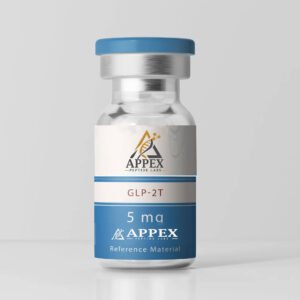
SLU-PP-332 is a synthetic, non-peptide small molecule originally developed by researchers at Saint Louis University as a potent pan-agonist of estrogen-related receptors ERRα, ERRβ, and ERRγ. These orphan nuclear receptors function as ligand-regulated transcription factors that coordinate genes involved in mitochondrial function, oxidative metabolism, fatty acid utilization, and cellular energy production. Because endogenous ligands for ERRs remain incompletely characterized, SLU-PP-332 has become an important experimental compound for investigating receptor activation under controlled laboratory conditions.
Scientific investigations utilize SLU-PP-332 across molecular biology, metabolism, exercise physiology, mitochondrial biology, pharmacology, and systems biology. Researchers employ this compound to examine ERR-mediated transcription, PGC-1α coactivation, oxidative phosphorylation, mitochondrial biogenesis, fatty acid oxidation, glucose metabolism, and cellular bioenergetics.
Unlike estrogen receptor agonists, SLU-PP-332 demonstrates high selectivity for ERR family members without measurable activation of classical estrogen receptors (ERα or ERβ), allowing researchers to isolate ERR-specific signaling pathways. Its reproducible chemical properties and defined pharmacological profile make it a valuable experimental reagent for universities, biotechnology companies, pharmaceutical organizations, and life science laboratories.
Each batch is manufactured under rigorous quality-controlled procedures, analytically verified for purity and structural identity, and supplied as a stable crystalline powder with a comprehensive Certificate of Analysis to ensure reproducible laboratory investigations.
For research use only. Not intended for human consumption or clinical use.
SLU-PP-332 is extensively utilized in laboratory investigations examining ERRα, ERRβ, and ERRγ activation, receptor pharmacology, transcriptional regulation, and orphan nuclear receptor biology.
Researchers employ SLU-PP-332 to investigate mitochondrial biogenesis, oxidative phosphorylation, respiratory capacity, mitochondrial DNA regulation, and organelle function.
Experimental models utilize SLU-PP-332 to study ATP production, oxidative metabolism, substrate utilization, metabolic flexibility, and cellular energy homeostasis.
Scientists investigate ERR-mediated gene expression, PGC-1α coactivation, nuclear receptor signaling, chromatin interactions, and transcription factor regulation.
Laboratory investigations examine β-oxidation pathways, lipid metabolism, mitochondrial fatty acid transport, acyl-CoA metabolism, and metabolic pathway integration.
Researchers utilize SLU-PP-332 for receptor affinity studies, analytical characterization, medicinal chemistry, structure-activity relationship investigations, and formulation development.
| Specification | Details |
|---|---|
| Product Name | SLU-PP-332 |
| Synonyms | SLU-PP-332, Pan-ERR Agonist |
| Purity | ≥99% (HPLC Verified) |
| Molecular Formula | C₁₈H₁₄N₂O₂ |
| Molecular Weight | 290.32 g/mol |
| CAS Number | 303760-60-3 |
| Chemical Name | (E)-4-Hydroxy-N′-(naphthalen-2-ylmethylene)benzohydrazide |
| Appearance | Off-white to pale yellow crystalline powder |
| Solubility | Soluble in DMSO and compatible laboratory organic solvents; limited aqueous solubility |
| Storage Conditions | Store in a tightly sealed container at 2–8°C, protected from moisture and light. Long-term storage at −20°C is recommended for extended stability. |
| Available Sizes | 5 mg, 10 mg |
SLU-PP-332 is a synthetic, non-peptide small molecule that functions as a pan-agonist of estrogen-related receptors (ERRα, ERRβ, and ERRγ). These receptors belong to the nuclear receptor superfamily and regulate transcription of genes involved in mitochondrial function, oxidative metabolism, cellular respiration, and energy homeostasis. Unlike classical estrogen receptors, ERRs are classified as orphan nuclear receptors and are activated independently of endogenous estrogen signaling.
Upon entering the cell, SLU-PP-332 binds directly to the ligand-binding domains of ERRα, ERRβ, and ERRγ, stabilizing receptor conformations that promote recruitment of transcriptional coactivators, particularly peroxisome proliferator-activated receptor gamma coactivator-1 alpha (PGC-1α). The receptor-coactivator complex subsequently binds to estrogen-related receptor response elements (ERREs) within genomic DNA, initiating transcription of genes associated with mitochondrial biogenesis and oxidative metabolism.
Published laboratory studies demonstrate increased expression of genes involved in electron transport chain assembly, oxidative phosphorylation (OXPHOS), fatty acid β-oxidation, tricarboxylic acid (TCA) cycle activity, and mitochondrial respiratory function following ERR activation. Researchers frequently investigate modulation of proteins including CPT1, MCAD, TFAM, NRF1, and additional regulators of mitochondrial function.
Experimental investigations have also examined interactions between ERR signaling and AMP-activated protein kinase (AMPK), SIRT1, and PGC-1α pathways that collectively regulate cellular bioenergetics, metabolic adaptation, and mitochondrial remodeling. Because SLU-PP-332 selectively activates ERR receptors without measurable stimulation of ERα or ERβ, researchers can isolate ERR-mediated transcriptional programs without interference from classical estrogen receptor signaling.
Its defined molecular structure, high receptor selectivity, reproducible pharmacological profile, and well-characterized mechanism of action have established SLU-PP-332 as an important research compound for molecular metabolism, mitochondrial biology, nuclear receptor pharmacology, exercise physiology, biotechnology, and life science laboratories.
For research use only. Not intended for human consumption or clinical use.
| Size | 5mg |
|---|---|
| Dimensions | 9 × 7 × .5 in |
| Weight | .125 lbs |