Bulk Orders. Better Value.
Research institutions, universities and clinical teams qualify for volume discounts. Contact our team to discuss custom formulations and bulk pricing.

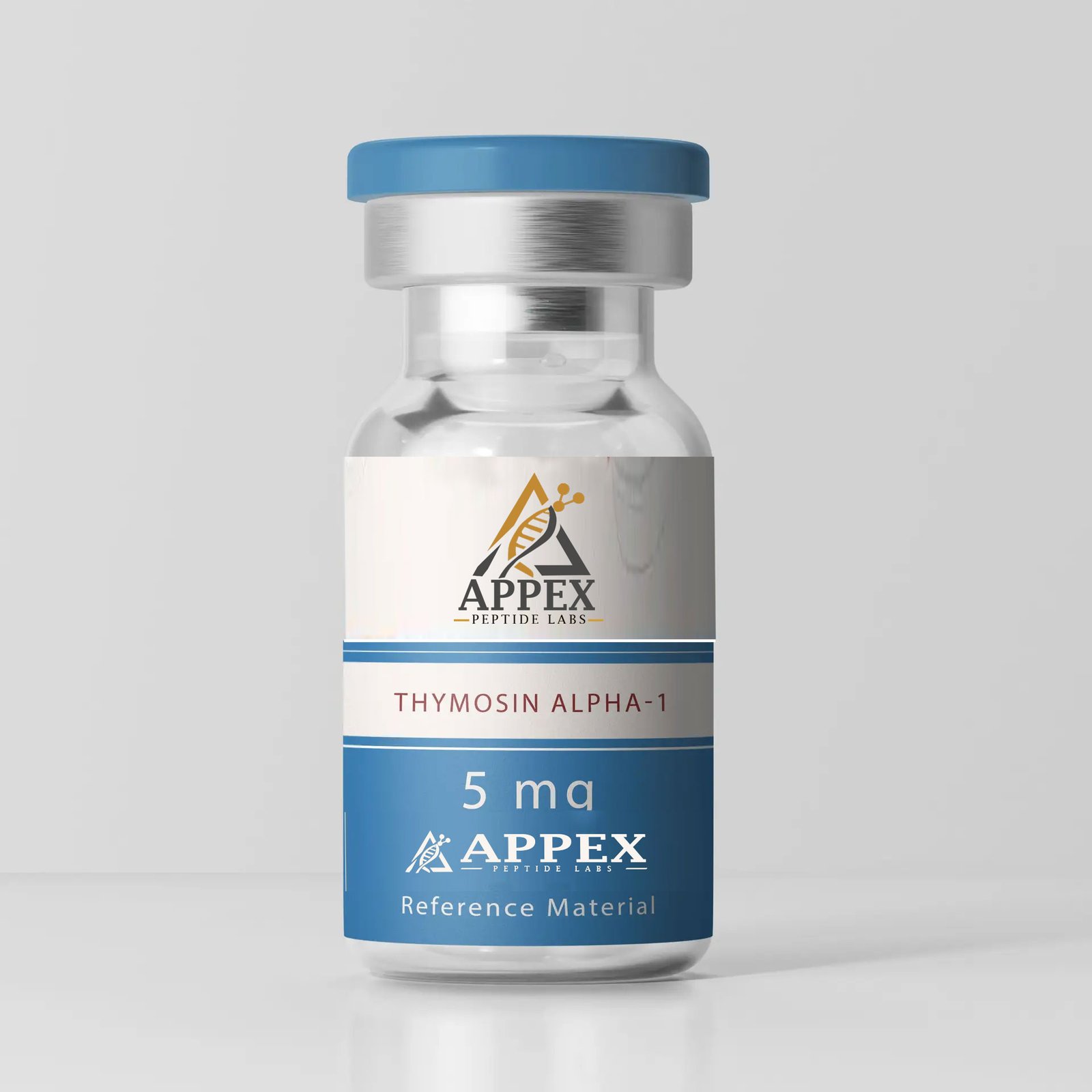
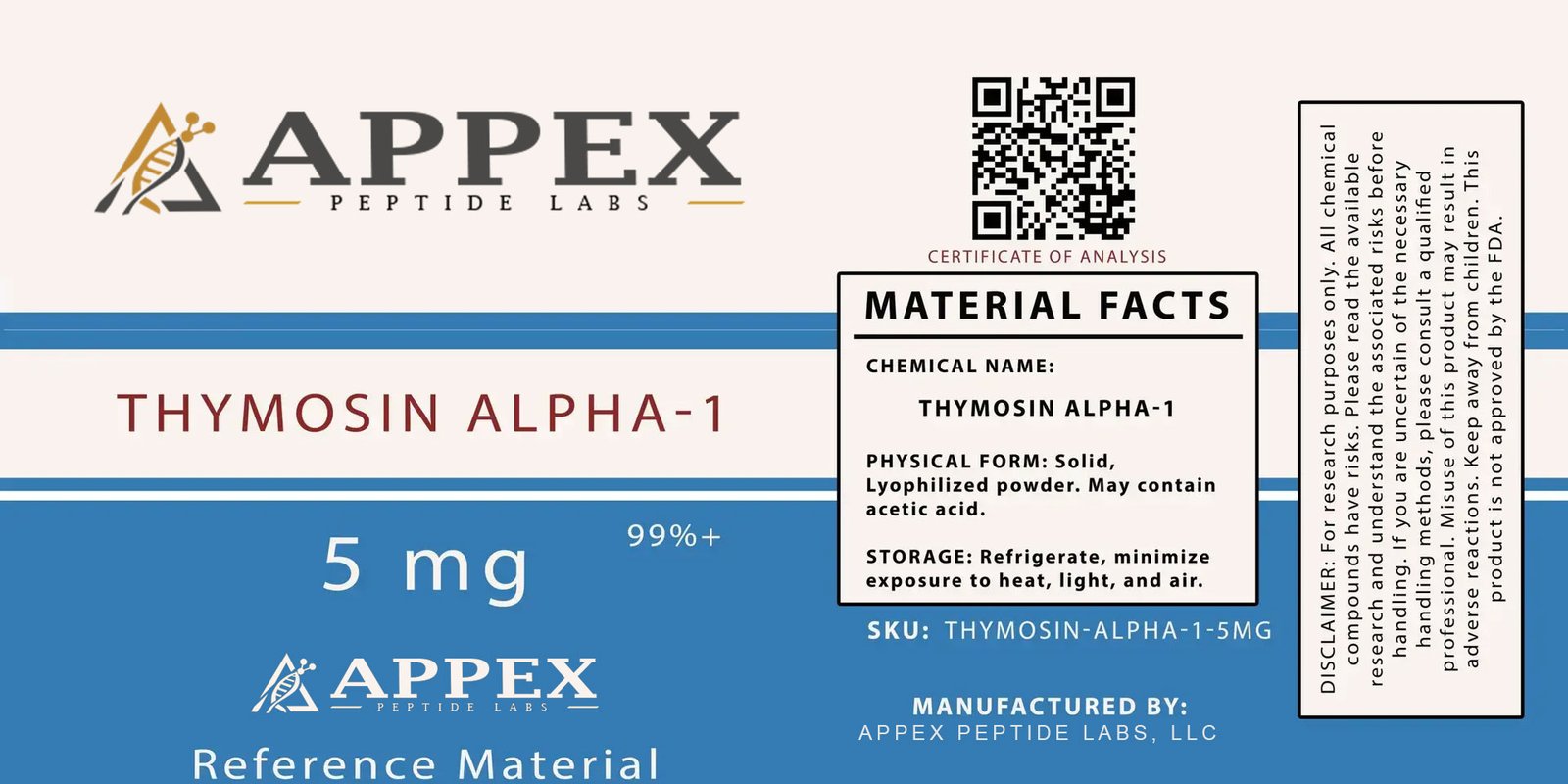

Thymosin Alpha-1 Peptide (Tα1) is a synthetic analog of the naturally occurring thymic peptide originally isolated from prothymosin α. Comprising 28 amino acids with an N-terminal acetyl group, it has become one of the most extensively studied immunoregulatory peptides in modern biomedical research. Its highly conserved sequence and broad biological activity have made it an important experimental reagent across immunology, virology, molecular pharmacology, and peptide chemistry.
Published laboratory studies have investigated Thymosin Alpha-1 Peptide in experimental models examining T-cell differentiation, dendritic cell maturation, natural killer (NK) cell activation, antigen presentation, cytokine regulation, and innate immune signaling. Researchers continue to explore its interactions with Toll-like receptors, intracellular transcription factors, and signaling pathways that coordinate immune cell communication and host defense mechanisms.
Beyond immunology, Thymosin Alpha-1 has become an important research tool for studying peptide-mediated signaling, inflammation-associated molecular pathways, cellular stress responses, and adaptive immunity. Its reproducible physicochemical characteristics and well-defined molecular structure make it valuable for biotechnology companies, pharmaceutical laboratories, universities, and life science research institutions.
Each batch is synthesized under rigorous quality-controlled manufacturing procedures, analytically verified for purity and sequence identity, and supplied as a stable lyophilized peptide accompanied by a comprehensive Certificate of Analysis to support reproducible scientific investigations.
For research use only. Not intended for human consumption or clinical use.
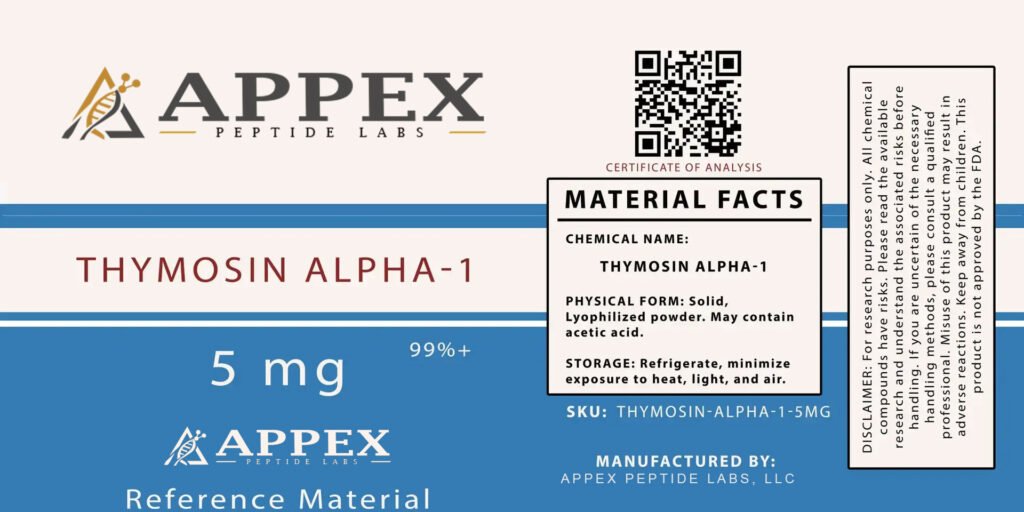
Thymosin Alpha-1 Peptide is extensively utilized in laboratory investigations examining innate and adaptive immune responses, immune cell communication, and molecular regulation of immune homeostasis.
Researchers employ Thymosin Alpha-1 to investigate T-cell maturation, differentiation, activation, receptor signaling, and intracellular mechanisms regulating lymphocyte function.
Experimental models utilize the peptide to evaluate dendritic cell maturation, antigen presentation, co-stimulatory molecule expression, and interactions with adaptive immune pathways.
Scientists investigate Thymosin Alpha-1 in studies involving Toll-like receptors (particularly TLR2 and TLR9), NF-κB activation, interferon signaling, and downstream transcriptional regulation.
Laboratory investigations examine modulation of cytokine signaling, chemokine expression, inflammatory mediators, and immune communication pathways under controlled experimental conditions.
Researchers utilize Thymosin Alpha-1 Peptide to investigate peptide stability, structure-function relationships, receptor interactions, analytical characterization, and formulation development.
| Specification | Details |
|---|---|
| Product Name | Thymosin Alpha-1 Peptide |
| Synonyms | Tα1, Thymalfasin, Thymosin α1 |
| Purity | ≥99% (HPLC Verified) |
| Molecular Formula | C₁₂₉H₂₁₅N₃₃O₅₅ |
| Molecular Weight | 3,108.30 g/mol |
| CAS Number | 62304-98-7 |
| Sequence | Ac-Ser-Asp-Ala-Ala-Val-Asp-Thr-Ser-Ser-Glu-Ile-Thr-Thr-Lys-Asp-Leu-Lys-Glu-Lys-Lys-Glu-Val-Val-Glu-Glu-Ala-Glu-Asn-OH |
| Appearance | White to off-white lyophilized powder |
| Solubility | Soluble in sterile bacteriostatic water and laboratory-grade aqueous buffers |
| Storage Conditions | Store lyophilized peptide at 2–8°C. For long-term storage, maintain at −20°C in a dry, light-protected environment. Avoid repeated freeze-thaw cycles after reconstitution. |
| Available Sizes | 5 mg, 10 mg |
Thymosin Alpha-1 Peptide (Tα1) is a synthetic, N-terminally acetylated 28-amino-acid peptide that functions as a multifaceted regulator of innate and adaptive immune signaling in experimental laboratory systems. Rather than acting through a single receptor, Thymosin Alpha-1 modulates multiple cellular signaling pathways involved in immune recognition, antigen presentation, cytokine production, and lymphocyte activation.
Published research demonstrates that Thymosin Alpha-1 influences Toll-like receptor (TLR) signaling, particularly TLR2 and TLR9, resulting in activation of downstream intracellular pathways including nuclear factor-kappa B (NF-κB), interferon regulatory factors (IRFs), and mitogen-activated protein kinase (MAPK) signaling. These pathways regulate transcription of genes associated with innate immune recognition, cytokine production, and immune cell communication.
Laboratory investigations have shown that Thymosin Alpha-1 promotes maturation and functional activation of dendritic cells, enhancing antigen processing and presentation through increased expression of major histocompatibility complex (MHC) molecules and co-stimulatory proteins including CD80 and CD86. These processes facilitate experimental studies of adaptive immune activation and T-cell signaling.
Researchers have also investigated the peptide’s influence on CD4+ and CD8+ T lymphocyte differentiation, natural killer (NK) cell activity, and cytokine network regulation. Experimental models demonstrate modulation of signaling molecules including interleukin-2 (IL-2), interferon-gamma (IFN-γ), interleukin-12 (IL-12), and additional mediators involved in immune communication. Scientists continue to evaluate these molecular interactions to better understand peptide-mediated regulation of cellular immunity.
Additional laboratory studies explore interactions with JAK/STAT, PI3K/Akt, and apoptosis-associated signaling pathways, along with mechanisms regulating oxidative stress responses, cellular homeostasis, and transcriptional control. Because of its broad immunoregulatory profile, defined molecular structure, and extensive scientific characterization, Thymosin Alpha-1 Peptide remains an important research reagent for immunology, virology, molecular pharmacology, peptide chemistry, and biotechnology laboratories investigating immune signaling and cellular communication.
For research use only. Not intended for human consumption or clinical use.
| Size | 10mg, 5mg |
|---|---|
| Dimensions | 9 × 7 × .5 in |
| Weight | .125 lbs |
Thymosin Alpha-1 Peptide (Tα1) is a synthetic analog of the naturally occurring thymic peptide originally isolated from prothymosin α. Comprising 28 amino acids with an N-terminal acetyl group, it has become one of the most extensively studied immunoregulatory peptides in modern biomedical research. Its highly conserved sequence and broad biological activity have made it an important experimental reagent across immunology, virology, molecular pharmacology, and peptide chemistry.
Published laboratory studies have investigated Thymosin Alpha-1 Peptide in experimental models examining T-cell differentiation, dendritic cell maturation, natural killer (NK) cell activation, antigen presentation, cytokine regulation, and innate immune signaling. Researchers continue to explore its interactions with Toll-like receptors, intracellular transcription factors, and signaling pathways that coordinate immune cell communication and host defense mechanisms.
Beyond immunology, Thymosin Alpha-1 has become an important research tool for studying peptide-mediated signaling, inflammation-associated molecular pathways, cellular stress responses, and adaptive immunity. Its reproducible physicochemical characteristics and well-defined molecular structure make it valuable for biotechnology companies, pharmaceutical laboratories, universities, and life science research institutions.
Each batch is synthesized under rigorous quality-controlled manufacturing procedures, analytically verified for purity and sequence identity, and supplied as a stable lyophilized peptide accompanied by a comprehensive Certificate of Analysis to support reproducible scientific investigations.
For research use only. Not intended for human consumption or clinical use.
Thymosin Alpha-1 Peptide is extensively utilized in laboratory investigations examining innate and adaptive immune responses, immune cell communication, and molecular regulation of immune homeostasis.
Researchers employ Thymosin Alpha-1 to investigate T-cell maturation, differentiation, activation, receptor signaling, and intracellular mechanisms regulating lymphocyte function.
Experimental models utilize the peptide to evaluate dendritic cell maturation, antigen presentation, co-stimulatory molecule expression, and interactions with adaptive immune pathways.
Scientists investigate Thymosin Alpha-1 in studies involving Toll-like receptors (particularly TLR2 and TLR9), NF-κB activation, interferon signaling, and downstream transcriptional regulation.
Laboratory investigations examine modulation of cytokine signaling, chemokine expression, inflammatory mediators, and immune communication pathways under controlled experimental conditions.
Researchers utilize Thymosin Alpha-1 Peptide to investigate peptide stability, structure-function relationships, receptor interactions, analytical characterization, and formulation development.
| Specification | Details |
|---|---|
| Product Name | Thymosin Alpha-1 Peptide |
| Synonyms | Tα1, Thymalfasin, Thymosin α1 |
| Purity | ≥99% (HPLC Verified) |
| Molecular Formula | C₁₂₉H₂₁₅N₃₃O₅₅ |
| Molecular Weight | 3,108.30 g/mol |
| CAS Number | 62304-98-7 |
| Sequence | Ac-Ser-Asp-Ala-Ala-Val-Asp-Thr-Ser-Ser-Glu-Ile-Thr-Thr-Lys-Asp-Leu-Lys-Glu-Lys-Lys-Glu-Val-Val-Glu-Glu-Ala-Glu-Asn-OH |
| Appearance | White to off-white lyophilized powder |
| Solubility | Soluble in sterile bacteriostatic water and laboratory-grade aqueous buffers |
| Storage Conditions | Store lyophilized peptide at 2–8°C. For long-term storage, maintain at −20°C in a dry, light-protected environment. Avoid repeated freeze-thaw cycles after reconstitution. |
| Available Sizes | 5 mg, 10 mg |
Thymosin Alpha-1 Peptide (Tα1) is a synthetic, N-terminally acetylated 28-amino-acid peptide that functions as a multifaceted regulator of innate and adaptive immune signaling in experimental laboratory systems. Rather than acting through a single receptor, Thymosin Alpha-1 modulates multiple cellular signaling pathways involved in immune recognition, antigen presentation, cytokine production, and lymphocyte activation.
Published research demonstrates that Thymosin Alpha-1 influences Toll-like receptor (TLR) signaling, particularly TLR2 and TLR9, resulting in activation of downstream intracellular pathways including nuclear factor-kappa B (NF-κB), interferon regulatory factors (IRFs), and mitogen-activated protein kinase (MAPK) signaling. These pathways regulate transcription of genes associated with innate immune recognition, cytokine production, and immune cell communication.
Laboratory investigations have shown that Thymosin Alpha-1 promotes maturation and functional activation of dendritic cells, enhancing antigen processing and presentation through increased expression of major histocompatibility complex (MHC) molecules and co-stimulatory proteins including CD80 and CD86. These processes facilitate experimental studies of adaptive immune activation and T-cell signaling.
Researchers have also investigated the peptide’s influence on CD4+ and CD8+ T lymphocyte differentiation, natural killer (NK) cell activity, and cytokine network regulation. Experimental models demonstrate modulation of signaling molecules including interleukin-2 (IL-2), interferon-gamma (IFN-γ), interleukin-12 (IL-12), and additional mediators involved in immune communication. Scientists continue to evaluate these molecular interactions to better understand peptide-mediated regulation of cellular immunity.
Additional laboratory studies explore interactions with JAK/STAT, PI3K/Akt, and apoptosis-associated signaling pathways, along with mechanisms regulating oxidative stress responses, cellular homeostasis, and transcriptional control. Because of its broad immunoregulatory profile, defined molecular structure, and extensive scientific characterization, Thymosin Alpha-1 Peptide remains an important research reagent for immunology, virology, molecular pharmacology, peptide chemistry, and biotechnology laboratories investigating immune signaling and cellular communication.
For research use only. Not intended for human consumption or clinical use.
| Size | 10mg, 5mg |
|---|---|
| Dimensions | 9 × 7 × .5 in |
| Weight | .125 lbs |