Bulk Orders. Better Value.
Research institutions, universities and clinical teams qualify for volume discounts. Contact our team to discuss custom formulations and bulk pricing.

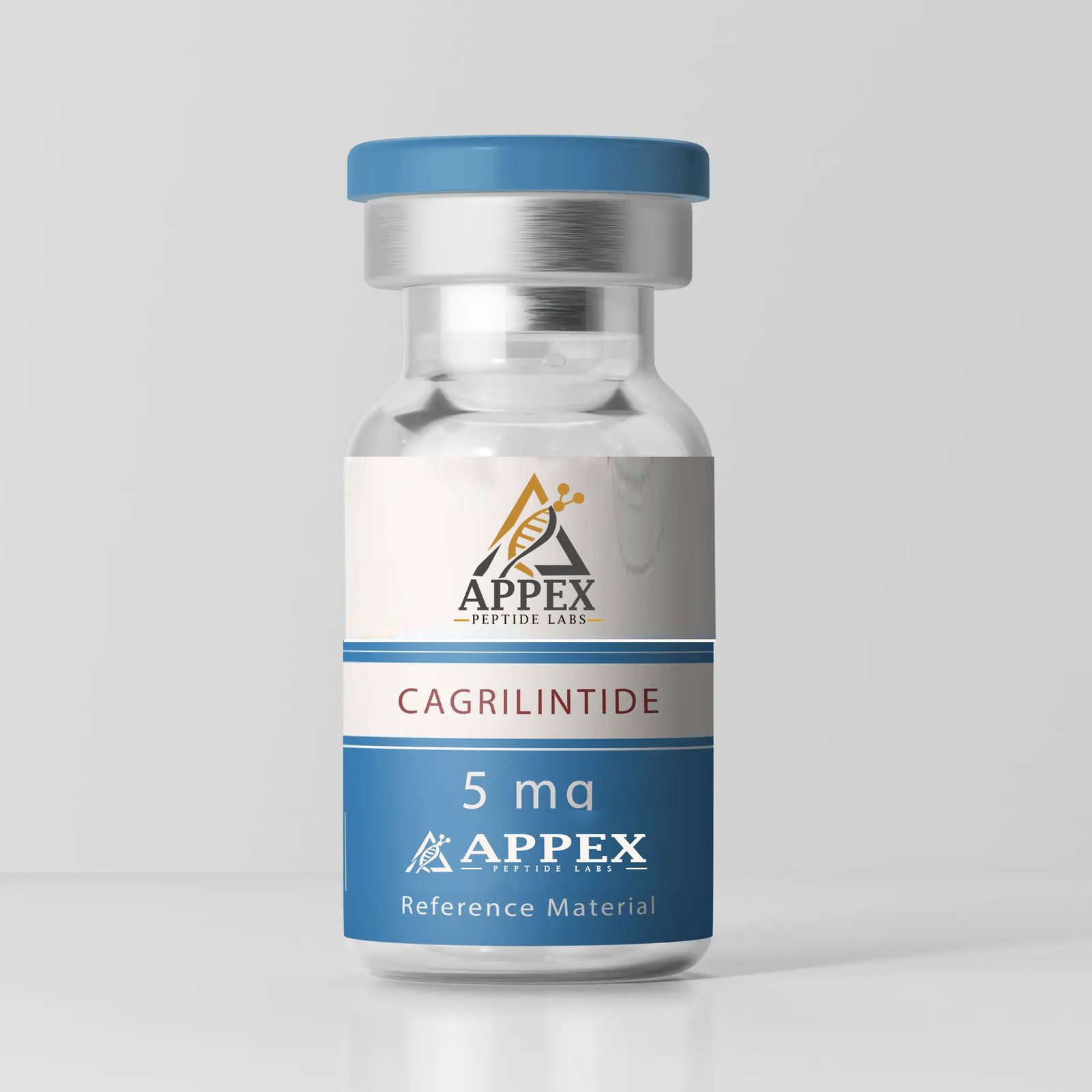
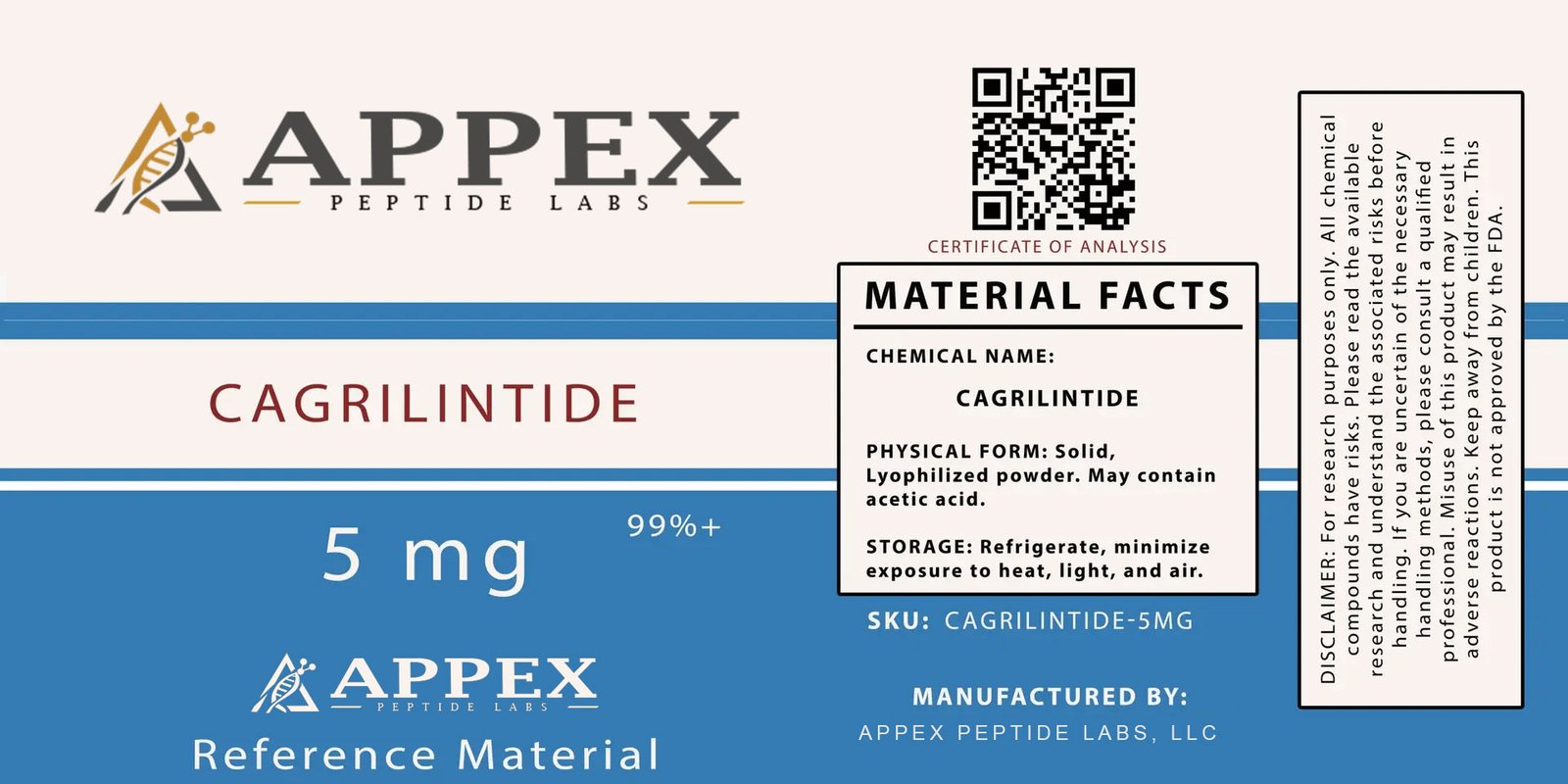

Cagrilintide Peptide is a synthetic, long-acting analog of the endogenous pancreatic hormone amylin, developed to provide sustained activation of amylin receptors (AMYRs) in laboratory research models. Structural modifications, including C14 fatty acid lipidation, enhance peptide stability and prolong receptor engagement, making Cagrilintide an important research tool for investigating neuroendocrine signaling and metabolic regulation.
Scientific investigations employ Cagrilintide Peptide across endocrinology, receptor pharmacology, peptide chemistry, neuroscience, and molecular biology. Researchers utilize this peptide to examine amylin receptor activation, calcitonin receptor interactions, intracellular signaling pathways, gastric signaling mechanisms, central nervous system regulation of energy balance, and peptide-receptor pharmacodynamics.
Beyond receptor biology, Cagrilintide is incorporated into studies involving intracellular cAMP signaling, calcium mobilization, MAPK activation, neuronal communication, peptide engineering, and receptor trafficking. Its reproducible biochemical profile and defined molecular structure make it a valuable reagent for universities, biotechnology organizations, pharmaceutical laboratories, and life science research institutions.
Each batch is synthesized under rigorous quality-controlled manufacturing procedures, analytically verified for purity and structural identity, and supplied as a stable lyophilized peptide accompanied by a comprehensive Certificate of Analysis to ensure reproducible laboratory investigations.
For research use only. Not intended for human consumption or clinical use.
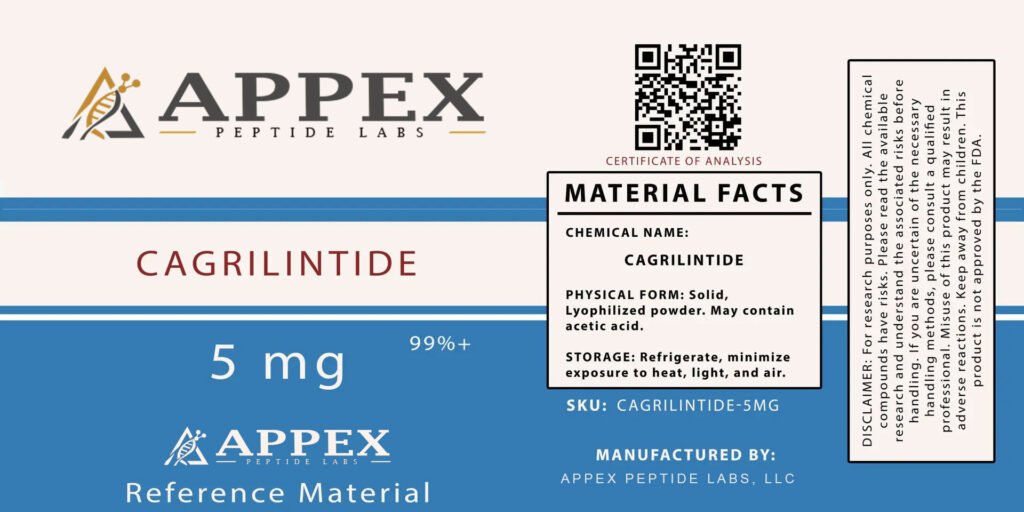
Cagrilintide Peptide is extensively utilized in laboratory investigations examining amylin receptor activation, receptor pharmacology, ligand binding kinetics, and downstream intracellular signaling.
Researchers employ Cagrilintide to investigate communication between peripheral metabolic signals and central nervous system pathways regulating energy homeostasis and endocrine signaling.
Experimental models utilize Cagrilintide to study intracellular signaling associated with amylin receptor activation, calcium mobilization, cAMP production, and metabolic regulatory pathways.
Scientists investigate calcitonin receptor complexes, receptor activity-modifying proteins (RAMPs), ligand selectivity, receptor trafficking, and peptide-receptor interactions.
Laboratory investigations incorporate Cagrilintide into studies examining hormone signaling networks, peptide stability, intracellular communication, and transcriptional regulation.
Researchers utilize Cagrilintide Peptide for analytical characterization, lipidated peptide chemistry, structure-function relationship studies, receptor affinity investigations, and formulation development.
| Specification | Details |
|---|---|
| Product Name | Cagrilintide Peptide |
| Synonyms | Cagrilintide, NNC0174-0833 |
| Purity | ≥99% (HPLC Verified) |
| Molecular Formula | Proprietary lipidated peptide |
| Molecular Weight | Approximately 4,200 g/mol |
| CAS Number | Not publicly assigned |
| Sequence | 37-amino-acid amylin analog with C14 fatty acid lipidation at Lys² |
| Appearance | White to off-white lyophilized powder |
| Solubility | Soluble in sterile bacteriostatic water and laboratory-grade aqueous buffers |
| Storage Conditions | Store lyophilized peptide at 2–8°C. For long-term storage, maintain at −20°C in a dry, light-protected environment. Avoid repeated freeze-thaw cycles after reconstitution. |
| Available Sizes | 5 mg, 10 mg |
Cagrilintide Peptide is a synthetic, long-acting analog of the endogenous pancreatic hormone amylin that functions as a potent agonist of amylin receptors (AMYRs). These receptors are heterodimeric complexes composed of the calcitonin receptor (CTR) associated with one of three receptor activity-modifying proteins (RAMP1, RAMP2, or RAMP3). The resulting receptor subtypes provide distinct ligand-binding characteristics that researchers investigate extensively in endocrinology and receptor pharmacology.
Structural modification through C14 fatty acid lipidation at the Lys² residue promotes reversible albumin association in experimental systems, extending peptide stability and prolonging receptor availability compared with native amylin. This design enables sustained receptor engagement during laboratory investigations while maintaining high affinity for amylin receptor complexes.
Upon binding to AMYRs, Cagrilintide activates Gs protein-coupled signaling, stimulating adenylyl cyclase and increasing intracellular cyclic adenosine monophosphate (cAMP) concentrations. Elevated cAMP activates protein kinase A (PKA) and downstream transcriptional pathways that regulate neuronal signaling, cellular communication, and endocrine responses. Laboratory studies have also demonstrated activation of additional signaling pathways including ERK1/2 (MAPK), intracellular calcium mobilization, and CREB phosphorylation following receptor stimulation.
Researchers further investigate Cagrilintide within experimental models examining central nervous system nuclei involved in metabolic regulation, including the area postrema, nucleus tractus solitarius, and hypothalamus. Studies explore neuronal activation patterns, receptor trafficking, ligand-receptor kinetics, peptide internalization, and interactions between amylin signaling and complementary endocrine pathways, including incretin receptor networks.
Additional investigations evaluate receptor desensitization, intracellular trafficking, second messenger signaling, peptide metabolism, and structure-function relationships using biochemical, molecular biology, and pharmacological techniques. Because of its extended stability, defined lipidated structure, and highly characterized receptor pharmacology, Cagrilintide Peptide remains an important research reagent for molecular endocrinology, peptide chemistry, neuroscience, biotechnology, and receptor biology laboratories.
For research use only. Not intended for human consumption or clinical use.
| Size | 10mg, 5mg |
|---|---|
| Dimensions | 9 × 7 × .5 in |
| Weight | .125 lbs |
Cagrilintide Peptide is a synthetic, long-acting analog of the endogenous pancreatic hormone amylin, developed to provide sustained activation of amylin receptors (AMYRs) in laboratory research models. Structural modifications, including C14 fatty acid lipidation, enhance peptide stability and prolong receptor engagement, making Cagrilintide an important research tool for investigating neuroendocrine signaling and metabolic regulation.
Scientific investigations employ Cagrilintide Peptide across endocrinology, receptor pharmacology, peptide chemistry, neuroscience, and molecular biology. Researchers utilize this peptide to examine amylin receptor activation, calcitonin receptor interactions, intracellular signaling pathways, gastric signaling mechanisms, central nervous system regulation of energy balance, and peptide-receptor pharmacodynamics.
Beyond receptor biology, Cagrilintide is incorporated into studies involving intracellular cAMP signaling, calcium mobilization, MAPK activation, neuronal communication, peptide engineering, and receptor trafficking. Its reproducible biochemical profile and defined molecular structure make it a valuable reagent for universities, biotechnology organizations, pharmaceutical laboratories, and life science research institutions.
Each batch is synthesized under rigorous quality-controlled manufacturing procedures, analytically verified for purity and structural identity, and supplied as a stable lyophilized peptide accompanied by a comprehensive Certificate of Analysis to ensure reproducible laboratory investigations.
For research use only. Not intended for human consumption or clinical use.
Cagrilintide Peptide is extensively utilized in laboratory investigations examining amylin receptor activation, receptor pharmacology, ligand binding kinetics, and downstream intracellular signaling.
Researchers employ Cagrilintide to investigate communication between peripheral metabolic signals and central nervous system pathways regulating energy homeostasis and endocrine signaling.
Experimental models utilize Cagrilintide to study intracellular signaling associated with amylin receptor activation, calcium mobilization, cAMP production, and metabolic regulatory pathways.
Scientists investigate calcitonin receptor complexes, receptor activity-modifying proteins (RAMPs), ligand selectivity, receptor trafficking, and peptide-receptor interactions.
Laboratory investigations incorporate Cagrilintide into studies examining hormone signaling networks, peptide stability, intracellular communication, and transcriptional regulation.
Researchers utilize Cagrilintide Peptide for analytical characterization, lipidated peptide chemistry, structure-function relationship studies, receptor affinity investigations, and formulation development.
| Specification | Details |
|---|---|
| Product Name | Cagrilintide Peptide |
| Synonyms | Cagrilintide, NNC0174-0833 |
| Purity | ≥99% (HPLC Verified) |
| Molecular Formula | Proprietary lipidated peptide |
| Molecular Weight | Approximately 4,200 g/mol |
| CAS Number | Not publicly assigned |
| Sequence | 37-amino-acid amylin analog with C14 fatty acid lipidation at Lys² |
| Appearance | White to off-white lyophilized powder |
| Solubility | Soluble in sterile bacteriostatic water and laboratory-grade aqueous buffers |
| Storage Conditions | Store lyophilized peptide at 2–8°C. For long-term storage, maintain at −20°C in a dry, light-protected environment. Avoid repeated freeze-thaw cycles after reconstitution. |
| Available Sizes | 5 mg, 10 mg |
Cagrilintide Peptide is a synthetic, long-acting analog of the endogenous pancreatic hormone amylin that functions as a potent agonist of amylin receptors (AMYRs). These receptors are heterodimeric complexes composed of the calcitonin receptor (CTR) associated with one of three receptor activity-modifying proteins (RAMP1, RAMP2, or RAMP3). The resulting receptor subtypes provide distinct ligand-binding characteristics that researchers investigate extensively in endocrinology and receptor pharmacology.
Structural modification through C14 fatty acid lipidation at the Lys² residue promotes reversible albumin association in experimental systems, extending peptide stability and prolonging receptor availability compared with native amylin. This design enables sustained receptor engagement during laboratory investigations while maintaining high affinity for amylin receptor complexes.
Upon binding to AMYRs, Cagrilintide activates Gs protein-coupled signaling, stimulating adenylyl cyclase and increasing intracellular cyclic adenosine monophosphate (cAMP) concentrations. Elevated cAMP activates protein kinase A (PKA) and downstream transcriptional pathways that regulate neuronal signaling, cellular communication, and endocrine responses. Laboratory studies have also demonstrated activation of additional signaling pathways including ERK1/2 (MAPK), intracellular calcium mobilization, and CREB phosphorylation following receptor stimulation.
Researchers further investigate Cagrilintide within experimental models examining central nervous system nuclei involved in metabolic regulation, including the area postrema, nucleus tractus solitarius, and hypothalamus. Studies explore neuronal activation patterns, receptor trafficking, ligand-receptor kinetics, peptide internalization, and interactions between amylin signaling and complementary endocrine pathways, including incretin receptor networks.
Additional investigations evaluate receptor desensitization, intracellular trafficking, second messenger signaling, peptide metabolism, and structure-function relationships using biochemical, molecular biology, and pharmacological techniques. Because of its extended stability, defined lipidated structure, and highly characterized receptor pharmacology, Cagrilintide Peptide remains an important research reagent for molecular endocrinology, peptide chemistry, neuroscience, biotechnology, and receptor biology laboratories.
For research use only. Not intended for human consumption or clinical use.
| Size | 10mg, 5mg |
|---|---|
| Dimensions | 9 × 7 × .5 in |
| Weight | .125 lbs |