Bulk Orders. Better Value.
Research institutions, universities and clinical teams qualify for volume discounts. Contact our team to discuss custom formulations and bulk pricing.

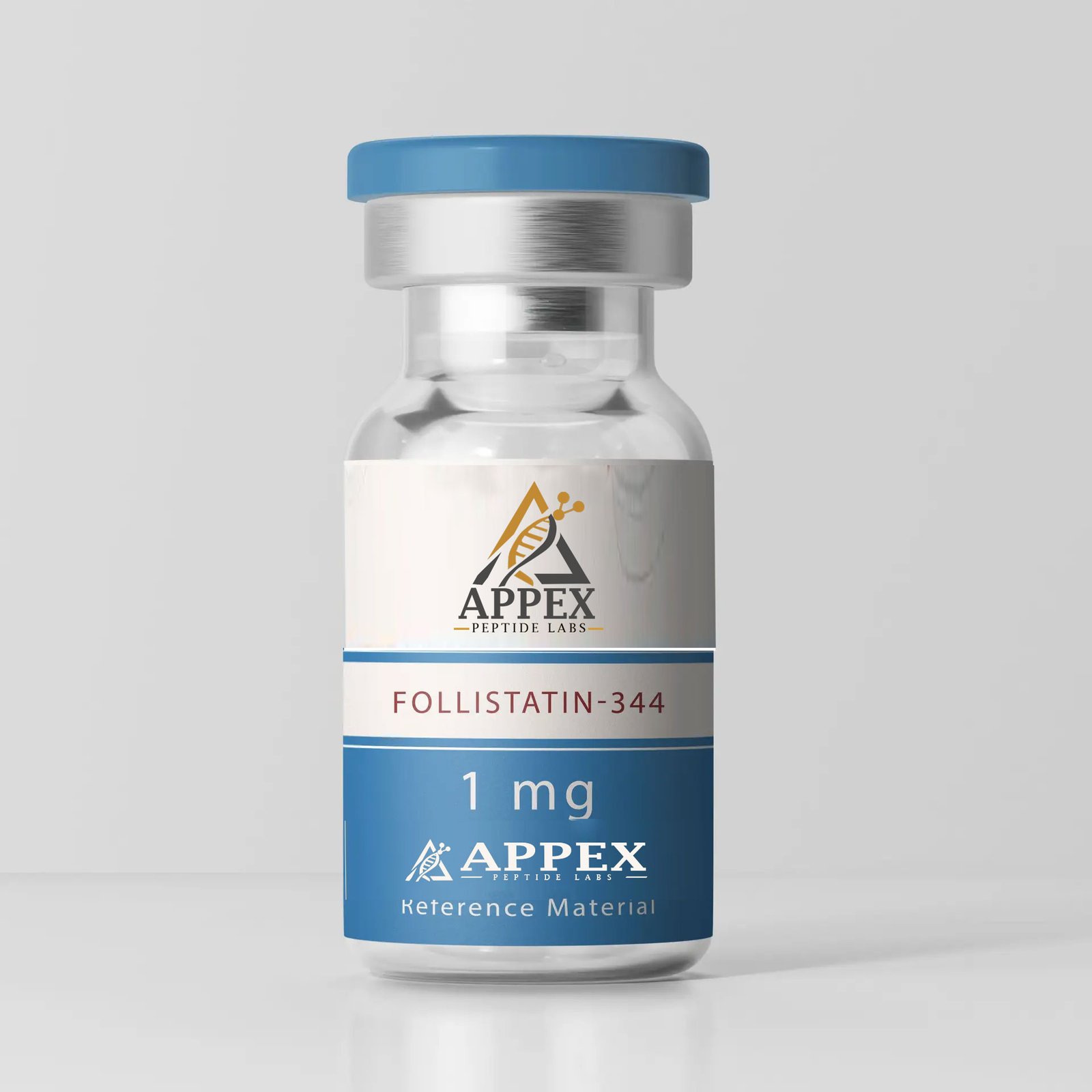


Follistatin 344 Peptide is the principal circulating isoform of the endogenous follistatin glycoprotein and serves as a naturally occurring extracellular regulator of numerous transforming growth factor-beta (TGF-β) superfamily ligands. Initially identified through its ability to bind activin with exceptionally high affinity, recombinant Follistatin 344 has become a valuable laboratory reagent for investigating extracellular growth factor regulation, receptor signaling, developmental biology, and skeletal muscle cellular physiology.
Researchers utilize Follistatin 344 Peptide across molecular biology, cell biology, regenerative medicine research, developmental biology, reproductive biology, and protein biochemistry. Laboratory investigations commonly evaluate interactions with activin A, activin B, myostatin (GDF-8), GDF-11, and additional TGF-β family members involved in cellular differentiation, proliferation, extracellular matrix remodeling, and intracellular SMAD signaling.
Its well-characterized ligand-binding profile enables researchers to investigate extracellular regulation of TGF-β signaling, satellite cell biology, stem cell differentiation, tissue remodeling, and protein-protein interactions. Universities, biotechnology companies, pharmaceutical organizations, and life science laboratories frequently employ Follistatin 344 as a reference recombinant protein for mechanistic investigations involving growth factor antagonism.
Each batch is produced using recombinant expression systems under rigorous quality-controlled manufacturing conditions, verified by chromatographic and electrophoretic analyses, and supplied as a stable lyophilized protein with a comprehensive Certificate of Analysis to ensure consistent laboratory performance.
For research use only. Not intended for human consumption or clinical use.

Follistatin 344 Peptide is extensively utilized to investigate extracellular regulation of myostatin activity, ligand sequestration, receptor availability, and downstream signaling pathways in controlled laboratory studies.
Researchers employ Follistatin 344 to examine activin-mediated cellular signaling, ligand-receptor interactions, developmental biology, endocrine communication, and extracellular protein regulation.
Experimental models utilize Follistatin 344 to study molecular mechanisms involving TGF-β family ligands, SMAD signaling, transcriptional regulation, and cellular differentiation.
Scientists investigate satellite cell activation, progenitor cell biology, cellular proliferation, differentiation pathways, and extracellular growth factor regulation in skeletal muscle research.
Laboratory investigations incorporate Follistatin 344 into studies examining embryonic signaling pathways, tissue morphogenesis, reproductive biology, organ development, and cellular specialization.
Researchers utilize Follistatin 344 for ligand-binding studies, protein interaction analysis, structural biology, recombinant protein characterization, formulation development, and analytical validation.
| Specification | Details |
|---|---|
| Product Name | Follistatin 344 Peptide |
| Synonyms | FS-344, Recombinant Human Follistatin 344 |
| Purity | ≥98% (HPLC and SDS-PAGE Verified) |
| Molecular Formula | Recombinant glycoprotein |
| Molecular Weight | Approximately 38.5 kDa (unglycosylated; glycosylation-dependent) |
| CAS Number | Not publicly assigned |
| Sequence | Recombinant human Follistatin 344 (344 amino acids) |
| Appearance | White to off-white lyophilized powder |
| Solubility | Soluble in sterile water, phosphate-buffered saline (PBS), and standard laboratory aqueous buffers |
| Storage Conditions | Store lyophilized protein at 2–8°C. For long-term storage, maintain at −20°C or below in a dry, protected environment. Avoid repeated freeze-thaw cycles after reconstitution. |
| Available Sizes | 1 mg, 5 mg |
Follistatin 344 Peptide is a recombinant form of the predominant circulating isoform of endogenous follistatin, an extracellular glycoprotein that functions primarily through high-affinity binding and neutralization of members of the transforming growth factor-beta (TGF-β) superfamily. Rather than directly activating cell-surface receptors, Follistatin 344 regulates biological signaling by sequestering soluble ligands before receptor engagement, making it an important experimental reagent for investigating extracellular growth factor modulation.
Published laboratory studies demonstrate that Follistatin 344 exhibits exceptionally strong affinity for activin A, activin B, myostatin (GDF-8), and several additional TGF-β family ligands, including GDF-11. Ligand binding forms highly stable protein complexes that prevent interaction with activin type II receptors (ActRIIA and ActRIIB), thereby reducing receptor-mediated activation of intracellular signaling cascades.
Researchers extensively investigate downstream effects on canonical SMAD2/SMAD3 phosphorylation, transcription factor activation, and gene expression associated with extracellular matrix remodeling, cellular proliferation, differentiation, and developmental biology. Additional investigations examine interactions with non-canonical signaling pathways involving MAPK, ERK, PI3K/Akt, and cross-talk between TGF-β signaling networks and other intracellular regulatory mechanisms.
Experimental models also evaluate the influence of Follistatin 344 on satellite cell biology, skeletal muscle precursor cells, stem cell differentiation, reproductive tissue signaling, and embryonic developmental pathways. Because Follistatin regulates multiple extracellular ligands simultaneously, it provides researchers with a unique tool for examining complex signaling networks involving ligand competition, receptor availability, and extracellular protein-protein interactions.
Its recombinant human sequence, well-characterized ligand-binding properties, and extensive documentation in peer-reviewed scientific literature have established Follistatin 344 Peptide as a foundational research reagent for molecular biology, developmental biology, protein biochemistry, regenerative science, biotechnology, and life science laboratories investigating TGF-β superfamily signaling and extracellular growth factor regulation.
For research use only. Not intended for human consumption or clinical use.
| Size | 1mg |
|---|---|
| Dimensions | 9 × 7 × .5 in |
| Weight | .125 lbs |
Follistatin 344 Peptide is the principal circulating isoform of the endogenous follistatin glycoprotein and serves as a naturally occurring extracellular regulator of numerous transforming growth factor-beta (TGF-β) superfamily ligands. Initially identified through its ability to bind activin with exceptionally high affinity, recombinant Follistatin 344 has become a valuable laboratory reagent for investigating extracellular growth factor regulation, receptor signaling, developmental biology, and skeletal muscle cellular physiology.
Researchers utilize Follistatin 344 Peptide across molecular biology, cell biology, regenerative medicine research, developmental biology, reproductive biology, and protein biochemistry. Laboratory investigations commonly evaluate interactions with activin A, activin B, myostatin (GDF-8), GDF-11, and additional TGF-β family members involved in cellular differentiation, proliferation, extracellular matrix remodeling, and intracellular SMAD signaling.
Its well-characterized ligand-binding profile enables researchers to investigate extracellular regulation of TGF-β signaling, satellite cell biology, stem cell differentiation, tissue remodeling, and protein-protein interactions. Universities, biotechnology companies, pharmaceutical organizations, and life science laboratories frequently employ Follistatin 344 as a reference recombinant protein for mechanistic investigations involving growth factor antagonism.
Each batch is produced using recombinant expression systems under rigorous quality-controlled manufacturing conditions, verified by chromatographic and electrophoretic analyses, and supplied as a stable lyophilized protein with a comprehensive Certificate of Analysis to ensure consistent laboratory performance.
For research use only. Not intended for human consumption or clinical use.
Follistatin 344 Peptide is extensively utilized to investigate extracellular regulation of myostatin activity, ligand sequestration, receptor availability, and downstream signaling pathways in controlled laboratory studies.
Researchers employ Follistatin 344 to examine activin-mediated cellular signaling, ligand-receptor interactions, developmental biology, endocrine communication, and extracellular protein regulation.
Experimental models utilize Follistatin 344 to study molecular mechanisms involving TGF-β family ligands, SMAD signaling, transcriptional regulation, and cellular differentiation.
Scientists investigate satellite cell activation, progenitor cell biology, cellular proliferation, differentiation pathways, and extracellular growth factor regulation in skeletal muscle research.
Laboratory investigations incorporate Follistatin 344 into studies examining embryonic signaling pathways, tissue morphogenesis, reproductive biology, organ development, and cellular specialization.
Researchers utilize Follistatin 344 for ligand-binding studies, protein interaction analysis, structural biology, recombinant protein characterization, formulation development, and analytical validation.
| Specification | Details |
|---|---|
| Product Name | Follistatin 344 Peptide |
| Synonyms | FS-344, Recombinant Human Follistatin 344 |
| Purity | ≥98% (HPLC and SDS-PAGE Verified) |
| Molecular Formula | Recombinant glycoprotein |
| Molecular Weight | Approximately 38.5 kDa (unglycosylated; glycosylation-dependent) |
| CAS Number | Not publicly assigned |
| Sequence | Recombinant human Follistatin 344 (344 amino acids) |
| Appearance | White to off-white lyophilized powder |
| Solubility | Soluble in sterile water, phosphate-buffered saline (PBS), and standard laboratory aqueous buffers |
| Storage Conditions | Store lyophilized protein at 2–8°C. For long-term storage, maintain at −20°C or below in a dry, protected environment. Avoid repeated freeze-thaw cycles after reconstitution. |
| Available Sizes | 1 mg, 5 mg |
Follistatin 344 Peptide is a recombinant form of the predominant circulating isoform of endogenous follistatin, an extracellular glycoprotein that functions primarily through high-affinity binding and neutralization of members of the transforming growth factor-beta (TGF-β) superfamily. Rather than directly activating cell-surface receptors, Follistatin 344 regulates biological signaling by sequestering soluble ligands before receptor engagement, making it an important experimental reagent for investigating extracellular growth factor modulation.
Published laboratory studies demonstrate that Follistatin 344 exhibits exceptionally strong affinity for activin A, activin B, myostatin (GDF-8), and several additional TGF-β family ligands, including GDF-11. Ligand binding forms highly stable protein complexes that prevent interaction with activin type II receptors (ActRIIA and ActRIIB), thereby reducing receptor-mediated activation of intracellular signaling cascades.
Researchers extensively investigate downstream effects on canonical SMAD2/SMAD3 phosphorylation, transcription factor activation, and gene expression associated with extracellular matrix remodeling, cellular proliferation, differentiation, and developmental biology. Additional investigations examine interactions with non-canonical signaling pathways involving MAPK, ERK, PI3K/Akt, and cross-talk between TGF-β signaling networks and other intracellular regulatory mechanisms.
Experimental models also evaluate the influence of Follistatin 344 on satellite cell biology, skeletal muscle precursor cells, stem cell differentiation, reproductive tissue signaling, and embryonic developmental pathways. Because Follistatin regulates multiple extracellular ligands simultaneously, it provides researchers with a unique tool for examining complex signaling networks involving ligand competition, receptor availability, and extracellular protein-protein interactions.
Its recombinant human sequence, well-characterized ligand-binding properties, and extensive documentation in peer-reviewed scientific literature have established Follistatin 344 Peptide as a foundational research reagent for molecular biology, developmental biology, protein biochemistry, regenerative science, biotechnology, and life science laboratories investigating TGF-β superfamily signaling and extracellular growth factor regulation.
For research use only. Not intended for human consumption or clinical use.
| Size | 1mg |
|---|---|
| Dimensions | 9 × 7 × .5 in |
| Weight | .125 lbs |