Bulk Orders. Better Value.
Research institutions, universities and clinical teams qualify for volume discounts. Contact our team to discuss custom formulations and bulk pricing.

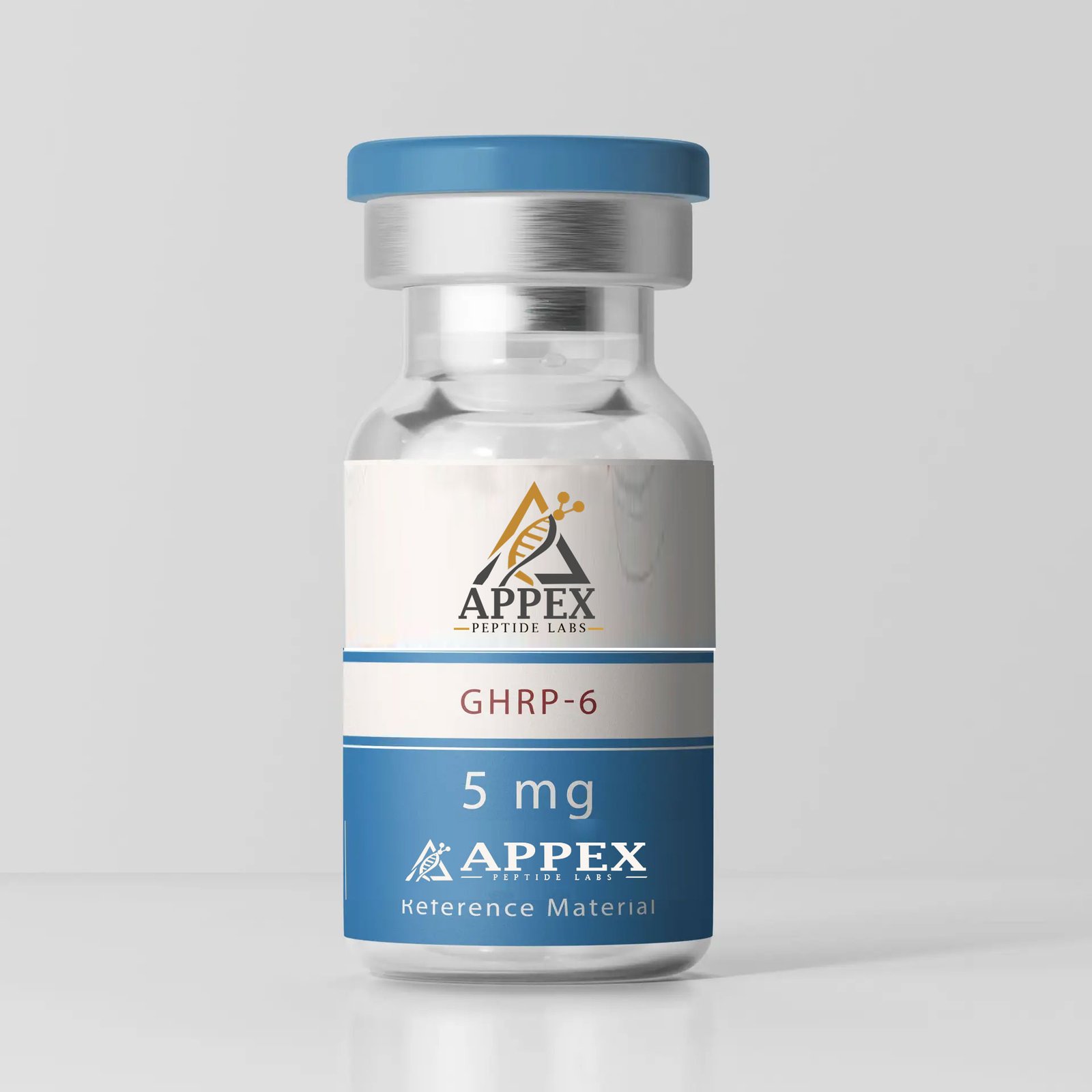
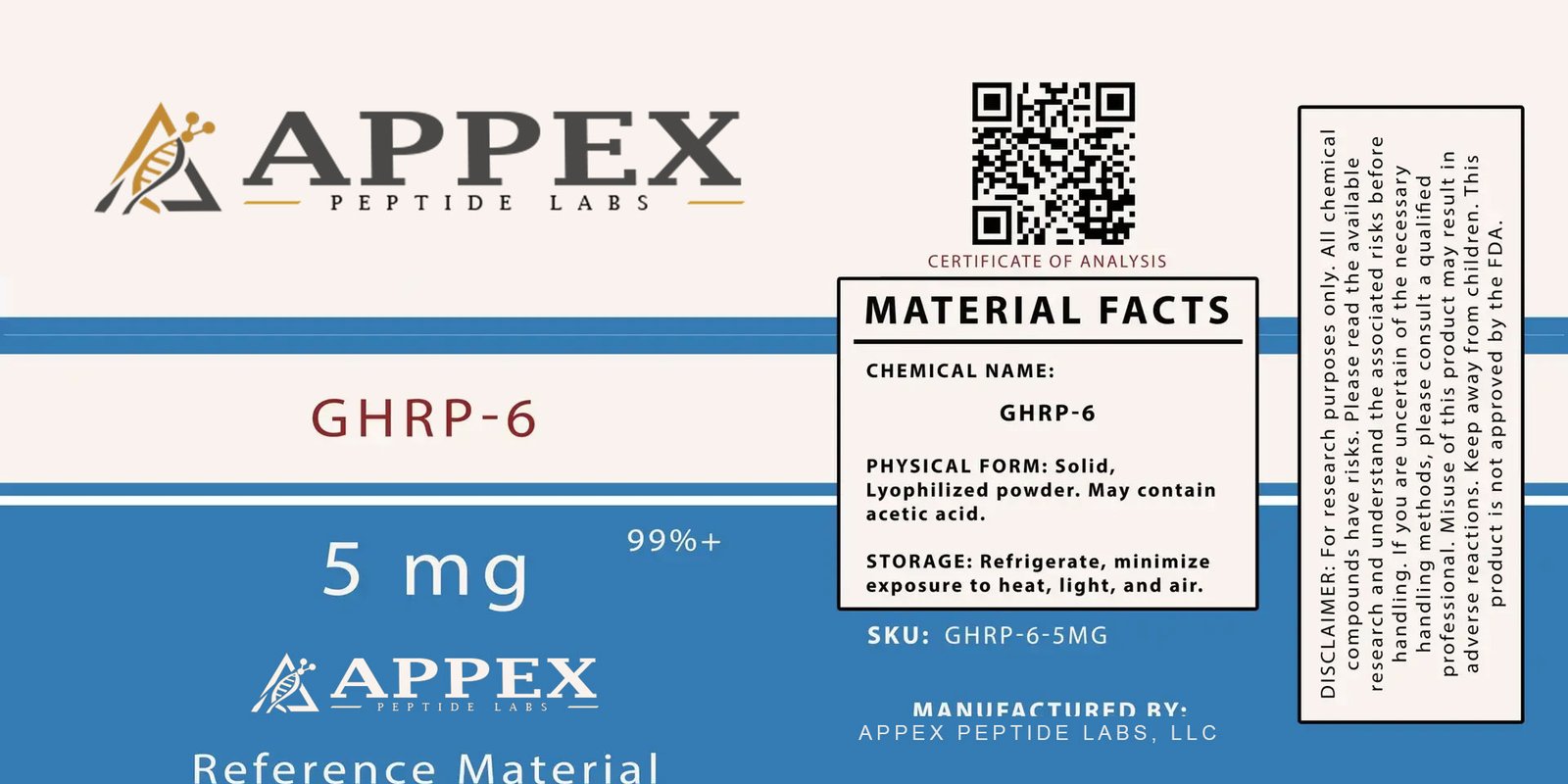

GHRP-6 Peptide is a well-characterized synthetic growth hormone secretagogue composed of six amino acids with the sequence His-D-Trp-Ala-Trp-D-Phe-Lys-NH₂. Developed to investigate mechanisms regulating pituitary hormone secretion, the peptide has become widely used in molecular biology, endocrinology, pharmacology, and receptor signaling research.
Unlike endogenous growth hormone-releasing hormone (GHRH), GHRP-6 Peptide primarily exerts its biological activity through selective activation of the growth hormone secretagogue receptor type 1a (GHS-R1a), a G protein-coupled receptor also recognized as the endogenous receptor for ghrelin. This receptor-mediated mechanism provides researchers with a valuable experimental model for studying intracellular signaling pathways, receptor pharmacodynamics, calcium-dependent signaling, phosphoinositide metabolism, and endocrine regulation.
The peptide is routinely incorporated into in vitro receptor assays, cell culture experiments, biochemical investigations, and laboratory models designed to characterize peptide-receptor interactions and downstream molecular responses. Because of its extensive scientific literature and reproducible pharmacological profile, GHRP-6 Peptide remains one of the most frequently referenced growth hormone secretagogues in endocrine research.
Appex Peptide Lab supplies high-purity research-grade GHRP-6 Peptide with strict manufacturing consistency and comprehensive analytical verification to support reliable laboratory outcomes.
For research use only. Not intended for human consumption or clinical use.
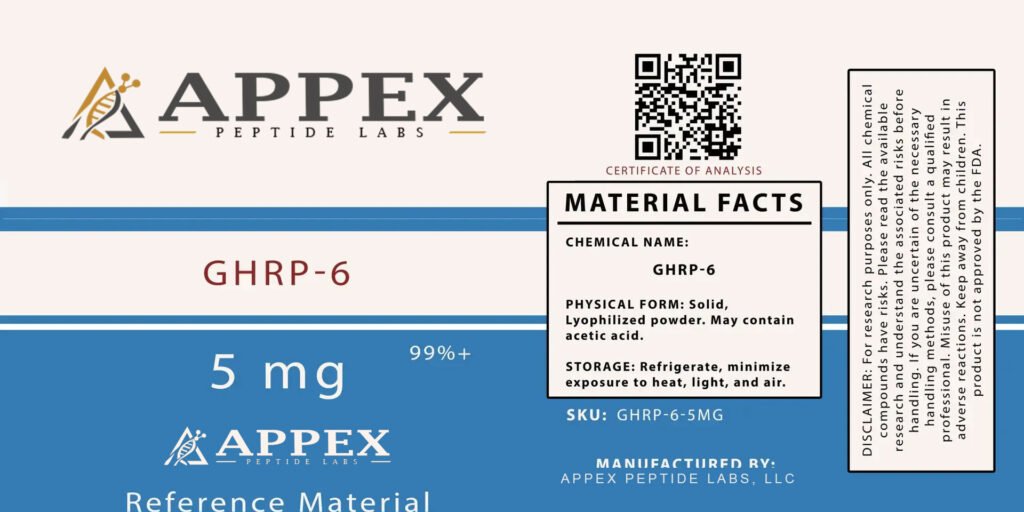
GHRP-6 Peptide is commonly employed to investigate ligand binding, receptor activation, receptor internalization, and downstream signaling mechanisms associated with the GHS-R1a receptor.
Researchers utilize GHRP-6 Peptide to explore endocrine communication pathways governing pituitary hormone regulation, neuropeptide signaling, and cellular communication.
The peptide serves as a valuable laboratory reagent for studying phospholipase C activation, intracellular calcium mobilization, protein kinase C signaling, MAPK activation, and secondary messenger systems.
GHRP-6 Peptide is incorporated into receptor pharmacology experiments to characterize agonist potency, ligand selectivity, receptor kinetics, and signal transduction efficiency.
Suitable for in vitro investigations involving pituitary-derived cell lines and recombinant expression systems evaluating peptide-mediated receptor responses.
Biotechnology and pharmaceutical laboratories use GHRP-6 Peptide during receptor assay development, compound screening, pharmacological validation, and peptide characterization studies.
| Specification | Details |
|---|---|
| Purity | ≥99% (HPLC verified) |
| Molecular Formula | C₄₆H₅₆N₁₂O₆ |
| Molecular Weight | 873.01 g/mol |
| CAS Number | 87616-84-0 |
| Appearance | White to off-white lyophilized powder |
| Storage Conditions | Store lyophilized peptide at -20°C. After reconstitution, store according to validated laboratory protocols and avoid repeated freeze-thaw cycles. |
| Solubility | Soluble in sterile laboratory-grade water or appropriate aqueous research buffer |
| Sequence | His-D-Trp-Ala-Trp-D-Phe-Lys-NH₂ |
| Available Sizes | 5 mg, 10 mg |
GHRP-6 Peptide is a synthetic hexapeptide that functions as a selective agonist of the growth hormone secretagogue receptor type 1a (GHS-R1a), a class A G protein-coupled receptor expressed in pituitary somatotrophs, hypothalamic neurons, and numerous peripheral tissues. In laboratory research, GHRP-6 Peptide is widely used to investigate receptor pharmacology, intracellular signaling mechanisms, endocrine regulation, and peptide-receptor interactions.
Upon binding to GHS-R1a, GHRP-6 Peptide primarily activates Gq/11-mediated signaling, leading to stimulation of phospholipase C (PLC). Activated PLC catalyzes the hydrolysis of phosphatidylinositol 4,5-bisphosphate (PIP₂), producing the intracellular second messengers inositol 1,4,5-trisphosphate (IP₃) and diacylglycerol (DAG). IP₃ promotes calcium release from intracellular endoplasmic reticulum stores, while DAG activates protein kinase C (PKC). Together, these signaling events regulate calcium-dependent exocytosis, transcriptional activity, and downstream cellular responses that are extensively investigated in endocrine research.
In addition to PLC signaling, GHRP-6 Peptide has been shown in experimental systems to influence multiple intracellular pathways including ERK1/2 (MAPK), PI3K/Akt, and calcium/calmodulin-dependent signaling networks. These pathways contribute to investigations examining receptor desensitization, gene transcription, receptor trafficking, phosphorylation events, and peptide-mediated cellular communication.
Unlike growth hormone-releasing hormone (GHRH), which primarily signals through adenylate cyclase and cyclic AMP (cAMP), GHRP-6 Peptide activates distinct intracellular mechanisms. Researchers frequently study the complementary relationship between these signaling pathways because simultaneous receptor activation has demonstrated coordinated cellular responses under controlled laboratory conditions. This makes GHRP-6 Peptide particularly valuable for experiments evaluating receptor crosstalk and integrated endocrine signaling.
Current molecular biology research also utilizes GHRP-6 Peptide to examine ligand-receptor binding kinetics, structure-activity relationships, receptor conformational dynamics, biased agonism, peptide stability, and downstream transcriptional regulation. These investigations continue to expand scientific understanding of GHS-R1a biology, peptide pharmacology, and intracellular signaling mechanisms across diverse experimental platforms.
For research use only. Not intended for human consumption or clinical use.
| Size | 5mg |
|---|---|
| Dimensions | 9 × 7 × .5 in |
| Weight | .125 lbs |
GHRP-6 Peptide is a well-characterized synthetic growth hormone secretagogue composed of six amino acids with the sequence His-D-Trp-Ala-Trp-D-Phe-Lys-NH₂. Developed to investigate mechanisms regulating pituitary hormone secretion, the peptide has become widely used in molecular biology, endocrinology, pharmacology, and receptor signaling research.
Unlike endogenous growth hormone-releasing hormone (GHRH), GHRP-6 Peptide primarily exerts its biological activity through selective activation of the growth hormone secretagogue receptor type 1a (GHS-R1a), a G protein-coupled receptor also recognized as the endogenous receptor for ghrelin. This receptor-mediated mechanism provides researchers with a valuable experimental model for studying intracellular signaling pathways, receptor pharmacodynamics, calcium-dependent signaling, phosphoinositide metabolism, and endocrine regulation.
The peptide is routinely incorporated into in vitro receptor assays, cell culture experiments, biochemical investigations, and laboratory models designed to characterize peptide-receptor interactions and downstream molecular responses. Because of its extensive scientific literature and reproducible pharmacological profile, GHRP-6 Peptide remains one of the most frequently referenced growth hormone secretagogues in endocrine research.
Appex Peptide Lab supplies high-purity research-grade GHRP-6 Peptide with strict manufacturing consistency and comprehensive analytical verification to support reliable laboratory outcomes.
For research use only. Not intended for human consumption or clinical use.
GHRP-6 Peptide is commonly employed to investigate ligand binding, receptor activation, receptor internalization, and downstream signaling mechanisms associated with the GHS-R1a receptor.
Researchers utilize GHRP-6 Peptide to explore endocrine communication pathways governing pituitary hormone regulation, neuropeptide signaling, and cellular communication.
The peptide serves as a valuable laboratory reagent for studying phospholipase C activation, intracellular calcium mobilization, protein kinase C signaling, MAPK activation, and secondary messenger systems.
GHRP-6 Peptide is incorporated into receptor pharmacology experiments to characterize agonist potency, ligand selectivity, receptor kinetics, and signal transduction efficiency.
Suitable for in vitro investigations involving pituitary-derived cell lines and recombinant expression systems evaluating peptide-mediated receptor responses.
Biotechnology and pharmaceutical laboratories use GHRP-6 Peptide during receptor assay development, compound screening, pharmacological validation, and peptide characterization studies.
| Specification | Details |
|---|---|
| Purity | ≥99% (HPLC verified) |
| Molecular Formula | C₄₆H₅₆N₁₂O₆ |
| Molecular Weight | 873.01 g/mol |
| CAS Number | 87616-84-0 |
| Appearance | White to off-white lyophilized powder |
| Storage Conditions | Store lyophilized peptide at -20°C. After reconstitution, store according to validated laboratory protocols and avoid repeated freeze-thaw cycles. |
| Solubility | Soluble in sterile laboratory-grade water or appropriate aqueous research buffer |
| Sequence | His-D-Trp-Ala-Trp-D-Phe-Lys-NH₂ |
| Available Sizes | 5 mg, 10 mg |
GHRP-6 Peptide is a synthetic hexapeptide that functions as a selective agonist of the growth hormone secretagogue receptor type 1a (GHS-R1a), a class A G protein-coupled receptor expressed in pituitary somatotrophs, hypothalamic neurons, and numerous peripheral tissues. In laboratory research, GHRP-6 Peptide is widely used to investigate receptor pharmacology, intracellular signaling mechanisms, endocrine regulation, and peptide-receptor interactions.
Upon binding to GHS-R1a, GHRP-6 Peptide primarily activates Gq/11-mediated signaling, leading to stimulation of phospholipase C (PLC). Activated PLC catalyzes the hydrolysis of phosphatidylinositol 4,5-bisphosphate (PIP₂), producing the intracellular second messengers inositol 1,4,5-trisphosphate (IP₃) and diacylglycerol (DAG). IP₃ promotes calcium release from intracellular endoplasmic reticulum stores, while DAG activates protein kinase C (PKC). Together, these signaling events regulate calcium-dependent exocytosis, transcriptional activity, and downstream cellular responses that are extensively investigated in endocrine research.
In addition to PLC signaling, GHRP-6 Peptide has been shown in experimental systems to influence multiple intracellular pathways including ERK1/2 (MAPK), PI3K/Akt, and calcium/calmodulin-dependent signaling networks. These pathways contribute to investigations examining receptor desensitization, gene transcription, receptor trafficking, phosphorylation events, and peptide-mediated cellular communication.
Unlike growth hormone-releasing hormone (GHRH), which primarily signals through adenylate cyclase and cyclic AMP (cAMP), GHRP-6 Peptide activates distinct intracellular mechanisms. Researchers frequently study the complementary relationship between these signaling pathways because simultaneous receptor activation has demonstrated coordinated cellular responses under controlled laboratory conditions. This makes GHRP-6 Peptide particularly valuable for experiments evaluating receptor crosstalk and integrated endocrine signaling.
Current molecular biology research also utilizes GHRP-6 Peptide to examine ligand-receptor binding kinetics, structure-activity relationships, receptor conformational dynamics, biased agonism, peptide stability, and downstream transcriptional regulation. These investigations continue to expand scientific understanding of GHS-R1a biology, peptide pharmacology, and intracellular signaling mechanisms across diverse experimental platforms.
For research use only. Not intended for human consumption or clinical use.
| Size | 5mg |
|---|---|
| Dimensions | 9 × 7 × .5 in |
| Weight | .125 lbs |