Bulk Orders. Better Value.
Research institutions, universities and clinical teams qualify for volume discounts. Contact our team to discuss custom formulations and bulk pricing.

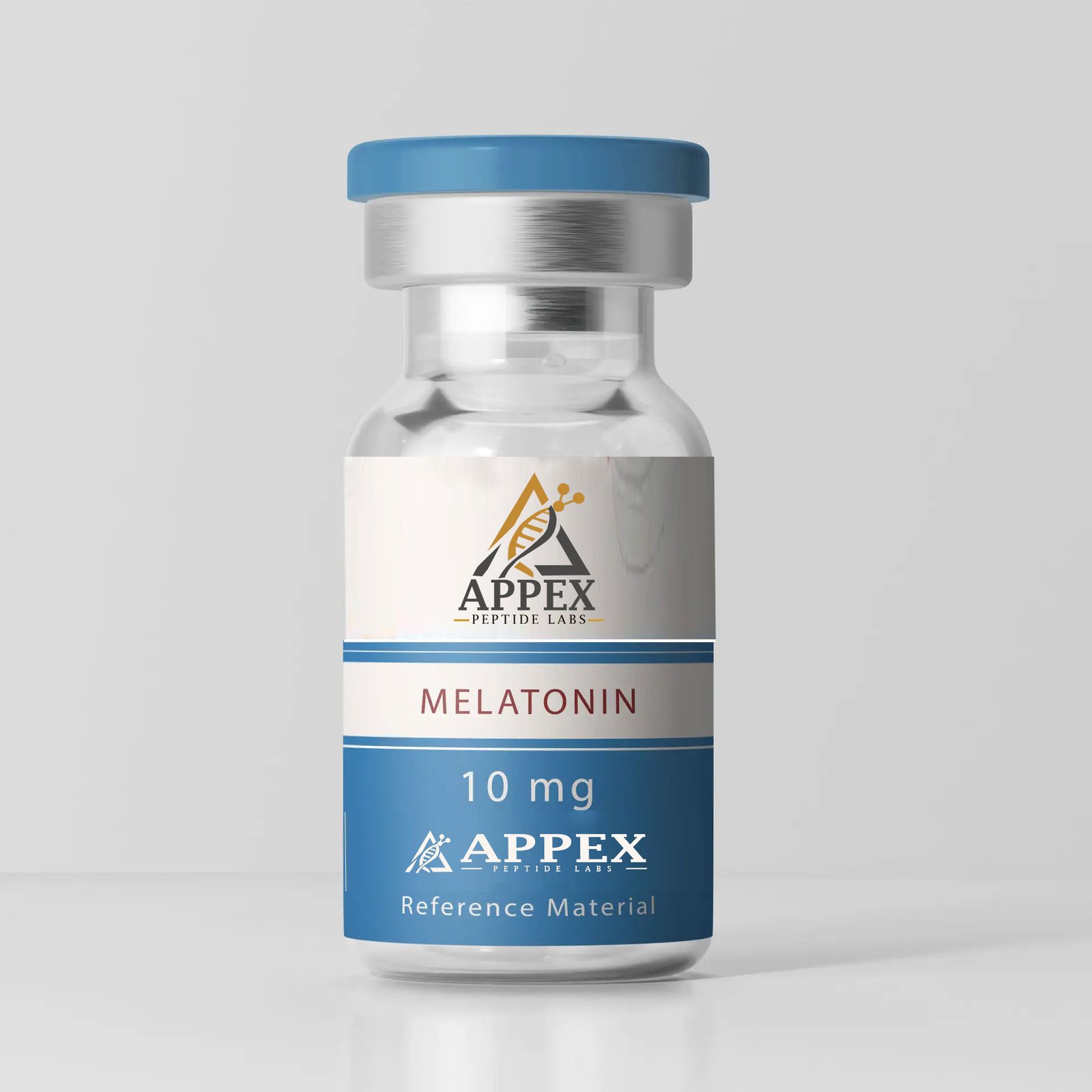

Melatonin Peptide is a naturally occurring indoleamine synthesized primarily by the pineal gland through the sequential metabolism of tryptophan and serotonin. It is one of the most extensively studied signaling molecules in chronobiology, neurobiology, endocrinology, molecular pharmacology, and mitochondrial research because of its central role in regulating circadian timing and cellular homeostasis.
Scientific investigations utilize Melatonin to examine MT1 and MT2 receptor activation, circadian rhythm synchronization, intracellular antioxidant defense systems, mitochondrial bioenergetics, redox signaling, gene transcription, and neuroendocrine communication. Laboratory studies also investigate receptor-independent mechanisms involving direct reactive oxygen species (ROS) and reactive nitrogen species (RNS) scavenging, mitochondrial membrane stabilization, and modulation of cellular stress responses.
Beyond circadian biology, Melatonin is widely incorporated into molecular biology, neuroscience, cell biology, oncology research, pharmacology, and peptide chemistry studies. Its well-characterized molecular structure and reproducible biochemical properties make it an essential experimental reagent for universities, biotechnology companies, pharmaceutical organizations, and life science research laboratories.
Each batch is manufactured under rigorous quality-controlled procedures, analytically verified for purity and structural identity, and supplied as a stable crystalline or lyophilized preparation with a comprehensive Certificate of Analysis to ensure reproducible laboratory investigations.
For research use only. Not intended for human consumption or clinical use.

Melatonin is extensively utilized in laboratory investigations examining circadian clock regulation, chronobiology, suprachiasmatic nucleus signaling, biological timing, and photoperiodic responses.
Researchers employ Melatonin to investigate MT1 and MT2 receptor activation, receptor signaling, ligand affinity, intracellular communication, receptor trafficking, and pharmacological characterization.
Experimental models utilize Melatonin to study mitochondrial membrane potential, oxidative phosphorylation, ATP production, mitochondrial dynamics, and bioenergetic regulation.
Scientists investigate reactive oxygen species (ROS), reactive nitrogen species (RNS), antioxidant defense mechanisms, cellular redox balance, and oxidative signaling pathways.
Laboratory investigations incorporate Melatonin into studies examining endocrine communication, neuronal signaling, transcriptional regulation, and cellular adaptation to circadian cues.
Researchers utilize Melatonin for receptor characterization, intracellular signaling studies, analytical method development, formulation research, medicinal chemistry, and structure-function investigations.
| Specification | Details |
|---|---|
| Product Name | Melatonin |
| Synonyms | N-acetyl-5-methoxytryptamine |
| Purity | ≥99.9% (HPLC Verified) |
| Molecular Formula | C₁₃H₁₆N₂O₂ |
| Molecular Weight | 232.28 g/mol |
| CAS Number | 73-31-4 |
| Chemical Name | N-acetyl-5-methoxytryptamine |
| Appearance | White to off-white crystalline powder or lyophilized solid |
| Solubility | Soluble in ethanol, methanol, DMSO, and partially soluble in aqueous laboratory buffers |
| Storage Conditions | Store at 2–8°C in a dry, light-protected environment. Long-term storage at −20°C is recommended to preserve chemical stability. |
| Available Sizes | 10 mg, 100 mg (or custom laboratory quantities upon request) |
Melatonin Peptide is an endogenous indoleamine that exerts its biological effects through both receptor-dependent and receptor-independent mechanisms. In receptor-mediated signaling, Melatonin binds with high affinity to the MT1 (MTNR1A) and MT2 (MTNR1B) receptors, two Class A G protein-coupled receptors (GPCRs) broadly expressed throughout the central nervous system, retina, cardiovascular tissues, immune cells, and peripheral organs.
Activation of MT1 and MT2 receptors primarily couples to Gi/Go proteins, leading to inhibition of adenylyl cyclase, reduced intracellular cyclic AMP (cAMP) concentrations, modulation of protein kinase A (PKA) activity, and regulation of transcription factors involved in circadian gene expression. Researchers frequently investigate downstream signaling pathways including MAPK/ERK, PI3K/Akt, PKC, and intracellular calcium signaling to better understand receptor-mediated chronobiological regulation.
Beyond receptor activation, Melatonin Peptide possesses unique receptor-independent biochemical properties. Laboratory investigations have demonstrated its ability to directly interact with reactive oxygen species (ROS) and reactive nitrogen species (RNS), making it one of the most extensively studied endogenous redox-active molecules. Researchers also investigate Melatonin’s interactions with antioxidant enzymes including superoxide dismutase (SOD), glutathione peroxidase (GPx), catalase, and signaling pathways involving Nrf2, SIRT1, and mitochondrial transcription factors. Melatonin Peptide
Within mitochondria, Melatonin has been investigated for its influence on mitochondrial membrane potential, electron transport chain efficiency, ATP synthesis, mitochondrial permeability transition, and maintenance of cellular bioenergetics. Additional laboratory studies examine regulation of circadian clock genes including CLOCK, BMAL1, PER, and CRY, providing insight into molecular mechanisms governing circadian synchronization. Melatonin Peptide
Its well-defined molecular structure, extensive characterization across multiple biological systems, and highly reproducible biochemical profile have established Melatonin as an essential experimental compound for chronobiology, neurobiology, mitochondrial physiology, molecular pharmacology, oxidative stress research, biotechnology, and life science laboratories.
For research use only. Not intended for human consumption or clinical use.
| Size | 10mg |
|---|---|
| Dimensions | 9 × 7 × .5 in |
| Weight | .125 lbs |
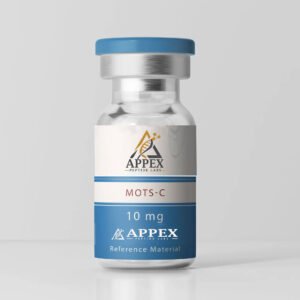
Melatonin Peptide is a naturally occurring indoleamine synthesized primarily by the pineal gland through the sequential metabolism of tryptophan and serotonin. It is one of the most extensively studied signaling molecules in chronobiology, neurobiology, endocrinology, molecular pharmacology, and mitochondrial research because of its central role in regulating circadian timing and cellular homeostasis.
Scientific investigations utilize Melatonin to examine MT1 and MT2 receptor activation, circadian rhythm synchronization, intracellular antioxidant defense systems, mitochondrial bioenergetics, redox signaling, gene transcription, and neuroendocrine communication. Laboratory studies also investigate receptor-independent mechanisms involving direct reactive oxygen species (ROS) and reactive nitrogen species (RNS) scavenging, mitochondrial membrane stabilization, and modulation of cellular stress responses.
Beyond circadian biology, Melatonin is widely incorporated into molecular biology, neuroscience, cell biology, oncology research, pharmacology, and peptide chemistry studies. Its well-characterized molecular structure and reproducible biochemical properties make it an essential experimental reagent for universities, biotechnology companies, pharmaceutical organizations, and life science research laboratories.
Each batch is manufactured under rigorous quality-controlled procedures, analytically verified for purity and structural identity, and supplied as a stable crystalline or lyophilized preparation with a comprehensive Certificate of Analysis to ensure reproducible laboratory investigations.
For research use only. Not intended for human consumption or clinical use.
Melatonin is extensively utilized in laboratory investigations examining circadian clock regulation, chronobiology, suprachiasmatic nucleus signaling, biological timing, and photoperiodic responses.
Researchers employ Melatonin to investigate MT1 and MT2 receptor activation, receptor signaling, ligand affinity, intracellular communication, receptor trafficking, and pharmacological characterization.
Experimental models utilize Melatonin to study mitochondrial membrane potential, oxidative phosphorylation, ATP production, mitochondrial dynamics, and bioenergetic regulation.
Scientists investigate reactive oxygen species (ROS), reactive nitrogen species (RNS), antioxidant defense mechanisms, cellular redox balance, and oxidative signaling pathways.
Laboratory investigations incorporate Melatonin into studies examining endocrine communication, neuronal signaling, transcriptional regulation, and cellular adaptation to circadian cues.
Researchers utilize Melatonin for receptor characterization, intracellular signaling studies, analytical method development, formulation research, medicinal chemistry, and structure-function investigations.
| Specification | Details |
|---|---|
| Product Name | Melatonin |
| Synonyms | N-acetyl-5-methoxytryptamine |
| Purity | ≥99.9% (HPLC Verified) |
| Molecular Formula | C₁₃H₁₆N₂O₂ |
| Molecular Weight | 232.28 g/mol |
| CAS Number | 73-31-4 |
| Chemical Name | N-acetyl-5-methoxytryptamine |
| Appearance | White to off-white crystalline powder or lyophilized solid |
| Solubility | Soluble in ethanol, methanol, DMSO, and partially soluble in aqueous laboratory buffers |
| Storage Conditions | Store at 2–8°C in a dry, light-protected environment. Long-term storage at −20°C is recommended to preserve chemical stability. |
| Available Sizes | 10 mg, 100 mg (or custom laboratory quantities upon request) |
Melatonin Peptide is an endogenous indoleamine that exerts its biological effects through both receptor-dependent and receptor-independent mechanisms. In receptor-mediated signaling, Melatonin binds with high affinity to the MT1 (MTNR1A) and MT2 (MTNR1B) receptors, two Class A G protein-coupled receptors (GPCRs) broadly expressed throughout the central nervous system, retina, cardiovascular tissues, immune cells, and peripheral organs.
Activation of MT1 and MT2 receptors primarily couples to Gi/Go proteins, leading to inhibition of adenylyl cyclase, reduced intracellular cyclic AMP (cAMP) concentrations, modulation of protein kinase A (PKA) activity, and regulation of transcription factors involved in circadian gene expression. Researchers frequently investigate downstream signaling pathways including MAPK/ERK, PI3K/Akt, PKC, and intracellular calcium signaling to better understand receptor-mediated chronobiological regulation.
Beyond receptor activation, Melatonin Peptide possesses unique receptor-independent biochemical properties. Laboratory investigations have demonstrated its ability to directly interact with reactive oxygen species (ROS) and reactive nitrogen species (RNS), making it one of the most extensively studied endogenous redox-active molecules. Researchers also investigate Melatonin’s interactions with antioxidant enzymes including superoxide dismutase (SOD), glutathione peroxidase (GPx), catalase, and signaling pathways involving Nrf2, SIRT1, and mitochondrial transcription factors. Melatonin Peptide
Within mitochondria, Melatonin has been investigated for its influence on mitochondrial membrane potential, electron transport chain efficiency, ATP synthesis, mitochondrial permeability transition, and maintenance of cellular bioenergetics. Additional laboratory studies examine regulation of circadian clock genes including CLOCK, BMAL1, PER, and CRY, providing insight into molecular mechanisms governing circadian synchronization. Melatonin Peptide
Its well-defined molecular structure, extensive characterization across multiple biological systems, and highly reproducible biochemical profile have established Melatonin as an essential experimental compound for chronobiology, neurobiology, mitochondrial physiology, molecular pharmacology, oxidative stress research, biotechnology, and life science laboratories.
For research use only. Not intended for human consumption or clinical use.
| Size | 10mg |
|---|---|
| Dimensions | 9 × 7 × .5 in |
| Weight | .125 lbs |