Bulk Orders. Better Value.
Research institutions, universities and clinical teams qualify for volume discounts. Contact our team to discuss custom formulations and bulk pricing.

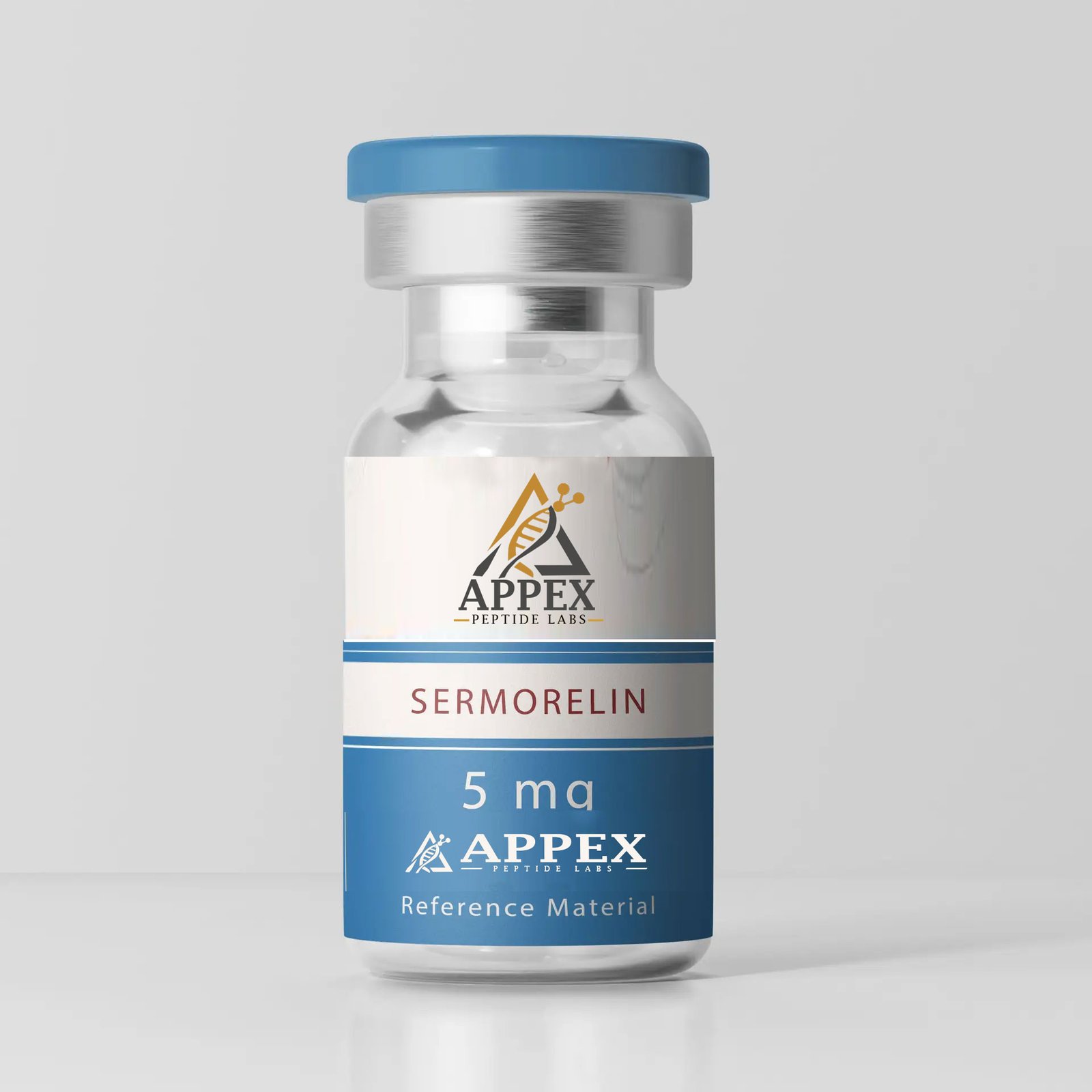
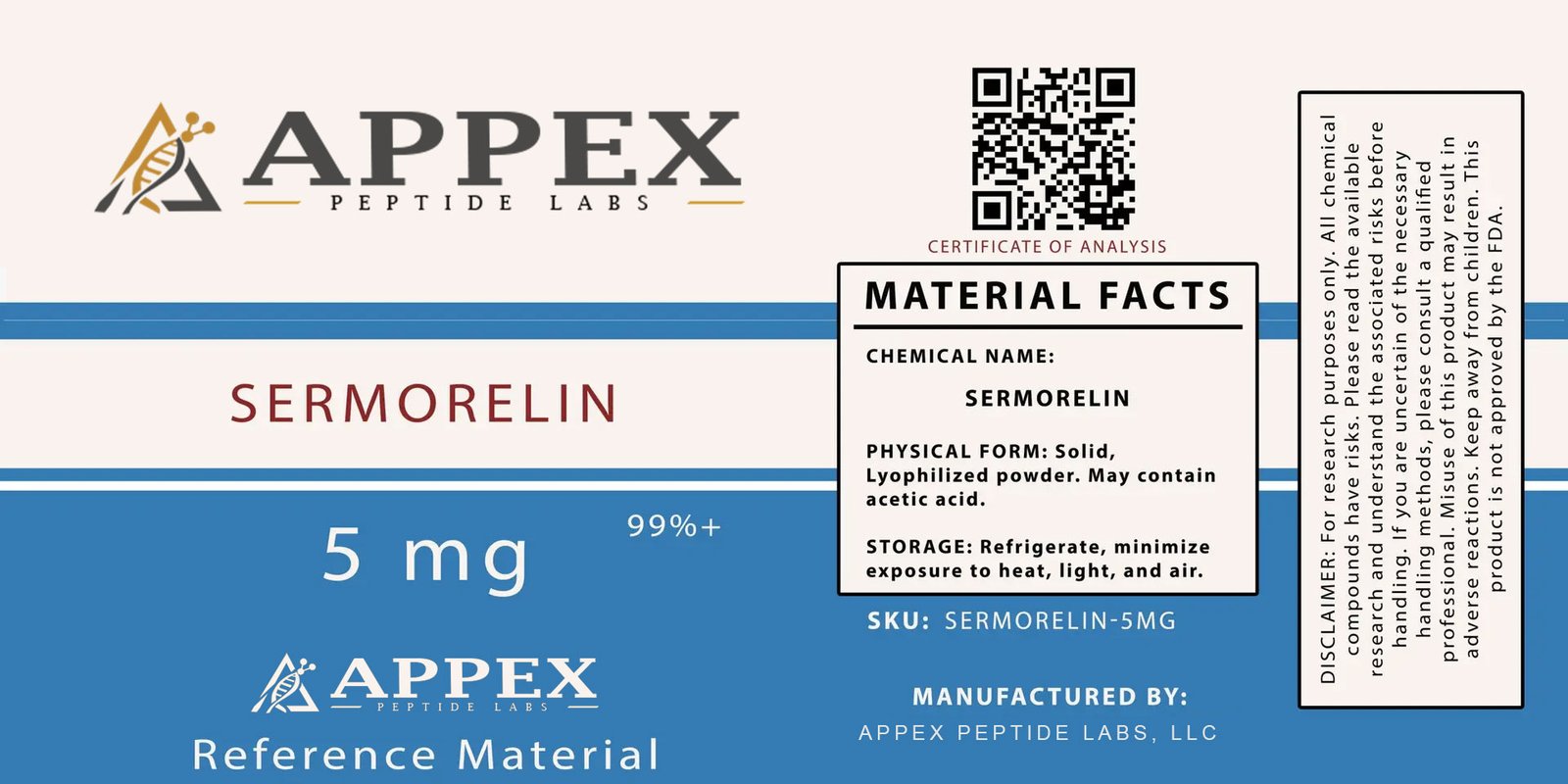
Sermorelin Peptide, also known as GRF (1-29), is the biologically active N-terminal fragment of endogenous human Growth Hormone-Releasing Hormone (GHRH). This synthetic peptide retains receptor-binding activity while providing researchers with a highly characterized model for investigating hypothalamic-pituitary signaling and endocrine regulation under controlled laboratory conditions.
Scientific research has extensively examined Sermorelin Peptide for its interaction with GHRH receptors expressed on anterior pituitary somatotroph cells. These studies have contributed to understanding intracellular signaling mechanisms responsible for pulsatile growth hormone secretion, feedback regulation, second messenger activation, and downstream modulation of insulin-like growth factor-1 (IGF-1) synthesis.
Beyond endocrine physiology, Sermorelin Peptide has become an important experimental reagent in neurobiology, molecular pharmacology, peptide chemistry, and cellular signaling research. Investigators continue to explore its effects on cyclic AMP (cAMP) signaling, protein kinase activation, transcriptional regulation, neuroendocrine communication, and receptor pharmacodynamics.
Each batch is manufactured under stringent quality-controlled peptide synthesis procedures, analytically verified for purity and identity, and supplied as a stable lyophilized powder with a comprehensive Certificate of Analysis to support reproducible laboratory investigations.
For research use only. Not intended for human consumption or clinical use.
Sermorelin Peptide is extensively utilized to investigate physiological regulation of growth hormone secretion, pituitary responsiveness, hypothalamic signaling, and endocrine feedback mechanisms.
Researchers employ Sermorelin Peptide to characterize GHRH receptor activation, ligand-receptor binding kinetics, receptor internalization, and downstream intracellular signaling pathways.
Experimental models utilize Sermorelin Peptide to examine communication between hypothalamic and pituitary tissues, neuropeptide signaling, endocrine regulation, and hormonal feedback networks.
Laboratory investigations incorporate Sermorelin Peptide to evaluate molecular mechanisms regulating insulin-like growth factor-1 production, transcriptional activity, and downstream endocrine signaling.
Researchers investigate cAMP production, adenylate cyclase activation, protein kinase A (PKA) signaling, CREB phosphorylation, and transcription factor regulation following GHRH receptor stimulation.
Sermorelin Peptide is widely employed in studies evaluating peptide stability, receptor selectivity, pharmacokinetics, formulation development, and structure-function relationships.
| Specification | Details |
|---|---|
| Product Name | Sermorelin Peptide |
| Synonyms | Sermorelin Acetate, GRF (1-29), GHRH (1-29) |
| Purity | ≥99% (HPLC Verified) |
| Molecular Formula | C₁₄₉H₂₄₆N₄₄O₄₂S |
| Molecular Weight | 3357.9 g/mol |
| CAS Number | 86168-78-7 |
| Sequence | Tyr-Ala-Asp-Ala-Ile-Phe-Thr-Asn-Ser-Tyr-Arg-Lys-Val-Leu-Gly-Gln-Leu-Ser-Ala-Arg-Lys-Leu-Leu-Gln-Asp-Ile-Met-Ser-Arg-NH₂ |
| Appearance | White to off-white lyophilized powder |
| Solubility | Soluble in sterile bacteriostatic water and laboratory-grade aqueous buffers |
| Storage Conditions | Store lyophilized peptide at 2–8°C. For long-term storage, maintain at −20°C in a dry, light-protected environment. Avoid repeated freeze-thaw cycles after reconstitution. |
| Available Sizes | 5 mg, 10 mg |
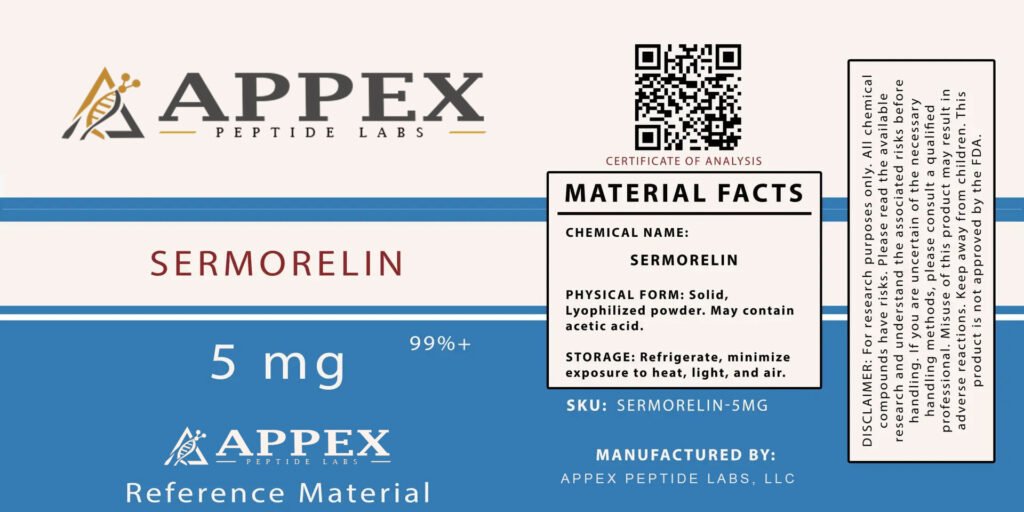
Sermorelin Peptide is a synthetic analog of the first 29 amino acids of endogenous human Growth Hormone-Releasing Hormone (GHRH), representing the biologically active receptor-binding region responsible for stimulating pituitary somatotroph cells. In laboratory research, Sermorelin serves as a highly characterized model peptide for investigating endocrine signaling, receptor pharmacology, and hypothalamic-pituitary communication.
The peptide exerts its biological activity through selective binding to the Growth Hormone-Releasing Hormone Receptor (GHRHR), a Class B G protein-coupled receptor (GPCR) expressed primarily on anterior pituitary somatotrophs. Upon receptor binding, Sermorelin activates the Gs protein, leading to stimulation of adenylate cyclase and a subsequent increase in intracellular cyclic adenosine monophosphate (cAMP) concentrations.
Elevated cAMP activates protein kinase A (PKA), initiating phosphorylation of multiple downstream substrates, including the cAMP response element-binding protein (CREB). Activated CREB regulates transcription of genes associated with growth hormone synthesis, peptide secretion, and cellular differentiation. Researchers frequently investigate these signaling events to better understand receptor-mediated transcriptional regulation and endocrine physiology.
In addition to cAMP-dependent signaling, published studies have demonstrated activation of intracellular calcium mobilization and voltage-dependent calcium channels following GHRHR stimulation. Increased intracellular calcium facilitates regulated exocytosis of growth hormone-containing secretory granules within somatotroph cells. These tightly controlled signaling mechanisms contribute to physiological pulsatile secretion patterns observed in experimental endocrine models.
Scientific investigations have also explored Sermorelin’s influence on downstream endocrine signaling involving insulin-like growth factor-1 (IGF-1), phosphatidylinositol signaling, mitogen-activated protein kinase (MAPK/ERK) pathways, and transcription factors regulating pituitary cellular function. These molecular interactions continue to be evaluated in laboratory studies examining neuroendocrine regulation, receptor desensitization, peptide pharmacodynamics, and intracellular communication.
Because Sermorelin Peptide preserves receptor specificity while closely mimicking endogenous GHRH activity, it remains an important research reagent for molecular endocrinology, peptide pharmacology, neurobiology, cellular signaling, and biotechnology laboratories investigating the mechanisms governing pituitary function and endocrine homeostasis.
For research use only. Not intended for human consumption or clinical use.
| Size | 10mg, 5mg |
|---|---|
| Dimensions | 9 × 7 × .5 in |
| Weight | .125 lbs |
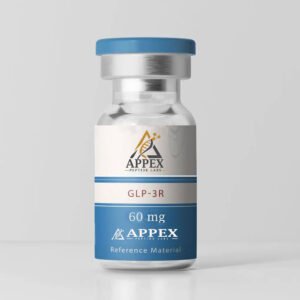
Sermorelin Peptide, also known as GRF (1-29), is the biologically active N-terminal fragment of endogenous human Growth Hormone-Releasing Hormone (GHRH). This synthetic peptide retains receptor-binding activity while providing researchers with a highly characterized model for investigating hypothalamic-pituitary signaling and endocrine regulation under controlled laboratory conditions.
Scientific research has extensively examined Sermorelin Peptide for its interaction with GHRH receptors expressed on anterior pituitary somatotroph cells. These studies have contributed to understanding intracellular signaling mechanisms responsible for pulsatile growth hormone secretion, feedback regulation, second messenger activation, and downstream modulation of insulin-like growth factor-1 (IGF-1) synthesis.
Beyond endocrine physiology, Sermorelin Peptide has become an important experimental reagent in neurobiology, molecular pharmacology, peptide chemistry, and cellular signaling research. Investigators continue to explore its effects on cyclic AMP (cAMP) signaling, protein kinase activation, transcriptional regulation, neuroendocrine communication, and receptor pharmacodynamics.
Each batch is manufactured under stringent quality-controlled peptide synthesis procedures, analytically verified for purity and identity, and supplied as a stable lyophilized powder with a comprehensive Certificate of Analysis to support reproducible laboratory investigations.
For research use only. Not intended for human consumption or clinical use.
Sermorelin Peptide is extensively utilized to investigate physiological regulation of growth hormone secretion, pituitary responsiveness, hypothalamic signaling, and endocrine feedback mechanisms.
Researchers employ Sermorelin Peptide to characterize GHRH receptor activation, ligand-receptor binding kinetics, receptor internalization, and downstream intracellular signaling pathways.
Experimental models utilize Sermorelin Peptide to examine communication between hypothalamic and pituitary tissues, neuropeptide signaling, endocrine regulation, and hormonal feedback networks.
Laboratory investigations incorporate Sermorelin Peptide to evaluate molecular mechanisms regulating insulin-like growth factor-1 production, transcriptional activity, and downstream endocrine signaling.
Researchers investigate cAMP production, adenylate cyclase activation, protein kinase A (PKA) signaling, CREB phosphorylation, and transcription factor regulation following GHRH receptor stimulation.
Sermorelin Peptide is widely employed in studies evaluating peptide stability, receptor selectivity, pharmacokinetics, formulation development, and structure-function relationships.
| Specification | Details |
|---|---|
| Product Name | Sermorelin Peptide |
| Synonyms | Sermorelin Acetate, GRF (1-29), GHRH (1-29) |
| Purity | ≥99% (HPLC Verified) |
| Molecular Formula | C₁₄₉H₂₄₆N₄₄O₄₂S |
| Molecular Weight | 3357.9 g/mol |
| CAS Number | 86168-78-7 |
| Sequence | Tyr-Ala-Asp-Ala-Ile-Phe-Thr-Asn-Ser-Tyr-Arg-Lys-Val-Leu-Gly-Gln-Leu-Ser-Ala-Arg-Lys-Leu-Leu-Gln-Asp-Ile-Met-Ser-Arg-NH₂ |
| Appearance | White to off-white lyophilized powder |
| Solubility | Soluble in sterile bacteriostatic water and laboratory-grade aqueous buffers |
| Storage Conditions | Store lyophilized peptide at 2–8°C. For long-term storage, maintain at −20°C in a dry, light-protected environment. Avoid repeated freeze-thaw cycles after reconstitution. |
| Available Sizes | 5 mg, 10 mg |
Sermorelin Peptide is a synthetic analog of the first 29 amino acids of endogenous human Growth Hormone-Releasing Hormone (GHRH), representing the biologically active receptor-binding region responsible for stimulating pituitary somatotroph cells. In laboratory research, Sermorelin serves as a highly characterized model peptide for investigating endocrine signaling, receptor pharmacology, and hypothalamic-pituitary communication.
The peptide exerts its biological activity through selective binding to the Growth Hormone-Releasing Hormone Receptor (GHRHR), a Class B G protein-coupled receptor (GPCR) expressed primarily on anterior pituitary somatotrophs. Upon receptor binding, Sermorelin activates the Gs protein, leading to stimulation of adenylate cyclase and a subsequent increase in intracellular cyclic adenosine monophosphate (cAMP) concentrations.
Elevated cAMP activates protein kinase A (PKA), initiating phosphorylation of multiple downstream substrates, including the cAMP response element-binding protein (CREB). Activated CREB regulates transcription of genes associated with growth hormone synthesis, peptide secretion, and cellular differentiation. Researchers frequently investigate these signaling events to better understand receptor-mediated transcriptional regulation and endocrine physiology.
In addition to cAMP-dependent signaling, published studies have demonstrated activation of intracellular calcium mobilization and voltage-dependent calcium channels following GHRHR stimulation. Increased intracellular calcium facilitates regulated exocytosis of growth hormone-containing secretory granules within somatotroph cells. These tightly controlled signaling mechanisms contribute to physiological pulsatile secretion patterns observed in experimental endocrine models.
Scientific investigations have also explored Sermorelin’s influence on downstream endocrine signaling involving insulin-like growth factor-1 (IGF-1), phosphatidylinositol signaling, mitogen-activated protein kinase (MAPK/ERK) pathways, and transcription factors regulating pituitary cellular function. These molecular interactions continue to be evaluated in laboratory studies examining neuroendocrine regulation, receptor desensitization, peptide pharmacodynamics, and intracellular communication.
Because Sermorelin Peptide preserves receptor specificity while closely mimicking endogenous GHRH activity, it remains an important research reagent for molecular endocrinology, peptide pharmacology, neurobiology, cellular signaling, and biotechnology laboratories investigating the mechanisms governing pituitary function and endocrine homeostasis.
For research use only. Not intended for human consumption or clinical use.
| Size | 10mg, 5mg |
|---|---|
| Dimensions | 9 × 7 × .5 in |
| Weight | .125 lbs |