Bulk Orders. Better Value.
Research institutions, universities and clinical teams qualify for volume discounts. Contact our team to discuss custom formulations and bulk pricing.

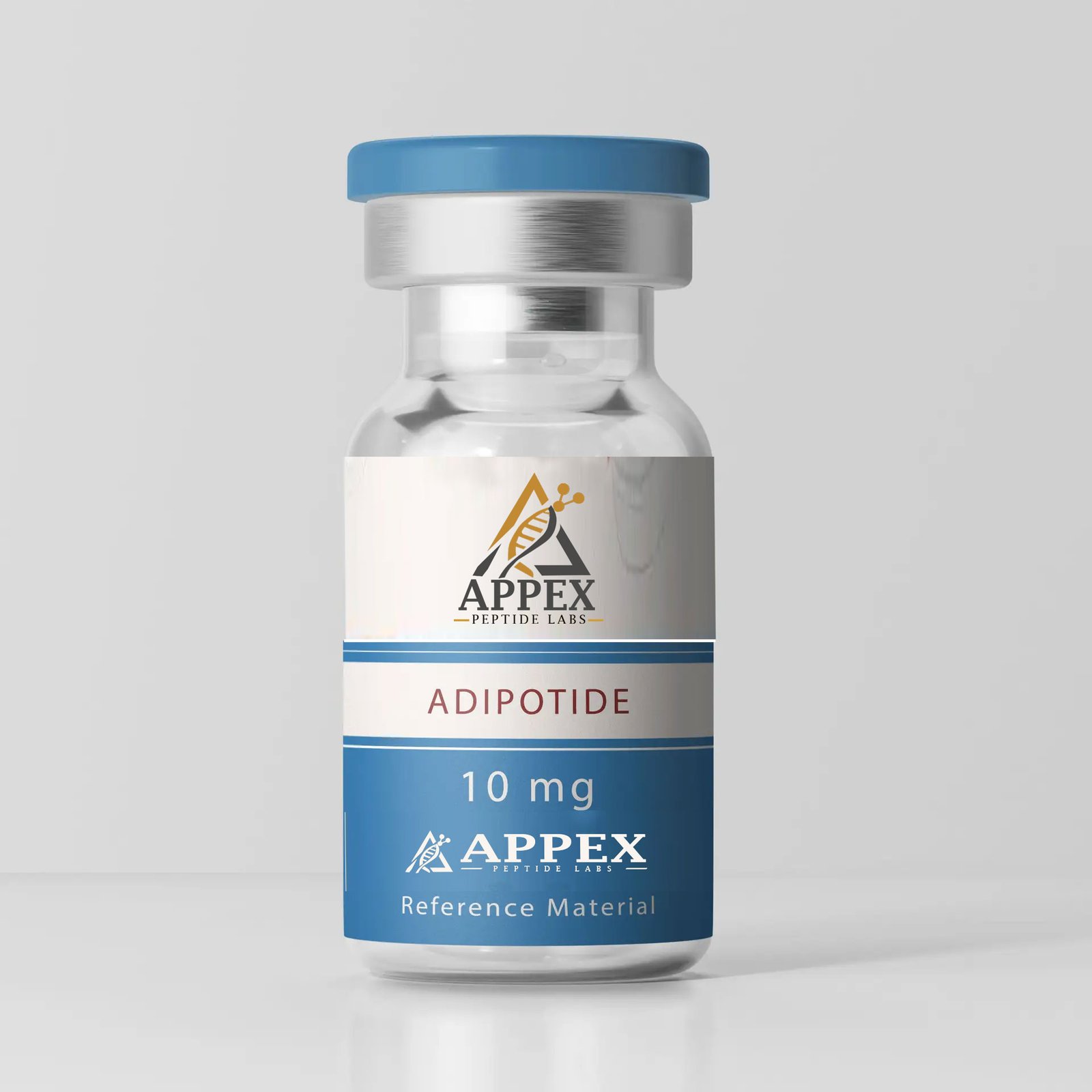
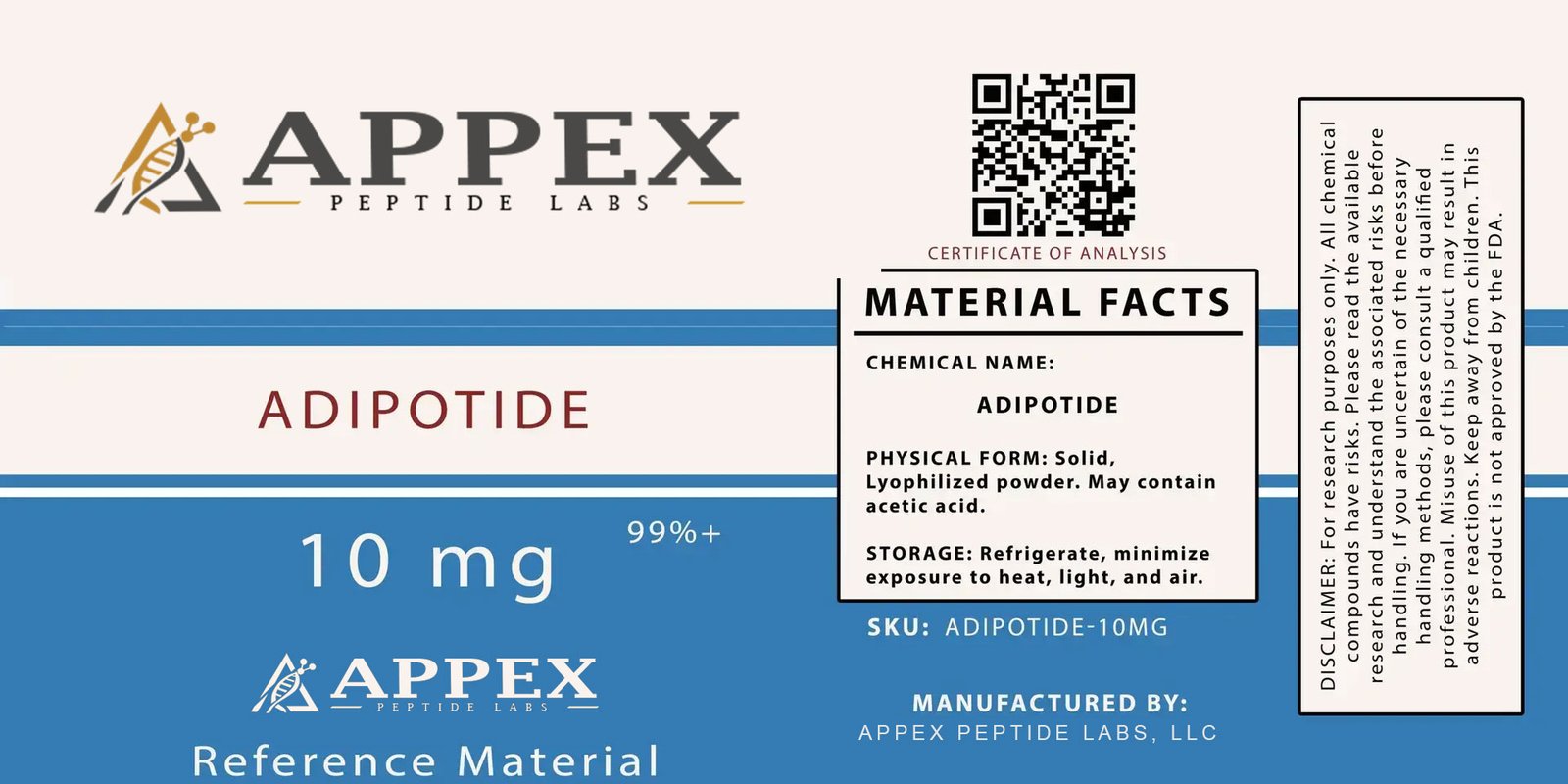

Adipotide Peptide, also known as Fat-Targeted Proapoptotic Peptide (FTPP), is a synthetic targeted peptidomimetic composed of two functional domains designed to investigate selective peptide delivery and programmed cellular responses in laboratory models. The N-terminal cyclic peptide CKGGRAKDC functions as a vascular homing sequence reported to recognize molecular targets associated with white adipose tissue endothelium, while the C-terminal D(KLAKLAK)₂ sequence serves as a membrane-active proapoptotic domain following cellular internalization.
Scientific investigations utilize Adipotide Peptide across vascular biology, molecular pharmacology, peptide engineering, oncology research, endothelial cell biology, and targeted delivery research. Laboratory studies commonly examine endothelial targeting mechanisms, receptor-mediated internalization, mitochondrial membrane interactions, peptide transport, angiogenesis, and intracellular signaling pathways associated with programmed cell death.
Researchers also investigate ligand-directed peptide delivery, tissue-selective targeting strategies, membrane biology, peptide pharmacodynamics, and structure-function relationships. Its modular architecture has made Adipotide an important experimental reagent for developing targeted peptide therapeutics and studying vascular-selective molecular delivery systems in controlled research environments.
Each batch is synthesized under rigorous quality-controlled manufacturing procedures, analytically verified for purity and structural identity, and supplied as a stable lyophilized peptide accompanied by a comprehensive Certificate of Analysis to ensure reproducible laboratory investigations.
For research use only. Not intended for human consumption or clinical use.
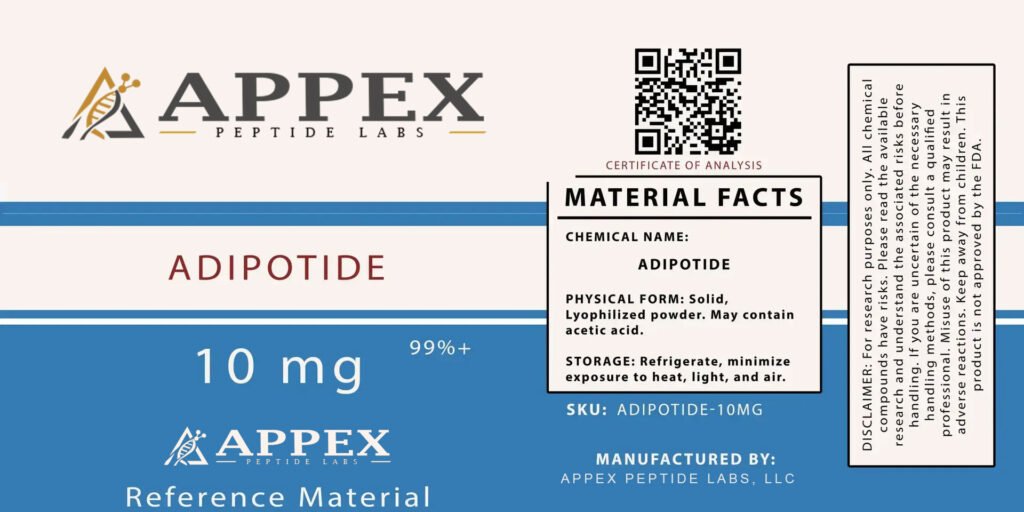
Adipotide Peptide is extensively utilized in laboratory investigations examining peptide-directed tissue targeting, receptor-mediated internalization, selective molecular delivery, and peptide transport mechanisms.
Researchers employ Adipotide Peptide to investigate endothelial cell biology, vascular biomarkers, adipose tissue microvasculature, angiogenesis, and endothelial signaling pathways.
Experimental models utilize Adipotide Peptide to study mitochondrial membrane integrity, membrane permeability, intracellular trafficking, and programmed cell death mechanisms following peptide internalization.
Scientists investigate peptide-receptor interactions, ligand specificity, intracellular signaling pathways, pharmacodynamic behavior, and targeted molecular delivery systems.
Laboratory investigations incorporate Adipotide Peptide into studies examining tumor-associated vasculature, endothelial biomarkers, angiogenic signaling, and selective vascular targeting strategies.
Researchers utilize Adipotide Peptide for analytical characterization, structure-activity relationship investigations, peptide optimization, medicinal chemistry, and formulation development.
| Specification | Details |
|---|---|
| Product Name | Adipotide Peptide |
| Synonyms | FTPP, Fat-Targeted Proapoptotic Peptide, Prohibitin-TP01 |
| Purity | ≥98% (HPLC Verified) |
| Molecular Formula | Sequence-specific synthetic peptidomimetic |
| Molecular Weight | Approximately 3.2 kDa |
| CAS Number | Not publicly assigned |
| Sequence | Cyclo(CKGGRAKDC)-GG-D(KLAKLAK)₂ |
| Appearance | White to off-white lyophilized powder |
| Solubility | Soluble in sterile bacteriostatic water and laboratory-grade aqueous buffers |
| Storage Conditions | Store lyophilized peptide at 2–8°C. For long-term storage, maintain at −20°C in a dry, light-protected environment. Avoid repeated freeze-thaw cycles after reconstitution. |
| Available Sizes | 2 mg, 5 mg, 10 mg |
Adipotide Peptide is a synthetic dual-domain peptidomimetic designed to investigate targeted peptide delivery and intracellular membrane disruption in experimental laboratory models. Its molecular architecture combines a cyclic vascular homing peptide, CKGGRAKDC, with the amphipathic proapoptotic sequence D(KLAKLAK)₂, allowing researchers to study sequential mechanisms of tissue targeting, cellular internalization, and mitochondrial membrane interaction.
The N-terminal CKGGRAKDC domain has been investigated for its affinity toward molecular markers expressed on the endothelium associated with white adipose tissue vasculature, including proteins such as prohibitin and annexin A2 (ANXA2) in experimental systems. Following receptor recognition and peptide internalization, the homing domain facilitates delivery of the C-terminal effector sequence into target cells, providing a model for studying selective peptide-mediated transport.
The D(KLAKLAK)₂ domain is a cationic amphipathic peptide derived from antimicrobial peptide research. Unlike receptor-binding peptides, this sequence interacts directly with negatively charged mitochondrial membranes following intracellular uptake. Laboratory investigations demonstrate that membrane association can disrupt mitochondrial membrane integrity, alter mitochondrial membrane potential, and initiate signaling events associated with programmed cell death. Researchers frequently investigate these mechanisms using assays that evaluate mitochondrial permeability, cytochrome c release, caspase activation, and cellular bioenergetics.
Additional experimental studies examine intracellular trafficking, endosomal escape, receptor-mediated endocytosis, membrane selectivity, peptide pharmacokinetics, and tissue-specific targeting strategies. Because Adipotide combines molecular recognition with a defined effector domain, it has become an important experimental platform for investigating targeted peptide therapeutics, vascular biology, peptide engineering, and selective intracellular delivery systems.
Its well-characterized modular design, reproducible biochemical properties, and extensive evaluation in preclinical laboratory research have established Adipotide Peptide as a valuable research reagent for vascular biology, molecular pharmacology, peptide chemistry, biotechnology, oncology research, and life science laboratories.
For research use only. Not intended for human consumption or clinical use.
| Size | 10mg, 2mg, 5mg |
|---|---|
| Dimensions | 9 × 7 × .5 in |
| Weight | .125 lbs |
Adipotide Peptide, also known as Fat-Targeted Proapoptotic Peptide (FTPP), is a synthetic targeted peptidomimetic composed of two functional domains designed to investigate selective peptide delivery and programmed cellular responses in laboratory models. The N-terminal cyclic peptide CKGGRAKDC functions as a vascular homing sequence reported to recognize molecular targets associated with white adipose tissue endothelium, while the C-terminal D(KLAKLAK)₂ sequence serves as a membrane-active proapoptotic domain following cellular internalization.
Scientific investigations utilize Adipotide Peptide across vascular biology, molecular pharmacology, peptide engineering, oncology research, endothelial cell biology, and targeted delivery research. Laboratory studies commonly examine endothelial targeting mechanisms, receptor-mediated internalization, mitochondrial membrane interactions, peptide transport, angiogenesis, and intracellular signaling pathways associated with programmed cell death.
Researchers also investigate ligand-directed peptide delivery, tissue-selective targeting strategies, membrane biology, peptide pharmacodynamics, and structure-function relationships. Its modular architecture has made Adipotide an important experimental reagent for developing targeted peptide therapeutics and studying vascular-selective molecular delivery systems in controlled research environments.
Each batch is synthesized under rigorous quality-controlled manufacturing procedures, analytically verified for purity and structural identity, and supplied as a stable lyophilized peptide accompanied by a comprehensive Certificate of Analysis to ensure reproducible laboratory investigations.
For research use only. Not intended for human consumption or clinical use.
Adipotide Peptide is extensively utilized in laboratory investigations examining peptide-directed tissue targeting, receptor-mediated internalization, selective molecular delivery, and peptide transport mechanisms.
Researchers employ Adipotide Peptide to investigate endothelial cell biology, vascular biomarkers, adipose tissue microvasculature, angiogenesis, and endothelial signaling pathways.
Experimental models utilize Adipotide Peptide to study mitochondrial membrane integrity, membrane permeability, intracellular trafficking, and programmed cell death mechanisms following peptide internalization.
Scientists investigate peptide-receptor interactions, ligand specificity, intracellular signaling pathways, pharmacodynamic behavior, and targeted molecular delivery systems.
Laboratory investigations incorporate Adipotide Peptide into studies examining tumor-associated vasculature, endothelial biomarkers, angiogenic signaling, and selective vascular targeting strategies.
Researchers utilize Adipotide Peptide for analytical characterization, structure-activity relationship investigations, peptide optimization, medicinal chemistry, and formulation development.
| Specification | Details |
|---|---|
| Product Name | Adipotide Peptide |
| Synonyms | FTPP, Fat-Targeted Proapoptotic Peptide, Prohibitin-TP01 |
| Purity | ≥98% (HPLC Verified) |
| Molecular Formula | Sequence-specific synthetic peptidomimetic |
| Molecular Weight | Approximately 3.2 kDa |
| CAS Number | Not publicly assigned |
| Sequence | Cyclo(CKGGRAKDC)-GG-D(KLAKLAK)₂ |
| Appearance | White to off-white lyophilized powder |
| Solubility | Soluble in sterile bacteriostatic water and laboratory-grade aqueous buffers |
| Storage Conditions | Store lyophilized peptide at 2–8°C. For long-term storage, maintain at −20°C in a dry, light-protected environment. Avoid repeated freeze-thaw cycles after reconstitution. |
| Available Sizes | 2 mg, 5 mg, 10 mg |
Adipotide Peptide is a synthetic dual-domain peptidomimetic designed to investigate targeted peptide delivery and intracellular membrane disruption in experimental laboratory models. Its molecular architecture combines a cyclic vascular homing peptide, CKGGRAKDC, with the amphipathic proapoptotic sequence D(KLAKLAK)₂, allowing researchers to study sequential mechanisms of tissue targeting, cellular internalization, and mitochondrial membrane interaction.
The N-terminal CKGGRAKDC domain has been investigated for its affinity toward molecular markers expressed on the endothelium associated with white adipose tissue vasculature, including proteins such as prohibitin and annexin A2 (ANXA2) in experimental systems. Following receptor recognition and peptide internalization, the homing domain facilitates delivery of the C-terminal effector sequence into target cells, providing a model for studying selective peptide-mediated transport.
The D(KLAKLAK)₂ domain is a cationic amphipathic peptide derived from antimicrobial peptide research. Unlike receptor-binding peptides, this sequence interacts directly with negatively charged mitochondrial membranes following intracellular uptake. Laboratory investigations demonstrate that membrane association can disrupt mitochondrial membrane integrity, alter mitochondrial membrane potential, and initiate signaling events associated with programmed cell death. Researchers frequently investigate these mechanisms using assays that evaluate mitochondrial permeability, cytochrome c release, caspase activation, and cellular bioenergetics.
Additional experimental studies examine intracellular trafficking, endosomal escape, receptor-mediated endocytosis, membrane selectivity, peptide pharmacokinetics, and tissue-specific targeting strategies. Because Adipotide combines molecular recognition with a defined effector domain, it has become an important experimental platform for investigating targeted peptide therapeutics, vascular biology, peptide engineering, and selective intracellular delivery systems.
Its well-characterized modular design, reproducible biochemical properties, and extensive evaluation in preclinical laboratory research have established Adipotide Peptide as a valuable research reagent for vascular biology, molecular pharmacology, peptide chemistry, biotechnology, oncology research, and life science laboratories.
For research use only. Not intended for human consumption or clinical use.
| Size | 10mg, 2mg, 5mg |
|---|---|
| Dimensions | 9 × 7 × .5 in |
| Weight | .125 lbs |