Bulk Orders. Better Value.
Research institutions, universities and clinical teams qualify for volume discounts. Contact our team to discuss custom formulations and bulk pricing.

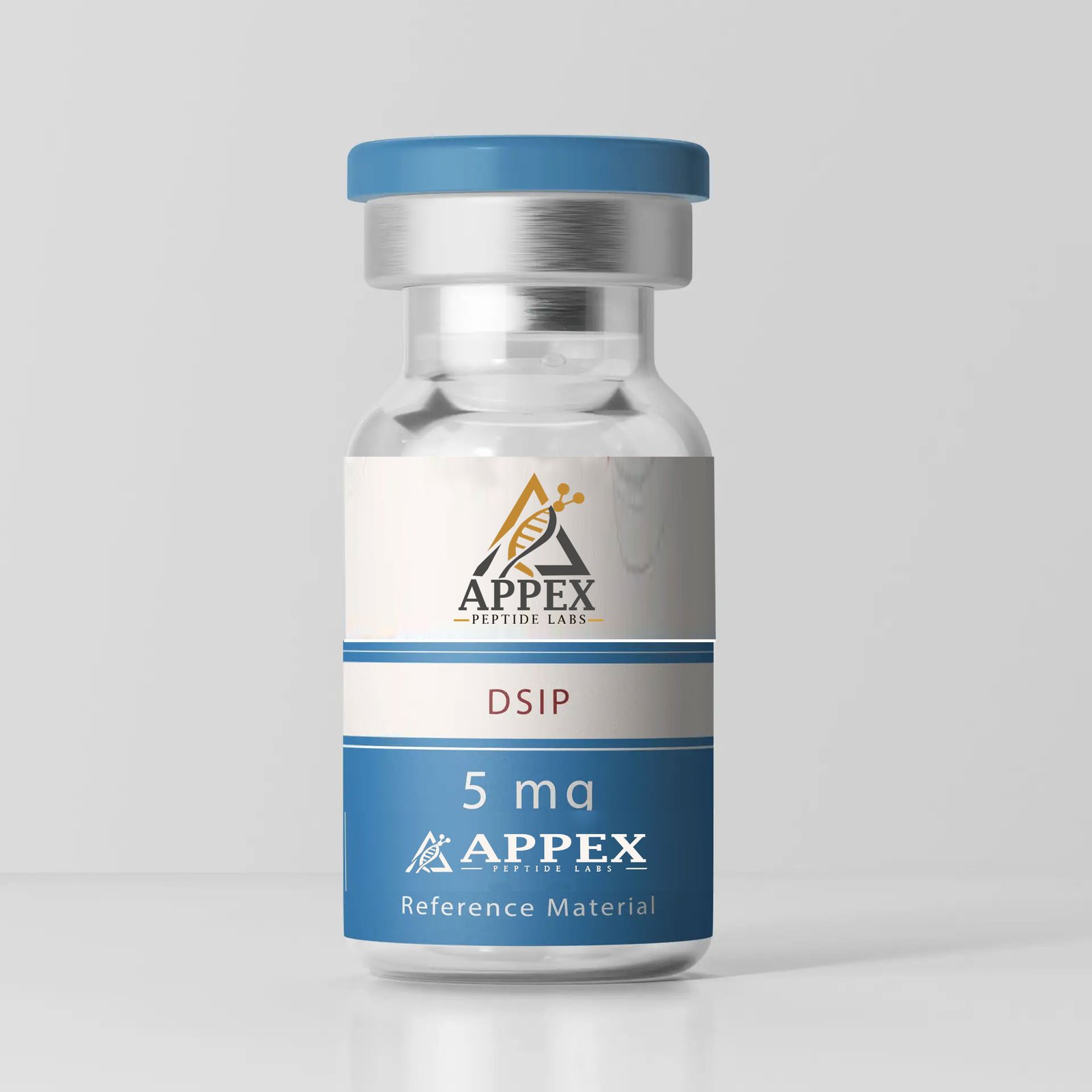
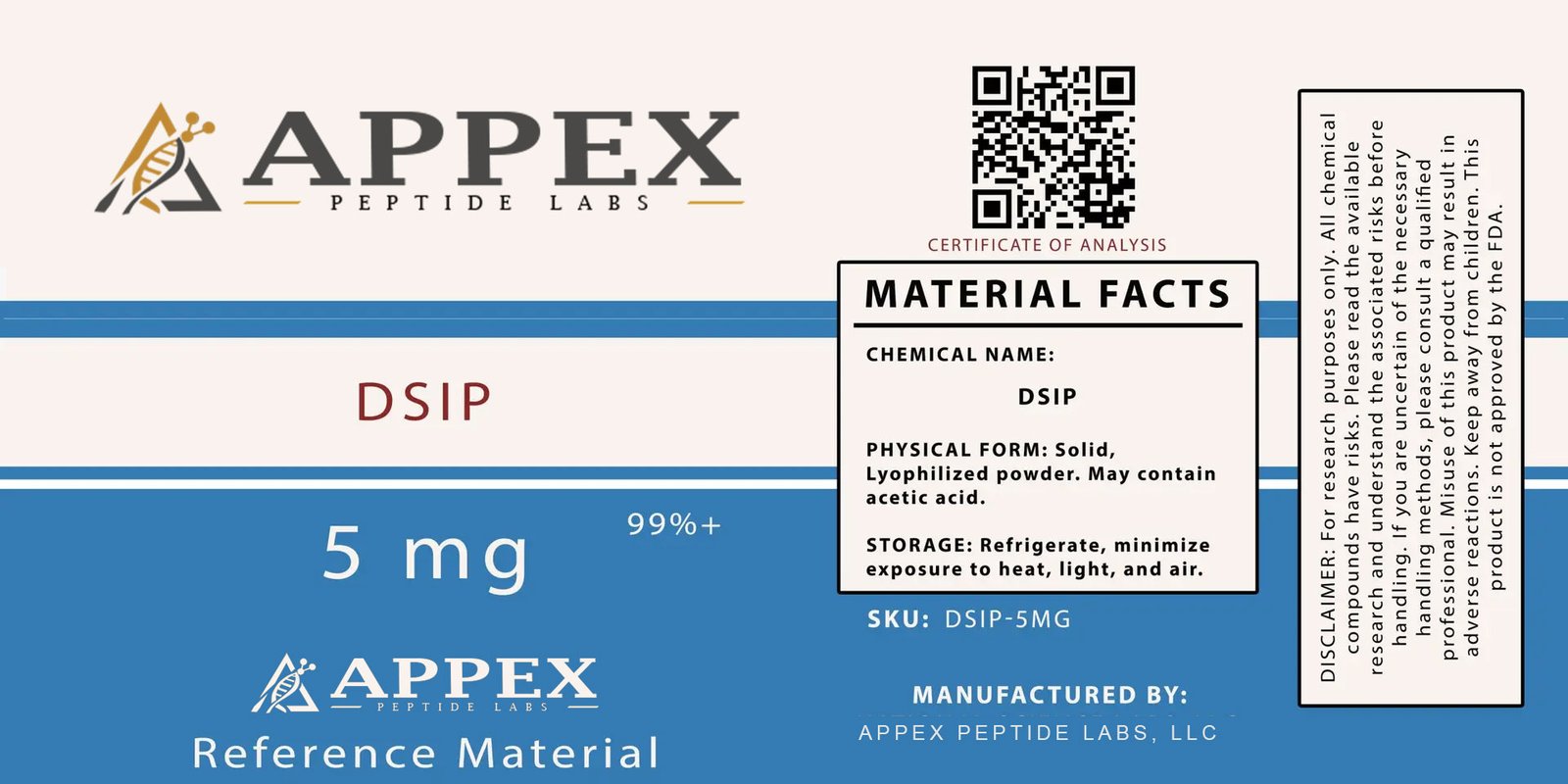

DSIP (Delta Sleep-Inducing Peptide) is a synthetic nonapeptide originally identified during investigations into endogenous neuropeptides associated with physiological sleep regulation. Since its initial discovery, DSIP has become the subject of extensive laboratory research exploring its interactions with neuroendocrine pathways, hypothalamic function, circadian rhythm regulation, and central nervous system signaling. DSIP (Delta Sleep-Inducing Peptide)
Scientific investigations have examined DSIP in experimental models evaluating sleep architecture, hypothalamic-pituitary-adrenal (HPA) axis activity, neurotransmitter regulation, peptide-mediated neuronal communication, and endocrine homeostasis. Although its precise endogenous biological role remains under active investigation, published studies continue to explore its influence on neuronal signaling networks and neurochemical regulation within controlled laboratory settings. DSIP (Delta Sleep-Inducing Peptide)
Beyond sleep biology, DSIP has attracted interest in molecular neuroscience, peptide chemistry, and neuropharmacology because of its interactions with multiple neuroendocrine systems. Researchers continue to investigate intracellular signaling pathways, receptor interactions, hormonal regulation, oxidative stress responses, and neuronal adaptation associated with this peptide.
Each batch is synthesized using rigorous quality-controlled peptide manufacturing processes, analytically verified for purity and identity, and supplied as a stable lyophilized powder accompanied by a comprehensive Certificate of Analysis to support reproducible laboratory research.
For research use only. Not intended for human consumption or clinical use.
DSIP is widely utilized in laboratory investigations examining sleep architecture, circadian regulation, neuronal synchronization, and neurophysiological mechanisms associated with sleep-wake cycles.
Researchers employ DSIP to investigate communication between the hypothalamus, pituitary gland, and endocrine signaling pathways responsible for maintaining neuroendocrine homeostasis.
Experimental models incorporate DSIP to evaluate hypothalamic-pituitary-adrenal axis regulation, stress-associated hormonal signaling, glucocorticoid responses, and neuroendocrine feedback mechanisms.
Scientists investigate interactions between DSIP and neurotransmitter systems involved in neuronal communication, synaptic signaling, peptide modulation, and intracellular signal transduction.
DSIP is utilized in studies examining peptide-mediated cellular signaling, neuronal adaptation, gene expression, oxidative stress responses, and intracellular communication.
Researchers employ DSIP to evaluate peptide stability, pharmacokinetic behavior, degradation pathways, receptor interactions, and structure-function relationships in peptide chemistry.
| Specification | Details |
|---|---|
| Product Name | DSIP (Delta Sleep-Inducing Peptide) |
| Synonyms | Delta Sleep-Inducing Peptide, DSIP |
| Purity | ≥99% (HPLC Verified) |
| Molecular Formula | C₃₅H₄₈N₁₀O₁₅ |
| Molecular Weight | 848.81 g/mol |
| CAS Number | 62568-57-4 |
| Sequence | Trp-Ala-Gly-Gly-Asp-Ala-Ser-Gly-Glu |
| Appearance | White to off-white lyophilized powder |
| Solubility | Soluble in sterile bacteriostatic water and laboratory-grade aqueous buffers |
| Storage Conditions | Store lyophilized peptide at 2–8°C. For long-term storage, maintain at −20°C in a dry, light-protected environment. Avoid repeated freeze-thaw cycles after reconstitution. |
| Available Sizes | 5 mg, 10 mg, 15 mg |

DSIP (Delta Sleep-Inducing Peptide) is a synthetic nonapeptide investigated for its complex interactions within the central nervous system and neuroendocrine signaling networks. Although its precise endogenous receptor and complete physiological function remain subjects of ongoing scientific investigation, published laboratory research indicates that DSIP influences multiple regulatory pathways associated with neuronal communication, endocrine signaling, and cellular homeostasis.
Experimental studies suggest that DSIP interacts indirectly with several neurotransmitter systems, including GABAergic, glutamatergic, serotonergic, and monoaminergic pathways. Rather than functioning as a classical receptor agonist, DSIP appears to modulate neuronal activity through coordinated regulation of neurochemical signaling, contributing to investigations of neuronal excitability and network synchronization in experimental models.
A major focus of laboratory research involves DSIP’s interaction with the hypothalamic-pituitary-adrenal (HPA) axis. Researchers have examined its influence on neuroendocrine communication involving corticotropin-releasing hormone (CRH), adrenocorticotropic hormone (ACTH), and glucocorticoid regulatory pathways. These investigations seek to clarify how peptide-mediated signaling contributes to endocrine homeostasis and adaptive physiological responses.
Additional studies have explored DSIP’s effects on intracellular signaling pathways associated with calcium homeostasis, cyclic AMP (cAMP), protein kinase activity, transcriptional regulation, and oxidative stress responses. Scientists continue to investigate whether these molecular interactions influence neuronal plasticity, cellular adaptation, mitochondrial function, and peptide-mediated regulation of gene expression within controlled laboratory environments.
DSIP has also been incorporated into research examining circadian biology, neuropeptide communication, electrophysiological activity, and interactions between hypothalamic nuclei involved in biological rhythm regulation. Because its molecular mechanisms are not yet fully characterized, DSIP remains an active area of investigation across neuroscience, molecular endocrinology, peptide pharmacology, and systems biology.
Its defined amino acid sequence, reproducible physicochemical properties, and broad research applications make DSIP an important experimental reagent for laboratories investigating neuroendocrine regulation, peptide signaling, sleep biology, cellular communication, and molecular neuroscience.
For research use only. Not intended for human consumption or clinical use.
| Size | 10mg, 15mg, 5mg |
|---|---|
| Dimensions | 9 × 7 × .5 in |
| Weight | .125 lbs |
DSIP (Delta Sleep-Inducing Peptide) is a synthetic nonapeptide originally identified during investigations into endogenous neuropeptides associated with physiological sleep regulation. Since its initial discovery, DSIP has become the subject of extensive laboratory research exploring its interactions with neuroendocrine pathways, hypothalamic function, circadian rhythm regulation, and central nervous system signaling. DSIP (Delta Sleep-Inducing Peptide)
Scientific investigations have examined DSIP in experimental models evaluating sleep architecture, hypothalamic-pituitary-adrenal (HPA) axis activity, neurotransmitter regulation, peptide-mediated neuronal communication, and endocrine homeostasis. Although its precise endogenous biological role remains under active investigation, published studies continue to explore its influence on neuronal signaling networks and neurochemical regulation within controlled laboratory settings. DSIP (Delta Sleep-Inducing Peptide)
Beyond sleep biology, DSIP has attracted interest in molecular neuroscience, peptide chemistry, and neuropharmacology because of its interactions with multiple neuroendocrine systems. Researchers continue to investigate intracellular signaling pathways, receptor interactions, hormonal regulation, oxidative stress responses, and neuronal adaptation associated with this peptide.
Each batch is synthesized using rigorous quality-controlled peptide manufacturing processes, analytically verified for purity and identity, and supplied as a stable lyophilized powder accompanied by a comprehensive Certificate of Analysis to support reproducible laboratory research.
For research use only. Not intended for human consumption or clinical use.
DSIP is widely utilized in laboratory investigations examining sleep architecture, circadian regulation, neuronal synchronization, and neurophysiological mechanisms associated with sleep-wake cycles.
Researchers employ DSIP to investigate communication between the hypothalamus, pituitary gland, and endocrine signaling pathways responsible for maintaining neuroendocrine homeostasis.
Experimental models incorporate DSIP to evaluate hypothalamic-pituitary-adrenal axis regulation, stress-associated hormonal signaling, glucocorticoid responses, and neuroendocrine feedback mechanisms.
Scientists investigate interactions between DSIP and neurotransmitter systems involved in neuronal communication, synaptic signaling, peptide modulation, and intracellular signal transduction.
DSIP is utilized in studies examining peptide-mediated cellular signaling, neuronal adaptation, gene expression, oxidative stress responses, and intracellular communication.
Researchers employ DSIP to evaluate peptide stability, pharmacokinetic behavior, degradation pathways, receptor interactions, and structure-function relationships in peptide chemistry.
| Specification | Details |
|---|---|
| Product Name | DSIP (Delta Sleep-Inducing Peptide) |
| Synonyms | Delta Sleep-Inducing Peptide, DSIP |
| Purity | ≥99% (HPLC Verified) |
| Molecular Formula | C₃₅H₄₈N₁₀O₁₅ |
| Molecular Weight | 848.81 g/mol |
| CAS Number | 62568-57-4 |
| Sequence | Trp-Ala-Gly-Gly-Asp-Ala-Ser-Gly-Glu |
| Appearance | White to off-white lyophilized powder |
| Solubility | Soluble in sterile bacteriostatic water and laboratory-grade aqueous buffers |
| Storage Conditions | Store lyophilized peptide at 2–8°C. For long-term storage, maintain at −20°C in a dry, light-protected environment. Avoid repeated freeze-thaw cycles after reconstitution. |
| Available Sizes | 5 mg, 10 mg, 15 mg |
DSIP (Delta Sleep-Inducing Peptide) is a synthetic nonapeptide investigated for its complex interactions within the central nervous system and neuroendocrine signaling networks. Although its precise endogenous receptor and complete physiological function remain subjects of ongoing scientific investigation, published laboratory research indicates that DSIP influences multiple regulatory pathways associated with neuronal communication, endocrine signaling, and cellular homeostasis.
Experimental studies suggest that DSIP interacts indirectly with several neurotransmitter systems, including GABAergic, glutamatergic, serotonergic, and monoaminergic pathways. Rather than functioning as a classical receptor agonist, DSIP appears to modulate neuronal activity through coordinated regulation of neurochemical signaling, contributing to investigations of neuronal excitability and network synchronization in experimental models.
A major focus of laboratory research involves DSIP’s interaction with the hypothalamic-pituitary-adrenal (HPA) axis. Researchers have examined its influence on neuroendocrine communication involving corticotropin-releasing hormone (CRH), adrenocorticotropic hormone (ACTH), and glucocorticoid regulatory pathways. These investigations seek to clarify how peptide-mediated signaling contributes to endocrine homeostasis and adaptive physiological responses.
Additional studies have explored DSIP’s effects on intracellular signaling pathways associated with calcium homeostasis, cyclic AMP (cAMP), protein kinase activity, transcriptional regulation, and oxidative stress responses. Scientists continue to investigate whether these molecular interactions influence neuronal plasticity, cellular adaptation, mitochondrial function, and peptide-mediated regulation of gene expression within controlled laboratory environments.
DSIP has also been incorporated into research examining circadian biology, neuropeptide communication, electrophysiological activity, and interactions between hypothalamic nuclei involved in biological rhythm regulation. Because its molecular mechanisms are not yet fully characterized, DSIP remains an active area of investigation across neuroscience, molecular endocrinology, peptide pharmacology, and systems biology.
Its defined amino acid sequence, reproducible physicochemical properties, and broad research applications make DSIP an important experimental reagent for laboratories investigating neuroendocrine regulation, peptide signaling, sleep biology, cellular communication, and molecular neuroscience.
For research use only. Not intended for human consumption or clinical use.
| Size | 10mg, 15mg, 5mg |
|---|---|
| Dimensions | 9 × 7 × .5 in |
| Weight | .125 lbs |