Bulk Orders. Better Value.
Research institutions, universities and clinical teams qualify for volume discounts. Contact our team to discuss custom formulations and bulk pricing.

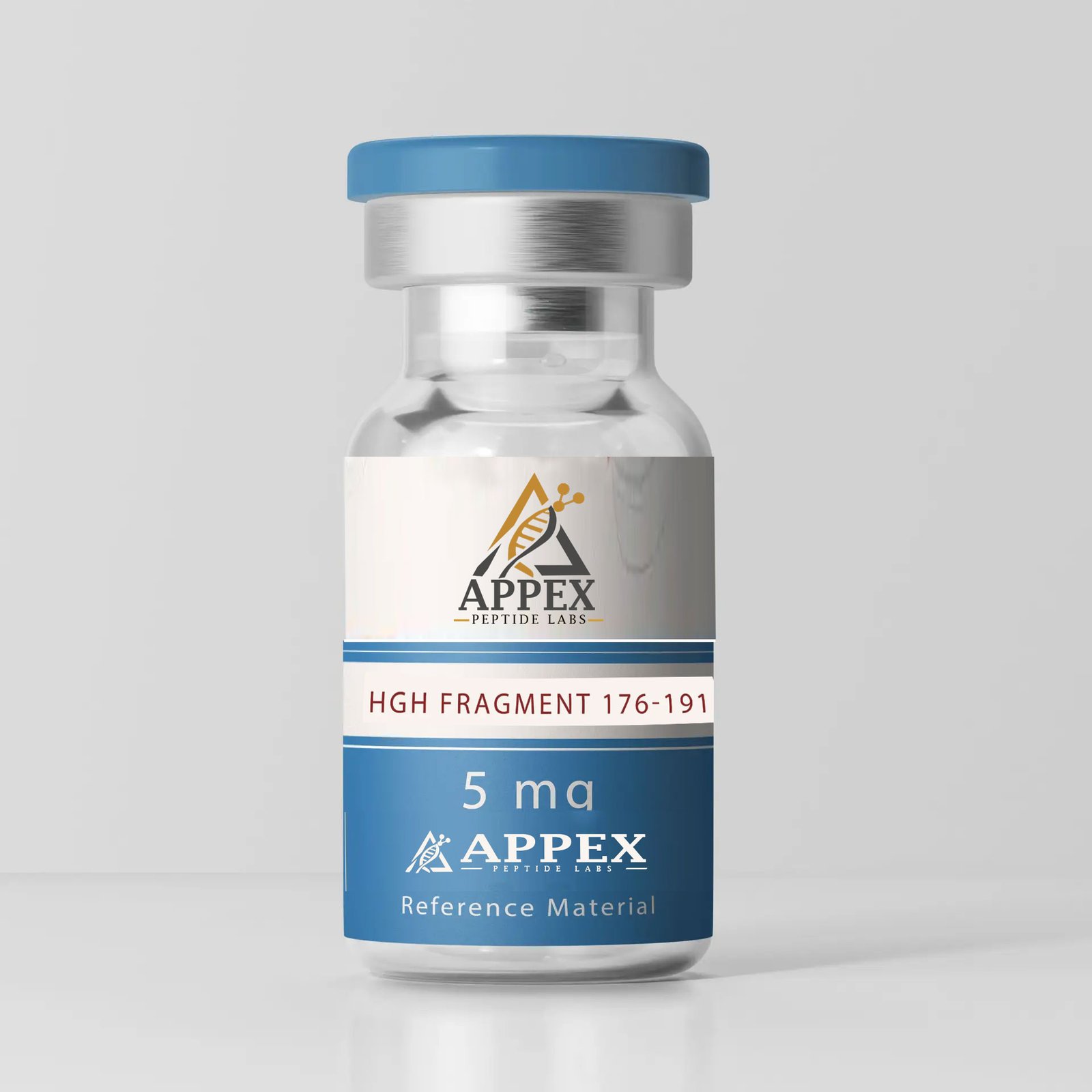
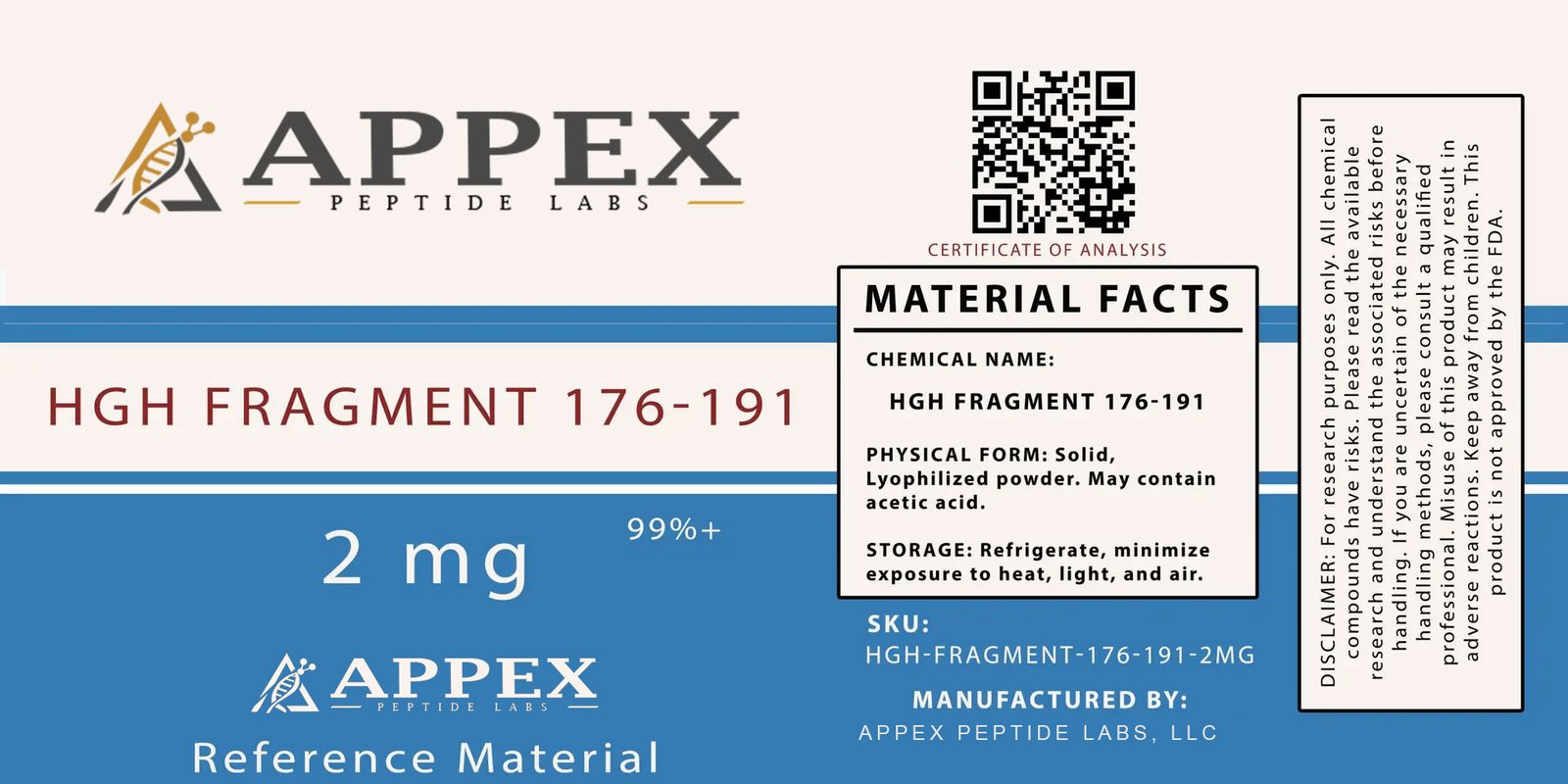

HGH Fragment 176-191 Peptide is a synthetic peptide comprising amino acids 176 through 191 of endogenous human growth hormone. This highly conserved C-terminal sequence has been extensively investigated because it exhibits distinct biological properties that differ from those of the complete 191-amino-acid growth hormone molecule. As a result, it has become an important experimental reagent in molecular endocrinology, metabolic biology, peptide pharmacology, and cellular signaling research.
Published laboratory studies have explored HGH Fragment 176-191 Peptide in experimental models evaluating adipocyte metabolism, intracellular lipid signaling, mitochondrial function, fatty acid oxidation, and energy homeostasis. Researchers continue to investigate its interactions with adrenergic signaling pathways, AMP-activated protein kinase (AMPK), lipid-metabolizing enzymes, and transcription factors involved in metabolic regulation.
Beyond metabolic investigations, HGH Fragment 176-191 Peptide is incorporated into studies examining receptor biology, peptide transport, cellular uptake mechanisms, molecular pharmacology, and targeted peptide delivery. Its well-defined amino acid sequence and reproducible physicochemical characteristics make it valuable across universities, biotechnology organizations, pharmaceutical laboratories, and life science research institutions.
Each batch is synthesized using rigorous quality-controlled manufacturing procedures, analytically verified for purity and identity, and supplied as a stable lyophilized powder with a comprehensive Certificate of Analysis to support highly reproducible laboratory investigations.
For research use only. Not intended for human consumption or clinical use.
HGH Fragment 176-191 Peptide is widely utilized in laboratory investigations examining adipocyte function, intracellular lipid metabolism, adipose tissue signaling, and metabolic regulation.
Researchers employ HGH Fragment 176-191 Peptide to investigate fatty acid mobilization, lipid oxidation pathways, metabolic enzyme regulation, and cellular energy utilization.
Experimental models utilize the peptide to study AMP-activated protein kinase activation, downstream metabolic signaling, mitochondrial adaptation, and transcriptional regulation associated with cellular energy homeostasis.
Scientists investigate mitochondrial function, oxidative metabolism, ATP generation, fatty acid oxidation, and bioenergetic regulation using controlled experimental systems incorporating HGH Fragment 176-191 Peptide.
Laboratory studies evaluate interactions with intracellular signaling pathways including β-adrenergic signaling, MAPK/ERK pathways, PI3K-associated signaling, and metabolic transcription factors.
Researchers utilize HGH Fragment 176-191 Peptide to investigate peptide stability, structure-function relationships, receptor interactions, intracellular transport, and analytical characterization.
| Specification | Details |
|---|---|
| Product Name | HGH Fragment 176-191 Peptide |
| Synonyms | hGH Fragment 176-191, Growth Hormone Fragment 176-191 |
| Purity | ≥99% (HPLC Verified) |
| Molecular Formula | C₇₈H₁₂₃N₂₃O₂₃S₂ |
| Molecular Weight | 1815.1 g/mol |
| CAS Number | 66004-57-7 |
| Sequence | Tyr-Leu-Arg-Ile-Val-Gln-Cys-Arg-Ser-Val-Glu-Gly-Ser-Cys-Gly-Phe |
| Appearance | White to off-white lyophilized powder |
| Solubility | Soluble in sterile bacteriostatic water and laboratory-grade aqueous buffers |
| Storage Conditions | Store lyophilized peptide at 2–8°C. For long-term storage, maintain at −20°C in a dry, light-protected environment. Avoid repeated freeze-thaw cycles after reconstitution. |
| Available Sizes | 5 mg |
HGH Fragment 176-191 Peptide is a synthetic peptide comprising the C-terminal amino acid sequence of endogenous human growth hormone. Unlike full-length human growth hormone, this fragment has been extensively investigated for molecular activities that appear independent of classical growth hormone receptor (GHR) activation. Laboratory research focuses primarily on its influence over intracellular metabolic signaling, adipocyte biology, and energy regulation rather than anabolic growth hormone pathways.
Published studies suggest that HGH Fragment 176-191 Peptide interacts with signaling mechanisms involved in lipid metabolism through modulation of β-adrenergic signaling, particularly pathways associated with β₃-adrenergic receptor (ADRB3) activity in adipocyte models. Researchers continue to investigate whether these interactions influence intracellular cyclic AMP (cAMP) production, activation of protein kinase A (PKA), and phosphorylation of enzymes involved in lipid mobilization.
Experimental investigations have also demonstrated activation of AMP-activated protein kinase (AMPK), a central regulator of cellular energy homeostasis. AMPK activation influences downstream metabolic processes including fatty acid oxidation, mitochondrial function, glucose utilization, and regulation of enzymes responsible for maintaining cellular energy balance. Researchers frequently examine these pathways alongside transcriptional regulators such as PGC-1α, which coordinates mitochondrial biogenesis and oxidative metabolism.
Additional laboratory studies have explored interactions with lipid-metabolizing enzymes including hormone-sensitive lipase (HSL) and acetyl-CoA carboxylase (ACC), as well as signaling networks governing mitochondrial respiration, oxidative phosphorylation, and intracellular metabolic adaptation. Scientists continue investigating how these molecular mechanisms influence adipocyte physiology, cellular bioenergetics, and metabolic regulation in experimental systems.
Beyond metabolic biology, HGH Fragment 176-191 Peptide has been incorporated into research involving targeted peptide delivery, receptor-independent peptide transport, molecular pharmacology, and cellular uptake. Experimental investigations also explore its use as a model peptide for studying structure-function relationships and peptide engineering.
Because of its defined 16-amino-acid sequence, reproducible physicochemical characteristics, and extensive scientific characterization, HGH Fragment 176-191 Peptide remains an important research reagent in metabolic biology, molecular endocrinology, peptide pharmacology, mitochondrial physiology, and biotechnology laboratories investigating cellular energy regulation and peptide-mediated signaling.
For research use only. Not intended for human consumption or clinical use.
| Size | 5mg |
|---|---|
| Dimensions | 9 × 7 × .5 in |
| Weight | .125 lbs |
HGH Fragment 176-191 Peptide is a synthetic peptide comprising amino acids 176 through 191 of endogenous human growth hormone. This highly conserved C-terminal sequence has been extensively investigated because it exhibits distinct biological properties that differ from those of the complete 191-amino-acid growth hormone molecule. As a result, it has become an important experimental reagent in molecular endocrinology, metabolic biology, peptide pharmacology, and cellular signaling research.
Published laboratory studies have explored HGH Fragment 176-191 Peptide in experimental models evaluating adipocyte metabolism, intracellular lipid signaling, mitochondrial function, fatty acid oxidation, and energy homeostasis. Researchers continue to investigate its interactions with adrenergic signaling pathways, AMP-activated protein kinase (AMPK), lipid-metabolizing enzymes, and transcription factors involved in metabolic regulation.
Beyond metabolic investigations, HGH Fragment 176-191 Peptide is incorporated into studies examining receptor biology, peptide transport, cellular uptake mechanisms, molecular pharmacology, and targeted peptide delivery. Its well-defined amino acid sequence and reproducible physicochemical characteristics make it valuable across universities, biotechnology organizations, pharmaceutical laboratories, and life science research institutions.
Each batch is synthesized using rigorous quality-controlled manufacturing procedures, analytically verified for purity and identity, and supplied as a stable lyophilized powder with a comprehensive Certificate of Analysis to support highly reproducible laboratory investigations.
For research use only. Not intended for human consumption or clinical use.
HGH Fragment 176-191 Peptide is widely utilized in laboratory investigations examining adipocyte function, intracellular lipid metabolism, adipose tissue signaling, and metabolic regulation.
Researchers employ HGH Fragment 176-191 Peptide to investigate fatty acid mobilization, lipid oxidation pathways, metabolic enzyme regulation, and cellular energy utilization.
Experimental models utilize the peptide to study AMP-activated protein kinase activation, downstream metabolic signaling, mitochondrial adaptation, and transcriptional regulation associated with cellular energy homeostasis.
Scientists investigate mitochondrial function, oxidative metabolism, ATP generation, fatty acid oxidation, and bioenergetic regulation using controlled experimental systems incorporating HGH Fragment 176-191 Peptide.
Laboratory studies evaluate interactions with intracellular signaling pathways including β-adrenergic signaling, MAPK/ERK pathways, PI3K-associated signaling, and metabolic transcription factors.
Researchers utilize HGH Fragment 176-191 Peptide to investigate peptide stability, structure-function relationships, receptor interactions, intracellular transport, and analytical characterization.
| Specification | Details |
|---|---|
| Product Name | HGH Fragment 176-191 Peptide |
| Synonyms | hGH Fragment 176-191, Growth Hormone Fragment 176-191 |
| Purity | ≥99% (HPLC Verified) |
| Molecular Formula | C₇₈H₁₂₃N₂₃O₂₃S₂ |
| Molecular Weight | 1815.1 g/mol |
| CAS Number | 66004-57-7 |
| Sequence | Tyr-Leu-Arg-Ile-Val-Gln-Cys-Arg-Ser-Val-Glu-Gly-Ser-Cys-Gly-Phe |
| Appearance | White to off-white lyophilized powder |
| Solubility | Soluble in sterile bacteriostatic water and laboratory-grade aqueous buffers |
| Storage Conditions | Store lyophilized peptide at 2–8°C. For long-term storage, maintain at −20°C in a dry, light-protected environment. Avoid repeated freeze-thaw cycles after reconstitution. |
| Available Sizes | 5 mg |
HGH Fragment 176-191 Peptide is a synthetic peptide comprising the C-terminal amino acid sequence of endogenous human growth hormone. Unlike full-length human growth hormone, this fragment has been extensively investigated for molecular activities that appear independent of classical growth hormone receptor (GHR) activation. Laboratory research focuses primarily on its influence over intracellular metabolic signaling, adipocyte biology, and energy regulation rather than anabolic growth hormone pathways.
Published studies suggest that HGH Fragment 176-191 Peptide interacts with signaling mechanisms involved in lipid metabolism through modulation of β-adrenergic signaling, particularly pathways associated with β₃-adrenergic receptor (ADRB3) activity in adipocyte models. Researchers continue to investigate whether these interactions influence intracellular cyclic AMP (cAMP) production, activation of protein kinase A (PKA), and phosphorylation of enzymes involved in lipid mobilization.
Experimental investigations have also demonstrated activation of AMP-activated protein kinase (AMPK), a central regulator of cellular energy homeostasis. AMPK activation influences downstream metabolic processes including fatty acid oxidation, mitochondrial function, glucose utilization, and regulation of enzymes responsible for maintaining cellular energy balance. Researchers frequently examine these pathways alongside transcriptional regulators such as PGC-1α, which coordinates mitochondrial biogenesis and oxidative metabolism.
Additional laboratory studies have explored interactions with lipid-metabolizing enzymes including hormone-sensitive lipase (HSL) and acetyl-CoA carboxylase (ACC), as well as signaling networks governing mitochondrial respiration, oxidative phosphorylation, and intracellular metabolic adaptation. Scientists continue investigating how these molecular mechanisms influence adipocyte physiology, cellular bioenergetics, and metabolic regulation in experimental systems.
Beyond metabolic biology, HGH Fragment 176-191 Peptide has been incorporated into research involving targeted peptide delivery, receptor-independent peptide transport, molecular pharmacology, and cellular uptake. Experimental investigations also explore its use as a model peptide for studying structure-function relationships and peptide engineering.
Because of its defined 16-amino-acid sequence, reproducible physicochemical characteristics, and extensive scientific characterization, HGH Fragment 176-191 Peptide remains an important research reagent in metabolic biology, molecular endocrinology, peptide pharmacology, mitochondrial physiology, and biotechnology laboratories investigating cellular energy regulation and peptide-mediated signaling.
For research use only. Not intended for human consumption or clinical use.
| Size | 5mg |
|---|---|
| Dimensions | 9 × 7 × .5 in |
| Weight | .125 lbs |