Bulk Orders. Better Value.
Research institutions, universities and clinical teams qualify for volume discounts. Contact our team to discuss custom formulations and bulk pricing.

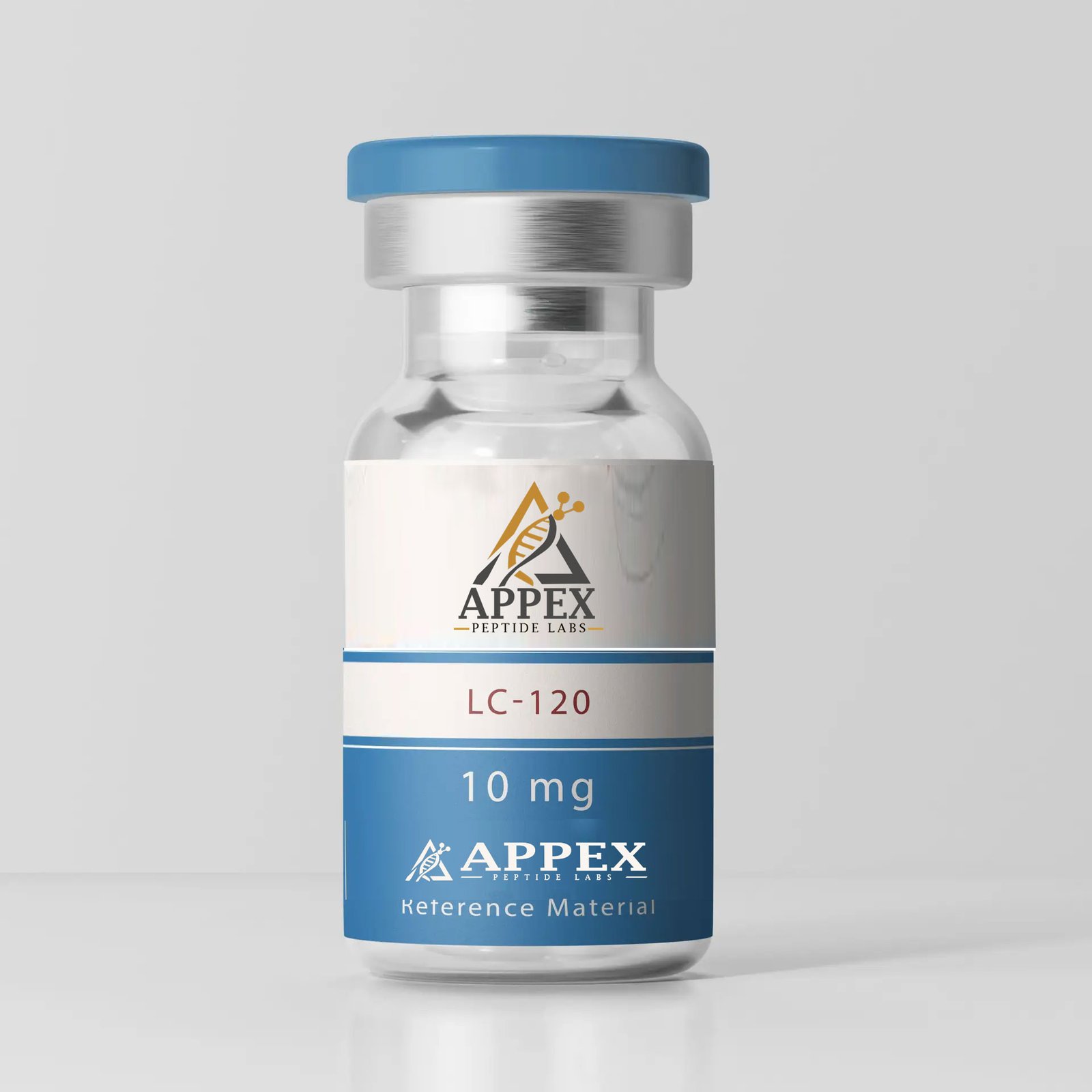
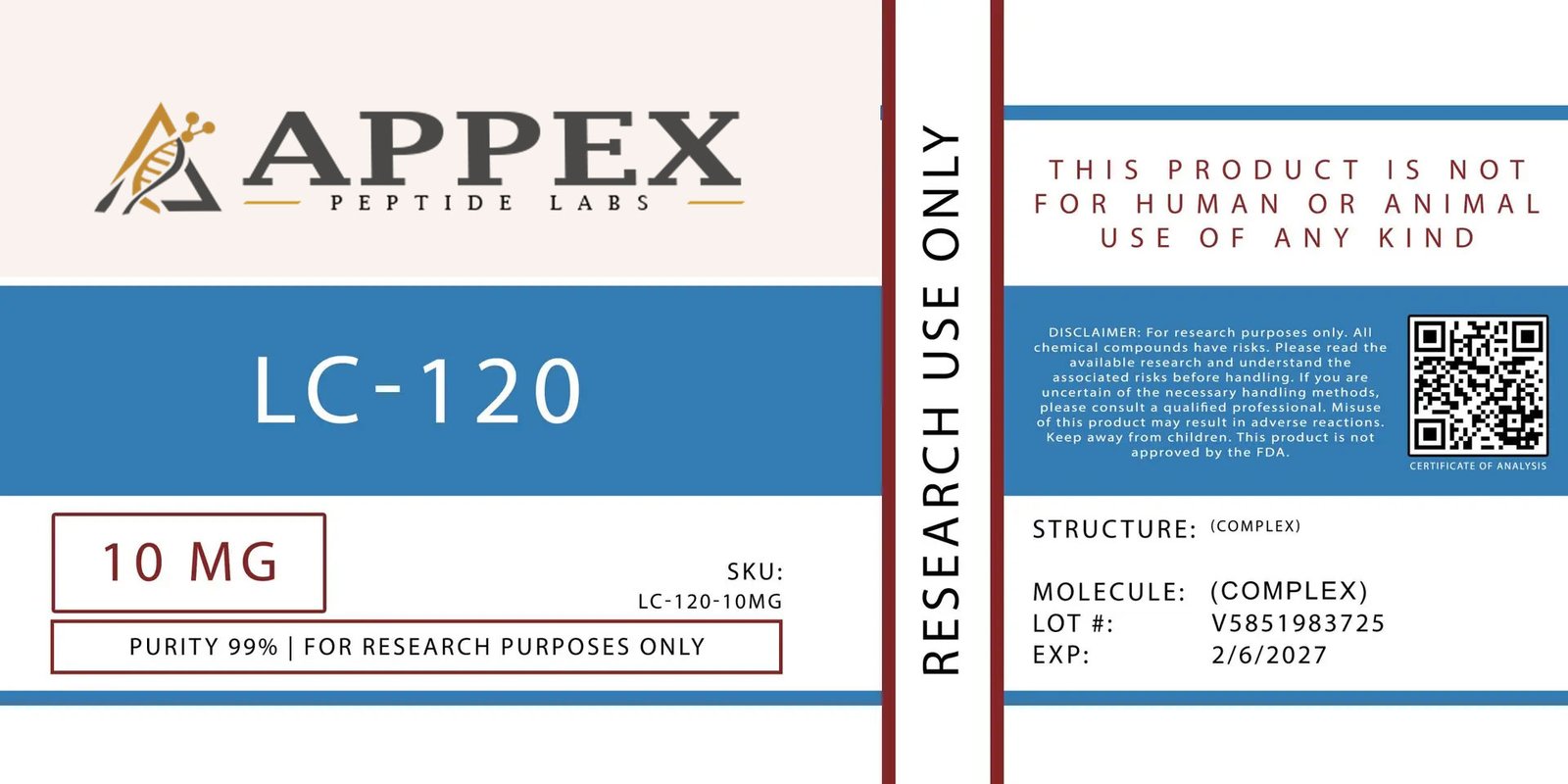
LC-120 Peptide is a specialized research-grade lipotropic formulation designed for scientific investigations into lipid metabolism, hepatic physiology, methyl donor biochemistry, and mitochondrial energy production. Although commonly referred to as LC-120 Peptide, this laboratory formulation functions as a multi-component research blend rather than a single peptide molecule, enabling researchers to investigate complementary biochemical pathways involved in cellular lipid handling and metabolic regulation.
The formulation is frequently incorporated into preclinical studies examining fatty acid transport, phospholipid biosynthesis, one-carbon metabolism, β-oxidation, and hepatic lipid homeostasis. Researchers utilize LC-120 Peptide to evaluate coordinated interactions between lipotropic compounds involved in methylation reactions, membrane phospholipid synthesis, carnitine-dependent fatty acid transport, and mitochondrial energy metabolism under controlled laboratory conditions.
Its multi-target biochemical profile makes LC-120 Peptide valuable for investigations in molecular metabolism, nutritional biochemistry, hepatic cell biology, systems biology, and metabolic pharmacology. The formulation also serves as a practical research tool for studying integrated metabolic networks rather than isolated biochemical pathways.
Appex Peptide Lab supplies research-grade LC-120 Peptide manufactured under stringent quality control standards with comprehensive analytical verification to support reproducible laboratory investigations.
For research use only. Not intended for human consumption or clinical use.
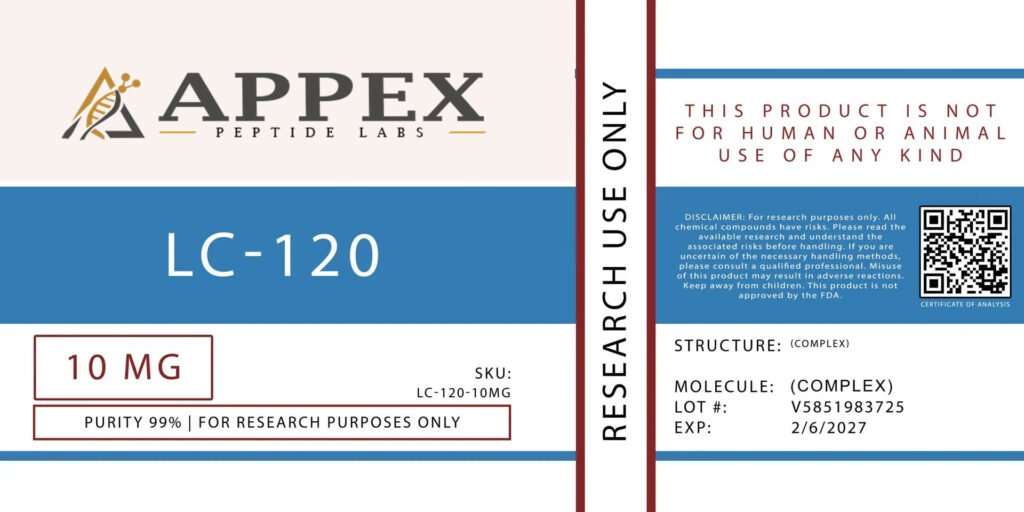
LC-120 Peptide is widely used to investigate intracellular lipid transport, hepatic lipid homeostasis, phospholipid metabolism, and metabolic adaptation in controlled laboratory environments.
Researchers utilize LC-120 Peptide to examine one-carbon metabolism, methyl donor utilization, homocysteine metabolism, transmethylation reactions, and related biochemical pathways.
The formulation supports investigations into carnitine-mediated transport of long-chain fatty acids, mitochondrial β-oxidation, and cellular energy production.
LC-120 Peptide is incorporated into laboratory studies evaluating nutrient-regulated metabolic pathways, enzymatic regulation, cellular bioenergetics, and metabolic network interactions.
Suitable for in vitro investigations using hepatocyte models and other metabolically active cell systems examining intracellular lipid handling and biochemical regulation.
Biotechnology and pharmaceutical laboratories employ LC-120 Peptide for metabolic assay development, biochemical pathway characterization, formulation screening, and mechanistic laboratory investigations.
| Specification | Details |
|---|---|
| Purity | Research-grade; individual components analytically verified |
| Molecular Formula | Multi-component formulation (not a single molecular entity) |
| Molecular Weight | Not applicable (blend formulation) |
| CAS Number | Not assigned |
| Appearance | Clear sterile solution or white to off-white lyophilized powder (depending on formulation) |
| Storage Conditions | Store at 2–8°C for solution formulations or -20°C for lyophilized material. Protect from light and repeated freeze-thaw cycles where applicable. |
| Solubility | Ready-to-use solution or soluble in appropriate laboratory-grade aqueous buffers following reconstitution |
| Sequence | Not applicable (lipotropic research blend) |
| Available Sizes | Laboratory research sizes (availability may vary) |
LC-120 Peptide is a research-grade lipotropic formulation designed to support laboratory investigations into interconnected metabolic pathways governing hepatic lipid homeostasis, mitochondrial fatty acid utilization, phospholipid biosynthesis, and methylation-dependent cellular processes. Unlike single-target peptide agonists, LC-120 functions as a multi-component biochemical research blend that enables investigators to examine coordinated metabolic interactions across several intracellular pathways.
A primary area of investigation involves fatty acid transport and mitochondrial β-oxidation. Components within the formulation are studied for their roles in facilitating transport of long-chain fatty acids toward mitochondrial metabolic machinery, where sequential β-oxidation reactions generate acetyl-CoA, reducing equivalents (NADH and FADH₂), and substrates for oxidative phosphorylation. Researchers employ LC-120 to investigate regulatory mechanisms governing cellular energy metabolism, mitochondrial substrate utilization, and lipid turnover under controlled experimental conditions.
LC-120 Peptide is also widely utilized in studies examining hepatic lipid homeostasis. Laboratory investigations explore intracellular lipid trafficking, phospholipid synthesis, lipoprotein assembly, membrane remodeling, and regulation of neutral lipid storage. These pathways are closely associated with maintenance of cellular membrane integrity, vesicular transport, and lipid-mediated signaling mechanisms within hepatocyte models.
Another important research focus involves one-carbon metabolism and methylation biochemistry. Lipotropic methyl donors contribute to the synthesis of S-adenosylmethionine (SAM), the principal intracellular methyl group donor required for DNA methylation, RNA modification, phosphatidylcholine biosynthesis, protein methylation, and numerous enzymatic reactions. Experimental studies frequently evaluate how modulation of methylation pathways influences cellular metabolism, gene expression, membrane composition, and metabolic enzyme activity.
Researchers additionally investigate the relationship between lipotropic compounds and major metabolic signaling pathways including AMP-activated protein kinase (AMPK), peroxisome proliferator-activated receptors (PPARs), and transcriptional regulators controlling lipid oxidation, fatty acid synthesis, mitochondrial biogenesis, and cellular bioenergetics. These integrated signaling networks provide valuable models for understanding metabolic adaptation at the molecular level.
Because LC-120 Peptide combines complementary biochemical components within a single research formulation, it enables scientists to study coordinated metabolic regulation rather than isolated enzymatic events. Its broad experimental utility has made it a valuable laboratory tool for investigations spanning metabolic biochemistry, nutritional science, hepatocyte biology, mitochondrial physiology, systems biology, and pharmaceutical discovery.
For research use only. Not intended for human consumption or clinical use.
| Size | 10mg |
|---|---|
| Dimensions | 9 × 7 × .5 in |
| Weight | .125 lbs |
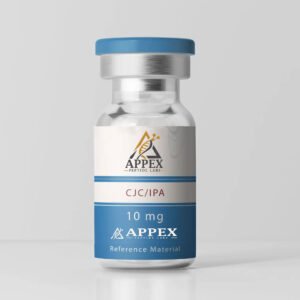
LC-120 Peptide is a specialized research-grade lipotropic formulation designed for scientific investigations into lipid metabolism, hepatic physiology, methyl donor biochemistry, and mitochondrial energy production. Although commonly referred to as LC-120 Peptide, this laboratory formulation functions as a multi-component research blend rather than a single peptide molecule, enabling researchers to investigate complementary biochemical pathways involved in cellular lipid handling and metabolic regulation.
The formulation is frequently incorporated into preclinical studies examining fatty acid transport, phospholipid biosynthesis, one-carbon metabolism, β-oxidation, and hepatic lipid homeostasis. Researchers utilize LC-120 Peptide to evaluate coordinated interactions between lipotropic compounds involved in methylation reactions, membrane phospholipid synthesis, carnitine-dependent fatty acid transport, and mitochondrial energy metabolism under controlled laboratory conditions.
Its multi-target biochemical profile makes LC-120 Peptide valuable for investigations in molecular metabolism, nutritional biochemistry, hepatic cell biology, systems biology, and metabolic pharmacology. The formulation also serves as a practical research tool for studying integrated metabolic networks rather than isolated biochemical pathways.
Appex Peptide Lab supplies research-grade LC-120 Peptide manufactured under stringent quality control standards with comprehensive analytical verification to support reproducible laboratory investigations.
For research use only. Not intended for human consumption or clinical use.
LC-120 Peptide is widely used to investigate intracellular lipid transport, hepatic lipid homeostasis, phospholipid metabolism, and metabolic adaptation in controlled laboratory environments.
Researchers utilize LC-120 Peptide to examine one-carbon metabolism, methyl donor utilization, homocysteine metabolism, transmethylation reactions, and related biochemical pathways.
The formulation supports investigations into carnitine-mediated transport of long-chain fatty acids, mitochondrial β-oxidation, and cellular energy production.
LC-120 Peptide is incorporated into laboratory studies evaluating nutrient-regulated metabolic pathways, enzymatic regulation, cellular bioenergetics, and metabolic network interactions.
Suitable for in vitro investigations using hepatocyte models and other metabolically active cell systems examining intracellular lipid handling and biochemical regulation.
Biotechnology and pharmaceutical laboratories employ LC-120 Peptide for metabolic assay development, biochemical pathway characterization, formulation screening, and mechanistic laboratory investigations.
| Specification | Details |
|---|---|
| Purity | Research-grade; individual components analytically verified |
| Molecular Formula | Multi-component formulation (not a single molecular entity) |
| Molecular Weight | Not applicable (blend formulation) |
| CAS Number | Not assigned |
| Appearance | Clear sterile solution or white to off-white lyophilized powder (depending on formulation) |
| Storage Conditions | Store at 2–8°C for solution formulations or -20°C for lyophilized material. Protect from light and repeated freeze-thaw cycles where applicable. |
| Solubility | Ready-to-use solution or soluble in appropriate laboratory-grade aqueous buffers following reconstitution |
| Sequence | Not applicable (lipotropic research blend) |
| Available Sizes | Laboratory research sizes (availability may vary) |
LC-120 Peptide is a research-grade lipotropic formulation designed to support laboratory investigations into interconnected metabolic pathways governing hepatic lipid homeostasis, mitochondrial fatty acid utilization, phospholipid biosynthesis, and methylation-dependent cellular processes. Unlike single-target peptide agonists, LC-120 functions as a multi-component biochemical research blend that enables investigators to examine coordinated metabolic interactions across several intracellular pathways.
A primary area of investigation involves fatty acid transport and mitochondrial β-oxidation. Components within the formulation are studied for their roles in facilitating transport of long-chain fatty acids toward mitochondrial metabolic machinery, where sequential β-oxidation reactions generate acetyl-CoA, reducing equivalents (NADH and FADH₂), and substrates for oxidative phosphorylation. Researchers employ LC-120 to investigate regulatory mechanisms governing cellular energy metabolism, mitochondrial substrate utilization, and lipid turnover under controlled experimental conditions.
LC-120 Peptide is also widely utilized in studies examining hepatic lipid homeostasis. Laboratory investigations explore intracellular lipid trafficking, phospholipid synthesis, lipoprotein assembly, membrane remodeling, and regulation of neutral lipid storage. These pathways are closely associated with maintenance of cellular membrane integrity, vesicular transport, and lipid-mediated signaling mechanisms within hepatocyte models.
Another important research focus involves one-carbon metabolism and methylation biochemistry. Lipotropic methyl donors contribute to the synthesis of S-adenosylmethionine (SAM), the principal intracellular methyl group donor required for DNA methylation, RNA modification, phosphatidylcholine biosynthesis, protein methylation, and numerous enzymatic reactions. Experimental studies frequently evaluate how modulation of methylation pathways influences cellular metabolism, gene expression, membrane composition, and metabolic enzyme activity.
Researchers additionally investigate the relationship between lipotropic compounds and major metabolic signaling pathways including AMP-activated protein kinase (AMPK), peroxisome proliferator-activated receptors (PPARs), and transcriptional regulators controlling lipid oxidation, fatty acid synthesis, mitochondrial biogenesis, and cellular bioenergetics. These integrated signaling networks provide valuable models for understanding metabolic adaptation at the molecular level.
Because LC-120 Peptide combines complementary biochemical components within a single research formulation, it enables scientists to study coordinated metabolic regulation rather than isolated enzymatic events. Its broad experimental utility has made it a valuable laboratory tool for investigations spanning metabolic biochemistry, nutritional science, hepatocyte biology, mitochondrial physiology, systems biology, and pharmaceutical discovery.
For research use only. Not intended for human consumption or clinical use.
| Size | 10mg |
|---|---|
| Dimensions | 9 × 7 × .5 in |
| Weight | .125 lbs |