Bulk Orders. Better Value.
Research institutions, universities and clinical teams qualify for volume discounts. Contact our team to discuss custom formulations and bulk pricing.

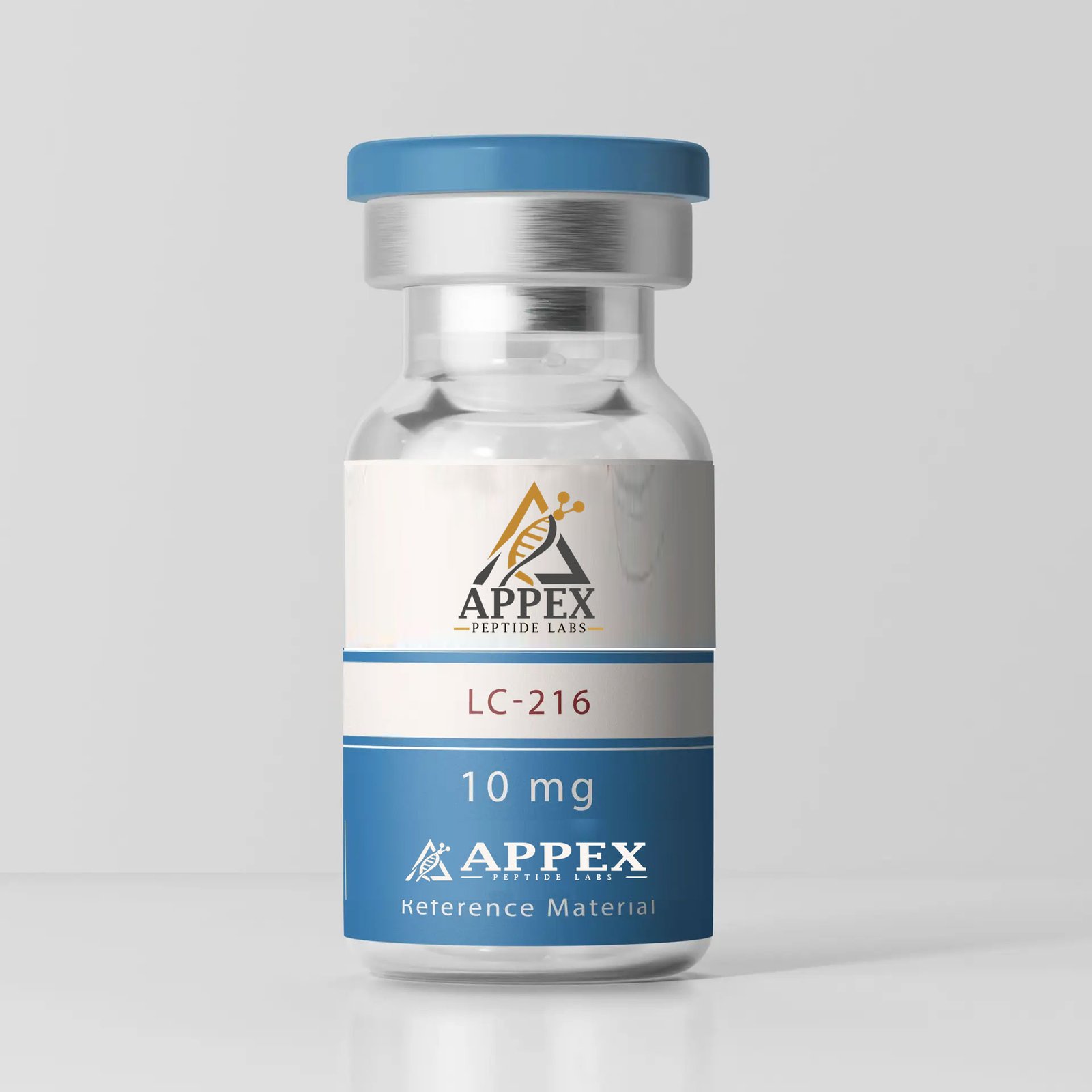


LC-216 Peptide is a specialized research formulation designed for laboratory investigations of metabolic pathways associated with lipid transport, mitochondrial energy production, methyl donor metabolism, and hepatic biochemical processes. Rather than functioning as a conventional peptide hormone, LC-216 represents a scientifically formulated research compound incorporating multiple lipotropic constituents that are widely examined for their complementary biochemical roles within cellular metabolism.
Researchers employ LC-216 to investigate complex interactions between fatty acid transport systems, mitochondrial substrate utilization, phospholipid biosynthesis, one-carbon metabolism, and cellular energy homeostasis. The formulation is frequently utilized in controlled experimental models exploring nutrient metabolism, biochemical regulation, and molecular signaling associated with lipid handling.
Its standardized composition, analytical verification, and reproducible manufacturing process make LC-216 an appropriate reference material for metabolic biology, nutritional biochemistry, pharmaceutical development, and life science research. Academic laboratories, biotechnology organizations, and pharmaceutical research teams value consistent batch quality when conducting mechanistic investigations and comparative metabolic studies.
Each batch undergoes rigorous analytical testing to verify identity, composition, and purity and is accompanied by a Certificate of Analysis (COA) to support experimental reproducibility.
For research use only. Not intended for human consumption or clinical use.

LC-216 Peptide is commonly incorporated into laboratory investigations examining intracellular lipid transport, fatty acid mobilization, triglyceride metabolism, and phospholipid biosynthesis within controlled experimental systems.
Researchers utilize LC-216 to explore biochemical pathways involved in mitochondrial fatty acid transport, oxidative metabolism, cellular ATP production, and metabolic substrate utilization.
Experimental models employ LC-216 to investigate biochemical mechanisms associated with hepatic lipid processing, cellular metabolism, and molecular regulation of liver-associated metabolic pathways.
The formulation is valuable for studying methyl donor metabolism, homocysteine regulation, phosphatidylcholine biosynthesis, and other biochemical processes involved in one-carbon metabolic pathways.
Scientists investigate LC-216 to better understand nutrient sensing, intracellular signaling, enzyme regulation, and coordinated metabolic responses under controlled laboratory conditions.
LC-216 serves as a research material for comparative biochemical investigations, formulation development, metabolic pathway characterization, and experimental evaluation of lipotropic compounds.
| Specification | Details |
|---|---|
| Product Name | LC-216 Peptide |
| Purity | ≥99% (Analytical Tested) |
| Molecular Formula | Proprietary Multi-Component Research Formulation |
| Molecular Weight | Not Applicable (Multi-Component Formulation) |
| CAS Number | Not Available |
| Appearance | White to off-white lyophilized powder or clear sterile solution (depending on supplied formulation) |
| Storage Conditions | Store refrigerated at 2–8°C for solution formulations or at -20°C for lyophilized material. Protect from moisture, heat, and direct light. |
| Solubility | Soluble in sterile laboratory-grade aqueous solutions (formulation dependent) |
| Sequence | Not Applicable (Multi-Component Research Formulation) |
| Available Sizes | 10 mL Multi-Dose Vial (or as supplied) |
LC-216 Peptide is a research formulation designed to facilitate laboratory investigations into interconnected metabolic pathways involved in lipid transport, mitochondrial function, methyl donor metabolism, and cellular energy regulation. Unlike receptor-selective peptide analogs, LC-216 functions as a multi-component biochemical research system in which each constituent contributes to distinct yet complementary metabolic processes that can be examined under controlled experimental conditions.
A principal area of investigation involves the role of L-carnitine, which participates in the transport of long-chain fatty acids across the inner mitochondrial membrane through the carnitine shuttle. This transport process enables fatty acyl-CoA molecules to enter the mitochondrial matrix, where β-oxidation enzymes sequentially metabolize fatty acids into acetyl-CoA. Researchers frequently evaluate changes in mitochondrial respiration, oxidative phosphorylation, ATP generation, and metabolic substrate utilization using cell culture and preclinical models.
Additional laboratory research focuses on methionine, an essential sulfur-containing amino acid that serves as a precursor to S-adenosyl-L-methionine (SAM), the principal methyl donor in numerous cellular methylation reactions. Experimental studies investigate how methylation influences phospholipid synthesis, nucleic acid modification, protein regulation, and intracellular signaling pathways associated with metabolic homeostasis.
Choline is examined for its contribution to phosphatidylcholine biosynthesis, membrane integrity, lipoprotein assembly, and one-carbon metabolism. Researchers utilize molecular biology techniques to study the relationship between choline-dependent phospholipid production, cellular membrane dynamics, and lipid transport mechanisms in hepatic and extrahepatic tissues.
Inositol has been widely investigated as a precursor for phosphoinositides involved in intracellular signal transduction. Laboratory experiments frequently evaluate its participation in phosphatidylinositol signaling networks, second messenger generation, calcium-mediated cellular responses, and kinase-regulated metabolic pathways.
When combined within a standardized research formulation, these components provide investigators with a comprehensive experimental platform for examining coordinated metabolic regulation rather than isolated biochemical reactions. Contemporary laboratory research employs transcriptomic analysis, metabolomics, lipidomics, enzyme activity assays, mitochondrial functional assessments, and molecular signaling studies to characterize the integrated biochemical responses associated with LC-216 under controlled experimental conditions.
For research use only. Not intended for human consumption or clinical use.
| Size | 10mg |
|---|---|
| Dimensions | 9 × 7 × .5 in |
| Weight | .125 lbs |
LC-216 Peptide is a specialized research formulation designed for laboratory investigations of metabolic pathways associated with lipid transport, mitochondrial energy production, methyl donor metabolism, and hepatic biochemical processes. Rather than functioning as a conventional peptide hormone, LC-216 represents a scientifically formulated research compound incorporating multiple lipotropic constituents that are widely examined for their complementary biochemical roles within cellular metabolism.
Researchers employ LC-216 to investigate complex interactions between fatty acid transport systems, mitochondrial substrate utilization, phospholipid biosynthesis, one-carbon metabolism, and cellular energy homeostasis. The formulation is frequently utilized in controlled experimental models exploring nutrient metabolism, biochemical regulation, and molecular signaling associated with lipid handling.
Its standardized composition, analytical verification, and reproducible manufacturing process make LC-216 an appropriate reference material for metabolic biology, nutritional biochemistry, pharmaceutical development, and life science research. Academic laboratories, biotechnology organizations, and pharmaceutical research teams value consistent batch quality when conducting mechanistic investigations and comparative metabolic studies.
Each batch undergoes rigorous analytical testing to verify identity, composition, and purity and is accompanied by a Certificate of Analysis (COA) to support experimental reproducibility.
For research use only. Not intended for human consumption or clinical use.
LC-216 Peptide is commonly incorporated into laboratory investigations examining intracellular lipid transport, fatty acid mobilization, triglyceride metabolism, and phospholipid biosynthesis within controlled experimental systems.
Researchers utilize LC-216 to explore biochemical pathways involved in mitochondrial fatty acid transport, oxidative metabolism, cellular ATP production, and metabolic substrate utilization.
Experimental models employ LC-216 to investigate biochemical mechanisms associated with hepatic lipid processing, cellular metabolism, and molecular regulation of liver-associated metabolic pathways.
The formulation is valuable for studying methyl donor metabolism, homocysteine regulation, phosphatidylcholine biosynthesis, and other biochemical processes involved in one-carbon metabolic pathways.
Scientists investigate LC-216 to better understand nutrient sensing, intracellular signaling, enzyme regulation, and coordinated metabolic responses under controlled laboratory conditions.
LC-216 serves as a research material for comparative biochemical investigations, formulation development, metabolic pathway characterization, and experimental evaluation of lipotropic compounds.
| Specification | Details |
|---|---|
| Product Name | LC-216 Peptide |
| Purity | ≥99% (Analytical Tested) |
| Molecular Formula | Proprietary Multi-Component Research Formulation |
| Molecular Weight | Not Applicable (Multi-Component Formulation) |
| CAS Number | Not Available |
| Appearance | White to off-white lyophilized powder or clear sterile solution (depending on supplied formulation) |
| Storage Conditions | Store refrigerated at 2–8°C for solution formulations or at -20°C for lyophilized material. Protect from moisture, heat, and direct light. |
| Solubility | Soluble in sterile laboratory-grade aqueous solutions (formulation dependent) |
| Sequence | Not Applicable (Multi-Component Research Formulation) |
| Available Sizes | 10 mL Multi-Dose Vial (or as supplied) |
LC-216 Peptide is a research formulation designed to facilitate laboratory investigations into interconnected metabolic pathways involved in lipid transport, mitochondrial function, methyl donor metabolism, and cellular energy regulation. Unlike receptor-selective peptide analogs, LC-216 functions as a multi-component biochemical research system in which each constituent contributes to distinct yet complementary metabolic processes that can be examined under controlled experimental conditions.
A principal area of investigation involves the role of L-carnitine, which participates in the transport of long-chain fatty acids across the inner mitochondrial membrane through the carnitine shuttle. This transport process enables fatty acyl-CoA molecules to enter the mitochondrial matrix, where β-oxidation enzymes sequentially metabolize fatty acids into acetyl-CoA. Researchers frequently evaluate changes in mitochondrial respiration, oxidative phosphorylation, ATP generation, and metabolic substrate utilization using cell culture and preclinical models.
Additional laboratory research focuses on methionine, an essential sulfur-containing amino acid that serves as a precursor to S-adenosyl-L-methionine (SAM), the principal methyl donor in numerous cellular methylation reactions. Experimental studies investigate how methylation influences phospholipid synthesis, nucleic acid modification, protein regulation, and intracellular signaling pathways associated with metabolic homeostasis.
Choline is examined for its contribution to phosphatidylcholine biosynthesis, membrane integrity, lipoprotein assembly, and one-carbon metabolism. Researchers utilize molecular biology techniques to study the relationship between choline-dependent phospholipid production, cellular membrane dynamics, and lipid transport mechanisms in hepatic and extrahepatic tissues.
Inositol has been widely investigated as a precursor for phosphoinositides involved in intracellular signal transduction. Laboratory experiments frequently evaluate its participation in phosphatidylinositol signaling networks, second messenger generation, calcium-mediated cellular responses, and kinase-regulated metabolic pathways.
When combined within a standardized research formulation, these components provide investigators with a comprehensive experimental platform for examining coordinated metabolic regulation rather than isolated biochemical reactions. Contemporary laboratory research employs transcriptomic analysis, metabolomics, lipidomics, enzyme activity assays, mitochondrial functional assessments, and molecular signaling studies to characterize the integrated biochemical responses associated with LC-216 under controlled experimental conditions.
For research use only. Not intended for human consumption or clinical use.
| Size | 10mg |
|---|---|
| Dimensions | 9 × 7 × .5 in |
| Weight | .125 lbs |