Bulk Orders. Better Value.
Research institutions, universities and clinical teams qualify for volume discounts. Contact our team to discuss custom formulations and bulk pricing.

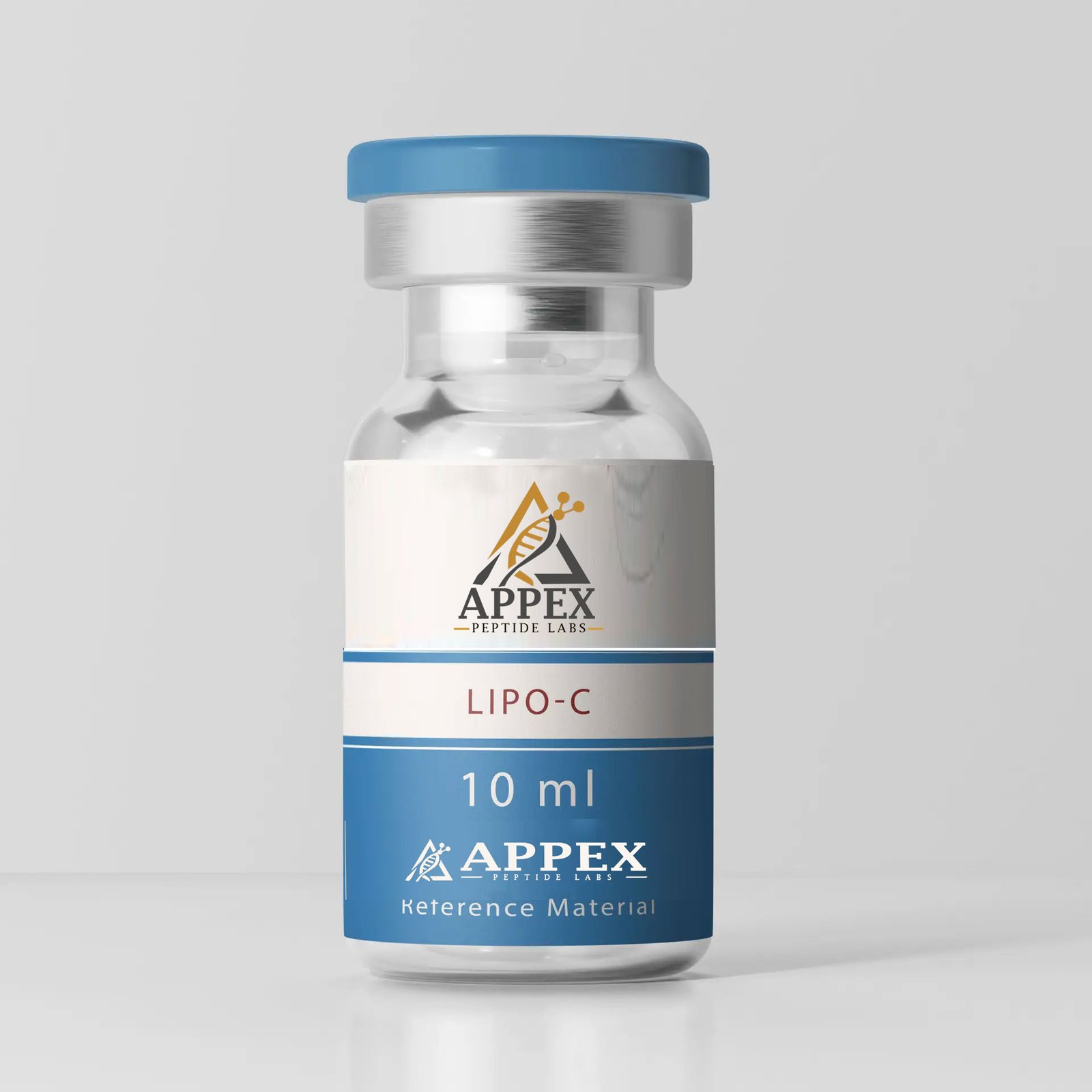
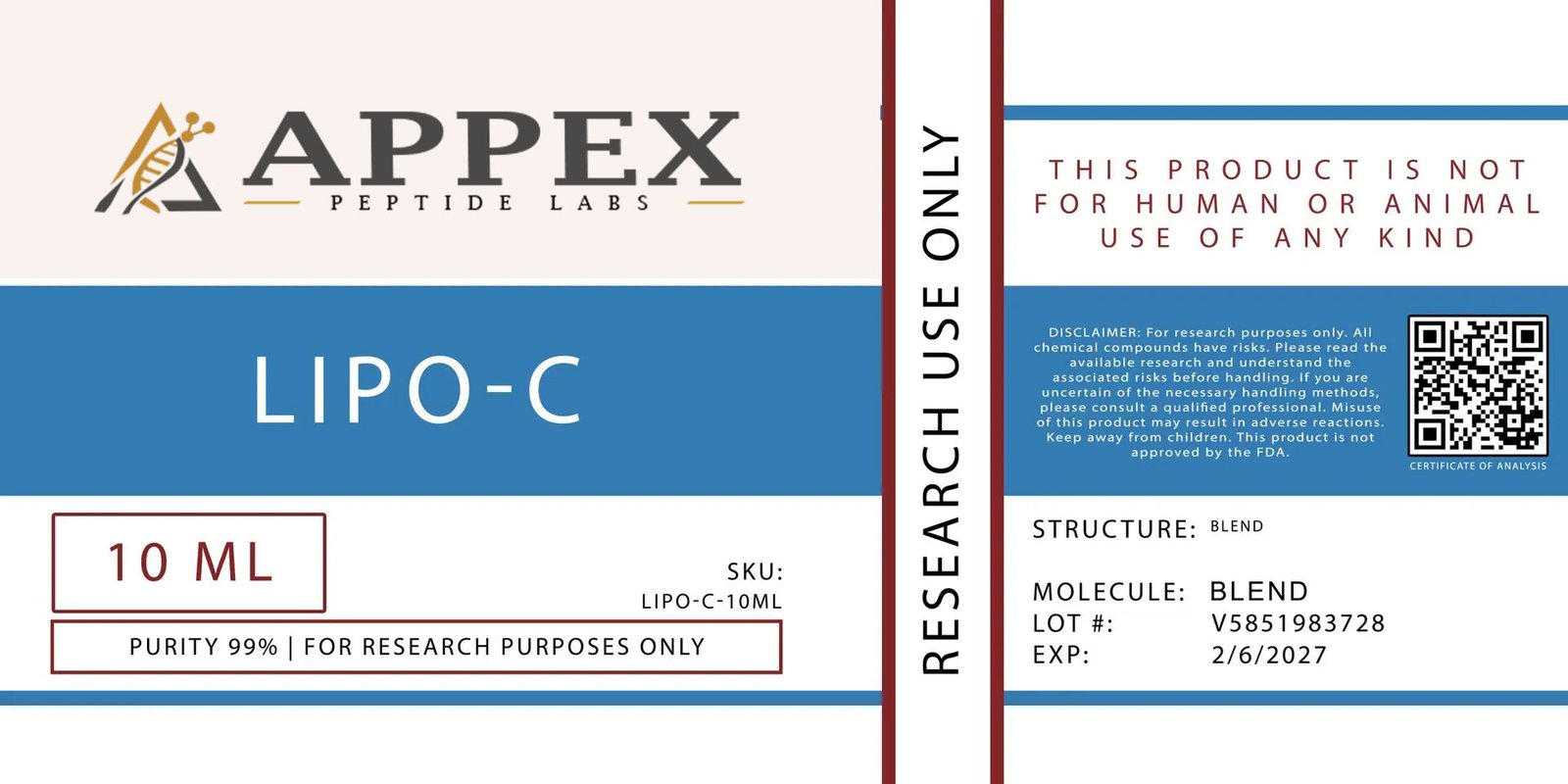

The Lipo-C Peptide formulation represents an advanced multi-target biochemical toolkit designed for metabolic, nutritional, and enzymatic research. This optimized configuration integrates premium lipotropic compounds—specifically methionine, inositol, choline, and L-carnitine—with active B-vitamin complexes (B5, B6, and B12). The components function in unison as critical coenzymes and molecular chaperones within core cellular pathways.
Academic institutions, biotechnology companies, pharmaceutical research organizations, and life science laboratories utilize Lipo-C Peptide to investigate the complex biochemical networks involved in lipid mobilization, mitochondrial energy metabolism, and hepatic lipid transport. This research-grade formulation combines multiple lipotropic compounds that serve as substrates and cofactors within interconnected metabolic pathways, providing researchers with a standardized experimental platform for studying cellular bioenergetics.
By supporting the transport of long-chain fatty acids across the inner mitochondrial membrane while supplying essential methyl donors required for phospholipid synthesis, the Lipo-C matrix enables controlled investigations into metabolic flux, one-carbon metabolism, oxidative balance, and lipid homeostasis. Researchers also employ this formulation to evaluate enzymatic bottlenecks associated with β-oxidation, phosphatidylcholine biosynthesis, and intracellular signaling pathways involving phosphoinositides.
Manufactured using high-purity individual components and stringent quality-controlled production standards, every batch delivers consistent composition and reproducible analytical performance. The stable lyophilized formulation minimizes variability across experiments, making it suitable for long-term laboratory investigations in metabolic biology, nutritional biochemistry, mitochondrial physiology, and hepatic research.
For research use only. Not intended for human consumption or clinical use.
For research use only. Not intended for human consumption or clinical use.
Lipo-C is widely utilized to investigate mitochondrial fatty acid transport and lipid catabolism. Researchers evaluate how L-carnitine participates in the carnitine shuttle by facilitating transport of long-chain acyl-CoA molecules across the inner mitochondrial membrane through CPT-1, carnitine-acylcarnitine translocase, and CPT-2, enabling studies of β-oxidation kinetics and ATP generation.
Researchers employ Lipo-C to study phosphatidylcholine synthesis and hepatic lipid export. The coordinated activities of choline and methionine provide a useful experimental model for investigating phospholipid biosynthesis, lipoprotein assembly, and very-low-density lipoprotein (VLDL) secretion within hepatocyte culture systems.
The inositol component supports investigations into phosphatidylinositol metabolism and phosphoinositide signaling. Laboratory studies evaluate PIP₂ synthesis, phospholipase C activation, IP₃ generation, DAG formation, intracellular calcium mobilization, and protein kinase C (PKC) activation following receptor-mediated signaling.
Lipo-C serves as a valuable research tool for studying methionine metabolism and methyl-group transfer reactions. Experimental models examine S-adenosylmethionine (SAM) production, DNA methyltransferase activity, histone methylation, epigenetic regulation, and one-carbon metabolic pathways under controlled laboratory conditions.
The formulation is frequently incorporated into studies investigating mitochondrial respiration, ATP production, Coenzyme A biosynthesis, intermediary metabolism, and metabolic enzyme regulation. B5, B6, and B12 function as important cofactors within multiple biochemical pathways supporting cellular energy production.
| Specification | Details |
|---|---|
| Product Name | Lipo-C Peptide Matrix |
| Product Type | Multi-Component Lipotropic Research Formulation |
| Purity | ≥98% Individual Components (HPLC/MS Verified) |
| Core Ingredients | L-Carnitine, Methionine, Inositol, Choline, Vitamin B5, Vitamin B6, Vitamin B12 |
| Component Composition | Methionine (50–100 mg), Inositol (50–100 mg), Choline (50–100 mg), L-Carnitine (100–250 mg), B-Vitamins (1–5 mg each) |
| Appearance | White to off-white lyophilized powder |
| Moisture Content | <0.5% (Karl Fischer Analysis) |
| Solubility | Soluble in sterile water, saline, and standard aqueous laboratory buffers |
| Storage Conditions | Store desiccated at −20°C for routine storage or −80°C for extended preservation. Avoid repeated freeze-thaw cycles after reconstitution. |
| Available Sizes | Multi-component research vials |
| Regulatory Status | For research use only. Not intended for human consumption or clinical use. |
Lipo-C functions as a multi-component biochemical research formulation whose constituents participate in complementary metabolic pathways rather than acting through a single receptor or signaling target. Each component contributes to cellular metabolism by serving as a substrate, cofactor, or metabolic intermediate involved in lipid transport, phospholipid synthesis, methyl-group transfer, intracellular signaling, and mitochondrial energy production.
L-carnitine participates in the carnitine shuttle responsible for transporting long-chain fatty acids into mitochondria. Fatty acyl-CoA molecules are converted to acylcarnitines by carnitine palmitoyltransferase-1 (CPT-1) on the outer mitochondrial membrane, transported across the inner membrane via carnitine-acylcarnitine translocase, and reconverted to fatty acyl-CoA by CPT-2 within the mitochondrial matrix. These molecules subsequently undergo β-oxidation to generate acetyl-CoA for entry into the tricarboxylic acid (TCA) cycle.
Methionine enters one-carbon metabolism through conversion to S-adenosylmethionine (SAM), the primary intracellular methyl donor. Researchers utilize this pathway to investigate methylation reactions involving nucleic acids, proteins, phospholipids, and epigenetic regulatory mechanisms. Vitamin B12 functions as a cofactor for methionine synthase, while vitamin B6 supports transsulfuration and amino acid metabolism.
Choline serves as a precursor for phosphatidylcholine through the CDP-choline (Kennedy) pathway. Phosphatidylcholine represents a major structural phospholipid required for membrane integrity and lipoprotein assembly. Researchers investigate these pathways in studies involving hepatic lipid transport, membrane biology, and phospholipid metabolism.
Inositol contributes to phosphatidylinositol synthesis, providing substrates for production of phosphatidylinositol 4,5-bisphosphate (PIP₂). Following phospholipase C activation, PIP₂ is hydrolyzed into inositol 1,4,5-trisphosphate (IP₃) and diacylglycerol (DAG), two important second messengers involved in intracellular calcium signaling and protein kinase C activation.
Together, these interconnected pathways provide researchers with a comprehensive experimental platform for investigating mitochondrial bioenergetics, lipid metabolism, phospholipid biosynthesis, one-carbon metabolism, intracellular signaling, oxidative balance, and cellular metabolic regulation under controlled laboratory conditions.
For research use only. Not intended for human consumption or clinical use.
| Dimensions | 9 × 7 × .5 in |
|---|---|
| Weight | .125 lbs |
The Lipo-C Peptide formulation represents an advanced multi-target biochemical toolkit designed for metabolic, nutritional, and enzymatic research. This optimized configuration integrates premium lipotropic compounds—specifically methionine, inositol, choline, and L-carnitine—with active B-vitamin complexes (B5, B6, and B12). The components function in unison as critical coenzymes and molecular chaperones within core cellular pathways.
Academic institutions, biotechnology companies, pharmaceutical research organizations, and life science laboratories utilize Lipo-C Peptide to investigate the complex biochemical networks involved in lipid mobilization, mitochondrial energy metabolism, and hepatic lipid transport. This research-grade formulation combines multiple lipotropic compounds that serve as substrates and cofactors within interconnected metabolic pathways, providing researchers with a standardized experimental platform for studying cellular bioenergetics.
By supporting the transport of long-chain fatty acids across the inner mitochondrial membrane while supplying essential methyl donors required for phospholipid synthesis, the Lipo-C matrix enables controlled investigations into metabolic flux, one-carbon metabolism, oxidative balance, and lipid homeostasis. Researchers also employ this formulation to evaluate enzymatic bottlenecks associated with β-oxidation, phosphatidylcholine biosynthesis, and intracellular signaling pathways involving phosphoinositides.
Manufactured using high-purity individual components and stringent quality-controlled production standards, every batch delivers consistent composition and reproducible analytical performance. The stable lyophilized formulation minimizes variability across experiments, making it suitable for long-term laboratory investigations in metabolic biology, nutritional biochemistry, mitochondrial physiology, and hepatic research.
For research use only. Not intended for human consumption or clinical use.
For research use only. Not intended for human consumption or clinical use.
Lipo-C is widely utilized to investigate mitochondrial fatty acid transport and lipid catabolism. Researchers evaluate how L-carnitine participates in the carnitine shuttle by facilitating transport of long-chain acyl-CoA molecules across the inner mitochondrial membrane through CPT-1, carnitine-acylcarnitine translocase, and CPT-2, enabling studies of β-oxidation kinetics and ATP generation.
Researchers employ Lipo-C to study phosphatidylcholine synthesis and hepatic lipid export. The coordinated activities of choline and methionine provide a useful experimental model for investigating phospholipid biosynthesis, lipoprotein assembly, and very-low-density lipoprotein (VLDL) secretion within hepatocyte culture systems.
The inositol component supports investigations into phosphatidylinositol metabolism and phosphoinositide signaling. Laboratory studies evaluate PIP₂ synthesis, phospholipase C activation, IP₃ generation, DAG formation, intracellular calcium mobilization, and protein kinase C (PKC) activation following receptor-mediated signaling.
Lipo-C serves as a valuable research tool for studying methionine metabolism and methyl-group transfer reactions. Experimental models examine S-adenosylmethionine (SAM) production, DNA methyltransferase activity, histone methylation, epigenetic regulation, and one-carbon metabolic pathways under controlled laboratory conditions.
The formulation is frequently incorporated into studies investigating mitochondrial respiration, ATP production, Coenzyme A biosynthesis, intermediary metabolism, and metabolic enzyme regulation. B5, B6, and B12 function as important cofactors within multiple biochemical pathways supporting cellular energy production.
| Specification | Details |
|---|---|
| Product Name | Lipo-C Peptide Matrix |
| Product Type | Multi-Component Lipotropic Research Formulation |
| Purity | ≥98% Individual Components (HPLC/MS Verified) |
| Core Ingredients | L-Carnitine, Methionine, Inositol, Choline, Vitamin B5, Vitamin B6, Vitamin B12 |
| Component Composition | Methionine (50–100 mg), Inositol (50–100 mg), Choline (50–100 mg), L-Carnitine (100–250 mg), B-Vitamins (1–5 mg each) |
| Appearance | White to off-white lyophilized powder |
| Moisture Content | <0.5% (Karl Fischer Analysis) |
| Solubility | Soluble in sterile water, saline, and standard aqueous laboratory buffers |
| Storage Conditions | Store desiccated at −20°C for routine storage or −80°C for extended preservation. Avoid repeated freeze-thaw cycles after reconstitution. |
| Available Sizes | Multi-component research vials |
| Regulatory Status | For research use only. Not intended for human consumption or clinical use. |
Lipo-C functions as a multi-component biochemical research formulation whose constituents participate in complementary metabolic pathways rather than acting through a single receptor or signaling target. Each component contributes to cellular metabolism by serving as a substrate, cofactor, or metabolic intermediate involved in lipid transport, phospholipid synthesis, methyl-group transfer, intracellular signaling, and mitochondrial energy production.
L-carnitine participates in the carnitine shuttle responsible for transporting long-chain fatty acids into mitochondria. Fatty acyl-CoA molecules are converted to acylcarnitines by carnitine palmitoyltransferase-1 (CPT-1) on the outer mitochondrial membrane, transported across the inner membrane via carnitine-acylcarnitine translocase, and reconverted to fatty acyl-CoA by CPT-2 within the mitochondrial matrix. These molecules subsequently undergo β-oxidation to generate acetyl-CoA for entry into the tricarboxylic acid (TCA) cycle.
Methionine enters one-carbon metabolism through conversion to S-adenosylmethionine (SAM), the primary intracellular methyl donor. Researchers utilize this pathway to investigate methylation reactions involving nucleic acids, proteins, phospholipids, and epigenetic regulatory mechanisms. Vitamin B12 functions as a cofactor for methionine synthase, while vitamin B6 supports transsulfuration and amino acid metabolism.
Choline serves as a precursor for phosphatidylcholine through the CDP-choline (Kennedy) pathway. Phosphatidylcholine represents a major structural phospholipid required for membrane integrity and lipoprotein assembly. Researchers investigate these pathways in studies involving hepatic lipid transport, membrane biology, and phospholipid metabolism.
Inositol contributes to phosphatidylinositol synthesis, providing substrates for production of phosphatidylinositol 4,5-bisphosphate (PIP₂). Following phospholipase C activation, PIP₂ is hydrolyzed into inositol 1,4,5-trisphosphate (IP₃) and diacylglycerol (DAG), two important second messengers involved in intracellular calcium signaling and protein kinase C activation.
Together, these interconnected pathways provide researchers with a comprehensive experimental platform for investigating mitochondrial bioenergetics, lipid metabolism, phospholipid biosynthesis, one-carbon metabolism, intracellular signaling, oxidative balance, and cellular metabolic regulation under controlled laboratory conditions.
For research use only. Not intended for human consumption or clinical use.
| Dimensions | 9 × 7 × .5 in |
|---|---|
| Weight | .125 lbs |