Bulk Orders. Better Value.
Research institutions, universities and clinical teams qualify for volume discounts. Contact our team to discuss custom formulations and bulk pricing.

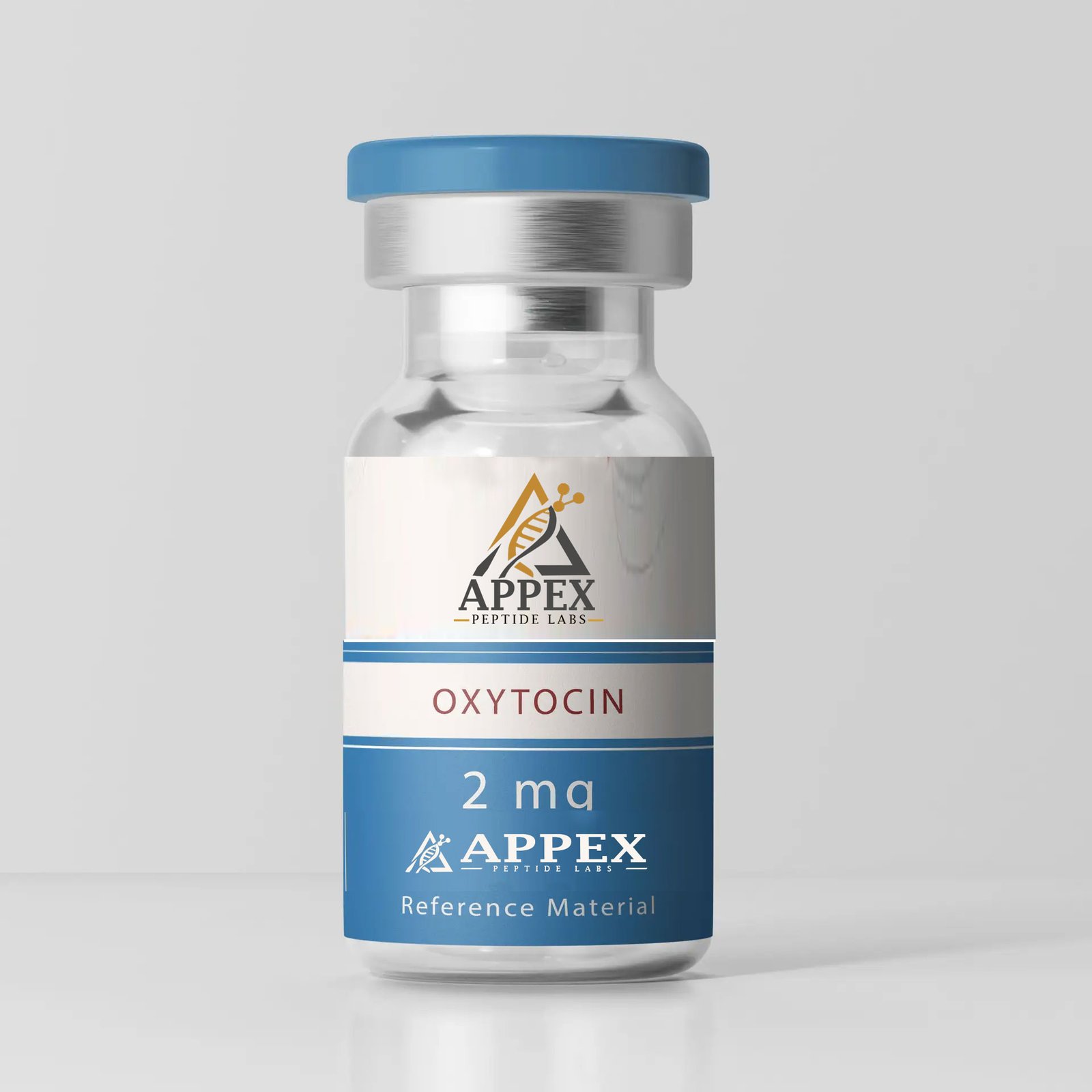

Oxytocin Peptide is a naturally occurring cyclic nonapeptide synthesized for research applications requiring a highly characterized neuropeptide with established receptor pharmacology. Structurally composed of nine amino acids linked by a disulfide bridge, Oxytocin has become one of the most extensively studied peptide hormones in modern molecular and cellular biology due to its highly selective interaction with the oxytocin receptor (OXTR), a Class A G protein-coupled receptor.
In laboratory research, Oxytocin Peptide is frequently employed to investigate GPCR-mediated signal transduction, calcium-dependent intracellular signaling, neuroendocrine communication, neurotransmitter modulation, and peptide-receptor binding kinetics. Numerous experimental studies have examined its influence on second messenger systems, phospholipase C activation, intracellular calcium mobilization, MAPK signaling, and downstream transcriptional regulation.
Beyond receptor pharmacology, Oxytocin Peptide serves as a valuable research reagent in behavioral neuroscience, developmental biology, reproductive physiology, systems neuroscience, and comparative endocrinology. Its conserved biological structure and extensive characterization in scientific literature enable researchers to investigate cellular signaling mechanisms with high reproducibility across diverse experimental models.
Manufactured under stringent laboratory quality standards and supplied as a lyophilized peptide with verified purity, Oxytocin Peptide supports reliable experimental outcomes in academic, pharmaceutical, and biotechnology research environments.
For research use only. Not intended for human consumption or clinical use.
Oxytocin Peptide is widely used to investigate oxytocin receptor activation, ligand-binding kinetics, receptor internalization, and G protein-coupled receptor signaling pathways.
Researchers employ Oxytocin Peptide to examine peptide-mediated communication between endocrine and nervous systems, including hormone signaling and neuronal regulatory mechanisms.
The peptide supports investigations into neuronal signaling networks, neurotransmitter modulation, synaptic communication, and intracellular protein phosphorylation within experimental laboratory models.
Oxytocin Peptide is valuable for studying receptor selectivity, ligand affinity, downstream signaling dynamics, receptor desensitization, and pharmacodynamic characteristics.
Laboratory studies utilize Oxytocin Peptide to evaluate phospholipase C activation, calcium mobilization, protein kinase signaling, MAPK pathways, and transcription factor regulation.
Researchers investigate Oxytocin Peptide across multiple experimental species to better understand conserved peptide signaling mechanisms and endocrine system regulation.
| Specification | Details |
|---|---|
| Product Name | Oxytocin Peptide |
| Purity | ≥98% (HPLC Verified) |
| Molecular Formula | C₄₃H₆₆N₁₂O₁₂S₂ |
| Molecular Weight | 1007.19 g/mol |
| CAS Number | 50-56-6 |
| Appearance | White to off-white lyophilized powder |
| Sequence | Cys-Tyr-Ile-Gln-Asn-Cys-Pro-Leu-Gly-NH₂ (disulfide bridge between Cys¹ and Cys⁶) |
| Solubility | Soluble in sterile laboratory-grade water and compatible research buffers |
| Storage Conditions | Store lyophilized at -20°C. Following reconstitution, aliquot appropriately and avoid repeated freeze-thaw cycles. |
| Available Sizes | 2 mg, 5 mg, 10 mg |

Oxytocin Peptide functions as a highly selective endogenous ligand for the oxytocin receptor (OXTR), a member of the Class A G protein-coupled receptor (GPCR) superfamily. Binding of Oxytocin Peptide to OXTR induces receptor conformational changes that initiate multiple intracellular signaling pathways, making it one of the most extensively investigated peptide-receptor systems in molecular pharmacology and neuroendocrine research.
Following receptor activation, OXTR primarily couples with Gq/11 proteins, resulting in activation of phospholipase C-β (PLC-β). PLC-mediated hydrolysis of phosphatidylinositol 4,5-bisphosphate generates the second messengers inositol 1,4,5-trisphosphate (IP₃) and diacylglycerol (DAG). IP₃ stimulates calcium release from intracellular stores, while DAG activates protein kinase C (PKC), collectively regulating diverse intracellular signaling events and protein phosphorylation processes.
Experimental studies have further demonstrated that Oxytocin Peptide influences mitogen-activated protein kinase (MAPK/ERK) signaling, phosphatidylinositol 3-kinase (PI3K)/Akt pathways, and calcium/calmodulin-dependent signaling cascades. These molecular events regulate transcription factor activation, cytoskeletal remodeling, vesicular trafficking, and gene expression within numerous cellular systems.
OXTR signaling also undergoes tightly regulated receptor phosphorylation, β-arrestin recruitment, receptor internalization, recycling, and desensitization. These mechanisms have made Oxytocin Peptide a valuable experimental model for studying GPCR trafficking, receptor resensitization, ligand bias, and signal duration under controlled laboratory conditions.
In neuroscience research, Oxytocin Peptide has been utilized to investigate neuronal communication, neurotransmitter release, synaptic signaling, and network connectivity within experimental models. Molecular biology studies continue to explore its influence on transcriptional regulation, intracellular calcium dynamics, protein kinase activation, and cellular communication across diverse tissue types.
Due to its highly conserved amino acid sequence, well-characterized receptor pharmacology, and extensive documentation in peer-reviewed literature, Oxytocin Peptide remains a benchmark research compound for investigations involving peptide chemistry, GPCR biology, molecular endocrinology, receptor signaling kinetics, and cellular physiology. Its reproducible biochemical properties and selective receptor interactions make it an essential experimental tool for laboratories conducting advanced peptide and neuroendocrine research.
For research use only. Not intended for human consumption or clinical use.
| Size | 10mg, 2mg, 5mg |
|---|---|
| Weight | .125 lbs |
| Dimensions | 9 × 7 × .5 in |

Oxytocin Peptide is a naturally occurring cyclic nonapeptide synthesized for research applications requiring a highly characterized neuropeptide with established receptor pharmacology. Structurally composed of nine amino acids linked by a disulfide bridge, Oxytocin has become one of the most extensively studied peptide hormones in modern molecular and cellular biology due to its highly selective interaction with the oxytocin receptor (OXTR), a Class A G protein-coupled receptor.
In laboratory research, Oxytocin Peptide is frequently employed to investigate GPCR-mediated signal transduction, calcium-dependent intracellular signaling, neuroendocrine communication, neurotransmitter modulation, and peptide-receptor binding kinetics. Numerous experimental studies have examined its influence on second messenger systems, phospholipase C activation, intracellular calcium mobilization, MAPK signaling, and downstream transcriptional regulation.
Beyond receptor pharmacology, Oxytocin Peptide serves as a valuable research reagent in behavioral neuroscience, developmental biology, reproductive physiology, systems neuroscience, and comparative endocrinology. Its conserved biological structure and extensive characterization in scientific literature enable researchers to investigate cellular signaling mechanisms with high reproducibility across diverse experimental models.
Manufactured under stringent laboratory quality standards and supplied as a lyophilized peptide with verified purity, Oxytocin Peptide supports reliable experimental outcomes in academic, pharmaceutical, and biotechnology research environments.
For research use only. Not intended for human consumption or clinical use.
Oxytocin Peptide is widely used to investigate oxytocin receptor activation, ligand-binding kinetics, receptor internalization, and G protein-coupled receptor signaling pathways.
Researchers employ Oxytocin Peptide to examine peptide-mediated communication between endocrine and nervous systems, including hormone signaling and neuronal regulatory mechanisms.
The peptide supports investigations into neuronal signaling networks, neurotransmitter modulation, synaptic communication, and intracellular protein phosphorylation within experimental laboratory models.
Oxytocin Peptide is valuable for studying receptor selectivity, ligand affinity, downstream signaling dynamics, receptor desensitization, and pharmacodynamic characteristics.
Laboratory studies utilize Oxytocin Peptide to evaluate phospholipase C activation, calcium mobilization, protein kinase signaling, MAPK pathways, and transcription factor regulation.
Researchers investigate Oxytocin Peptide across multiple experimental species to better understand conserved peptide signaling mechanisms and endocrine system regulation.
| Specification | Details |
|---|---|
| Product Name | Oxytocin Peptide |
| Purity | ≥98% (HPLC Verified) |
| Molecular Formula | C₄₃H₆₆N₁₂O₁₂S₂ |
| Molecular Weight | 1007.19 g/mol |
| CAS Number | 50-56-6 |
| Appearance | White to off-white lyophilized powder |
| Sequence | Cys-Tyr-Ile-Gln-Asn-Cys-Pro-Leu-Gly-NH₂ (disulfide bridge between Cys¹ and Cys⁶) |
| Solubility | Soluble in sterile laboratory-grade water and compatible research buffers |
| Storage Conditions | Store lyophilized at -20°C. Following reconstitution, aliquot appropriately and avoid repeated freeze-thaw cycles. |
| Available Sizes | 2 mg, 5 mg, 10 mg |
Oxytocin Peptide functions as a highly selective endogenous ligand for the oxytocin receptor (OXTR), a member of the Class A G protein-coupled receptor (GPCR) superfamily. Binding of Oxytocin Peptide to OXTR induces receptor conformational changes that initiate multiple intracellular signaling pathways, making it one of the most extensively investigated peptide-receptor systems in molecular pharmacology and neuroendocrine research.
Following receptor activation, OXTR primarily couples with Gq/11 proteins, resulting in activation of phospholipase C-β (PLC-β). PLC-mediated hydrolysis of phosphatidylinositol 4,5-bisphosphate generates the second messengers inositol 1,4,5-trisphosphate (IP₃) and diacylglycerol (DAG). IP₃ stimulates calcium release from intracellular stores, while DAG activates protein kinase C (PKC), collectively regulating diverse intracellular signaling events and protein phosphorylation processes.
Experimental studies have further demonstrated that Oxytocin Peptide influences mitogen-activated protein kinase (MAPK/ERK) signaling, phosphatidylinositol 3-kinase (PI3K)/Akt pathways, and calcium/calmodulin-dependent signaling cascades. These molecular events regulate transcription factor activation, cytoskeletal remodeling, vesicular trafficking, and gene expression within numerous cellular systems.
OXTR signaling also undergoes tightly regulated receptor phosphorylation, β-arrestin recruitment, receptor internalization, recycling, and desensitization. These mechanisms have made Oxytocin Peptide a valuable experimental model for studying GPCR trafficking, receptor resensitization, ligand bias, and signal duration under controlled laboratory conditions.
In neuroscience research, Oxytocin Peptide has been utilized to investigate neuronal communication, neurotransmitter release, synaptic signaling, and network connectivity within experimental models. Molecular biology studies continue to explore its influence on transcriptional regulation, intracellular calcium dynamics, protein kinase activation, and cellular communication across diverse tissue types.
Due to its highly conserved amino acid sequence, well-characterized receptor pharmacology, and extensive documentation in peer-reviewed literature, Oxytocin Peptide remains a benchmark research compound for investigations involving peptide chemistry, GPCR biology, molecular endocrinology, receptor signaling kinetics, and cellular physiology. Its reproducible biochemical properties and selective receptor interactions make it an essential experimental tool for laboratories conducting advanced peptide and neuroendocrine research.
For research use only. Not intended for human consumption or clinical use.
| Size | 10mg, 2mg, 5mg |
|---|---|
| Weight | .125 lbs |
| Dimensions | 9 × 7 × .5 in |