Bulk Orders. Better Value.
Research institutions, universities and clinical teams qualify for volume discounts. Contact our team to discuss custom formulations and bulk pricing.

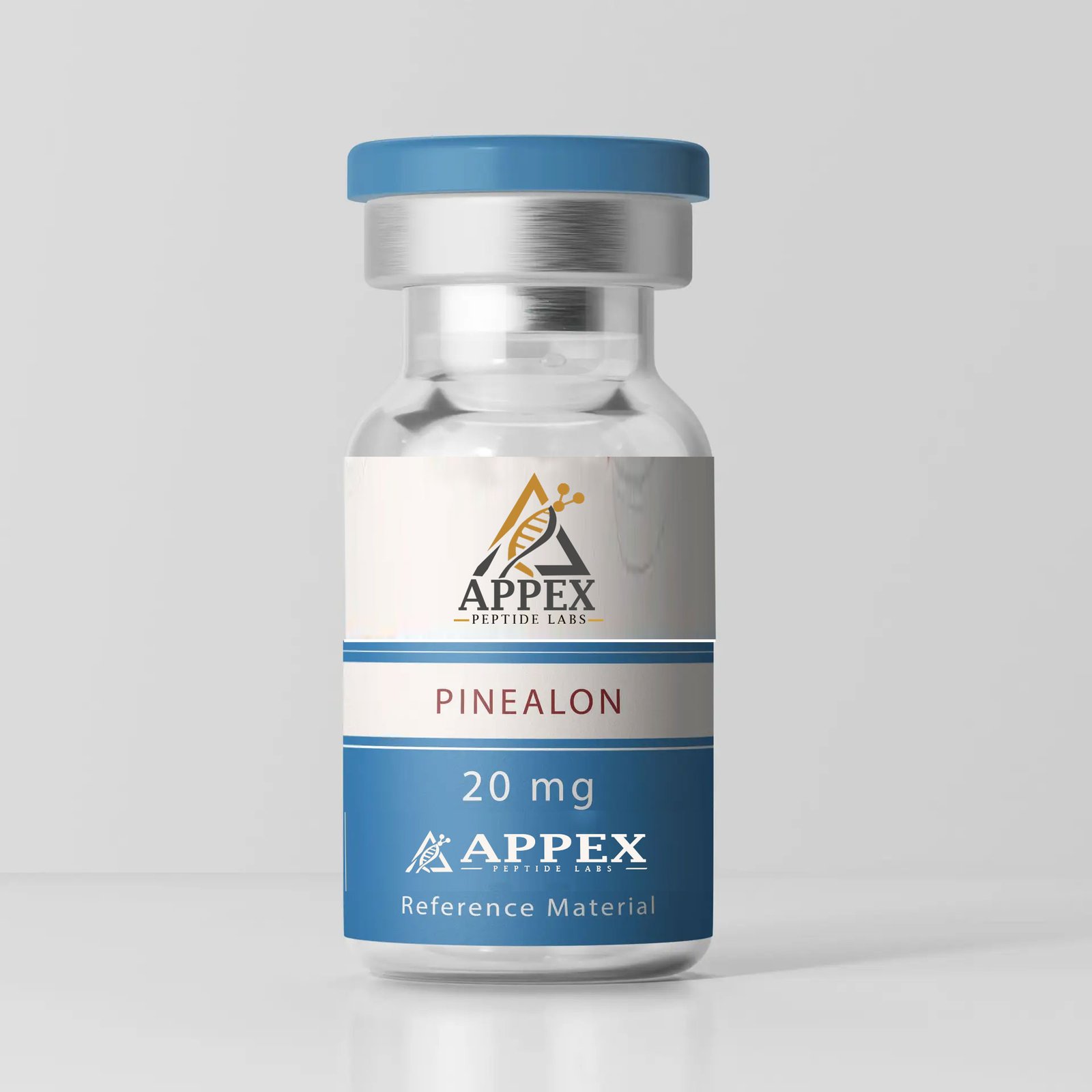
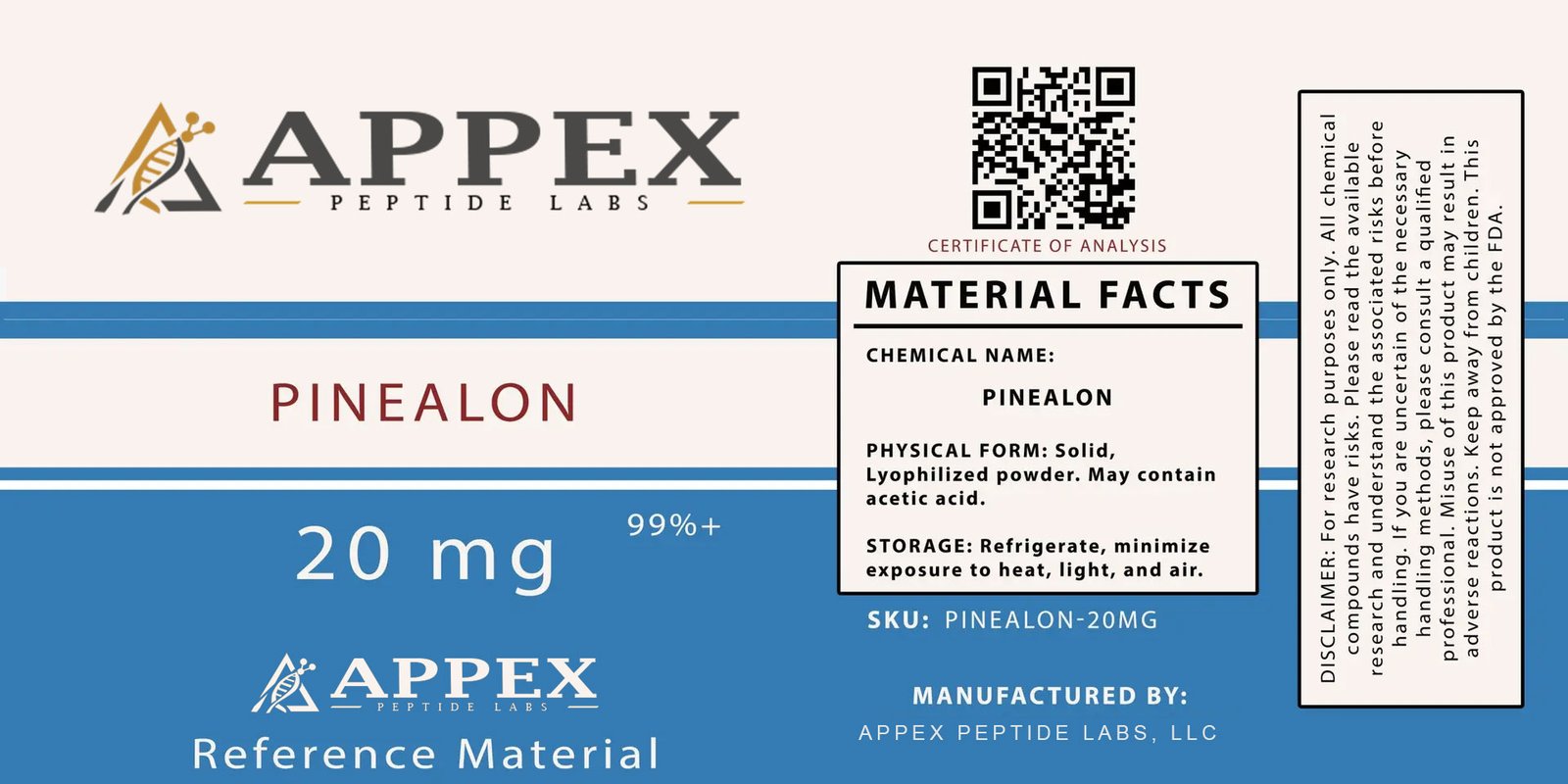

Pinealon Peptide is a synthetic tripeptide consisting of the amino acid sequence Glu-Asp-Arg (EDR), designed to mimic biologically active peptide fragments associated with pineal gland regulation. Since its development within the Khavinson peptide research program, Pinealon has become an important experimental reagent for investigating molecular mechanisms involved in neuronal homeostasis, neuroendocrine communication, and peptide-mediated cellular regulation.
Published laboratory research has explored Pinealon Peptide in experimental models examining neuronal survival, neurotrophic signaling, oxidative stress responses, transcriptional regulation, and epigenetic modulation. Scientists continue investigating its interactions with pathways associated with brain-derived neurotrophic factor (BDNF), mitochondrial function, chromatin organization, and intracellular signaling involved in neuronal adaptation.
Beyond neuroscience, Pinealon Peptide has attracted significant interest in molecular pharmacology, peptide chemistry, aging biology, and circadian rhythm research. Its small molecular size, defined amino acid sequence, and reproducible physicochemical properties make it a valuable research reagent for universities, biotechnology organizations, pharmaceutical laboratories, and life science research institutions.
Each batch is synthesized under rigorous quality-controlled manufacturing procedures, analytically verified for purity and identity, and supplied as a stable lyophilized powder with a comprehensive Certificate of Analysis to support highly reproducible laboratory investigations.
For research use only. Not intended for human consumption or clinical use.
Pinealon Peptide is extensively utilized in laboratory investigations examining neuronal communication, synaptic signaling, cellular adaptation, and molecular mechanisms regulating nervous system function.
Researchers employ Pinealon Peptide to investigate pineal gland physiology, neuroendocrine communication, circadian signaling pathways, and molecular regulation associated with biological rhythm research.
Experimental models utilize Pinealon Peptide to evaluate brain-derived neurotrophic factor (BDNF) regulation, neuronal differentiation, intracellular signaling, and transcriptional responses.
Scientists investigate Pinealon Peptide in studies examining mitochondrial homeostasis, antioxidant signaling pathways, reactive oxygen species regulation, and cellular adaptation to oxidative stress.
Pinealon Peptide is incorporated into laboratory investigations exploring chromatin remodeling, gene expression, DNA-protein interactions, and peptide-mediated transcriptional regulation.
Researchers employ Pinealon Peptide for studies involving peptide stability, molecular pharmacology, structure-function relationships, intracellular transport, and analytical method development.
| Specification | Details |
|---|---|
| Product Name | Pinealon Peptide |
| Synonyms | Pinealon, EDR Peptide |
| Purity | ≥99% (HPLC Verified) |
| Molecular Formula | C₁₅H₂₄N₄O₈ |
| Molecular Weight | 388.37 g/mol |
| CAS Number | 251870-73-0 |
| Sequence | Glu-Asp-Arg (EDR) |
| Appearance | White to off-white lyophilized powder |
| Solubility | Soluble in sterile bacteriostatic water and laboratory-grade aqueous buffers |
| Storage Conditions | Store lyophilized peptide at 2–8°C. For long-term storage, maintain at −20°C in a dry, light-protected environment. Avoid repeated freeze-thaw cycles after reconstitution. |
| Available Sizes | 5 mg, 10 mg, 20 mg |
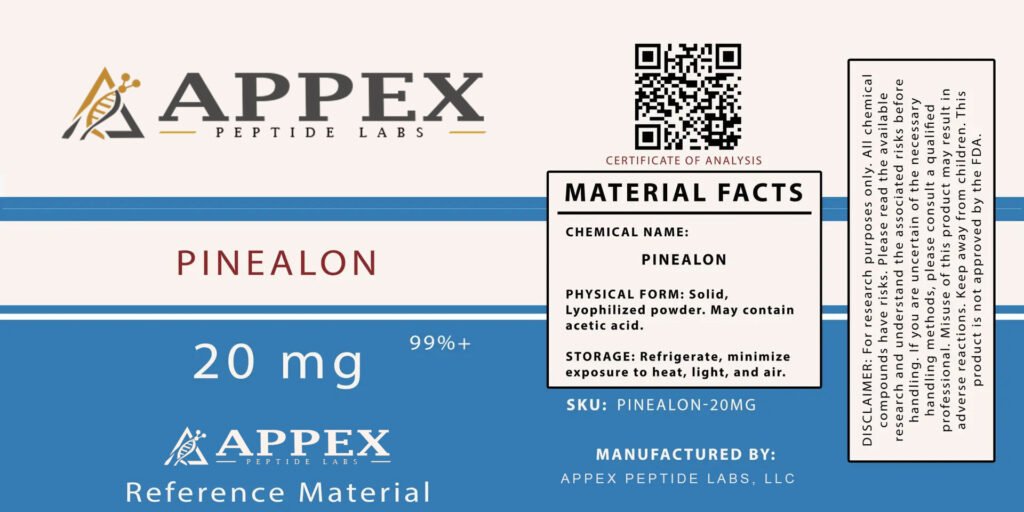
Pinealon Peptide is a synthetic tripeptide composed of glutamic acid, aspartic acid, and arginine (Glu-Asp-Arg; EDR) that has been extensively investigated for its interactions with intracellular signaling pathways involved in neuronal regulation and gene expression. Unlike conventional receptor agonists, Pinealon is believed to exert its biological activity primarily through modulation of transcriptional processes and peptide-mediated regulation of cellular homeostasis.
Published laboratory studies indicate that Pinealon Peptide influences the expression of genes associated with neuronal survival, cellular differentiation, and neuroplasticity. Researchers have investigated its capacity to interact with DNA-protein complexes, transcription factors, and chromatin-associated regulatory mechanisms that coordinate gene expression within neuronal cells. These molecular interactions continue to be studied using transcriptomic and epigenetic research techniques.
A significant area of investigation involves Pinealon’s influence on brain-derived neurotrophic factor (BDNF) signaling. Experimental models have explored whether the peptide modulates transcriptional pathways associated with neuronal growth, synaptic plasticity, intracellular communication, and adaptive cellular responses. These observations remain confined to laboratory research and continue to be evaluated to clarify underlying molecular mechanisms.
Pinealon has also been investigated for its effects on mitochondrial biology and oxidative stress regulation. Laboratory studies suggest interactions with intracellular antioxidant systems, mitochondrial membrane stability, reactive oxygen species (ROS) signaling, and enzymes responsible for maintaining cellular redox homeostasis. Researchers continue to examine these pathways to better understand peptide-mediated responses to oxidative stress in neuronal models.
Additional investigations have explored Pinealon’s relationship with pineal gland physiology and circadian regulatory mechanisms. Experimental studies evaluate peptide interactions with neuroendocrine signaling pathways governing melatonin synthesis, biological rhythm regulation, and hypothalamic-pineal communication. Although the complete molecular targets remain under investigation, current evidence supports continued research into Pinealon’s role in peptide-mediated neuroendocrine regulation.
Because of its defined tripeptide sequence, favorable physicochemical characteristics, and reproducible laboratory performance, Pinealon Peptide remains an important research reagent for neuroscience, molecular biology, peptide pharmacology, epigenetics, and biotechnology laboratories investigating the molecular regulation of neuronal function and cellular signaling.
For research use only. Not intended for human consumption or clinical use.
| Size | 10mg, 20mg, 5mg |
|---|---|
| Weight | .125 lbs |
| Dimensions | 9 × 7 × .5 in |
Pinealon Peptide is a synthetic tripeptide consisting of the amino acid sequence Glu-Asp-Arg (EDR), designed to mimic biologically active peptide fragments associated with pineal gland regulation. Since its development within the Khavinson peptide research program, Pinealon has become an important experimental reagent for investigating molecular mechanisms involved in neuronal homeostasis, neuroendocrine communication, and peptide-mediated cellular regulation.
Published laboratory research has explored Pinealon Peptide in experimental models examining neuronal survival, neurotrophic signaling, oxidative stress responses, transcriptional regulation, and epigenetic modulation. Scientists continue investigating its interactions with pathways associated with brain-derived neurotrophic factor (BDNF), mitochondrial function, chromatin organization, and intracellular signaling involved in neuronal adaptation.
Beyond neuroscience, Pinealon Peptide has attracted significant interest in molecular pharmacology, peptide chemistry, aging biology, and circadian rhythm research. Its small molecular size, defined amino acid sequence, and reproducible physicochemical properties make it a valuable research reagent for universities, biotechnology organizations, pharmaceutical laboratories, and life science research institutions.
Each batch is synthesized under rigorous quality-controlled manufacturing procedures, analytically verified for purity and identity, and supplied as a stable lyophilized powder with a comprehensive Certificate of Analysis to support highly reproducible laboratory investigations.
For research use only. Not intended for human consumption or clinical use.
Pinealon Peptide is extensively utilized in laboratory investigations examining neuronal communication, synaptic signaling, cellular adaptation, and molecular mechanisms regulating nervous system function.
Researchers employ Pinealon Peptide to investigate pineal gland physiology, neuroendocrine communication, circadian signaling pathways, and molecular regulation associated with biological rhythm research.
Experimental models utilize Pinealon Peptide to evaluate brain-derived neurotrophic factor (BDNF) regulation, neuronal differentiation, intracellular signaling, and transcriptional responses.
Scientists investigate Pinealon Peptide in studies examining mitochondrial homeostasis, antioxidant signaling pathways, reactive oxygen species regulation, and cellular adaptation to oxidative stress.
Pinealon Peptide is incorporated into laboratory investigations exploring chromatin remodeling, gene expression, DNA-protein interactions, and peptide-mediated transcriptional regulation.
Researchers employ Pinealon Peptide for studies involving peptide stability, molecular pharmacology, structure-function relationships, intracellular transport, and analytical method development.
| Specification | Details |
|---|---|
| Product Name | Pinealon Peptide |
| Synonyms | Pinealon, EDR Peptide |
| Purity | ≥99% (HPLC Verified) |
| Molecular Formula | C₁₅H₂₄N₄O₈ |
| Molecular Weight | 388.37 g/mol |
| CAS Number | 251870-73-0 |
| Sequence | Glu-Asp-Arg (EDR) |
| Appearance | White to off-white lyophilized powder |
| Solubility | Soluble in sterile bacteriostatic water and laboratory-grade aqueous buffers |
| Storage Conditions | Store lyophilized peptide at 2–8°C. For long-term storage, maintain at −20°C in a dry, light-protected environment. Avoid repeated freeze-thaw cycles after reconstitution. |
| Available Sizes | 5 mg, 10 mg, 20 mg |
Pinealon Peptide is a synthetic tripeptide composed of glutamic acid, aspartic acid, and arginine (Glu-Asp-Arg; EDR) that has been extensively investigated for its interactions with intracellular signaling pathways involved in neuronal regulation and gene expression. Unlike conventional receptor agonists, Pinealon is believed to exert its biological activity primarily through modulation of transcriptional processes and peptide-mediated regulation of cellular homeostasis.
Published laboratory studies indicate that Pinealon Peptide influences the expression of genes associated with neuronal survival, cellular differentiation, and neuroplasticity. Researchers have investigated its capacity to interact with DNA-protein complexes, transcription factors, and chromatin-associated regulatory mechanisms that coordinate gene expression within neuronal cells. These molecular interactions continue to be studied using transcriptomic and epigenetic research techniques.
A significant area of investigation involves Pinealon’s influence on brain-derived neurotrophic factor (BDNF) signaling. Experimental models have explored whether the peptide modulates transcriptional pathways associated with neuronal growth, synaptic plasticity, intracellular communication, and adaptive cellular responses. These observations remain confined to laboratory research and continue to be evaluated to clarify underlying molecular mechanisms.
Pinealon has also been investigated for its effects on mitochondrial biology and oxidative stress regulation. Laboratory studies suggest interactions with intracellular antioxidant systems, mitochondrial membrane stability, reactive oxygen species (ROS) signaling, and enzymes responsible for maintaining cellular redox homeostasis. Researchers continue to examine these pathways to better understand peptide-mediated responses to oxidative stress in neuronal models.
Additional investigations have explored Pinealon’s relationship with pineal gland physiology and circadian regulatory mechanisms. Experimental studies evaluate peptide interactions with neuroendocrine signaling pathways governing melatonin synthesis, biological rhythm regulation, and hypothalamic-pineal communication. Although the complete molecular targets remain under investigation, current evidence supports continued research into Pinealon’s role in peptide-mediated neuroendocrine regulation.
Because of its defined tripeptide sequence, favorable physicochemical characteristics, and reproducible laboratory performance, Pinealon Peptide remains an important research reagent for neuroscience, molecular biology, peptide pharmacology, epigenetics, and biotechnology laboratories investigating the molecular regulation of neuronal function and cellular signaling.
For research use only. Not intended for human consumption or clinical use.
| Size | 10mg, 20mg, 5mg |
|---|---|
| Weight | .125 lbs |
| Dimensions | 9 × 7 × .5 in |