Bulk Orders. Better Value.
Research institutions, universities and clinical teams qualify for volume discounts. Contact our team to discuss custom formulations and bulk pricing.

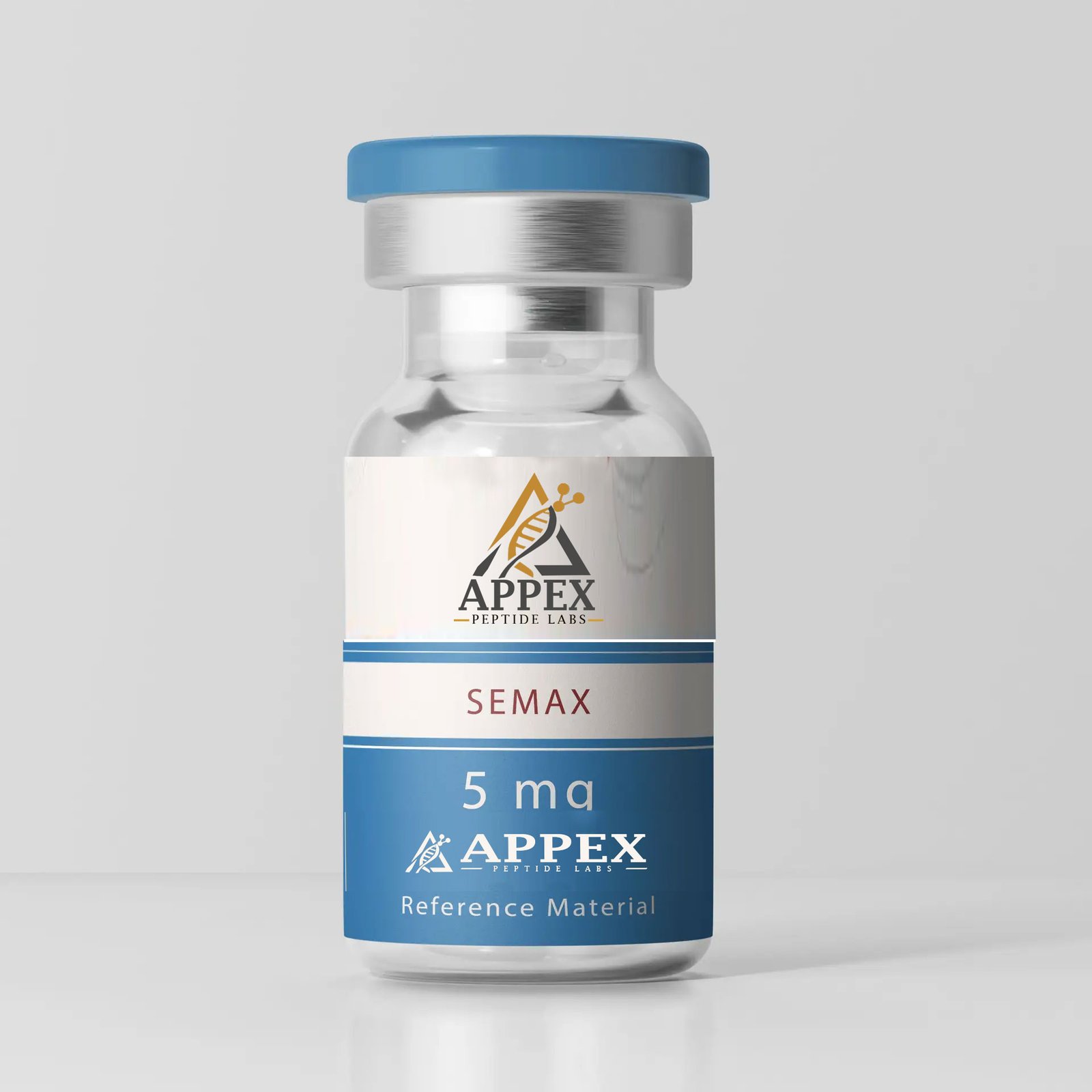


Semax Peptide is a synthetic analog of the ACTH(4–10) fragment consisting of the amino acid sequence Met-Glu-His-Phe-Pro-Gly-Pro (MEHFPGP). Originally developed for scientific investigation of neurobiological signaling mechanisms, Semax has become one of the most extensively studied research peptides in experimental neuroscience due to its broad influence on neurotrophic pathways, neurotransmitter systems, and intracellular signaling networks.
Published laboratory research has demonstrated that Semax Peptide interacts with multiple molecular pathways involved in neuronal communication, including regulation of brain-derived neurotrophic factor (BDNF), nerve growth factor (NGF), cyclic AMP-responsive transcription factors, and several kinase-mediated signaling cascades. Investigators have also examined its effects on dopamine, serotonin, and glutamatergic neurotransmission in controlled experimental models.
The peptide’s favorable stability and well-characterized molecular profile make it an important research reagent for studies involving neuronal differentiation, synaptic plasticity, peptide transport, oxidative stress responses, and gene regulation. Its lack of classical hormonal activity further allows researchers to evaluate neurobiological signaling independently of endocrine effects associated with native ACTH.
Manufactured to rigorous research standards, Semax Peptide is supplied as a high-purity lyophilized powder suitable for advanced molecular biology, pharmacology, biotechnology, and neuroscience research laboratories.
For research use only. Not intended for human consumption or clinical use.
Semax Peptide is widely utilized to investigate regulation of neurotrophic signaling molecules including brain-derived neurotrophic factor (BDNF) and nerve growth factor (NGF) within experimental laboratory systems.
Researchers employ Semax Peptide to study molecular interactions involving dopaminergic, serotonergic, glutamatergic, and cholinergic signaling pathways in cellular and preclinical models.
Semax Peptide supports investigations into transcriptional regulation, intracellular signaling proteins, transcription factor activation, and peptide-mediated genomic responses.
The peptide serves as a valuable research reagent for studying neuronal connectivity, synaptic remodeling, dendritic architecture, and intracellular communication mechanisms.
Semax Peptide is frequently incorporated into receptor pharmacology studies evaluating peptide stability, structure-function relationships, intracellular signaling kinetics, and peptide metabolism.
Laboratory investigations utilize Semax Peptide to examine neuronal differentiation, mitochondrial function, oxidative stress responses, protein phosphorylation, and cellular adaptation mechanisms.
| Specification | Details |
|---|---|
| Product Name | Semax Peptide |
| Purity | ≥98% (HPLC Verified) |
| Molecular Formula | C₃₇H₅₁N₉O₁₀S |
| Molecular Weight | 813.91 g/mol |
| CAS Number | 80714-61-0 |
| Appearance | White to off-white lyophilized powder |
| Sequence | Met-Glu-His-Phe-Pro-Gly-Pro (MEHFPGP) |
| Solubility | Soluble in sterile laboratory-grade water and appropriate research buffers |
| Storage Conditions | Store lyophilized at -20°C. After reconstitution, aliquot into sterile containers and avoid repeated freeze-thaw cycles. |
| Available Sizes | 5 mg, 10 mg |

Semax Peptide is a synthetic heptapeptide derived from the adrenocorticotropic hormone fragment ACTH(4–10). Unlike the parent hormone, Semax does not exhibit significant melanocortin-mediated endocrine activity, allowing researchers to investigate its molecular actions independently of classical ACTH signaling. Its established biochemical profile has made it an important experimental peptide in molecular neuroscience, neuropharmacology, and cellular signaling research.
Published laboratory investigations indicate that Semax Peptide modulates multiple intracellular signaling pathways associated with neuronal communication and adaptive cellular responses. One of the most extensively studied mechanisms involves regulation of brain-derived neurotrophic factor (BDNF), a neurotrophin that activates tropomyosin receptor kinase B (TrkB). Activation of TrkB initiates intracellular signaling through phosphoinositide 3-kinase (PI3K)/Akt, mitogen-activated protein kinase (MAPK/ERK), and phospholipase C-γ pathways, influencing transcriptional activity, protein phosphorylation, and neuronal signaling processes.
Experimental studies have also demonstrated modulation of cyclic AMP response element-binding protein (CREB), a transcription factor involved in regulation of genes associated with neuronal development, synaptic communication, and intracellular adaptation. Additional investigations suggest that Semax influences expression of nerve growth factor (NGF), immediate early genes, and proteins associated with synaptic plasticity under controlled laboratory conditions.
Beyond neurotrophic signaling, Semax Peptide has been examined for its effects on neurotransmitter systems, including dopaminergic, serotonergic, glutamatergic, and cholinergic pathways. These studies explore how peptide-mediated signaling influences neurotransmitter synthesis, release, receptor responsiveness, and neuronal network communication in experimental models.
Research has further investigated Semax in relation to oxidative stress regulation, mitochondrial function, antioxidant enzyme activity, and inflammatory signaling pathways. Laboratory evidence suggests modulation of intracellular kinase activity, reactive oxygen species homeostasis, and transcriptional networks involved in cellular stress responses, although these findings continue to be explored in mechanistic studies.
Because of its defined amino acid sequence, favorable stability, and extensive characterization within peer-reviewed scientific literature, Semax Peptide remains an important molecular tool for investigating peptide chemistry, neurotrophic factor regulation, receptor pharmacology, gene expression, and intracellular signaling mechanisms across a broad range of in vitro and preclinical research applications.
For research use only. Not intended for human consumption or clinical use.
| Size | 10mg, 5mg |
|---|---|
| Dimensions | 9 × 7 × .5 in |
| Weight | .125 lbs |
Semax Peptide is a synthetic analog of the ACTH(4–10) fragment consisting of the amino acid sequence Met-Glu-His-Phe-Pro-Gly-Pro (MEHFPGP). Originally developed for scientific investigation of neurobiological signaling mechanisms, Semax has become one of the most extensively studied research peptides in experimental neuroscience due to its broad influence on neurotrophic pathways, neurotransmitter systems, and intracellular signaling networks.
Published laboratory research has demonstrated that Semax Peptide interacts with multiple molecular pathways involved in neuronal communication, including regulation of brain-derived neurotrophic factor (BDNF), nerve growth factor (NGF), cyclic AMP-responsive transcription factors, and several kinase-mediated signaling cascades. Investigators have also examined its effects on dopamine, serotonin, and glutamatergic neurotransmission in controlled experimental models.
The peptide’s favorable stability and well-characterized molecular profile make it an important research reagent for studies involving neuronal differentiation, synaptic plasticity, peptide transport, oxidative stress responses, and gene regulation. Its lack of classical hormonal activity further allows researchers to evaluate neurobiological signaling independently of endocrine effects associated with native ACTH.
Manufactured to rigorous research standards, Semax Peptide is supplied as a high-purity lyophilized powder suitable for advanced molecular biology, pharmacology, biotechnology, and neuroscience research laboratories.
For research use only. Not intended for human consumption or clinical use.
Semax Peptide is widely utilized to investigate regulation of neurotrophic signaling molecules including brain-derived neurotrophic factor (BDNF) and nerve growth factor (NGF) within experimental laboratory systems.
Researchers employ Semax Peptide to study molecular interactions involving dopaminergic, serotonergic, glutamatergic, and cholinergic signaling pathways in cellular and preclinical models.
Semax Peptide supports investigations into transcriptional regulation, intracellular signaling proteins, transcription factor activation, and peptide-mediated genomic responses.
The peptide serves as a valuable research reagent for studying neuronal connectivity, synaptic remodeling, dendritic architecture, and intracellular communication mechanisms.
Semax Peptide is frequently incorporated into receptor pharmacology studies evaluating peptide stability, structure-function relationships, intracellular signaling kinetics, and peptide metabolism.
Laboratory investigations utilize Semax Peptide to examine neuronal differentiation, mitochondrial function, oxidative stress responses, protein phosphorylation, and cellular adaptation mechanisms.
| Specification | Details |
|---|---|
| Product Name | Semax Peptide |
| Purity | ≥98% (HPLC Verified) |
| Molecular Formula | C₃₇H₅₁N₉O₁₀S |
| Molecular Weight | 813.91 g/mol |
| CAS Number | 80714-61-0 |
| Appearance | White to off-white lyophilized powder |
| Sequence | Met-Glu-His-Phe-Pro-Gly-Pro (MEHFPGP) |
| Solubility | Soluble in sterile laboratory-grade water and appropriate research buffers |
| Storage Conditions | Store lyophilized at -20°C. After reconstitution, aliquot into sterile containers and avoid repeated freeze-thaw cycles. |
| Available Sizes | 5 mg, 10 mg |
Semax Peptide is a synthetic heptapeptide derived from the adrenocorticotropic hormone fragment ACTH(4–10). Unlike the parent hormone, Semax does not exhibit significant melanocortin-mediated endocrine activity, allowing researchers to investigate its molecular actions independently of classical ACTH signaling. Its established biochemical profile has made it an important experimental peptide in molecular neuroscience, neuropharmacology, and cellular signaling research.
Published laboratory investigations indicate that Semax Peptide modulates multiple intracellular signaling pathways associated with neuronal communication and adaptive cellular responses. One of the most extensively studied mechanisms involves regulation of brain-derived neurotrophic factor (BDNF), a neurotrophin that activates tropomyosin receptor kinase B (TrkB). Activation of TrkB initiates intracellular signaling through phosphoinositide 3-kinase (PI3K)/Akt, mitogen-activated protein kinase (MAPK/ERK), and phospholipase C-γ pathways, influencing transcriptional activity, protein phosphorylation, and neuronal signaling processes.
Experimental studies have also demonstrated modulation of cyclic AMP response element-binding protein (CREB), a transcription factor involved in regulation of genes associated with neuronal development, synaptic communication, and intracellular adaptation. Additional investigations suggest that Semax influences expression of nerve growth factor (NGF), immediate early genes, and proteins associated with synaptic plasticity under controlled laboratory conditions.
Beyond neurotrophic signaling, Semax Peptide has been examined for its effects on neurotransmitter systems, including dopaminergic, serotonergic, glutamatergic, and cholinergic pathways. These studies explore how peptide-mediated signaling influences neurotransmitter synthesis, release, receptor responsiveness, and neuronal network communication in experimental models.
Research has further investigated Semax in relation to oxidative stress regulation, mitochondrial function, antioxidant enzyme activity, and inflammatory signaling pathways. Laboratory evidence suggests modulation of intracellular kinase activity, reactive oxygen species homeostasis, and transcriptional networks involved in cellular stress responses, although these findings continue to be explored in mechanistic studies.
Because of its defined amino acid sequence, favorable stability, and extensive characterization within peer-reviewed scientific literature, Semax Peptide remains an important molecular tool for investigating peptide chemistry, neurotrophic factor regulation, receptor pharmacology, gene expression, and intracellular signaling mechanisms across a broad range of in vitro and preclinical research applications.
For research use only. Not intended for human consumption or clinical use.
| Size | 10mg, 5mg |
|---|---|
| Dimensions | 9 × 7 × .5 in |
| Weight | .125 lbs |