Bulk Orders. Better Value.
Research institutions, universities and clinical teams qualify for volume discounts. Contact our team to discuss custom formulations and bulk pricing.

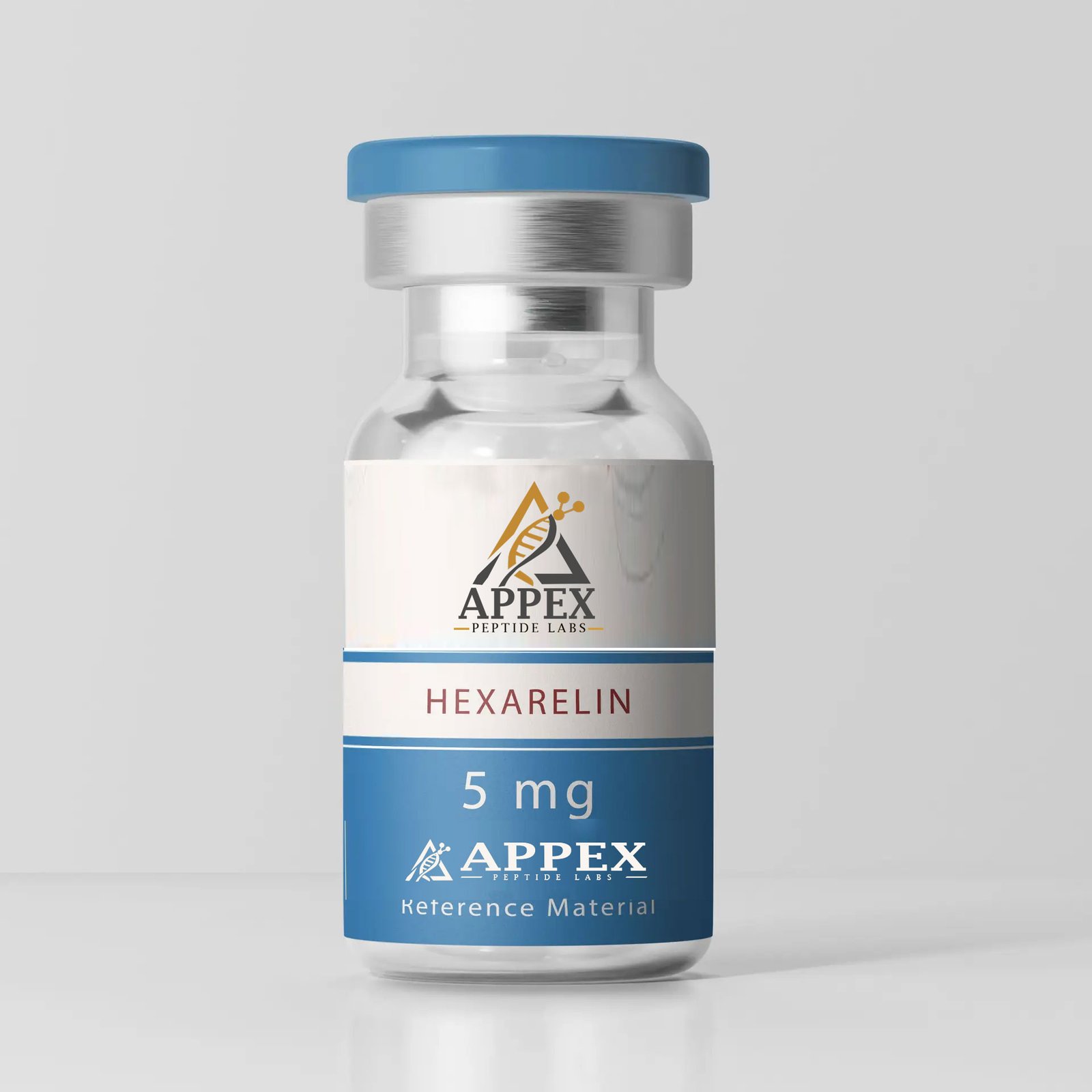
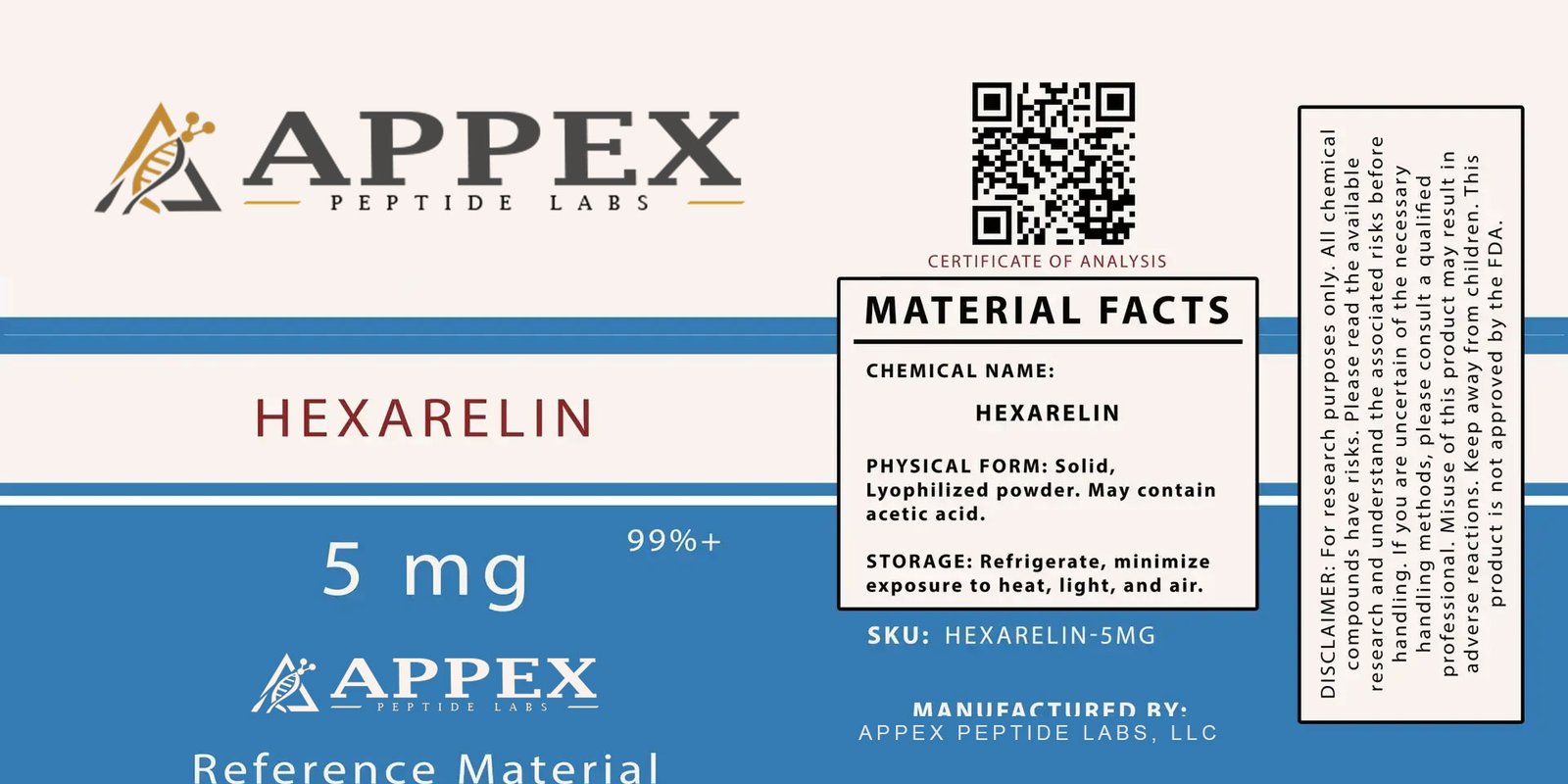

Hexarelin Peptide, also known as Hexarelin Acetate or Examorelin, is a synthetic hexapeptide belonging to the growth hormone secretagogue (GHS) family. It was developed as a structurally optimized peptide ligand capable of selectively interacting with the growth hormone secretagogue receptor type 1a (GHS-R1a), while also demonstrating affinity for the scavenger receptor CD36, making it an important research molecule for studying multiple signaling pathways.
Unlike endogenous ghrelin, Hexarelin contains strategically modified amino acid residues, including D-2-methyl-tryptophan, which significantly enhance resistance to enzymatic degradation and improve receptor-binding characteristics in experimental systems. These structural modifications have made Hexarelin one of the most extensively characterized synthetic GHS peptides in receptor pharmacology and endocrine signaling research.
Researchers utilize Hexarelin to investigate molecular mechanisms regulating peptide-receptor interactions, intracellular signal transduction, endocrine pathway activation, cellular communication, receptor desensitization, and comparative growth hormone secretagogue pharmacology. It is frequently incorporated into studies involving molecular endocrinology, cardiovascular biology, peptide chemistry, and cellular signaling.
Each research-grade preparation is synthesized under stringent quality-controlled conditions, analytically verified for purity and identity, and supplied with a Certificate of Analysis (COA) to ensure consistent laboratory performance.
For research use only. Not intended for human consumption or clinical use.
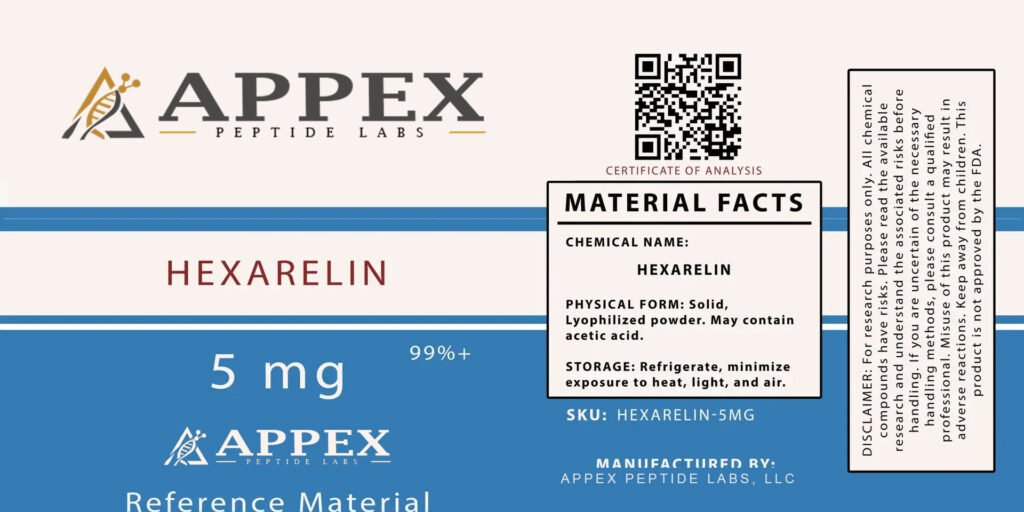
Hexarelin is extensively utilized to investigate ligand binding, receptor activation, intracellular signaling, receptor internalization, and downstream molecular responses mediated through growth hormone secretagogue receptor type 1a.
Researchers employ Hexarelin to examine molecular interactions involving the CD36 receptor, including receptor-mediated signaling, lipid-associated cellular processes, and membrane protein biology.
Laboratory investigations incorporate Hexarelin to characterize signaling pathways associated with peptide hormones, endocrine regulation, intracellular kinase activation, and transcriptional responses.
The peptide serves as a valuable research tool for comparative agonist studies, ligand affinity measurements, receptor selectivity analysis, and pharmacodynamic investigations involving synthetic growth hormone secretagogues.
Scientists utilize Hexarelin to investigate intracellular communication involving PI3K/Akt, MAPK/ERK, phospholipase C, calcium mobilization, and other signaling pathways activated following receptor engagement.
Hexarelin provides an established experimental model for peptide engineering, structure-activity relationship analysis, receptor optimization studies, and pharmaceutical research involving synthetic peptide ligands.
| Specification | Details |
|---|---|
| Product Name | Hexarelin Peptide |
| Purity | ≥99% (HPLC Tested) |
| Molecular Formula | C₄₇H₅₈N₁₂O₆ |
| Molecular Weight | 887.0 g/mol |
| CAS Number | 140703-51-1 |
| Appearance | White to off-white lyophilized powder |
| Storage Conditions | Store at -20°C in a dry environment. Protect from moisture, repeated freeze-thaw cycles, and prolonged light exposure. |
| Solubility | Soluble in sterile laboratory-grade water and buffered aqueous solutions |
| Sequence | His-D-2-Methyl-Trp-Ala-Trp-D-Phe-Lys-NH₂ |
| Available Sizes | 2 mg, 5 mg, 10 mg |
Hexarelin Peptide is a synthetic growth hormone secretagogue (GHS) belonging to the hexapeptide class of receptor agonists. It has been engineered to selectively interact with the growth hormone secretagogue receptor type 1a (GHS-R1a) while also demonstrating affinity for the multifunctional membrane receptor CD36. This dual receptor profile distinguishes Hexarelin from many other synthetic GHS peptides and has made it an important molecular tool for investigating endocrine signaling, receptor pharmacology, and peptide-mediated cellular communication.
Following receptor binding, Hexarelin activates the GHS-R1a, a G protein-coupled receptor primarily coupled to Gq/11 proteins. Activation initiates phospholipase C (PLC) signaling, leading to hydrolysis of phosphatidylinositol 4,5-bisphosphate (PIP₂) into inositol trisphosphate (IP₃) and diacylglycerol (DAG). These second messengers promote intracellular calcium mobilization and activation of protein kinase C (PKC), triggering downstream signaling cascades that regulate gene expression, peptide secretion, and cellular signaling events. Researchers frequently monitor these pathways using calcium imaging, phosphorylation assays, reporter gene systems, and receptor trafficking studies.
Hexarelin has also been shown to activate MAPK/ERK, PI3K/Akt, and additional kinase pathways involved in transcriptional regulation, cellular metabolism, and signal integration. Experimental investigations examine receptor phosphorylation, β-arrestin recruitment, receptor internalization, and desensitization kinetics to better understand prolonged receptor activation and ligand-specific signaling characteristics.
In addition to GHS-R1a, Hexarelin exhibits binding affinity for CD36, a multifunctional scavenger receptor expressed in numerous cell types. CD36 participates in lipid recognition, fatty acid transport, inflammatory signaling, oxidative stress responses, and cellular metabolism. Laboratory studies investigate how Hexarelin-mediated CD36 activation influences intracellular signaling independently of classical endocrine receptor pathways. Researchers often evaluate these interactions using ligand-binding assays, transcriptomic analysis, proteomics, and receptor knockdown models.
The inclusion of D-2-methyl-tryptophan within the peptide sequence significantly enhances resistance to enzymatic degradation compared with earlier synthetic growth hormone secretagogues. This increased metabolic stability contributes to reproducible receptor occupancy and consistent experimental performance, making Hexarelin particularly valuable for mechanistic investigations requiring extended observation periods.
From a peptide chemistry perspective, Hexarelin serves as a well-characterized reference compound for studying synthetic GHS analogs, receptor selectivity, ligand bias, intracellular signaling networks, and structure-activity relationships. Its standardized synthesis, high analytical purity, and extensive scientific characterization make it a dependable research reagent for biotechnology, pharmaceutical, and academic laboratories investigating peptide pharmacology and molecular endocrinology.
For research use only. Not intended for human consumption or clinical use.
| Size | 5mg |
|---|---|
| Dimensions | 9 × 7 × .5 in |
| Weight | .125 lbs |
Hexarelin Peptide, also known as Hexarelin Acetate or Examorelin, is a synthetic hexapeptide belonging to the growth hormone secretagogue (GHS) family. It was developed as a structurally optimized peptide ligand capable of selectively interacting with the growth hormone secretagogue receptor type 1a (GHS-R1a), while also demonstrating affinity for the scavenger receptor CD36, making it an important research molecule for studying multiple signaling pathways.
Unlike endogenous ghrelin, Hexarelin contains strategically modified amino acid residues, including D-2-methyl-tryptophan, which significantly enhance resistance to enzymatic degradation and improve receptor-binding characteristics in experimental systems. These structural modifications have made Hexarelin one of the most extensively characterized synthetic GHS peptides in receptor pharmacology and endocrine signaling research.
Researchers utilize Hexarelin to investigate molecular mechanisms regulating peptide-receptor interactions, intracellular signal transduction, endocrine pathway activation, cellular communication, receptor desensitization, and comparative growth hormone secretagogue pharmacology. It is frequently incorporated into studies involving molecular endocrinology, cardiovascular biology, peptide chemistry, and cellular signaling.
Each research-grade preparation is synthesized under stringent quality-controlled conditions, analytically verified for purity and identity, and supplied with a Certificate of Analysis (COA) to ensure consistent laboratory performance.
For research use only. Not intended for human consumption or clinical use.
Hexarelin is extensively utilized to investigate ligand binding, receptor activation, intracellular signaling, receptor internalization, and downstream molecular responses mediated through growth hormone secretagogue receptor type 1a.
Researchers employ Hexarelin to examine molecular interactions involving the CD36 receptor, including receptor-mediated signaling, lipid-associated cellular processes, and membrane protein biology.
Laboratory investigations incorporate Hexarelin to characterize signaling pathways associated with peptide hormones, endocrine regulation, intracellular kinase activation, and transcriptional responses.
The peptide serves as a valuable research tool for comparative agonist studies, ligand affinity measurements, receptor selectivity analysis, and pharmacodynamic investigations involving synthetic growth hormone secretagogues.
Scientists utilize Hexarelin to investigate intracellular communication involving PI3K/Akt, MAPK/ERK, phospholipase C, calcium mobilization, and other signaling pathways activated following receptor engagement.
Hexarelin provides an established experimental model for peptide engineering, structure-activity relationship analysis, receptor optimization studies, and pharmaceutical research involving synthetic peptide ligands.
| Specification | Details |
|---|---|
| Product Name | Hexarelin Peptide |
| Purity | ≥99% (HPLC Tested) |
| Molecular Formula | C₄₇H₅₈N₁₂O₆ |
| Molecular Weight | 887.0 g/mol |
| CAS Number | 140703-51-1 |
| Appearance | White to off-white lyophilized powder |
| Storage Conditions | Store at -20°C in a dry environment. Protect from moisture, repeated freeze-thaw cycles, and prolonged light exposure. |
| Solubility | Soluble in sterile laboratory-grade water and buffered aqueous solutions |
| Sequence | His-D-2-Methyl-Trp-Ala-Trp-D-Phe-Lys-NH₂ |
| Available Sizes | 2 mg, 5 mg, 10 mg |
Hexarelin Peptide is a synthetic growth hormone secretagogue (GHS) belonging to the hexapeptide class of receptor agonists. It has been engineered to selectively interact with the growth hormone secretagogue receptor type 1a (GHS-R1a) while also demonstrating affinity for the multifunctional membrane receptor CD36. This dual receptor profile distinguishes Hexarelin from many other synthetic GHS peptides and has made it an important molecular tool for investigating endocrine signaling, receptor pharmacology, and peptide-mediated cellular communication.
Following receptor binding, Hexarelin activates the GHS-R1a, a G protein-coupled receptor primarily coupled to Gq/11 proteins. Activation initiates phospholipase C (PLC) signaling, leading to hydrolysis of phosphatidylinositol 4,5-bisphosphate (PIP₂) into inositol trisphosphate (IP₃) and diacylglycerol (DAG). These second messengers promote intracellular calcium mobilization and activation of protein kinase C (PKC), triggering downstream signaling cascades that regulate gene expression, peptide secretion, and cellular signaling events. Researchers frequently monitor these pathways using calcium imaging, phosphorylation assays, reporter gene systems, and receptor trafficking studies.
Hexarelin has also been shown to activate MAPK/ERK, PI3K/Akt, and additional kinase pathways involved in transcriptional regulation, cellular metabolism, and signal integration. Experimental investigations examine receptor phosphorylation, β-arrestin recruitment, receptor internalization, and desensitization kinetics to better understand prolonged receptor activation and ligand-specific signaling characteristics.
In addition to GHS-R1a, Hexarelin exhibits binding affinity for CD36, a multifunctional scavenger receptor expressed in numerous cell types. CD36 participates in lipid recognition, fatty acid transport, inflammatory signaling, oxidative stress responses, and cellular metabolism. Laboratory studies investigate how Hexarelin-mediated CD36 activation influences intracellular signaling independently of classical endocrine receptor pathways. Researchers often evaluate these interactions using ligand-binding assays, transcriptomic analysis, proteomics, and receptor knockdown models.
The inclusion of D-2-methyl-tryptophan within the peptide sequence significantly enhances resistance to enzymatic degradation compared with earlier synthetic growth hormone secretagogues. This increased metabolic stability contributes to reproducible receptor occupancy and consistent experimental performance, making Hexarelin particularly valuable for mechanistic investigations requiring extended observation periods.
From a peptide chemistry perspective, Hexarelin serves as a well-characterized reference compound for studying synthetic GHS analogs, receptor selectivity, ligand bias, intracellular signaling networks, and structure-activity relationships. Its standardized synthesis, high analytical purity, and extensive scientific characterization make it a dependable research reagent for biotechnology, pharmaceutical, and academic laboratories investigating peptide pharmacology and molecular endocrinology.
For research use only. Not intended for human consumption or clinical use.
| Size | 5mg |
|---|---|
| Dimensions | 9 × 7 × .5 in |
| Weight | .125 lbs |