Bulk Orders. Better Value.
Research institutions, universities and clinical teams qualify for volume discounts. Contact our team to discuss custom formulations and bulk pricing.

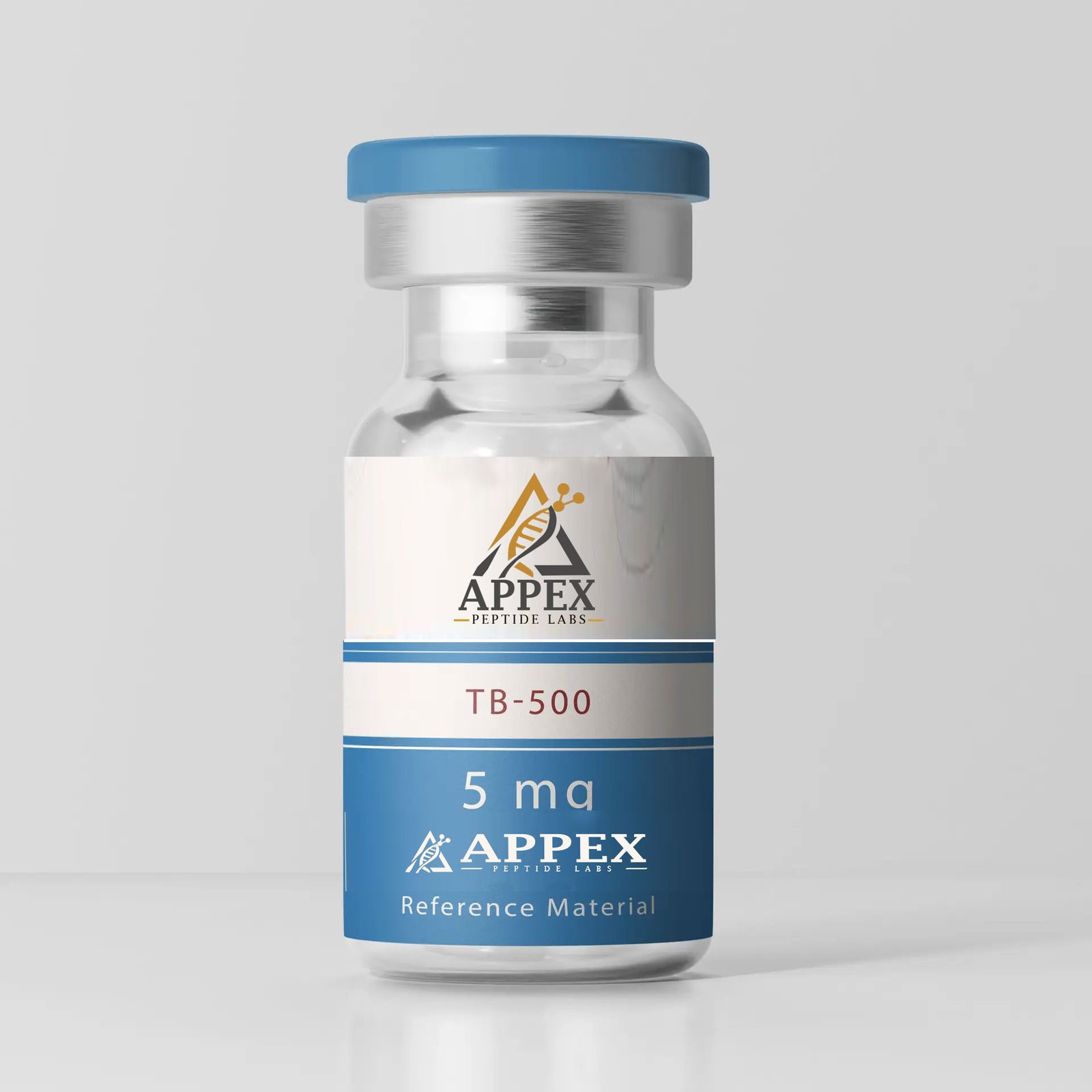
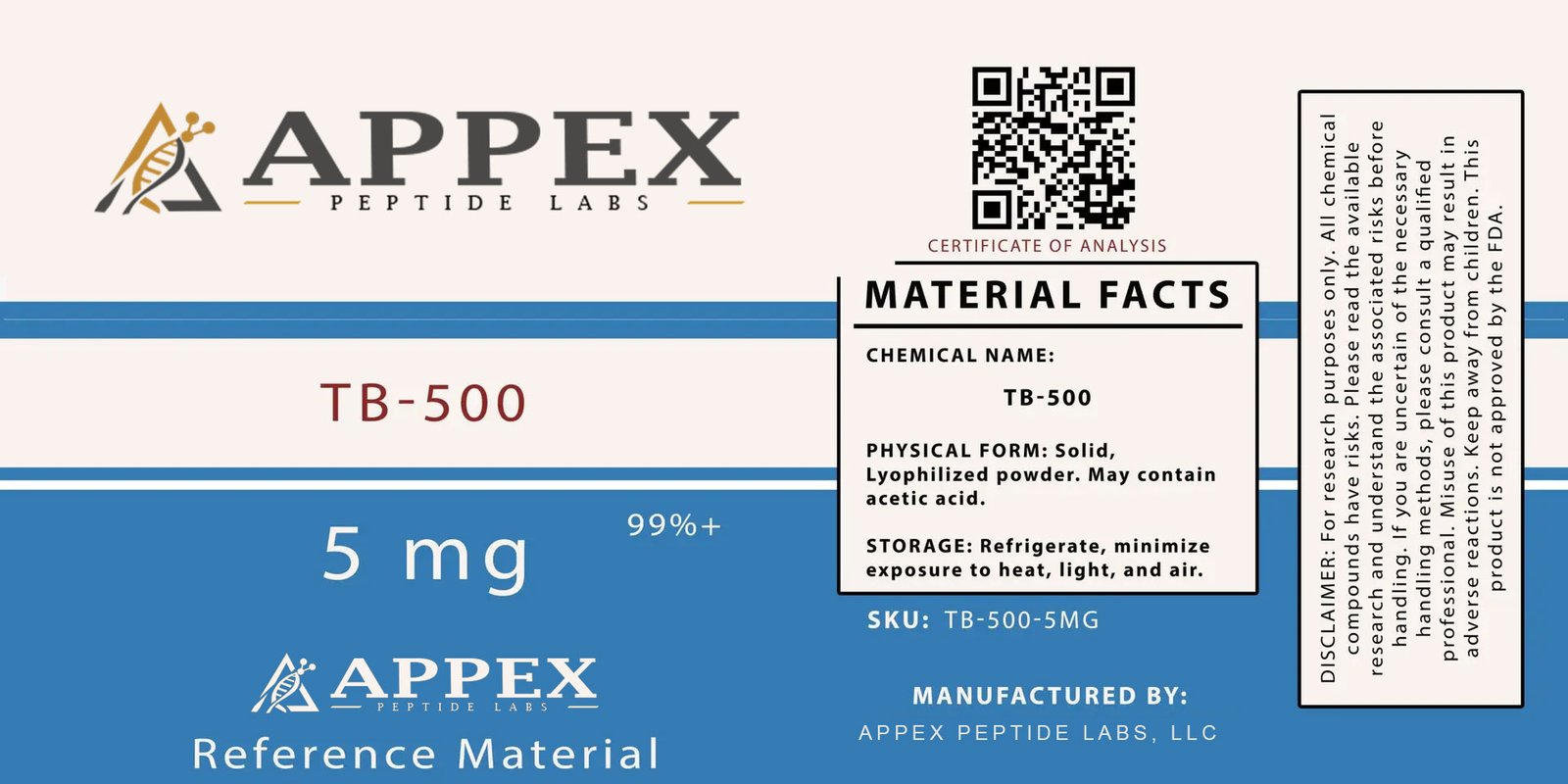

TB-500 Peptide (TB4) is a synthetic research peptide derived from the naturally occurring protein thymosin beta-4, a highly conserved actin-binding peptide found throughout mammalian tissues. Due to its role in regulating cytoskeletal dynamics, TB-500 has become an important research tool for investigating cellular migration, tissue remodeling, angiogenesis, and intracellular signaling pathways.
Within laboratory research, TB-500 is frequently incorporated into experimental models exploring actin polymerization, cell adhesion, extracellular matrix interactions, fibroblast activity, endothelial cell behavior, and structural protein organization. These molecular processes are fundamental to understanding how cells respond to environmental stimuli, mechanical stress, and developmental signaling.
Beyond cytoskeletal biology, published research has examined TB-500 in studies involving inflammatory signaling networks, oxidative stress responses, mitochondrial function, and transcriptional regulation. Its broad biological activity makes it valuable across multiple scientific disciplines, including regenerative biology, peptide pharmacology, developmental biology, molecular physiology, and biotechnology research.
Every batch of TB-500 Peptide (TB4) is synthesized under strict quality control procedures, analytically verified for purity and identity, and supplied as a stable lyophilized powder with comprehensive analytical documentation. This ensures researchers receive a consistent, high-quality reagent suitable for demanding experimental protocols.
For research use only. Not intended for human consumption or clinical use.
TB-500 Peptide (TB4) is widely employed in laboratory studies examining mechanisms of cell migration, actin filament remodeling, cytoskeletal dynamics, and intracellular structural organization.
Researchers investigate TB-500 to better understand actin-binding proteins, filament assembly, G-actin sequestration, and regulation of cellular architecture during physiological processes.
Experimental models utilize TB-500 to explore endothelial cell behavior, vascular network formation, extracellular matrix interactions, and angiogenic signaling pathways.
The peptide is incorporated into studies evaluating matrix protein turnover, fibroblast activity, cellular adhesion, and tissue architecture remodeling within controlled laboratory systems.
Researchers employ TB-500 to investigate intracellular signaling cascades associated with cytoskeletal regulation, transcription factor activation, oxidative stress responses, and peptide-mediated cellular communication.
TB-500 serves as an important model peptide for studying peptide stability, intracellular distribution, molecular interactions, and structure-function relationships relevant to peptide chemistry and pharmacology.
| Specification | Details |
|---|---|
| Product Name | TB-500 Peptide (TB4) |
| Synonyms | TB-500, Thymosin Beta-4 Fragment |
| Purity | ≥99% (HPLC Verified) |
| Molecular Formula | Synthetic peptide (sequence-specific) |
| Molecular Weight | Approximately 889.0 g/mol |
| CAS Number | Not officially assigned |
| Sequence | Ac-LKKTETQ-amide |
| Appearance | White to off-white lyophilized powder |
| Solubility | Soluble in sterile bacteriostatic water or laboratory-grade aqueous buffers |
| Storage Conditions | Store lyophilized peptide at 2–8°C. For long-term storage, keep at −20°C in a dry, protected environment. Avoid repeated freeze-thaw cycles after reconstitution. |
| Available Sizes | 5 mg, 10 mg |
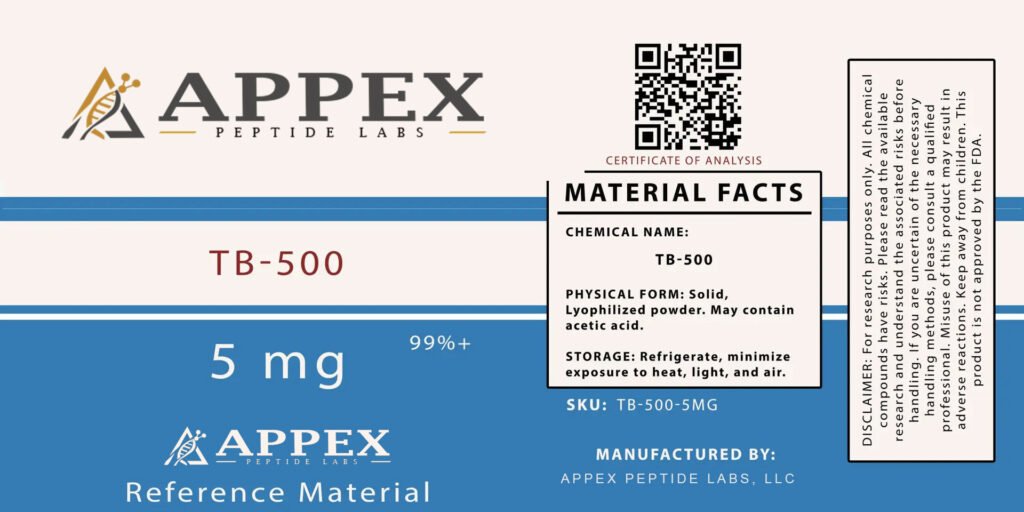
TB-500 Peptide (TB4) is a synthetic peptide designed from the biologically active region of thymosin beta-4, an endogenous actin-binding protein involved in regulating cytoskeletal architecture and intracellular structural dynamics. Within laboratory research, TB-500 is primarily investigated for its influence on actin-mediated cellular processes and its ability to modulate signaling pathways associated with cellular organization and movement.
A principal mechanism studied involves reversible binding to globular actin (G-actin). By regulating the equilibrium between monomeric G-actin and filamentous F-actin, TB-500 contributes to actin polymerization dynamics that govern cell morphology, migration, adhesion, and intracellular transport. These cytoskeletal processes are essential for understanding cellular responses during development, mechanical adaptation, and tissue remodeling in experimental systems.
Published research also indicates that TB-500 influences multiple intracellular signaling pathways involved in cytoskeletal remodeling. Experimental investigations have demonstrated modulation of focal adhesion dynamics, integrin-mediated signaling, Rho family GTPase activity, and downstream regulators responsible for actin filament assembly and cellular motility. These coordinated molecular events make TB-500 a valuable reagent for studying structural cell biology.
In vascular biology research, TB-500 has been evaluated for its effects on endothelial cell migration and angiogenic signaling. Laboratory studies continue to investigate interactions with signaling molecules such as vascular endothelial growth factor (VEGF), matrix metalloproteinases (MMPs), and extracellular matrix proteins that contribute to vascular remodeling under controlled experimental conditions. These observations remain confined to laboratory and preclinical research.
Additional investigations have explored TB-500’s relationship with oxidative stress signaling, mitochondrial homeostasis, inflammatory mediator regulation, and transcriptional responses associated with cellular adaptation. Researchers have examined its influence on pathways involving NF-κB, transforming growth factor-beta (TGF-β), and other regulatory proteins that coordinate cellular communication and structural remodeling. While these findings continue to expand scientific understanding of peptide biology, they do not establish therapeutic applications.
Because of its defined amino acid sequence, reproducible physicochemical characteristics, and broad involvement in cytoskeletal regulation, TB-500 Peptide (TB4) remains an important research reagent across molecular biology, regenerative science, peptide pharmacology, developmental biology, and biotechnology laboratories investigating fundamental mechanisms of cellular organization.
For research use only. Not intended for human consumption or clinical use.
| Size | 10mg, 5mg |
|---|---|
| Dimensions | 9 × 7 × .5 in |
| Weight | .125 lbs |

TB-500 Peptide (TB4) is a synthetic research peptide derived from the naturally occurring protein thymosin beta-4, a highly conserved actin-binding peptide found throughout mammalian tissues. Due to its role in regulating cytoskeletal dynamics, TB-500 has become an important research tool for investigating cellular migration, tissue remodeling, angiogenesis, and intracellular signaling pathways.
Within laboratory research, TB-500 is frequently incorporated into experimental models exploring actin polymerization, cell adhesion, extracellular matrix interactions, fibroblast activity, endothelial cell behavior, and structural protein organization. These molecular processes are fundamental to understanding how cells respond to environmental stimuli, mechanical stress, and developmental signaling.
Beyond cytoskeletal biology, published research has examined TB-500 in studies involving inflammatory signaling networks, oxidative stress responses, mitochondrial function, and transcriptional regulation. Its broad biological activity makes it valuable across multiple scientific disciplines, including regenerative biology, peptide pharmacology, developmental biology, molecular physiology, and biotechnology research.
Every batch of TB-500 Peptide (TB4) is synthesized under strict quality control procedures, analytically verified for purity and identity, and supplied as a stable lyophilized powder with comprehensive analytical documentation. This ensures researchers receive a consistent, high-quality reagent suitable for demanding experimental protocols.
For research use only. Not intended for human consumption or clinical use.
TB-500 Peptide (TB4) is widely employed in laboratory studies examining mechanisms of cell migration, actin filament remodeling, cytoskeletal dynamics, and intracellular structural organization.
Researchers investigate TB-500 to better understand actin-binding proteins, filament assembly, G-actin sequestration, and regulation of cellular architecture during physiological processes.
Experimental models utilize TB-500 to explore endothelial cell behavior, vascular network formation, extracellular matrix interactions, and angiogenic signaling pathways.
The peptide is incorporated into studies evaluating matrix protein turnover, fibroblast activity, cellular adhesion, and tissue architecture remodeling within controlled laboratory systems.
Researchers employ TB-500 to investigate intracellular signaling cascades associated with cytoskeletal regulation, transcription factor activation, oxidative stress responses, and peptide-mediated cellular communication.
TB-500 serves as an important model peptide for studying peptide stability, intracellular distribution, molecular interactions, and structure-function relationships relevant to peptide chemistry and pharmacology.
| Specification | Details |
|---|---|
| Product Name | TB-500 Peptide (TB4) |
| Synonyms | TB-500, Thymosin Beta-4 Fragment |
| Purity | ≥99% (HPLC Verified) |
| Molecular Formula | Synthetic peptide (sequence-specific) |
| Molecular Weight | Approximately 889.0 g/mol |
| CAS Number | Not officially assigned |
| Sequence | Ac-LKKTETQ-amide |
| Appearance | White to off-white lyophilized powder |
| Solubility | Soluble in sterile bacteriostatic water or laboratory-grade aqueous buffers |
| Storage Conditions | Store lyophilized peptide at 2–8°C. For long-term storage, keep at −20°C in a dry, protected environment. Avoid repeated freeze-thaw cycles after reconstitution. |
| Available Sizes | 5 mg, 10 mg |
TB-500 Peptide (TB4) is a synthetic peptide designed from the biologically active region of thymosin beta-4, an endogenous actin-binding protein involved in regulating cytoskeletal architecture and intracellular structural dynamics. Within laboratory research, TB-500 is primarily investigated for its influence on actin-mediated cellular processes and its ability to modulate signaling pathways associated with cellular organization and movement.
A principal mechanism studied involves reversible binding to globular actin (G-actin). By regulating the equilibrium between monomeric G-actin and filamentous F-actin, TB-500 contributes to actin polymerization dynamics that govern cell morphology, migration, adhesion, and intracellular transport. These cytoskeletal processes are essential for understanding cellular responses during development, mechanical adaptation, and tissue remodeling in experimental systems.
Published research also indicates that TB-500 influences multiple intracellular signaling pathways involved in cytoskeletal remodeling. Experimental investigations have demonstrated modulation of focal adhesion dynamics, integrin-mediated signaling, Rho family GTPase activity, and downstream regulators responsible for actin filament assembly and cellular motility. These coordinated molecular events make TB-500 a valuable reagent for studying structural cell biology.
In vascular biology research, TB-500 has been evaluated for its effects on endothelial cell migration and angiogenic signaling. Laboratory studies continue to investigate interactions with signaling molecules such as vascular endothelial growth factor (VEGF), matrix metalloproteinases (MMPs), and extracellular matrix proteins that contribute to vascular remodeling under controlled experimental conditions. These observations remain confined to laboratory and preclinical research.
Additional investigations have explored TB-500’s relationship with oxidative stress signaling, mitochondrial homeostasis, inflammatory mediator regulation, and transcriptional responses associated with cellular adaptation. Researchers have examined its influence on pathways involving NF-κB, transforming growth factor-beta (TGF-β), and other regulatory proteins that coordinate cellular communication and structural remodeling. While these findings continue to expand scientific understanding of peptide biology, they do not establish therapeutic applications.
Because of its defined amino acid sequence, reproducible physicochemical characteristics, and broad involvement in cytoskeletal regulation, TB-500 Peptide (TB4) remains an important research reagent across molecular biology, regenerative science, peptide pharmacology, developmental biology, and biotechnology laboratories investigating fundamental mechanisms of cellular organization.
For research use only. Not intended for human consumption or clinical use.
| Size | 10mg, 5mg |
|---|---|
| Dimensions | 9 × 7 × .5 in |
| Weight | .125 lbs |